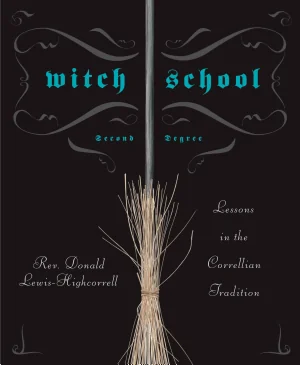
Witch School Second Degree
 73
73

Witch School Second Degree
Don Lewis-Highcorrell’s *Witch School Second Degree* offers a methodical progression for those immersed in the Correllian Nativist tradition. Unlike many contemporary grimoires that offer a smorgasbord of spells, this volume diligently expands on the structured curriculum initiated in its predecessor. Its strength lies in its detailed exposition of energy working and ritual mechanics, providing clear, actionable instruction for students ready to advance. A notable passage discussing the ethical considerations of wielding magical power for advancement within the Correllian hierarchy highlights the tradition’s emphasis on responsibility. However, its highly specific focus on the Correllian path may limit its appeal to those outside this particular lineage, offering less for the general practitioner of eclectic witchcraft. The text functions as a rigorous, dedicated textbook rather than a broad exploration of magical theory. Ultimately, *Witch School Second Degree* serves as a competent, albeit specialized, pedagogical tool for its intended audience.
📝 Description
73
Don Lewis-Highcorrell published Witch School Second Degree in 2008.
This is the second volume in Don Lewis-Highcorrell's Correllian Nativist Wicca teaching series. It follows the first book by building on its principles and preparing students for higher degrees within the Correllian tradition. The text moves past introductory ideas to discuss more advanced magical practices and their theoretical bases.
The book is intended for those who have completed the initial Correllian Nativist lessons or want a structured path for second-degree Wiccan studies. It suits students of witchcraft who seek a thorough grasp of magical theory, ritual creation, and the ethical standards required for advancement in a recognized Wiccan line. The work aims to give practitioners the judgment and ability for more advanced spiritual and magical work.
The Correllian Nativist tradition, as presented by Lewis-Highcorrell, developed within a larger modern Pagan and Wiccan movement that grew significantly in the late 20th and early 21st centuries. Its structured, initiatory format reflects a lineage-based approach, differing from the more eclectic or solitary witchcraft styles that also became popular then. The tradition's "Nativist" focus suggests an emphasis on indigenous or ancestral spiritual roots.
💡 Why Read This Book?
• You will learn advanced energy manipulation techniques, moving beyond basic concepts to understand their application in complex rituals, as detailed in the sections on energy working. • You will gain a clearer understanding of the Correllian Nativist tradition’s specific initiatory structure and the ethical framework governing higher degrees, offering a unique insight into organized Wiccan progression. • You will explore practical applications of magical theory, specifically how to construct and perform rituals appropriate for second-degree practitioners, differentiating it from general witchcraft texts.
⭐ Reader Reviews
Honest opinions from readers who have explored this book.
❓ Frequently Asked Questions
What specific topics are covered in Witch School Second Degree?
This volume expands on foundational Wiccan principles, focusing on advanced energy working, detailed ritual construction, and the ethical responsibilities associated with progressing within the Correllian Nativist tradition.
Is Witch School Second Degree suitable for absolute beginners in witchcraft?
No, this book is designed as the second part of a three-volume series, building upon introductory concepts from the first book. It assumes prior knowledge and is intended for students ready for second-degree studies.
What is the Correllian Nativist tradition?
The Correllian Nativist tradition is a significant and growing Wiccan lineage, known for its structured, initiatory system that guides practitioners through various degrees of study and practice.
When was Witch School Second Degree first published?
The book was first published in 2008 as part of a comprehensive teaching series by Don Lewis-Highcorrell.
Does this book contain spells and rituals?
While it focuses on the principles behind magic and ritual, it provides instruction on constructing and performing rituals suitable for second-degree practitioners within its specific tradition, rather than a collection of standalone spells.
How does this book relate to the first book in the series?
It serves as a direct continuation, moving from the introductory lessons of 'Witch School First Degree' to more advanced theoretical and practical applications necessary for further initiation.
🔮 Key Themes & Symbolism
Advanced Energy Manipulation
This volume moves beyond basic energy concepts, detailing methods for cultivating, directing, and utilizing magical energy for more complex workings. It emphasizes the importance of intent and focus in amplifying one's magical efficacy, a crucial step for practitioners advancing within structured traditions. The text likely explores nuances in energetic sensing and projection, preparing students for the responsibilities that accompany increased power.
Ritual Design and Ethics
Beyond simply performing rituals, *Witch School Second Degree* looks at the principles of their construction. This includes understanding the components of effective ritual, symbolic language, and the appropriate timing and atmosphere. Crucially, it addresses the ethical considerations and duties incumbent upon a second-degree practitioner, stressing responsible application of magical knowledge within the Correllian framework.
Correllian Nativist Lineage
The book is deeply rooted in the Correllian Nativist tradition, offering a specific pathway for initiation and spiritual development. It aims to educate students on the history, philosophy, and practices unique to this lineage, distinguishing it from more eclectic or solitary paths and emphasizing the value of a structured, hierarchical system of learning and advancement.
The Witch's Path
As a second volume in a teaching series, this work maps a segment of the witch's spiritual journey. It illustrates the progression of knowledge and skill required for initiation into higher degrees, highlighting the commitment and ongoing learning involved in dedicated witchcraft practice. It frames witchcraft not as a static set of beliefs but as an evolving path of personal and magical growth.
💬 Memorable Quotes
Direct passages from the work, attributed to the author.
“The second volume builds upon this foundation and discusses the duties...”
— This foundational statement from the original blurb highlights the book's purpose: to transition from theoretical introduction to practical application and the ethical obligations of advancing practitioners within the Correllian tradition.
“Prepare you for initiation into all three degrees of Correllian Wicca.”
— This indicates the book's specific intent within a larger curriculum. It's not a standalone guide but a structured component of a larger initiatory system, aiming to qualify students for specific levels of recognition.
“Twelve lessons, you'll learn about magic, ritual, divination, crystals, and more.”
— This refers to the scope of the first volume, implying that the second volume expands significantly on these topics, introducing more complex techniques and theoretical frameworks.
“From magical alphabets to energy working...”
— This phrasing suggests a progression from foundational symbolic systems to more advanced energetic practices, marking the shift in complexity and depth between the first and second degrees.
💡 Key Ideas
Editorial paraphrase of the work's core concepts — not direct quotes.
Introduces Wicca as a spiritual path and what it means to be a Witch.
This paraphrase of the first book's content contrasts with the second degree's focus, emphasizing that *Witch School Second Degree* moves beyond these initial definitions into more advanced practice and understanding.
🌙 Esoteric Significance
Tradition
The Correllian Nativist tradition, within which this book sits, draws from a complex range of influences, including Gardnerian Wicca, Ceremonial Magic, and Native American spiritualities, though its primary structure is rooted in modern Wiccan initiatory systems. Lewis-Highcorrell's work functions as a didactic text, designed to transmit a specific lineage's teachings in a systematic manner, preparing students for formal initiation and progression through its defined degrees.
Symbolism
While specific symbols are not detailed in the provided blurb, traditions like Correllian often employ a rich symbolic language. This might include representations of the elements (Earth, Air, Fire, Water), the divine polarity (God and Goddess), and specific tools of the craft (athame, wand, chalice). The 'magical alphabets' mentioned suggest a focus on symbolic scripts used for inscription or ritual purposes, imbuing everyday objects and actions with esoteric meaning.
Modern Relevance
Contemporary students seeking structured, initiatory paths in witchcraft often look to traditions like Correllian for guidance. This book remains relevant for those who value a clear curriculum and a recognized lineage, providing a pedagogical framework that contrasts with more eclectic or solitary approaches. It speaks to a segment of the modern Pagan community interested in deepening their practice through formalized study and recognized degrees of advancement.
👥 Who Should Read This Book
• Dedicated students of the Correllian Nativist tradition who are ready to advance beyond foundational studies and seek formal instruction for second-degree initiation. • Practitioners of other Wiccan lineages who are interested in comparative study, specifically examining the structure and curriculum of a prominent Nativist tradition. • Individuals exploring organized witchcraft systems who want to understand the progression of study and responsibility within a recognized initiatory structure.
📜 Historical Context
Published in 2008, *Witch School Second Degree* arrived during a period of significant maturation and diversification within contemporary Paganism and Wicca. The early 21st century saw established traditions like the Correllian Nativist, founded in the mid-20th century, solidify their structures and educational programs. This era was marked by a growing interest in lineage-based witchcraft and formalized initiatory systems, partly as a response to the proliferation of eclectic or self-styled practitioners. While authors like Starhawk were already influential in shaping broader Wiccan discourse, Lewis-Highcorrell's work offered a more codified, tradition-specific curriculum. The reception of such structured teachings often appealed to students seeking a clear, hierarchical path and a recognized lineage, differentiating itself from the more decentralized, community-based approaches that also characterized the movement.
📔 Journal Prompts
Reflect on the concept of 'energy working' as presented in this volume.
Consider the specific duties outlined for second-degree practitioners.
Analyze the structure of advanced rituals discussed herein.
Evaluate the significance of initiation within the Correllian Nativist tradition.
Meditate on the transition from foundational knowledge to applied magical practice.
🗂️ Glossary
Correllian Nativist Tradition
A specific lineage within modern Wicca, characterized by its structured, initiatory system and emphasis on a 'Nativist' spiritual perspective, often incorporating diverse influences into its teachings.
Initiation
A formal ceremony or process marking a person's entry into a new stage, order, or degree within a spiritual or magical tradition, often involving symbolic rites and the conferral of new knowledge or responsibilities.
Energy Working
The practice of sensing, cultivating, directing, and manipulating magical or spiritual energy for various purposes, such as spellcasting, healing, or ritual enhancement.
Second Degree
A level of advancement within a Wiccan initiatory system, typically following a foundational first degree, requiring more in-depth knowledge, practical skill, and commitment to the tradition's principles.
Ritual Construction
The process of designing and assembling the components of a magical or religious ritual, including its purpose, structure, symbolism, participants, and required elements.
Magical Alphabets
Systems of symbolic characters used in magical inscriptions, talismans, or rituals, often derived from ancient scripts or created specifically for esoteric purposes to imbue written words with power.
Divination
The practice of seeking knowledge of the future or the unknown by supernatural means, using various tools or methods such as tarot cards, scrying, or astrology.
This book appears in 1 collection
🔮 Readers Also Liked
Browse all →







From the “Wicca” Collection
View all →







More Free Occult Philosophy Books
View all →