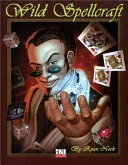
Wild Spellcraft
 78
78

Wild Spellcraft
Mystic Eye Games’ "Wild Spellcraft" presents a refreshingly direct approach to the craft, eschewing flowery language for actionable advice. Its strength lies in its systematic breakdown of spell construction, treating magic less as an ethereal art and more as a skill to be honed through deliberate practice. The section on "Energetic Anchors" offers a particularly concrete method for visualizing and directing magical force, a concept that feels grounded and replicable. However, the book's primary limitation is its lack of historical depth; while practical, it offers little by way of tracing the lineage of the techniques it presents, which can leave the reader wanting more context. The explicit focus on "Intent Amplification" is a solid takeaway, but its theoretical underpinnings could be further explored. Overall, "Wild Spellcraft" serves as a competent manual for those prioritizing pragmatic spellcasting.
📝 Description
78
Published in 2002, Wild Spellcraft offers a systematic approach to modern witchcraft practice.
"Wild Spellcraft," released by Mystic Eye Games in 2002, presents a structured method for modern witchcraft. The book covers spell construction, ritual design, and energy work, aiming for clarity and practical application. It is written for individuals ready to move beyond introductory concepts and develop their own magical systems.
This guide breaks down the components of spellcasting, focusing on the role of intent, energetic principles, and the use of correspondences. It also addresses ethical considerations and the psychological elements involved in magic, promoting a deliberate and responsible practice. The book's mechanics-focused perspective offers a self-contained resource for skill development.
Released in 2002, "Wild Spellcraft" emerged during a period of Neopaganism's expansion. It followed popular guides from the late 20th century but emphasized a more mechanical, step-by-step approach to spellcraft. The book's publication predates much of today's online grimoire sharing, positioning it as a resource for developing practical skills independently.
💡 Why Read This Book?
• Gain a systematic framework for spell construction, allowing you to design and execute your own magical workings based on the principles outlined in "Wild Spellcraft" for tangible results. • Understand and practice "Energetic Anchors," a specific technique detailed in the book to focus and direct magical energy effectively, enhancing the potency of your spells. • Develop a practical, mechanics-driven understanding of witchcraft that moves beyond theoretical concepts, offering clear steps for implementing magical principles as presented by Mystic Eye Games.
⭐ Reader Reviews
Honest opinions from readers who have explored this book.
❓ Frequently Asked Questions
What is the primary focus of 'Wild Spellcraft' by Mystic Eye Games?
'Wild Spellcraft' focuses on the practical, systematic construction of spells and rituals. It aims to provide readers with a clear understanding of the mechanics involved in spellcasting, emphasizing energetic principles and practical application.
When was 'Wild Spellcraft' first published?
The book 'Wild Spellcraft' was first published in August 2002 by Mystic Eye Games.
Is 'Wild Spellcraft' suitable for complete beginners to witchcraft?
Yes, 'Wild Spellcraft' is designed to be accessible to beginners seeking a structured approach. It clearly explains core concepts and provides practical steps for developing spellcasting skills.
Does 'Wild Spellcraft' require specific tools or materials?
While the book discusses various tools and correspondences, its emphasis is on understanding the underlying energetic principles. It encourages readers to adapt and use what is available to them, focusing on intent and energy.
What is the 'Intent Amplification' concept mentioned in 'Wild Spellcraft'?
'Intent Amplification' refers to specific techniques within the book designed to strengthen and focus the practitioner's will and intention, thereby increasing the effectiveness of a spell or ritual.
How does 'Wild Spellcraft' differ from other witchcraft books published around the same time?
Published in 2002, 'Wild Spellcraft' stands out by prioritizing a methodical, mechanics-driven approach to spellcraft, distinguishing it from more historically or spiritually focused texts prevalent in the late 20th century.
🔮 Key Themes & Symbolism
Systematic Spell Construction
The work meticulously details a step-by-step process for creating effective spells. It breaks down the components of a magical working, from initial intent formation to the final energetic release. This approach moves beyond intuitive or purely symbolic methods, offering a framework for understanding the 'how' and 'why' behind each magical action, empowering practitioners to build their own rituals with confidence.
Energetic Principles
Central to 'Wild Spellcraft' is the concept of energy as the fundamental force in magic. The book explores how to perceive, direct, and manipulate these energies, using specific techniques like 'Energetic Anchors' to ground and focus power. This focus on quantifiable energetic flow provides a practical lens through which to view magical phenomena.
Intent Amplification
A significant theme is the deliberate strengthening of a practitioner's will and focus – 'Intent Amplification.' The book provides methods to clarify and intensify one's desires, ensuring that the magical working is precisely aligned with the desired outcome. This theme underscores the psychological and volitional aspects crucial to successful spellcraft.
Personalized Practice
Rather than prescribing a rigid dogma, 'Wild Spellcraft' encourages the adaptation and personalization of magical techniques. It equips readers with fundamental principles they can apply to their unique circumstances and belief systems, fostering an independent and evolving practice rooted in personal experience and understanding.
💬 Memorable Quotes
Direct passages from the work, attributed to the author.
“The structure of a spell is as vital as the energy it contains.”
— This highlights the book's core philosophy: that effective magic relies on both the practitioner's focused will and a well-organized ritual framework. It suggests that form and substance are equally important in magical workings.
“Every component serves to amplify the core intent.”
— This principle underscores the importance of coherence in spell design. It means that all elements used – symbols, words, actions – should directly support and strengthen the primary goal of the magical working.
“Understand the flow before attempting to direct it.”
— This is an interpretation emphasizing the need for foundational knowledge in magic. It advises practitioners to first grasp the natural currents of energy before trying to manipulate them for specific spell effects.
“Your will is the engine; your focus, the steering.”
— This metaphor illustrates the dual nature of magical power. It suggests that personal willpower provides the raw force, while focused intention guides that force toward a specific, desired objective.
💡 Key Ideas
Editorial paraphrase of the work's core concepts — not direct quotes.
Visualize the outcome as already manifest.
This paraphrased concept emphasizes the power of visualization in spellcraft. It suggests that vividly imagining the desired result helps to align energetic forces and attract that outcome into reality.
🌙 Esoteric Significance
Tradition
While not strictly adhering to a single lineage like Hermeticism or Gnosticism, "Wild Spellcraft" draws from the broader currents of modern Western esoteric practice, particularly within the witchcraft and Neopagan movements. It synthesizes principles of will-working and energetic manipulation common in ceremonial magic but presents them in a more accessible, less ritualistically complex format suitable for individual practice. It departs from strictly traditional forms by prioritizing personal experimentation and adaptable frameworks.
Symbolism
The book utilizes symbolism primarily as a tool for focusing intent and directing energy. Specific symbols are often employed as "Energetic Anchors," acting as visual or conceptual focal points. For instance, a practitioner might use a symbol of growth (like a seed or a sprouting plant) to anchor a spell aimed at career advancement, imbuing the symbol with the desired outcome and channeling energy through it.
Modern Relevance
Contemporary practitioners, especially those engaged in pragmatic or results-oriented witchcraft, continue to find value in "Wild Spellcraft." Its emphasis on systematic spell construction and understanding energetic flows aligns with modern approaches that seek to clarify magic and make it a repeatable skill. Thinkers and groups focused on psychological approaches to magic or those building custom ritual systems often reference its structured methodology.
👥 Who Should Read This Book
• Aspiring spellcasters seeking a methodical guide to crafting their own magical workings, moving beyond basic concepts to practical implementation. • Practitioners interested in understanding the underlying mechanics of spellcraft and how to direct energy effectively, as detailed in "Wild Spellcraft." • Individuals exploring modern witchcraft who prefer a structured, systems-based approach to magic rather than purely intuitive or tradition-bound practices.
📜 Historical Context
Published in August 2002, "Wild Spellcraft" emerged during a period when witchcraft literature was diversifying rapidly. It followed the foundational works of figures like Doreen Valiente in the mid-20th century and the popular, accessible guides of Scott Cunningham in the 1980s and 90s. Mystic Eye Games' offering distinguished itself by focusing on the mechanics and systematic construction of spells, a more practical, less historically or religiously oriented approach compared to some contemporary Neopagan revivalist texts. While the early 2000s saw an explosion of online resources and forums, "Wild Spellcraft" served as a self-contained, printed manual. Its publication predated the widespread digital dissemination of grimoires and esoteric discussions, positioning it as a direct, hands-on resource for those seeking to develop practical magical skills outside of the burgeoning online communities.
📔 Journal Prompts
Analyze the structure of a spell you wish to cast, identifying each component's role in amplifying your intent.
Reflect on the concept of 'Energetic Anchors' and how you might apply them in a personal ritual.
Consider how your personal will can be focused to direct magical energy toward a specific goal.
Document the process of designing a spell using the systematic approach outlined in 'Wild Spellcraft'.
Explore the relationship between the form of a spell and the energy it contains based on the book's principles.
🗂️ Glossary
Energetic Anchor
A specific object, symbol, or visualization used within a spell to focus and ground magical energy, ensuring it is directed towards the intended outcome.
Intent Amplification
Techniques designed to strengthen and clarify a practitioner's will and focus, thereby increasing the power and effectiveness of a spell.
Spell Construction
The systematic process of designing and assembling the various components of a magical working, including intent, energy, symbolism, and action.
Will-Working
The practice of consciously directing one's personal will and mental energy to achieve a desired outcome through magical means.
Correspondences
The symbolic relationships between different elements (e.g., colors, herbs, planets) used in spellcraft to enhance the magic's focus and power.
Ritual Framework
The structured sequence of actions, words, and visualization employed during a spell or magical working.
Magical Energy
The fundamental force or power that practitioners work with in magic, often understood as ambient, personal, or drawn from specific sources.