Wicca
 76
76

Wicca
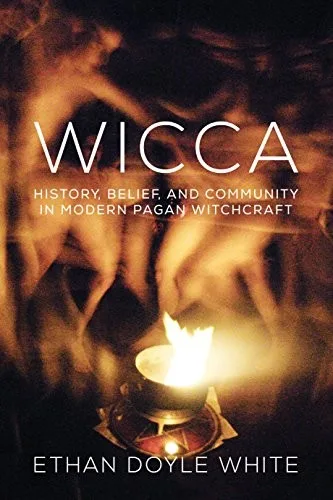
Ethan Doyle White's 'Wicca' offers a much-needed academic perspective on a religion often shrouded in myth. The book's strength lies in its detailed examination of Wicca's emergence from the mid-20th century British occult scene, particularly its roots in the works of figures like Gerald Gardner. White critically assesses the movement's claims of ancient lineage, a point where many popular accounts falter. A limitation, however, is the dense academic prose which, while precise, might deter casual readers seeking a more accessible introduction. The section discussing the early reception of Wicca by both occultists and the wider public is particularly illuminating, highlighting the anxieties and fascinations it provoked. This is a valuable, if demanding, resource for understanding modern Paganism.
📝 Description
76
Ethan Doyle White's Wicca traces the origins and development of a major contemporary religious movement.
Wicca, a modern religious movement, has become the most visible form of contemporary Paganism. With followers numbering in the hundreds of thousands worldwide, it signifies a substantial renewal of older European belief systems, adapted for present-day life. This book carefully follows its beginnings and growth.
It is written for academics of religion, individuals practicing witchcraft who want historical context, and anyone interested in how modern spiritual movements change. The book gives a thorough look for those wishing to understand Wicca, moving past common misunderstandings. It examines its foundational stories and how society responded to it during its early years.
This book examines Wicca as a modern religious movement that emerged from the British occult scene in the mid-20th century. It discusses how early adherents presented Wicca as a direct continuation of pre-Christian European witchcraft. The work situates these claims within the historical context of occultism and the revival of pagan traditions during that era.
💡 Why Read This Book?
• Gain a nuanced understanding of Wicca's origins in the mid-20th century British occult milieu, moving beyond simplistic historical claims. • Analyze the critical reception of Wicca, including how figures like Gerald Gardner shaped its public perception and academic scrutiny. • Explore the core concepts of nature veneration and ritual as presented in early Wiccan formulations, providing context for contemporary practices.
⭐ Reader Reviews
Honest opinions from readers who have explored this book.
❓ Frequently Asked Questions
When was Wicca first published as a recognized movement?
While the exact origins are complex, the modern Wiccan movement is widely recognized as originating in the mid-20th century, with key developments and publications occurring in the 1950s, notably through the work of Gerald Gardner.
What are the primary claims about Wicca's ancient origins?
Early proponents of Wicca, such as Gerald Gardner, claimed it was a survival of an ancient pre-Christian European religion, specifically a form of witchcraft that had persisted in secret for centuries.
Who is considered a central figure in the early development of Wicca?
Gerald Gardner is widely regarded as a pivotal figure. His books, including 'Witchcraft Today' (1954), played a significant role in popularizing and codifying early Wiccan practices and beliefs.
How does 'Wicca' by Ethan Doyle White approach the subject of its history?
The book critically examines the historical claims made by early Wiccans, situating the movement within the context of 20th-century British occultism and exploring the evidence (or lack thereof) for direct continuity with ancient traditions.
Is Wicca a revival of ancient European paganism?
While Wicca draws inspiration from and claims a connection to ancient European beliefs, scholars generally view it as a modern religious movement that emerged in the 20th century, synthesizing various esoteric and folkloric elements.
What is the estimated number of Wiccan adherents worldwide?
Estimates vary, but the book notes that Wicca can count hundreds of thousands of adherents worldwide, making it a significant contemporary Pagan religion.
🔮 Key Themes & Symbolism
Gardnerian Wicca's Genesis
The work scrutinizes the foundational narratives of Wicca, particularly those promoted by Gerald Gardner. It details how Gardner's involvement in British occult circles during the mid-20th century led to the creation and public presentation of what became known as Gardnerian Wicca, emphasizing its constructed nature rather than a direct, unbroken lineage from pre-Christian witchcraft.
The 'Ancient European' Claim
A central theme is the movement's assertion of reviving ancient European pagan traditions. The book critically evaluates this claim, distinguishing between genuine historical continuity and the selective appropriation and reinterpretation of folklore, mythology, and esoteric ideas to construct a novel religious identity for the modern era.
Modern Paganism's Landscape
Wicca is positioned within the broader spectrum of contemporary Paganism. The work explores how Wicca became the largest and most visible of these movements, influencing and interacting with other Pagan traditions and contributing significantly to the discourse on nature-based spirituality in the late 20th and early 21st centuries.
Occult Milieu Influence
The book emphasizes the crucial role of the British occult milieu in the 1940s and 1950s. It details how influences from figures and movements within this environment, including ceremonial magic and esoteric societies, shaped the rituals, cosmology, and organizational structures of early Wicca.
💬 Memorable Quotes
Direct passages from the work, attributed to the author.
“Wicca was first presented as the survival of an ancient pre-Christian European religion.”
— This statement highlights the core historical narrative early Wiccans constructed, positioning themselves as inheritors of ancient, suppressed traditions rather than as creators of a new spiritual path.
“The past century has born witness to a growing interest in the belief systems of ancient Europe.”
— This points to a broader cultural trend in the 20th century that provided fertile ground for the emergence and acceptance of movements like Wicca, reflecting a renewed engagement with pre-Christian European spirituality.
“By far the largest and best known of these Paganisms has been Wicca.”
— This emphasizes Wicca's significant impact and visibility within the contemporary Pagan landscape, distinguishing it from numerous other smaller or less recognized revivalist movements.
“Emerging from the occult milieu of mid twentieth-century Britain...”
— This locates Wicca's origins not in ancient forests but within a specific historical and intellectual context – the British occult revival of the 1950s, suggesting a synthesis of various esoteric ideas.
“...a new religious movement that can now count hundreds of thousands of adherents worldwide.”
— This underscores Wicca's substantial growth and global reach, marking it as a significant modern spiritual phenomenon with a considerable following.
🌙 Esoteric Significance
Tradition
Wicca fits within the broad umbrella of Western Esotericism, particularly the modern Pagan and nature-based spiritual movements that flourished in the 20th century. While claiming ancient roots, its structure and practices show clear influence from 20th-century occultism, ceremonial magic, and folkloric studies, rather than being a direct continuation of Hermeticism, Kabbalah, or Gnosticism, though it may draw symbolic material from these.
Symbolism
Key symbols include the pentacle, representing the elements and the human form, often worn point-up to signify spirit ruling matter. The Horned God, often depicted with antlers, symbolizes nature, virility, and the wild, drawing from ancient horned deities and Pan figures. The Triple Goddess, representing maiden, mother, and crone, embodies the cycles of life, death, and rebirth, reflecting lunar and seasonal rhythms.
Modern Relevance
Wicca's emphasis on nature, cyclical time, and immanent divinity continues to influence contemporary Paganism, eco-spirituality, and feminist spirituality movements. Thinkers and practitioners exploring earth-based religions, goddess theology, and ritual as a means of personal and societal transformation often engage with Wiccan concepts and history.
👥 Who Should Read This Book
• Students of comparative religion and contemporary spirituality seeking an academic understanding of modern Pagan movements. • Practitioners interested in the historical development and foundational concepts of Wicca, moving beyond popular lore. • Researchers of 20th-century British occultism and the social history of new religious movements.
📜 Historical Context
The mid-20th century in Britain was a fertile period for esoteric thought, marked by the lingering influence of figures like Aleister Crowley and the activities of various occult societies. It was within this milieu that Gerald Gardner developed and publicly presented what he termed 'Witchcraft' or Wicca, initially in the 1950s. Gardner claimed his practices were a revival of an ancient, pre-Christian European religion, a narrative that resonated with a growing interest in Paganism and nature-based spirituality. However, scholars like Ronald Hutton have critically examined these claims, suggesting Wicca was more of a modern construct, synthesizing elements from folklore, ceremonial magic, and earlier occult traditions, rather than a direct survival. The period saw competing occult schools and a general public fascination mixed with suspicion towards witchcraft claims, influencing Wicca's early reception and development.
📔 Journal Prompts
The narrative of Wicca as an ancient survival versus a modern construct.
Gerald Gardner's role in shaping early Wiccan practices.
The influence of the 1950s British occult milieu on Wicca.
Wicca's position as the largest contemporary Pagan religion.
The concept of 'new religious movement' applied to Wicca.
🗂️ Glossary
New Religious Movement (NRM)
A religious or spiritual group that has emerged relatively recently, often distinguished from established religions by its size, organizational structure, and societal integration.
Paganism
A broad term encompassing various polytheistic, nature-centered, and indigenous religious traditions, often contrasted with Abrahamic faiths. Contemporary Paganism includes movements like Wicca, Druidry, and Heathenry.
Occult Milieu
The social and intellectual environment characterized by interest in and practice of hidden or secret knowledge, particularly concerning magic, mysticism, and spiritualism, as seen in mid-20th century Britain.
Gerald Gardner
An influential figure in the mid-20th century who is widely credited with founding modern Wicca, publicizing its practices through books like 'Witchcraft Today'.
Initiation
A ritual or ceremony that marks a person's formal entry into a group, order, or spiritual path, often involving symbolic death and rebirth or the imparting of secret knowledge.
Esotericism
A category of religious and spiritual traditions that focus on or are concerned with the inner life or the inner meaning of religious and philosophical symbols, often involving direct experiential knowledge.
Contemporary Paganism
A modern revival or re-imagining of pre-Christian European polytheistic religions, characterized by a focus on nature, reverence for the divine in multiple forms (often Goddesses and Gods), and diverse ritual practices.



![Histoire de M. Oufle, par abbé Bordelon Cretouchée et réduite par M. G.] et la Description du sabbat. ... 1793: Iss 140](/img/thumb/histoire-de-m-oufle-par-abb-bordelon-cretouch-e-et-r-duite-par-m-g-et-la-description-du-sabbat-1793-iss-140-bordelon-laurent-1653-1730.webp)