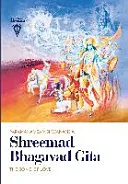
Shreemad Bhagavad Gita
 73
73

Shreemad Bhagavad Gita
The 2016 publication of the Shreemad Bhagavad Gita arrives without the centuries of accumulated commentary that typically frame this foundational text. This edition, while presenting the verses clearly, lacks the scholarly apparatus or interpretive guides that often aid readers in navigating its dense philosophical landscape. Its strength lies in its direct presentation of Krishna's teachings to Arjuna, particularly the discourse on performing one's duty (dharma) without attachment to outcomes. However, without historical context or scholarly introductions, new readers might find themselves adrift in its complex cosmology and ethical imperatives. The concept of 'nishkam karma' (action without desire for fruit) is powerfully conveyed, but its practical application, especially in the face of profound existential crisis as depicted in Chapter 1, remains challenging to grasp solely from the translated verses. This edition serves as a stark encounter with the text itself, demanding significant prior knowledge or dedicated self-study to fully appreciate its depth.
📝 Description
73
The Shreemad Bhagavad Gita, a section of the Mahabharata, presents a dialogue on duty and devotion.
This scripture is a philosophical conversation between Prince Arjuna and Lord Krishna, his charioteer, set on the battlefield of Kurukshetra. Arjuna faces a moral crisis, and Krishna's teachings address his quandaries concerning duty, devotion, knowledge, and action. The text delves into the nature of the soul, the divine, and the way to achieve liberation.
Its verses are of interest to those who wish to understand key Hindu philosophical ideas, particularly how action and spirituality connect. Students of comparative religion, philosophy, and anyone seeking guidance on ethics and spiritual discipline will find its discourse valuable. It also speaks to readers familiar with Eastern philosophies or non-dualistic thought. The Gita's origins are placed between the 5th and 2nd centuries BCE, a period of significant Indian philosophical growth. It emerged alongside Upanishadic thought and ascetic traditions. Its later inclusion in the Mahabharata points to a long process of acceptance and canonization.
The Bhagavad Gita is a central text within the Hindu tradition, often studied alongside the Upanishads and Vedanta philosophy. Its teachings on the nature of Brahman (the ultimate reality) and the Atman (the self) resonate with concepts found in other esoteric traditions that explore the divine within the individual and the path to spiritual realization. The emphasis on different yogic paths provides a framework for understanding how one can achieve union with the divine through various practices and states of consciousness.
💡 Why Read This Book?
• Gain a direct understanding of 'Dharma' as a guiding principle for action, learning how to align personal duty with cosmic order, as exemplified by Arjuna's dilemma on the battlefield. • Explore the concept of 'Karma Yoga' and its practical application in performing actions without attachment to results, a method for achieving inner peace amidst life's challenges. • Grasp the essence of 'Bhakti Yoga', the path of devotion, and its role in transcending material desires through surrender and love for the divine, as expounded by Krishna.
⭐ Reader Reviews
Honest opinions from readers who have explored this book.
❓ Frequently Asked Questions
What is the central conflict presented in the Bhagavad Gita?
The central conflict is Arjuna's moral and existential crisis. As a warrior prince, he faces the prospect of fighting and potentially killing his own relatives and teachers on the battlefield of Kurukshetra, questioning the righteousness of his duty.
Who are the main speakers in the Bhagavad Gita?
The primary speakers are Lord Krishna, who acts as Arjuna's divine guide and charioteer, and Prince Arjuna, who poses the crucial questions about duty, life, and spirituality.
What is the significance of the battlefield setting in the Gita?
The battlefield of Kurukshetra serves as a metaphor for the human condition, representing the constant struggle between righteousness and unrighteousness, duty and personal desire, within an individual's life.
How does the Bhagavad Gita define 'Dharma'?
Dharma in the Gita refers to one's intrinsic nature, righteous duty, and the cosmic order. It's about fulfilling one's prescribed role in society and the universe with integrity and purpose.
What are the different paths to liberation (moksha) discussed in the Gita?
The Gita outlines several paths, including Karma Yoga (path of action), Jnana Yoga (path of knowledge), and Bhakti Yoga (path of devotion), suggesting they can lead to spiritual liberation.
Is the Bhagavad Gita only relevant to Hinduism?
While rooted in Hindu philosophy, the Gita's exploration of ethics, duty, self-knowledge, and the nature of existence holds universal appeal and is studied across various philosophical and spiritual traditions worldwide.
🔮 Key Themes & Symbolism
The Nature of Duty (Dharma)
The text centers on Arjuna's profound crisis concerning his duty as a warrior. It posits that 'dharma' is not merely social obligation but an intrinsic, often divinely ordained, responsibility. The Gita argues for performing one's prescribed duty (svadharma) with dedication, even when it involves difficult choices, as a means to spiritual progress and societal order. This concept challenges the notion of duty as a burden, reframing it as a sacred path.
Action Without Attachment (Karma Yoga)
A central to the Gita is the principle of 'nishkam karma' – acting without attachment to the fruits or consequences of one's actions. Lord Krishna instructs Arjuna that one can achieve spiritual purity and liberation by dedicating all actions to the divine and relinquishing personal desires for outcomes. This approach transforms mundane activities into spiritual practices, fostering equanimity and detachment from worldly gains or losses.
Devotion and Surrender (Bhakti Yoga)
The path of devotion, Bhakti Yoga, is presented as a direct and accessible route to the divine. The Gita emphasizes unwavering love, faith, and surrender to a personal God, often embodied by Krishna himself. This devotional stance allows the practitioner to overcome ego, fear, and material attachments, finding solace and ultimate union through heartfelt worship and dedication to the divine will.
The Eternal Soul (Atman)
Central to the Gita's philosophy is the concept of the Atman, the eternal, unchanging soul or self. Krishna explains that the physical body is temporary and subject to death, but the Atman is indestructible, unborn, and immortal. Understanding this distinction is presented as crucial for overcoming fear of death and for realizing one's true, divine nature, transcending the illusions of material existence.
💬 Memorable Quotes
Direct passages from the work, attributed to the author.
“You have a right to perform your prescribed duty, but you are not entitled to the fruits of your actions.”
— This iconic verse expresses the principle of Karma Yoga. It asserts that one's focus should be on the execution of righteous action itself, detached from any expectation of reward or recognition, thereby freeing the mind from the anxieties of outcome.
“One who sees inaction in action and action in inaction is intelligent among men.”
— This paradoxical statement refers to the yogi who acts with detachment. They are aware of the subtle workings of karma even in their stillness and can perform action without becoming entangled by it, demonstrating profound spiritual insight.
“Whatever is not moving, that is movement. Whatever is moving, that is not movement.”
— This is an interpretation of the concept that true stillness is found in non-attachment and the realization of the eternal, while constant physical activity can be a form of being bound or 'moving' in illusion. It points to a deeper, spiritual perception of reality.
“He who has faith begins to obtain spiritual knowledge.”
— This highlights the importance of faith (shraddha) as a prerequisite for spiritual understanding. It suggests that a receptive and believing mind is essential for grasping the deeper truths presented in the scripture, paving the way for wisdom.
💡 Key Ideas
Editorial paraphrase of the work's core concepts — not direct quotes.
The soul can never be cut into pieces by any weapon, nor can he be burned by fire, nor moistened by water, nor withered by the air.
This quote speaks to the eternal nature of the soul (Atman). It emphasizes that the true self is beyond the reach of physical destruction, highlighting its immaterial and indestructible essence, a core tenet for overcoming the fear of mortality.
🌙 Esoteric Significance
Tradition
The Bhagavad Gita is a central to Hindu Vedanta philosophy, which itself contains significant esoteric dimensions. It is not typically categorized within Western esoteric lineages like Hermeticism or Kabbalah but shares universal themes of inner transformation, divine union, and the illusory nature of material reality. Its esoteric aspect lies in its teachings on yogic practices, the subtle body, and the direct experience of the divine, accessible through specific disciplines of mind and spirit.
Symbolism
The battlefield of Kurukshetra symbolizes the inner human struggle between higher and lower nature. Lord Krishna, the divine charioteer, represents the indwelling divine consciousness or guru guiding the individual soul (Arjuna) through life's trials. The chariot itself can symbolize the body, the senses as horses, and the mind as the reins, requiring skillful control to work through the path of righteousness and spiritual realization.
Modern Relevance
Contemporary practitioners of yoga and meditation frequently draw upon the Gita's principles of Karma Yoga and mindfulness. Its emphasis on finding spiritual meaning in everyday actions and its sophisticated psychology of motivation and detachment resonate with modern self-help and spiritual growth movements. Thinkers and gurus continue to interpret its verses for guidance on ethical living, mental discipline, and achieving inner peace in a complex world.
👥 Who Should Read This Book
• Students of Eastern philosophy and comparative religion looking for primary source material on Hindu ethical and metaphysical thought. • Individuals interested in practical spiritual disciplines, seeking guidance on how to integrate action, knowledge, and devotion into daily life. • Seekers of self-understanding and inner peace who wish to explore concepts like duty, detachment, and the nature of the soul from an ancient, wisdom-based perspective.
📜 Historical Context
The Bhagavad Gita, a seminal text within Hindu philosophy, likely emerged between the 5th and 2nd centuries BCE, a period of intense philosophical ferment in India. It was later integrated into the epic Mahabharata, solidifying its canonical status. During its formative period, it coexisted with and responded to diverse intellectual currents, including the abstract speculations of the Upanishads and the ascetic practices of various renunciatory orders. Its teachings offered a synthesis, reconciling the paths of action (karma), knowledge (jnana), and devotion (bhakti) into a cohesive spiritual framework. While not subject to widespread censorship in antiquity, its interpretation has been a site of ongoing discourse, influencing schools of thought from Vedanta to modern yoga. Its enduring influence is such that it has been engaged with by scholars and spiritual seekers across millennia, shaping Indian thought profoundly.
📔 Journal Prompts
Arjuna's dilemma on the battlefield: Reflect on a moment where duty conflicted with personal inclination.
The principle of 'nishkam karma': Consider one daily activity and how to perform it with detachment from its outcome.
Krishna's discourse on the eternal soul: Contemplate the difference between the physical self and the unchanging essence.
The path of Bhakti Yoga: Explore how devotion to a higher ideal or principle can guide your actions.
The symbolism of the chariot: Analyze how you currently 'drive' your life's chariot – what controls the reins?
🗂️ Glossary
Dharma
One's duty, righteousness, moral law, or intrinsic nature. In the Gita, it refers to the specific responsibilities and righteous conduct expected of an individual based on their station and cosmic order.
Karma Yoga
The spiritual path of selfless action. It involves performing one's duties without attachment to the results, dedicating the actions to the divine, and maintaining equanimity.
Bhakti Yoga
The spiritual path of devotion. It emphasizes love, faith, and surrender to the Supreme Being as a means to achieve union and spiritual liberation.
Jnana Yoga
The spiritual path of knowledge. It involves the pursuit of wisdom and understanding of the true nature of reality, the self, and the divine through study and contemplation.
Atman
The eternal, unchanging self or soul within an individual. It is considered to be identical with Brahman (the ultimate reality) and is indestructible.
Moksha
Liberation or release from the cycle of birth, death, and rebirth (samsara). It represents the ultimate spiritual goal in many Indian religions.
Samsara
The continuous cycle of birth, death, and reincarnation, driven by karma. Liberation (moksha) is the escape from this cycle.