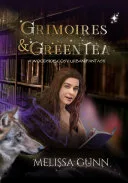
Grimoires and Green Tea
 83
83

Grimoires and Green Tea
Melissa Gunn's *Grimoires and Green Tea* offers a charming premise, situating Sibyl's inheritance of a magical bookshop and its resident grumpy grimoire within a relatable struggle for independence. The author skillfully juxtaposes the whimsical demands of magical literature with the very real problem of rodent control in an old building. One particularly effective scene involves Sibyl attempting to decipher an ancient incantation while simultaneously fending off a persistent mouse, highlighting the novel's unique blend of the arcane and the absurd.
However, the pacing occasionally falters, particularly in the middle section where the cataloging of books threatens to overshadow the narrative's magical momentum. The introduction of a vampire, while intriguing, feels somewhat underdeveloped within the existing plot threads. Despite these minor stumbles, the novel ultimately succeeds due to its endearing protagonist and the palpable atmosphere of the enchanted bookshop. It’s a delightful, if occasionally uneven, exploration of finding one's place amongst ancient magic and modern anxieties.
📝 Description
83
Published in 2025, Grimoires and Green Tea follows Sibyl's inheritance of a magical bookshop.
Melissa Gunn's 2025 novel, Grimoires and Green Tea, introduces Sibyl, a young woman who unexpectedly inherits a magical bookshop. The story centers on her adjustment to this new responsibility, which includes tending to a cantankerous grimoire and maintaining the shop itself. Gunn weaves together the practical challenges of starting a new business with the enchantment of Sibyl's new surroundings.
The narrative appeals to readers who enjoy cozy fantasy narratives that blend the ordinary with the extraordinary. It focuses on character development and the atmosphere of magical settings. Those who appreciate stories about enchanted objects and the gradual revelation of magical mysteries will find Sibyl's journey particularly satisfying. The book draws on familiar tropes of inherited magical power and the integration of the fantastical into daily life.
Grimoires and Green Tea engages with the long history of grimoires, magical texts that have been a part of Western esotericism since at least the medieval period. While a contemporary fantasy, it taps into a lineage of fascination with spellbooks and arcane knowledge. The novel also touches on themes common in esoteric traditions, such as the archetype of the reluctant inheritor of magical power and the idea of magical objects possessing distinct personalities. It situates these elements within a modern setting, reflecting a contemporary interest in reinterpreting older magical practices.
💡 Why Read This Book?
• Gain an understanding of how magical texts, like the grumpy grimoire in the book, can be personified and require unique approaches to management, offering a fresh perspective on sentient artifacts. • Experience the charm of a modern magical bookshop setting, as vividly depicted by Melissa Gunn, and learn how such spaces can serve as portals to arcane knowledge. • Discover how everyday challenges, such as dealing with pests or managing a new business, can be humorously intertwined with supernatural elements, as Sibyl navigates her new life.
⭐ Reader Reviews
Honest opinions from readers who have explored this book.
❓ Frequently Asked Questions
What is the primary genre of Grimoires and Green Tea?
Grimoires and Green Tea is primarily a contemporary fantasy novel, often described as 'cozy fantasy'. It blends magical elements and enchanted objects with relatable everyday challenges faced by the protagonist, Sibyl.
Who is the author of Grimoires and Green Tea?
The author of Grimoires and Green Tea is Melissa Gunn. The book was first published in 2025.
What kind of magical elements can I expect in the book?
Readers can expect a magical bookshop, a sentient and 'grumpy' grimoire, and potentially other supernatural beings and enchantments woven into the narrative fabric.
Is Grimoires and Green Tea suitable for beginners in fantasy literature?
Yes, its focus on character, a relatable protagonist, and a blend of the mundane and magical makes it accessible for readers new to the fantasy genre.
What is the central conflict for the protagonist, Sibyl?
Sibyl's central conflict involves inheriting a magical bookshop and apartment, requiring her to balance learning to run the business, managing a temperamental grimoire, and dealing with practical issues like pests.
When was Grimoires and Green Tea first published?
Grimoires and Green Tea was first published on August 17, 2025.
🔮 Key Themes & Symbolism
Sentient Magical Artifacts
The novel looks at the concept of magical objects possessing distinct personalities and wills. The grumpy grimoire Sibyl inherits is not merely a tool but an entity requiring negotiation and understanding. This theme explores the dynamic relationship between magic users and their tools, suggesting that true mastery involves recognizing and respecting the inherent nature of magical artifacts, moving beyond a purely utilitarian view.
Inheritance and Responsibility
Sibyl's unexpected inheritance of the bookshop forms the core of the narrative. This theme examines the weight of legacy and the challenges of stepping into a role one may not feel fully prepared for. The book explores how inheriting not just a business but also its magical contents and resident entities forces personal growth and adaptation, testing Sibyl's resilience and resourcefulness.
The Mundane and the Mystical
A central tenet of the book is the seamless integration of the magical with the ordinary. Sibyl must manage the practicalities of running a shop—cataloging, cleaning, dealing with pests—alongside the arcane responsibilities of a sentient grimoire. This juxtaposition highlights how magic can exist within, and often complicate, the everyday, suggesting that enchantment is not separate from reality but an interwoven aspect of it.
Finding One's Place
The narrative follows Sibyl's journey of self-discovery as she navigates her first venture away from home. The magical bookshop becomes a crucible for her personal development, offering a space where she can forge her own identity amidst ancient magic and new challenges. This theme appeals to anyone seeking to establish independence and find their unique path in the world.
💬 Memorable Quotes
Direct passages from the work, attributed to the author.
“Cataloging spells felt surprisingly similar to cataloging rare first editions.”
— This highlights the novel's blend of the mundane and the magical. It implies that the skills needed for dealing with arcane knowledge are not entirely dissimilar to those required for managing a traditional bookstore.
“She was torn between exhilaration and sheer panic.”
— This captures Sibyl's initial emotional state upon inheriting the bookshop. It reflects the common feeling of being overwhelmed by a significant new opportunity or responsibility.
“The apartment above the shop was her sanctuary, albeit a drafty one.”
— This provides a grounded, slightly imperfect description of Sibyl's living space, emphasizing the blend of comfort and the practical challenges of her new, potentially old, dwelling.
“A vampi… was that a new customer or a new problem?”
— This hints at the introduction of more complex supernatural elements and the ambiguity of whether they represent opportunities or threats in Sibyl's burgeoning magical world.
💡 Key Ideas
Editorial paraphrase of the work's core concepts — not direct quotes.
The grimoire sulked on the shelf, radiating an aura of profound displeasure.
This quote vividly personifies the magical book, suggesting it has emotions and a distinct, negative attitude. It sets a humorous yet challenging tone for Sibyl's interactions with her inheritance.
🌙 Esoteric Significance
Tradition
This work engages loosely with the Western Esoteric tradition, particularly its fascination with grimoires and the concept of inherent magical power within objects and places. It doesn't adhere strictly to any single lineage like Hermeticism or Kabbalah but draws on the popular imagination surrounding these traditions, focusing on the 'idea' of a magical bookshop and its sentient contents as a modern narrative device.
Symbolism
Key symbols include the bookshop itself, representing a repository of knowledge, potential, and hidden worlds. The 'grumpy grimoire' symbolizes challenging aspects of magical inheritance or power that require careful handling and understanding, rather than outright control. The presence of a vampire hints at darker, more ancient forces that may exist on the periphery of the established magical order.
Modern Relevance
Contemporary readers interested in the resurgence of interest in witchcraft, folklore, and magical systems find resonance in works like this. It speaks to modern desires for enchantment in everyday life and provides a fictional entry point into exploring concepts associated with magical texts and practitioners, making esoteric ideas more accessible and relatable to a broad audience.
👥 Who Should Read This Book
• Aspiring authors of cozy fantasy seeking to understand how to blend mundane challenges with magical elements effectively. • Readers interested in fictional explorations of magical bookshops and the idea of sentient arcane texts, offering a lighthearted yet engaging narrative. • Enthusiasts of contemporary fantasy who appreciate character-driven stories with a focus on personal growth and discovery within a magical setting.
📜 Historical Context
Published in 2025, Melissa Gunn's *Grimoires and Green Tea* emerges within a contemporary literary landscape that continues to explore and reimagine the occult and magical traditions. While the book itself is fiction, it taps into a centuries-long fascination with grimoires, which emerged as distinct texts in Europe from at least the late medieval period, often compiled from earlier magical sources and treatises. These were not just theoretical works but practical guides for ritual and spellcraft, circulating within esoteric circles. The genre of contemporary fantasy often engages with these historical forms, adapting their perceived power and mystery for modern audiences. The work can be seen as part of a broader trend in speculative fiction that revisits folkloric and alchemical themes, a lineage that includes authors like Leonora Carrington and more contemporary writers focused on magical realism and urban fantasy, offering a new lens through which to view these ancient practices.
📔 Journal Prompts
Sibyl's management of the grumpy grimoire: What personal qualities are revealed through her interactions?
The bookshop as a sanctuary: How does the physical space influence Sibyl's emotional state?
Cataloging spells versus rare books: What parallels can be drawn between these two tasks?
The fear of a vampire's arrival: What anxieties does this potential new character represent?
Sibyl's initial feelings of exhilaration and panic: Reflect on a time you experienced similar conflicting emotions regarding a new opportunity.
🗂️ Glossary
Grimoire
A textbook of magic, typically containing instructions on how to create magical objects, perform rituals, cast spells, and invoke supernatural entities. Historically, these texts date back to at least the medieval period in Europe.
Sentient Artifact
An inanimate object that possesses consciousness, awareness, or personality. In magical contexts, this often applies to enchanted items that can think, feel, or act independently.
Magical Bookshop
A retail establishment that sells books, but with the added element of being enchanted or containing magical properties, often serving as a nexus for arcane knowledge or supernatural activity.
Vampire
A mythical or folkloric being who subsists by feeding on the life force (generally in the form of blood) of others. Often depicted as undead creatures with supernatural powers.
Cataloging
The process of systematically listing and describing items, such as books or artifacts, for the purpose of organization, identification, and retrieval. In this context, it applies to both mundane and magical texts.
Esoteric
Intended for or likely to be understood by only a small number of people with a specialized knowledge or interest. Often refers to mystical, occult, or spiritual teachings.
Benefactors
People who give help, especially financial help, to a person or cause. In the book, these are the individuals who left Sibyl the magical bookshop.