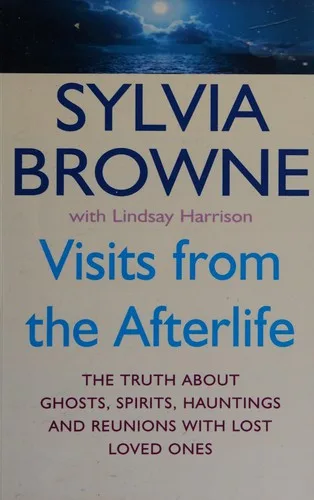
Visits from the Afterlife
 80
80

Visits from the Afterlife
Sylvia Browne's "Visits from the Afterlife" offers a direct, no-frills account of her alleged interactions with the deceased. The strength of the book lies in its straightforward presentation of Browne's mediumistic experiences, which are often detailed and compelling for those predisposed to believe. For instance, the chapter recounting a reading for a grieving parent, where Browne allegedly conveyed specific, private details, is particularly striking in its narrative. However, the work suffers from a lack of critical distance; it presents Browne's pronouncements as fact without robust corroboration or engagement with counterarguments, which limits its appeal to a more discerning reader. The absence of a chapter specifically addressing the potential for misinterpretation or the psychological underpinnings of grief-induced perception is a notable omission. Ultimately, "Visits from the Afterlife" serves as a testament to Browne's conviction and her ability to connect with a specific audience seeking comfort through mediumship.
📝 Description
80
Sylvia Browne and Lindsay Harrison's 2003 book details psychic mediumship and communication with the deceased.
Published in 2003, "Visits from the Afterlife" by Sylvia Browne and Lindsay Harrison collects accounts and perspectives on communicating with those who have passed on. The book uses psychic mediumship as its framework, describing Browne's claimed interactions and insights from the spirit world. Its goal is to make spiritual connection less mysterious and to help those grieving or wondering about life after death. The content is organized around case studies and Browne's explanations of how she receives and interprets messages from deceased individuals.
This work is mainly for people open to or actively interested in mediumship and the idea of life after physical death. It will appeal to those who have experienced loss and seek comfort or a feeling of continued connection with departed loved ones. Readers interested in parapsychology, spiritualism, and personal stories suggesting psychic phenomena will find relevant material. It is also suitable for those curious about the methods and experiences of well-known psychics like Sylvia Browne, and her way of channeling information from the spirit realm.
Published in 2003, "Visits from the Afterlife" fits within the spiritualist tradition, which has a history of claims about communication between the living and the dead. This book aligns with a broader interest in paranormal phenomena that saw a rise in popularity through various media. Sylvia Browne was a notable figure in this field, whose work often engaged with questions of spirituality outside of traditional religious structures, placing her writings in a space often debated by both believers and skeptics regarding the empirical validity of psychic claims.
💡 Why Read This Book?
• Understand Sylvia Browne's specific methodology for spirit communication, as detailed in her accounts, offering a practical look into her approach to mediumship. • Gain insight into the concept of afterlife communication as presented by a prominent psychic, providing a particular perspective on how spirits might convey messages. • Explore case studies of alleged spirit interactions, offering concrete examples that may provide comfort or a different lens for understanding grief and loss.
⭐ Reader Reviews
Honest opinions from readers who have explored this book.
❓ Frequently Asked Questions
What is Sylvia Browne's main claim in "Visits from the Afterlife"?
Sylvia Browne's central claim is that she can communicate with spirits of deceased individuals, acting as a medium to relay messages, guidance, and comfort from the afterlife to the living.
When was "Visits from the Afterlife" first published?
The book "Visits from the Afterlife" was first published in 2003.
What kind of information does Browne claim to receive from spirits?
Browne claims to receive a range of information, including personal details about the deceased, messages of love and reassurance for the living, and sometimes guidance or warnings.
Does the book offer evidence for its claims?
The book primarily offers anecdotal evidence in the form of Browne's own recounted experiences and readings. It presents these as compelling accounts rather than empirical proof.
Who is Lindsay Harrison in relation to this book?
Lindsay Harrison is credited as a co-author of "Visits from the Afterlife," working with Sylvia Browne to compile and present her experiences and teachings.
Is "Visits from the Afterlife" suitable for skeptics?
The book is likely more appealing to those open to or already believing in psychic phenomena. Skeptics may find the anecdotal nature and lack of scientific validation challenging.
🔮 Key Themes & Symbolism
Mediumship as Communication
The core of "Visits from the Afterlife" revolves around the concept of mediumship as a viable channel for inter-dimensional communication. Browne details her perceived ability to bridge the gap between the physical world and the spirit realm, acting as an interpreter for those who have transitioned. The book emphasizes that messages from the afterlife are not random but often carry specific meaning, love, and guidance intended for the living. This theme explores the mechanics of how such communication supposedly occurs, from receiving impressions to conveying them to the recipient.
The Nature of the Spirit World
Browne's work posits the existence of a tangible spirit world, a continuation of consciousness after physical death. "Visits from the Afterlife" describes this realm not as an abstract concept but as a place where spirits retain their identities and can interact with mediums. The book suggests this afterlife is a place of peace and understanding, where spirits are aware of the concerns and grief of those left behind. It offers a comforting vision of continued existence, accessible through specific spiritual sensitivities.
Grief, Closure, and Connection
A significant underlying theme is the role of mediumship in helping individuals cope with loss. "Visits from the Afterlife" presents the idea that communication with the deceased can provide profound closure, alleviate suffering, and reaffirm the enduring bond between souls. Browne's alleged readings often aim to offer reassurance that loved ones are at peace and continue to offer support from the other side. This theme speaks to the human need for connection and the desire to believe that death is not an absolute end.
Psychic Perception and Interpretation
The book looks at the subjective nature of psychic perception. Browne explains how she interprets the impressions, visions, and feelings she receives from spirits. This theme highlights the personal and often symbolic language of spiritual messages and the medium's role in translating these into understandable human terms. It touches upon the development and use of one's own intuitive faculties, suggesting that while some are naturally gifted mediums, elements of psychic reception are accessible to many.
💬 Memorable Quotes
Direct passages from the work, attributed to the author.
“The spirits are always around us, wanting to help.”
— This statement captures the book's premise that the afterlife is not distant or inaccessible, but actively engaged with the lives of the living, offering a perspective of constant spiritual support.
“When you feel a presence, it's not just your imagination.”
— This highlights Browne's assertion that perceived spiritual visitations are genuine encounters with entities from the spirit world, not merely psychological phenomena.
“The hardest part is bringing back messages of love, but also of warning.”
— This suggests the dual nature of spirit communication, where mediums are tasked not only with conveying comfort but also with relaying potentially difficult information from the other side.
“Death is just a change of clothes.”
— An interpretation of the afterlife, suggesting that the spirit (consciousness) remains while the physical body is shed, much like changing garments.
“They show me symbols that mean something to you.”
— This explains Browne's technique of receiving symbolic imagery from spirits, which she then interprets as relevant to the person she is reading for.
🌙 Esoteric Significance
Tradition
While not strictly aligned with a single esoteric lineage, "Visits from the Afterlife" draws heavily from the modern Spiritualist tradition, which emphasizes direct communication with spirits. It shares common ground with concepts found in Theosophy regarding the nature of the afterlife and the persistence of consciousness. Browne's mediumistic practices also echo elements of trance mediumship seen in various esoteric circles throughout the 20th century, positioning her as a contemporary channel for perceived spiritual truths outside conventional religious doctrines.
Symbolism
The book utilizes symbolism as a key aspect of spirit communication. For instance, specific animals or colors are often presented as direct messages from spirits, carrying particular meanings relevant to the recipient's situation. Light is frequently depicted as a symbol of the spirit world and the presence of departed loved ones, representing peace and transition. Water or flowing elements may also appear, symbolizing the continuous flow of life and consciousness beyond physical death, representing transition and purification.
Modern Relevance
Sylvia Browne's work, including "Visits from the Afterlife," continues to resonate with individuals seeking spiritual guidance outside of established religious frameworks. Her approach influences contemporary mediums and spiritual coaches who emphasize direct personal connection with the spirit world. The book's exploration of grief and connection remains relevant for many in the modern era, particularly within circles exploring alternative spirituality and the perennial questions surrounding life, death, and consciousness.
👥 Who Should Read This Book
• Individuals grieving a loss who are seeking comfort and a sense of continued connection with departed loved ones through mediumship. • Students of parapsychology and psychic phenomena interested in understanding the practical accounts and methodologies of a prominent 21st-century medium like Sylvia Browne. • Those exploring alternative spiritual beliefs and seeking perspectives on the afterlife that differ from traditional religious doctrines, focusing on direct communication.
📜 Historical Context
Published in 2003, "Visits from the Afterlife" arrived amidst a flourishing interest in paranormal communication and psychic phenomena, partly fueled by media portrayals. Sylvia Browne was a significant public figure in this domain, known for her television appearances and prolific writing, including numerous books that predated this one. The book's concepts align with the broader Spiritualist movement, which gained traction in the 19th century and continued to evolve. Browne's work, however, operated in a more contemporary landscape, where it was frequently contrasted with the more academic or skeptical approaches to consciousness studies. While figures like parapsychologist J.B. Rhine were laying groundwork for studying psychic phenomena scientifically decades earlier, Browne's approach was decidedly anecdotal and experiential. Reception was largely divided: believers found solace and validation, while skeptics pointed to the lack of verifiable evidence and Browne's history of controversial or inaccurate predictions, such as her incorrect assertion that Madeline McCann was dead.
📔 Journal Prompts
Reflect on the concept of 'spirit communication' as presented by Browne.
Analyze a perceived 'symbol' from a dream or waking experience, considering its potential spiritual meaning.
Consider the role of 'closure' in the grieving process and how mediumship might facilitate it.
Examine the idea of the 'spirit world' as a place of continued existence and awareness.
Document personal feelings of 'presence' and explore their possible origins, whether psychological or spiritual.
🗂️ Glossary
Medium
An individual believed to be able to communicate with the spirits of the dead or with other beings in the spirit world, acting as an intermediary between these realms.
Spirit World
A realm or dimension believed to exist beyond the physical world, where the consciousness or souls of deceased individuals reside after death.
Channeling
The process by which a medium is believed to receive and convey messages, information, or energy from a spirit entity or higher consciousness.
Psychic Reading
A session where a psychic or medium purports to access information about a person's life, past, present, or future, often by communicating with spirits or using intuitive abilities.
Afterlife
The existence or believed existence of consciousness or a soul after the death of the physical body; the realm or state of being following death.
Closure
A sense of resolution or emotional acceptance following a significant loss or traumatic event, often sought through communication or understanding.
Vibration
In esoteric contexts, often refers to the energetic frequency of a person, place, or entity, with higher vibrations typically associated with spiritual or positive states.
🔮 Readers Also Liked
Browse all →








More by Sylvia Browne, Lindsay Harrison
All books →





More Free Occult Philosophy Books
View all →