Visions
 78
78

Visions
Jung's engagement with Christiana Morgan's visions, as documented in this 1997 publication, offers a powerful, if occasionally dense, exploration of the psyche's visual and symbolic language. The integration of Morgan's striking paintings with Jung's seminar transcriptions provides a rare, almost alchemical, fusion of raw visionary material and analytical interpretation. One particularly compelling aspect is the detailed exposition of how Morgan's personal quest mapped onto universal mythological structures, demonstrating the collective dimension of individual psychic events. However, the sheer volume of seminar material can make it challenging for the uninitiated to follow the precise argumentative thread at times. The strength lies in its unfiltered presentation of both the visionary experience and the analytical process. It serves as a critical document for understanding the practical application of Jung's theories to extraordinary psychic phenomena, moving beyond purely clinical case studies.
📝 Description
78
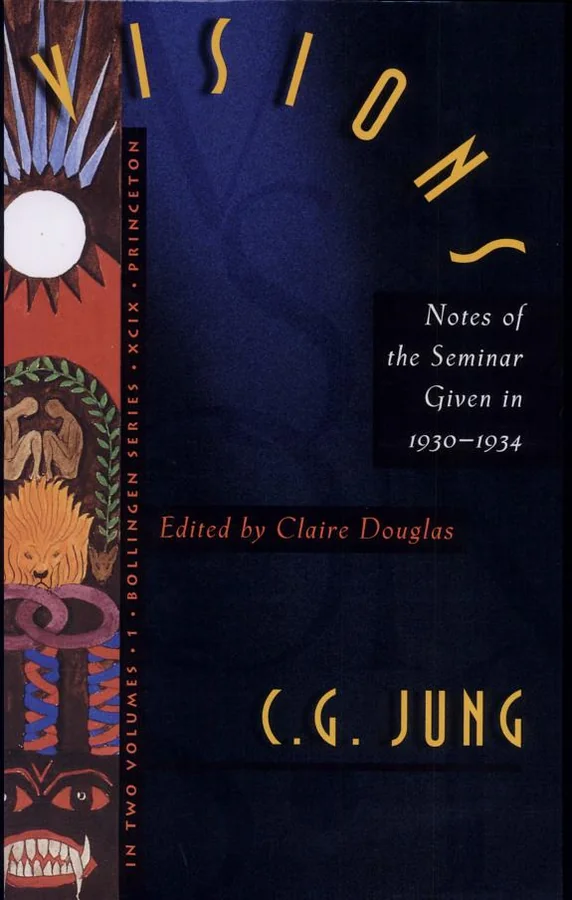
Carl Jung's 1997 publication *Visions* presents seminar notes on Christiana Morgan's visionary experiences.
This book collects transcribed seminar notes from Carl Gustav Jung concerning the visionary experiences of Christiana Morgan. Morgan's quest, documented through her words and paintings, provided Jung with substantial material for his work on archetypal psychology. The publication, released in 1997, integrates Jung's analytical framework with Morgan's original visual and textual contributions, offering a look into the process of understanding the unconscious.
*Visions* is suited for students of analytical psychology, comparative mythology, and esoteric philosophy. It will interest those who study the connections between art, spirituality, and psychological inquiry. Readers curious about the evolution of Jung's theories, particularly his engagement with Gnostic and Eastern traditions, will find relevant discussions. The work also appeals to individuals drawn to the visual expression of inner states and archetypal imagery.
Emerging from Carl Jung's seminars in Zurich, *Visions* engages with the intersection of personal visionary experience and psychological theory. The book draws on Christiana Morgan's accounts and artwork, placing them within Jung's developing concepts of the collective unconscious and archetypes. Its publication in 1997 occurred during a period of renewed interest in Jungian thought, particularly its connections to cross-cultural spiritual practices and mythological research, aligning with intellectual currents that explored Gnostic and Eastern traditions.
💡 Why Read This Book?
• Gain insight into the direct application of Jungian analytical psychology to visionary experience, as demonstrated by the detailed seminar notes from Zurich concerning Christiana Morgan's quest. • Understand the visual language of the unconscious through the direct juxtaposition of Christiana Morgan's paintings and Jung's interpretations, revealing archetypal parallels. • Explore the cross-cultural resonance of inner experiences by examining the connections drawn between Western myths and Eastern yoga, as detailed in the seminars conducted by Carl Jung.
⭐ Reader Reviews
Honest opinions from readers who have explored this book.
❓ Frequently Asked Questions
When was Carl Jung's 'Visions' first published for the public?
The book 'Visions', containing Jung's seminar notes on Christiana Morgan's experiences, was first made available to the public in 1997.
What is the relationship between Carl Jung and Christiana Morgan in this book?
Christiana Morgan was a student of Jung whose visionary experiences formed the basis for seminars he conducted in Zurich. Jung used her accounts and artwork as material for his analytical work.
What kind of artwork is featured in 'Visions'?
The book includes color reproductions of Christiana Morgan's paintings, which visually represent her inner archetypal encounters and visionary quest.
Does 'Visions' discuss Eastern spiritual traditions?
Yes, the book explores archetypal parallels between Morgan's visions and elements found in Eastern yoga traditions, linking them to Western myth.
How many volumes does 'Visions' consist of?
The publication of 'Visions' is presented in two volumes, offering a comprehensive collection of the seminar notes and Morgan's artwork.
What is the primary focus of Jung's seminars documented in 'Visions'?
The seminars primarily focus on analyzing and interpreting Christiana Morgan's visionary experiences, exploring their archetypal significance and connection to mythology and spiritual traditions.
🔮 Key Themes & Symbolism
Archetypal Encounters
The book meticulously documents Jung's analysis of Christiana Morgan's visions, identifying recurring archetypal figures and patterns that emerge from the unconscious. These are not merely personal fantasies but manifestations of the collective unconscious, mirroring ancient myths and spiritual narratives. Jung sought to demonstrate how these universal psychic structures inform individual experience, providing a framework for understanding profound inner states and their symbolic expression through art and language.
The Visionary Quest
Central to 'Visions' is the concept of the personal vision quest as a pathway to psychological integration. Morgan's deliberate engagement with her inner world, recorded through both text and painting, serves as a case study. Jung's seminars explore the transformative potential of such journeys, highlighting how confronting the archetypal realm can lead to individuation and a deeper connection with the self, moving beyond ordinary consciousness.
Cross-Cultural Symbolism
A significant aspect of the work lies in its comparative approach, drawing explicit parallels between Morgan's visionary experiences and symbols found in both Western mythology and Eastern yogic traditions. This highlights Jung's belief in the universal nature of the human psyche and its symbolic language. The book illustrates how distinct cultural expressions can arise from shared archetypal foundations, offering a unified perspective on spiritual and psychological phenomena.
Art as Psychological Expression
The visual dimension provided by Christiana Morgan's paintings is crucial. 'Visions' emphasizes the power of art as a direct conduit for expressing the contents of the unconscious. Jung's analysis of these artworks reveals how color, form, and composition serve as symbolic representations of complex psychological states and archetypal energies, underscoring the vital role of creative expression in the process of self-discovery and integration.
💬 Memorable Quotes
Direct passages from the work, attributed to the author.
“Morgan's paintings...reveal archetypal parallels with western myth and eastern yoga.”
— This observation highlights the book's core achievement: demonstrating how individual, subjective visionary experiences can contain universal symbolic patterns that resonate across diverse cultural and spiritual traditions.
“Inner archetypal encounters recorded in words and paintings.”
— This concisely describes the dual nature of Christiana Morgan's contribution, emphasizing both the textual and visual documentation of her profound psychic experiences that formed the basis of Jung's seminars.
“Jung later used [Morgan's experiences] as the basis for seminar work in Zurich.”
— This points to the academic and analytical context of the material, indicating that Morgan's visions were not just personal accounts but significant data for developing and illustrating Jung's theories on the collective unconscious.
“First time available to the public.”
— This signifies the historical importance of the 1997 publication, marking the initial release of previously private or restricted seminar materials to a wider audience interested in Jungian psychology.
“Transcriptions of the seminar notes combined with color reproductions of Morgan's paintings.”
— This describes the physical composition of the book, emphasizing the direct presentation of Jung's analytical discourse alongside the original artwork that inspired it.
🌙 Esoteric Significance
Tradition
This work is deeply rooted in the analytical psychology tradition founded by Carl Gustav Jung, which itself draws heavily from Gnostic, Hermetic, and alchemical symbolism. It explores the psyche's relationship with archetypal forces, aligning with esoteric philosophies that posit a connection between inner spiritual realities and external symbolic expressions. While not strictly a manual of esoteric practice, it provides a psychological framework for understanding the symbolic language common to many mystical traditions.
Symbolism
Key symbols include the divine feminine, often represented in Morgan's paintings, and the archetype of the Wise Old Man within Jung's interpretations. The serpent motif, prevalent in Gnostic and yogic traditions, likely appears as a symbol of transformation and psychic energy. The interplay between light and shadow in the visions also speaks to the alchemical process of integrating opposing forces within the psyche, a common theme in esoteric thought.
Modern Relevance
Contemporary thinkers in depth psychology, mythology studies, and transpersonal psychology continue to draw upon Jung's work, including materials like *Visions*. Artists, therapists, and spiritual seekers exploring archetypal imagery, dream analysis, and the integration of the unconscious find resonance with Jung's methodologies and the raw material presented here. The focus on visionary experience aligns with modern interest in consciousness studies and the potential for inner exploration through creative and symbolic means.
👥 Who Should Read This Book
• Students of Analytical Psychology: Those studying Jungian theory will find direct application of concepts like archetypes, the collective unconscious, and individuation through detailed seminar analysis. • Comparative Mythology Enthusiasts: Readers interested in cross-cultural symbolic patterns will appreciate the connections drawn between Morgan's visions, Western myths, and Eastern yoga traditions. • Artists and Creatives: Individuals exploring the intersection of art and the psyche can gain inspiration from Christiana Morgan's paintings and Jung's interpretation of visual symbolic language.
📜 Historical Context
The publication of *Visions* in 1997 placed Jung's mid-20th-century seminar work on Christiana Morgan's visions before a new generation. This occurred during a period of significant resurgence and popularization of Jungian thought, extending beyond clinical psychology into broader cultural and spiritual discourse. The intellectual currents of the time included a growing interest in comparative mythology, spirituality, and the intersection of psychology and art. Jung's work engaged with Gnosticism and Eastern traditions, fields explored concurrently by scholars like Mircea Eliade and Joseph Campbell. While Jung's analytical approach was well-established, the detailed examination of such intensely personal and visually rich visionary material, particularly through the lens of a female associate, offered a distinct perspective within the broader field of depth psychology, differentiating it from the more empirically focused psychological schools of the era.
📔 Journal Prompts
The archetypal parallels between Morgan's visions and Western myth.
Christiana Morgan's recorded visionary experiences.
Jung's seminar notes from Zurich.
The symbolic language of the unconscious as expressed in Morgan's paintings.
The concept of the personal vision quest.
🗂️ Glossary
Archetype
Universal, archaic patterns and images that derive from the collective unconscious and are the psychic counterpart of instinct. They are innate predispositions that structure our experience and perception.
Collective Unconscious
A concept developed by Jung, referring to the part of the unconscious mind that is common to all humanity, containing inherited psychic structures and memories expressed through archetypes.
Individuation
The psychological process by which a person becomes an individual, integrating conscious and unconscious aspects of the self to achieve wholeness and self-realization.
Vision Quest
A spiritual or psychological journey undertaken to gain insight, wisdom, or a connection with the divine or the unconscious. In this context, it refers to Christiana Morgan's documented experiences.
Symbolism
The use of images, objects, or actions to represent abstract ideas or concepts. In Jungian psychology, symbols are crucial for understanding the language of the unconscious.
Gnosticism
A diverse set of religious and philosophical beliefs and systems that originated in the first century CE, emphasizing spiritual knowledge (gnosis) for salvation.
Yoga
A group of physical, mental, and spiritual practices or disciplines originating in ancient India, aimed at controlling the mind and senses and achieving a state of spiritual insight and tranquility.
This book appears in 1 collection
🔮 Readers Also Liked
Browse all →









From the “Jungian Psychology” Collection
View all →






More Free Occult Philosophy Books
View all →