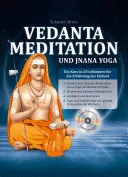
Vedanta Meditation und Jnana Yoga
 75
75

Vedanta Meditation und Jnana Yoga
Sukadev Bretz’s Vedanta Meditation und Jnana Yoga offers a methodical, 20-week immersion into the non-dual philosophy of Vedanta and the path of knowledge, Jnana Yoga. Bretz, a veteran teacher and founder of Yoga Vidya, distills over four decades of practice and thirty years of teaching into this guide. Its strength lies in its systematic, step-by-step approach, making complex philosophical ideas digestible for the dedicated student. A notable passage details the concept of *neti neti* (not this, not this) as a tool for distinguishing the real from the unreal, a powerful yet demanding practice. However, the book’s structured format, while beneficial for progression, can sometimes feel less like an exploration and more like a syllabus. It addresses the theoretical underpinnings but occasionally prioritizes instruction over evocative prose. For those seeking a disciplined path to understanding the self, it provides a robust framework. The work is a valuable resource for disciplined inquiry.
📝 Description
75
Sukadev Bretz's Vedanta Meditation und Jnana Yoga offers a structured 20-week path to understanding unity.
This manual lays out a 20-week curriculum on Vedanta and Jnana Yoga. It details the philosophy of unity and the path of knowledge, drawing from Sukadev Bretz's personal practice and teaching experience. The book aims to help readers understand existence more deeply and live more meaningfully.
It is written for individuals interested in philosophical questions and metaphysical ideas. Those curious about reality's nature and seeking a framework for spiritual growth will find its systematic approach useful. Beginners to Vedanta and Jnana Yoga will find the program accessible.
The text covers Vedanta's core ideas like Brahman, the ultimate reality, and Atman, the individual soul, emphasizing their non-dual nature. It also details Jnana Yoga's methods, such as viveka (discrimination) and vairagya (detachment), as tools to overcome ignorance. Practical exercises for meditation and contemplation are included.
Vedanta Meditation und Jnana Yoga connects to the long tradition of Indian spiritual thought that gained wider attention in the West in the late 19th and 20th centuries. This lineage includes figures who introduced concepts of unity and self-knowledge to international audiences. The book makes these complex ideas practical for a modern audience, continuing the effort to present ancient philosophical systems in an accessible way for personal development.
💡 Why Read This Book?
• You will gain a practical 20-week program for understanding the Vedanta concept of non-duality, a core principle distinguishing it from dualistic philosophies, allowing for a structured approach to spiritual insight. • You will learn the Jnana Yoga technique of *viveka* (discrimination) as taught by Sukadev Bretz, enabling you to differentiate the eternal Self from transient phenomena, a method central to this specific path. • You will explore the Vedantic idea of Brahman, the ultimate reality, through the lens of Sukadev Bretz's extensive teaching experience since the 1990s, offering a contemporary and accessible interpretation of this ancient concept.
⭐ Reader Reviews
Honest opinions from readers who have explored this book.
❓ Frequently Asked Questions
What is Vedanta and how does this book explain it?
Vedanta is a school of Hindu philosophy that explores the nature of ultimate reality and the self. This book, Vedanta Meditation und Jnana Yoga, introduces its core principle of non-duality, explaining concepts like Brahman and Atman through a 20-week course.
What is Jnana Yoga and what practices does the book suggest?
Jnana Yoga is the path of knowledge and wisdom. The book outlines practices rooted in discrimination (*viveka*) and self-inquiry, guiding readers to discern the real from the unreal through meditation and contemplation.
Who is Sukadev Bretz and what is his background?
Sukadev Bretz is the founder and director of Yoga Vidya, a prominent yoga center in Germany. He has over 40 years of personal yoga practice and more than 30 years of experience teaching yoga and meditation.
Is this book suitable for complete beginners in philosophy?
Yes, the book is structured as a 20-week course, making it accessible for beginners interested in Vedanta and Jnana Yoga. It systematically introduces foundational concepts and practices.
What is the primary goal of studying Vedanta and Jnana Yoga as presented here?
The primary goal is to achieve self-realization and understand the unity of existence. The book guides readers towards overcoming ignorance and experiencing the true nature of the Self through philosophical study and contemplative practice.
When was Vedanta Meditation und Jnana Yoga first published?
Vedanta Meditation und Jnana Yoga was first published on February 9, 2026, making it a contemporary guide to ancient philosophical traditions.
🔮 Key Themes & Symbolism
The Philosophy of Unity
The work centers on Vedanta's core tenet: the ultimate reality, Brahman, is one and indivisible. It posits that the individual self, Atman, is identical to Brahman. This concept challenges ordinary perception, which sees multiplicity and separation. The book guides the reader through exercises to dismantle this illusion of separateness, fostering an understanding of interconnectedness. This perspective is crucial for spiritual liberation within the Vedantic framework, moving beyond empirical experience to intuitive realization.
The Path of Knowledge
Jnana Yoga, the 'yoga of knowledge,' is presented as the primary method for realizing the Vedantic truth. This path emphasizes intellectual discernment, critical self-inquiry, and the rejection of ignorance (*avidya*). The book details practices like *viveka* (discrimination between the real and unreal) and *vairagya* (detachment from the transient). It's not merely academic study, but an active, yogic discipline aimed at direct experiential insight into the nature of the Self.
Meditation and Self-Inquiry
Integral to the 20-week curriculum are specific meditation techniques and introspective practices. The book provides guidance on how to use meditation to quiet the mind and facilitate deeper self-awareness, a prerequisite for grasping Vedantic truths. Self-inquiry, particularly the exploration of 'Who am I?', is highlighted as a potent tool for dismantling egoic identification and uncovering the essential nature of consciousness, aligning with classical Jnana Yoga methods.
Overcoming Ignorance
A significant theme is the identification and dissolution of ignorance (*avidya*), seen as the root cause of suffering and bondage. The book explains how ignorance creates the false perception of a separate self and a divided world. Through the practices of Vedanta and Jnana Yoga, readers are guided to gradually remove layers of misconception, leading to clarity and the recognition of one's true, unbounded nature. This process is fundamental to spiritual awakening.
💬 Memorable Quotes
Direct passages from the work, attributed to the author.
“The goal is not to acquire new knowledge, but to recognize what is already known within.”
— This interpretation underscores the Vedantic view that wisdom is not acquired but remembered or realized. It suggests that the 'knowledge' sought in Jnana Yoga is an unveiling of inherent truth, rather than an accumulation of external information.
“Attachment to the illusory world obscures the awareness of the true Self.”
— This captures the essence of *vairagya* (detachment) in the context of Vedanta. It explains that the mind's clinging to material possessions, experiences, and identities acts as a veil, preventing the recognition of one's fundamental spiritual identity.
“The ultimate truth is not found in external observation, but in internal realization.”
— This concept emphasizes the introspective nature of Vedantic inquiry. It suggests that the profound understanding of reality and the self comes from within, through contemplation and self-awareness, rather than solely from empirical data or external teachings.
💡 Key Ideas
Editorial paraphrase of the work's core concepts — not direct quotes.
Discrimination is the key to separating the eternal from the transient.
This paraphrased concept highlights the central role of *viveka* in Jnana Yoga. It emphasizes that the ability to discern what is permanent (the Self) from what is impermanent (the world of phenomena) is the fundamental tool for spiritual realization.
Through meditation, the mind becomes still enough to perceive the underlying unity.
This paraphrased idea points to the function of meditation in Vedanta. A calmed and focused mind, achieved through practice, is presented as essential for experiencing the non-dual nature of reality, moving beyond the distracting chatter of ordinary consciousness.
🌙 Esoteric Significance
Tradition
This work belongs to the Advaita Vedanta tradition, a non-dualistic school of Hindu philosophy. While Vedanta is a major orthodox philosophical system within Hinduism, its emphasis on direct realization of unity and the illusory nature of the manifest world aligns it with broader esoteric currents seeking ultimate truth beyond appearances. It diverges from exoteric religious practices by focusing on direct experiential knowledge of the Absolute (Brahman) through philosophical inquiry and meditation, rather than solely through ritual or devotion.
Symbolism
Key symbols include the concept of Brahman, representing the undifferentiated, all-pervading ultimate reality, often described metaphorically as pure consciousness or existence. Atman symbolizes the individual soul, which Advaita Vedanta asserts is identical to Brahman. The practice of *neti neti* ('not this, not this') functions symbolically, representing the process of negation used to strip away all conceptual limitations and identify what remains as the true Self.
Modern Relevance
Contemporary thinkers and spiritual practitioners interested in consciousness studies, non-dual awareness, and contemplative practices find resonance in Advaita Vedanta. Modern mindfulness and meditation movements, though often secularized, echo Vedantic principles of mental stillness and self-observation. Figures like Rupert Sheldrake or philosophical psychologists exploring the nature of consciousness often engage with Eastern philosophical frameworks, including Vedanta, for insights into subjective experience and reality.
👥 Who Should Read This Book
['• Students of comparative philosophy seeking to understand the core tenets of Vedanta and its yogic application, gaining structured knowledge beyond introductory texts.', '• Dedicated practitioners of meditation and yoga looking to deepen their practice with the philosophical underpinnings of Jnana Yoga, enhancing self-awareness.', '• Individuals on a spiritual quest for self-knowledge and a deeper understanding of existence, who benefit from a systematic, 20-week guided approach to non-dual philosophy.']
📜 Historical Context
Vedanta Meditation und Jnana Yoga is situated within a rich intellectual lineage, building upon centuries of Indian philosophical discourse. Its emergence in the 2020s reflects a continued global fascination with Advaita Vedanta, a tradition notably popularized in the West by figures like Swami Vivekananda at the Parliament of Religions in Chicago in 1893. The 20th century saw numerous Western scholars and practitioners engage deeply with Vedantic texts, such as the Upanishads and the Bhagavad Gita. Bretz’s work can be seen as a modern, structured pedagogical response to this enduring interest, contrasting with the more academic or devotional approaches prevalent in earlier eras. While contemporary spiritual movements often draw from various traditions, this book maintains a distinct focus on the rigorous philosophical and meditative path of Jnana Yoga, differentiating it from more eclectic or syncretic practices.
📔 Journal Prompts
The concept of Brahman as ultimate reality: How does this differ from your current worldview?
Reflect on the practice of *viveka* in your daily life. What are you discriminating between?
The meaning of *avidya* (ignorance): Identify one instance where it may have influenced your perception.
The goal of realizing Atman's identity with Brahman: What personal obstacles do you perceive?
Meditative stillness: Describe your experience of observing the mind's activity without judgment.
🗂️ Glossary
Vedanta
A school of Indian philosophy based on the Upanishads, Vedanta explores the nature of reality, consciousness, and the self, with a prominent non-dualistic (Advaita) branch.
Jnana Yoga
The yogic path of knowledge and wisdom, emphasizing discrimination (*viveka*), self-inquiry, and the intellectual understanding leading to spiritual realization.
Brahman
In Advaita Vedanta, the ultimate, unchanging, all-pervading reality or absolute consciousness that is the source and substratum of all existence.
Atman
The individual soul or true Self, which in Advaita Vedanta is considered identical to Brahman.
Viveka
The faculty of discrimination or discernment, particularly the ability to distinguish between the real (eternal) and the unreal (transient).
Vairagya
Detachment or dispassion; freedom from desire and aversion, particularly towards the objects and experiences of the material world.
Avidya
Spiritual ignorance or nescience; the fundamental misunderstanding of one's true nature and the nature of reality, considered the root cause of suffering.