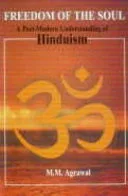
Freedom of the Soul
 78
78

Freedom of the Soul
M. M. Agrawal's "Freedom of the Soul" attempts to demystify the foundational principles of Hinduism for a contemporary audience. Its strength lies in its methodical presentation, untangling complex doctrines like Karma and Samsara with a commendable degree of clarity. The inclusion and contextualization of J. Krishnamurti’s philosophy is a particularly interesting choice, positioning him as a modern inheritor of the Hindu spiritual quest for freedom. However, the work occasionally feels more like a textbook than an engaging exploration. While factually sound, the prose can be dry, lacking the evocative language that often characterizes spiritual literature. The section on the Atman, while accurate, could benefit from more illustrative examples to truly land its significance. Despite this, the book offers a solid, if somewhat academic, introduction to its subject matter.
📝 Description
78
Published in 2002, M. M. Agrawal's 'Freedom of the Soul' distills fundamental Hindu spiritual principles.
This work offers a clear examination of Hindu spiritual philosophy, aiming to present its core ideas in an accessible manner. Agrawal's analytical approach breaks down complex concepts into understandable parts, suitable for readers seeking a structured introduction to Hinduism. It is designed for those interested in the systematic study of Indian spiritual traditions, focusing on philosophical tenets rather than devotional practices or historical accounts.
The book covers central concepts like Dharma, Karma, and Moksha, which are crucial for grasping the Hindu worldview. It also delves into the nature of the soul, Atman, and its connection to Brahman, the ultimate reality. A key focus is the concept of liberation from samsara, the cycle of rebirth, and the material world. Agrawal connects the spiritual pursuit of freedom to broader philosophical inquiries, bridging classical Hindu thought with modern perspectives.
Published in the early 2000s, 'Freedom of the Soul' engaged with a Western interest in Eastern philosophies, often explored through comparative studies. Agrawal's work fits within a broader trend of synthesizing spiritual traditions. The inclusion of J. Krishnamurti highlights a dialogue concerning individual liberation and evolving interpretations of spiritual ideas, moving beyond rigid dogma.
💡 Why Read This Book?
• Gain a clear grasp of Hindu concepts like Dharma and Moksha, as presented in the 2002 publication, enabling a structured understanding of spiritual liberation. • Understand J. Krishnamurti's philosophical lineage within the context of Hindu spiritual traditions, appreciating his unique contribution to the quest for freedom. • Explore the fundamental principles of Atman and Brahman, offering a foundational framework for contemplating the nature of self and ultimate reality.
⭐ Reader Reviews
Honest opinions from readers who have explored this book.
❓ Frequently Asked Questions
What is the primary focus of "Freedom of the Soul"?
The book's primary focus is a clear and insightful presentation of the fundamental principles of Hinduism. It aims to explain core concepts and the spiritual quest for liberation from worldly bondage.
Who is J. Krishnamurti and why is he included?
J. Krishnamurti was a 20th-century Indian philosopher. The book includes him to show how his spiritual quest for everlasting freedom aligns with and carries forward the wisdom of Hinduism.
When was "Freedom of the Soul" first published?
The book was first published in 2002, placing it within the early 21st-century landscape of spiritual and philosophical inquiry.
What are some key Hindu concepts explored in the book?
The work explores fundamental Hindu concepts such as Dharma, Karma, Moksha, the nature of the soul (Atman), and the ultimate reality (Brahman).
Is this book suitable for beginners in Hinduism?
Yes, the book is designed to bring a clear and insightful presentation of Hinduism's fundamental principles, making it suitable for those new to the subject seeking a structured overview.
What is the book's perspective on worldly bondage?
The book frames the spiritual quest as a path towards everlasting freedom from bondage to life in the temporal world, a central theme derived from Hindu philosophy.
🔮 Key Themes & Symbolism
The Quest for Liberation
This theme centers on the concept of Moksha, the ultimate spiritual goal in Hinduism: liberation from the cycle of birth and death (samsara). The book examines how various Hindu philosophies outline paths toward this freedom, often involving detachment from the temporal world and its illusions. It presents the spiritual quest not as an abstract ideal but as a practical pursuit for transcending suffering and achieving a state of everlasting peace.
Hinduism's Fundamental Principles
Agrawal's work systematically unpacks the bedrock concepts of Hinduism, including Dharma (righteous duty), Karma (action and consequence), and the nature of the soul (Atman) and its unity with the Absolute (Brahman). The book aims to provide a lucid explanation of these interwoven principles, demonstrating how they form a coherent worldview that guides spiritual practice and understanding.
J. Krishnamurti's Spiritual Continuity
A distinctive feature of the book is its analysis of J. Krishnamurti's teachings. It positions him as a figure who continued the Hindu spiritual tradition by emphasizing individual self-inquiry and freedom from conditioning. The work explores how Krishnamurti's insights into psychological and spiritual liberation echo ancient Hindu ideals, bridging the gap between traditional philosophy and modern existential thought.
The Temporal vs. The Eternal
The book critically examines the human condition as one often bound by attachment to the transient, material world. It contrasts this state of 'bondage' with the pursuit of 'everlasting freedom' through spiritual realization. This dichotomy forms a central argument, suggesting that true freedom lies in understanding and transcending the limitations of temporal existence.
💬 Memorable Quotes
Direct passages from the work, attributed to the author.
“The spiritual quest of Hinduism is the quest of everlasting freedom from bondage to life in the temporal world.”
— This statement captures the core aim of Hindu philosophy as presented in the book: liberation from the cycle of suffering and illusion inherent in material existence.
“J. Krishnamurti is shown to be carrying forward the spiritual quest of Hinduism.”
— This highlights the book's unique perspective in connecting 20th-century philosophical discourse with ancient Indian traditions, viewing Krishnamurti as a modern proponent of Hindu ideals.
“A clear and insightful presentation of the wisdom of Hinduism in all its fundamental principles.”
— This describes the book's objective: to offer readers a structured and understandable explanation of the core tenets and philosophical underpinnings of Hinduism.
“Understanding Karma and Samsara is key to grasping the Hindu worldview.”
— This emphasizes the importance of these foundational concepts, the law of cause and effect and the cycle of rebirth, within the book's exposition of Hindu philosophy.
💡 Key Ideas
Editorial paraphrase of the work's core concepts — not direct quotes.
The book explores the concept of Atman and its relation to Brahman.
This paraphrased concept points to the book's engagement with the Vedantic idea of the individual soul (Atman) and its ultimate identity with the universal consciousness (Brahman).
🌙 Esoteric Significance
Tradition
While rooted in Hinduism, the work touches upon universal esoteric themes of liberation and the nature of consciousness. It aligns with the broader Hermetic and Gnostic pursuit of gnosis (knowledge) leading to freedom from material illusion. The book's approach to understanding the self (Atman) and its relation to the Absolute (Brahman) speaks to mystical traditions across cultures, positioning Hinduism as a profound source of esoteric wisdom.
Symbolism
Key symbols within Hinduism, such as the lotus (purity, enlightenment), the Om mantra (primordial sound, cosmic vibration), and the cyclical nature of time (Samsara), are implicitly explored. The book focuses more on philosophical concepts than overt symbolism, but the underlying motifs of breaking free from illusion and realizing an eternal truth are pervasive.
Modern Relevance
Contemporary movements focusing on mindfulness, consciousness studies, and comparative spirituality often draw from Hindu philosophical frameworks. The book's accessible explanation of concepts like Karma and liberation offers a foundation for modern practitioners seeking to understand the roots of these ideas, informing practices that aim for inner peace and self-awareness.
👥 Who Should Read This Book
['• Students of comparative religion: Gain a structured understanding of Hindu philosophical underpinnings and their connections to other spiritual traditions.\n', '• Seekers of spiritual liberation: Explore the fundamental principles and quest for freedom from worldly bondage as outlined in classical Hindu thought.\n', '• Readers interested in J. Krishnamurti: Understand his philosophical position within the broader lineage of Indian spiritual wisdom and his emphasis on self-realization.']
📜 Historical Context
Published in 2002, "Freedom of the Soul" emerged in an era where global spiritual thought was increasingly interconnected. Western esoteric and philosophical circles continued to engage with Eastern traditions, often seeking common ground or distinct lineages. The inclusion of J. Krishnamurti, who himself famously broke from the Theosophical Society in 1929, places the work within a broader discourse on spiritual authority and individual liberation that challenged traditional structures. While not directly engaging with specific academic debates of the time, the book implicitly participates in the ongoing scholarly and popular interpretation of Hindu philosophy, offering a synthesis that contrasts with more academic, historical analyses or devotional approaches. Its reception likely appealed to those seeking a clear, principle-based overview rather than a deep dive into Vedic exegesis or Tantric practices.
📔 Journal Prompts
Reflect on the concept of Dharma as presented in the book.
Consider the implications of Karma for actions in the temporal world.
How does the book's portrayal of Moksha differ from common understandings of happiness?
Analyze the connection drawn between J. Krishnamurti's quest and Hindu philosophy.
Contemplate the nature of Atman as described in the text.
🗂️ Glossary
Dharma
In Hinduism, Dharma refers to one's righteous duty, ethical principles, and the natural order of the universe. It guides actions and responsibilities within society and the cosmos.
Karma
The principle of cause and effect, where actions (karma) in this life and past lives determine future consequences and rebirths. It is a fundamental law governing existence.
Moksha
The ultimate spiritual goal in Hinduism, signifying liberation from the cycle of birth, death, and rebirth (samsara). It is a state of eternal freedom and spiritual enlightenment.
Atman
The individual soul or self in Hindu philosophy. It is considered eternal and, in some schools like Advaita Vedanta, identical to Brahman.
Brahman
The ultimate reality or supreme cosmic spirit in Hinduism. It is the all-pervading, unchanging essence of the universe.
Samsara
The continuous cycle of birth, death, and rebirth, driven by karma and ignorance. Liberation from Samsara is the aim of Moksha.
Temporal World
Refers to the material, transient, and ever-changing world of sensory experience, often seen as a source of illusion and bondage from which spiritual freedom is sought.