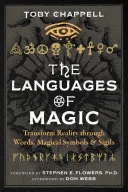
The Languages of Magic
 82
82

The Languages of Magic
Toby Chappell’s *The Languages of Magic* offers a compellingly analytical approach to a subject often steeped in mystique. The strength of the work lies in its rigorous application of linguistic and semiotic theory to magical practice, particularly in its examination of how different magical schools, from Hermeticism to Chaos Magic, utilize symbolic communication. Chappell's deconstruction of spellcraft as a form of precise symbolic interaction is illuminating. However, the book occasionally leans heavily on academic terminology, which might present a barrier for newcomers to either linguistics or esoteric studies. A passage discussing the semiotic function of sigil creation, where the intent is encoded and then the conscious mind 'forgets' the symbol to allow the subconscious to work, exemplifies the book's precise, if dense, methodology. It's an intellectually rigorous exploration of magical mechanics.
📝 Description
82
Toby Chappell's *The Languages of Magic* argues that spell effectiveness depends on the clarity of symbolic language.
Magic, at its core, is the enactment of change through symbolic action. Toby Chappell's *The Languages of Magic* examines the linguistic and semiotic structures that underpin magical operations, moving beyond simple ritual. The book posits that the efficacy of spells, sigils, and invocations relies on the precision of their symbolic language, akin to any other form of communication. By grasping how meaning is built and conveyed through symbols, practitioners can sharpen their intent and improve their outcomes.
Chappell applies principles from linguistics and semiotics to magic, suggesting that perceived 'power' stems from a practitioner's engagement with symbolic systems. Techniques such as visualization, verbalization, and crafting talismans are presented as forms of communication directed at the psyche and cosmic energies. This viewpoint shifts focus from hidden secrets to the practical use of cognitive and symbolic tools. The work includes comparative analyses of magical traditions like Hermeticism, Thelema, Chaos Magic, and the mythos of the Church of Satan and the Temple of Set, showing how they all employ semiotic principles.
This book situates magical practice within a framework of semiotics and linguistics. It suggests that the mechanisms of magic are not inherently supernatural but rather emerge from the sophisticated use of symbols and language by the practitioner. By analyzing various traditions, it demonstrates how shared principles of meaning-making are applied to achieve desired effects, offering a cognitive and structural understanding of ritual and invocation.
💡 Why Read This Book?
• Gain a practical understanding of how symbolic language functions in magic, as detailed in the analysis of sigil magic, allowing you to craft more effective magical communications. • Learn to identify and analyze the semiotic structures within various traditions, such as Hermetic magic or Thelema, to better grasp their operational principles. • Enhance your personal magical practice by applying communication techniques derived from linguistics, improving the clarity and impact of your intent and ritual work.
⭐ Reader Reviews
Honest opinions from readers who have explored this book.
❓ Frequently Asked Questions
What is the core argument of The Languages of Magic regarding magic and communication?
The book argues that magic functions as a form of precise symbolic communication. It posits that understanding linguistics and semiotics allows practitioners to refine their intent and enhance the effectiveness of their magical operations by mastering the 'language' of symbols.
Which specific magical traditions does Toby Chappell analyze in the book?
The book analyzes Hermetic magic, sigil magic, Thelema, the Church of Satan, Chaos Magic, and the Temple of Set, examining the unique symbolic languages and communication techniques employed by each.
How does The Languages of Magic relate to academic fields like linguistics?
It directly applies key ideas from linguistics and semiotics to the study and practice of magic, treating magical symbols and rituals as systems of meaning and communication that can be analyzed with academic rigor.
Is this book suitable for beginners in magic?
While offering practical applications, the book's academic approach to linguistics and semiotics may require some foundational understanding or a willingness to engage with complex theoretical concepts for novice practitioners.
What does the book suggest about the effectiveness of magical symbols?
It suggests that the effectiveness of magical symbols, like sigils, is tied to the clarity of the encoded intent and the practitioner's conscious and subconscious engagement with the symbol's meaning, rather than inherent magical power.
When was The Languages of Magic first published?
The book was first published on April 8, 2025.
🔮 Key Themes & Symbolism
Semiotics of Intent
This theme explores how magic operates through the deliberate manipulation of symbols and signs. Chappell draws parallels between linguistic structures and magical operations, asserting that the 'power' in magic stems from the practitioner's ability to imbue symbols with precise intent. The work examines how concepts like signifiers, signifieds, and interpretation, central to semiotics, are fundamental to enacting magical change. For instance, the construction of a sigil is presented not as a mere drawing, but as a process of encoding desire into a form that bypasses conscious linguistic filters, allowing for direct communication with subconscious or external forces.
Comparative Magical Linguistics
Chappell analyzes diverse magical traditions through the lens of their distinct symbolic languages. The book contrasts the structured, often classical, lexicons of Hermetic magic and Thelema with the more fluid, emergent languages of Chaos Magic. By dissecting the specific terminology, gestures, and visual symbols employed by schools like the Church of Satan and the Temple of Set, the work reveals underlying semiotic principles that are common across seemingly disparate practices. This comparative approach highlights how different cultures and individuals have developed unique 'grammars' for interacting with the magical dimensions of reality.
Practical Application of Symbolic Theory
Beyond theoretical exploration, *The Languages of Magic* offers actionable insights for practitioners. It details how an understanding of semiotic principles can refine magical techniques, from incantations and visualization to ritual design. The book encourages readers to become more conscious communicators within their magical work, suggesting that a critical examination of the symbols and language used can lead to greater efficacy and control. This theme empowers the reader to actively improve their practice by applying principles of effective communication to their most sacred endeavors.
The Mind as a Symbolic Interface
A core concept is the role of the human mind as the primary interface for magical operations, operating through symbolic representation. Chappell discusses how linguistic and semiotic frameworks influence perception and reality-building. The work examines how specific symbols and their associated meanings, when internalized and consciously or subconsciously utilized, can shape experience and manifest desired outcomes. This perspective frames magic as a sophisticated form of applied psychology and symbolic manipulation, where the practitioner actively crafts their reality through the precise use of language and symbols.
💬 Memorable Quotes
Direct passages from the work, attributed to the author.
“Magic is the art of conscious communication with the hidden architecture of reality.”
— This statement expresses the book's central thesis: that magic is not merely about invoking spirits or altering fate, but about a deliberate and informed engagement with the underlying symbolic systems that govern existence, akin to learning a new language.
“The precision of a sigil's design reflects the clarity of the magician's intent.”
— This highlights the semiotic principle that the effectiveness of a magical symbol is directly proportional to how well it encodes and represents the desired outcome, emphasizing careful craftsmanship and focused will.
“Each tradition offers a unique dictionary for understanding and influencing the subtle realms.”
— This metaphor suggests that different magical systems, like Hermeticism or Thelema, provide distinct sets of symbols, meanings, and grammatical rules for interacting with non-physical energies and consciousness.
“The power of a spell lies not in the words alone, but in the semiotic resonance they create.”
— This interpretation suggests that magical efficacy arises from the interplay between spoken or written words, their associated meanings, the practitioner's intent, and the symbolic context, creating a holistic effect.
💡 Key Ideas
Editorial paraphrase of the work's core concepts — not direct quotes.
To master magic is to become fluent in the language of symbols.
This paraphrased concept emphasizes that proficiency in magic requires not just theoretical knowledge but a deep, intuitive understanding and skilled application of symbolic communication, much like mastering any complex language.
🌙 Esoteric Significance
Tradition
This work fits within the broader lineage of Western Esotericism, particularly drawing from Hermetic and Gnostic traditions that emphasize gnosis (knowledge) through symbolic understanding and direct experience. It departs by framing these traditions through the more contemporary lens of linguistics and semiotics, treating magical systems as complex languages rather than purely mystical revelations. The book seeks to explain the 'how' of magic by grounding it in observable principles of communication and meaning-making.
Symbolism
Key symbols explored include the sigil, treated as a condensed linguistic unit encoding intent, and the 'Word' (as in 'The Word was God'), representing the power of articulated, symbolic language to shape reality. The book also examines the symbolic language of alphabets and their potential for magical use, framing letters not just as phonetic signs but as archetypal forms capable of holding specific magical energies and meanings within a symbolic system.
Modern Relevance
Contemporary practitioners of Chaos Magic, sigil work, and even some ceremonial magicians are likely to find Chappell's analysis directly applicable. Thinkers exploring the intersection of consciousness studies, psychology, and magic, as well as those interested in comparative religion and the philosophy of language, can also draw significant insights. The book’s focus on intentional communication through symbols speaks to modern trends in digital semiotics and the creation of online identity, offering a bridge between ancient practices and contemporary symbolic engagement.
👥 Who Should Read This Book
• Aspiring magicians and occultists seeking a deeper theoretical understanding of how magical practices function, particularly those interested in the role of language and symbols. • Students of comparative religion and esotericism who wish to analyze different magical traditions through a linguistic and semiotic framework. • Practitioners of Hermetic magic, Thelema, or Chaos Magic looking to refine their techniques by consciously applying principles of effective symbolic communication to their rituals and spellcraft.
📜 Historical Context
Published in 2025, *The Languages of Magic* emerges into a contemporary landscape where interest in esoteric studies has seen a resurgence, often fueled by online communities and a renewed appreciation for older magical traditions. The book builds upon a long history of occult scholarship that began to gain academic traction in the late 20th century, notably through figures like Eliphas Lévi's foundational work on ceremonial magic in the 19th century and later interpretations by occultists such as Aleister Crowley. Chappell's approach, however, distinguishes itself by integrating modern linguistic and semiotic theories, a departure from earlier analyses that often focused more on ritual mechanics or historical accounts. While competing schools of thought might emphasize intuitive channeling or raw psychic force, Chappell's work offers a structured, intellectual framework grounded in communication theory, providing a unique perspective that engages with, rather than replaces, existing magical paradigms.
📔 Journal Prompts
The semiotic function of your personal magical symbols.
How the 'grammar' of a specific ritual influences its perceived effectiveness.
The linguistic structures underlying your preferred magical tradition.
Analyzing the symbolic language used in a historical magical text.
Developing a sigil based on precise linguistic encoding of intent.
🗂️ Glossary
Semiotics
The study of signs and symbols and their interpretation. In *The Languages of Magic*, it's applied to understand how magical symbols convey meaning and effect change.
Linguistics
The scientific study of language, its structure, and its relation to thought and behavior. The book uses its principles to analyze magical language.
Sigil Magic
A magical practice involving the creation and charging of symbolic representations (sigils) to embody specific desires or intents, often by abstracting them from sentences.
Hermetic Magic
A system of magic derived from the Corpus Hermeticum and the writings attributed to Hermes Trismegistus, emphasizing correspondence, causation, and esoteric knowledge.
Thelema
A spiritual religion and magical tradition founded by Aleister Crowley, based on the Book of the Law, emphasizing individual will and the motto 'Do what thou wilt shall be the whole of the Law'.
Chaos Magic
A contemporary magical practice that emphasizes the use of belief as a tool and draws from a wide range of magical systems, often with a focus on results-oriented techniques and flexible methodologies.
Signifier
In semiotics, the physical form of a sign (e.g., the word 'tree', the image of a tree), as opposed to its meaning (the signified).