Reading neoplatonism

 84
84

Reading neoplatonism
Sara Ahbel-Rappe’s 'Reading Neoplatonism' offers a rigorous, if at times dense, exploration of a philosophical lineage that profoundly shaped Western esotericism. The strength of the work lies in its meticulous dissection of key texts, particularly its engagement with the philosophical underpinnings of Plotinus’s *Enneads*. Ahbel-Rappe’s analysis of the concept of 'the One' avoids simplistic interpretations, grounding it firmly within the philosophical discourse of late antiquity. However, the book’s academic focus can make it less accessible to those without a strong background in classical philosophy. The discussion of Porphyry’s editorial work on Plotinus, while historically important, might feel tangential to readers primarily interested in the core metaphysical doctrines. Ultimately, it serves as a valuable, albeit demanding, resource for serious students of the tradition.
📝 Description
84
Sara Ahbel-Rappe's 2000 book examines the philosophical and theological currents of Neoplatonism.
Published in 2000, 'Reading Neoplatonism' engages with a resurgence of academic interest in late antique philosophy. Ahbel-Rappe's study traces the development of Neoplatonic ideas through key texts and thinkers, detailing how these complex philosophical systems were formulated and passed down through centuries. The book examines the intellectual dialogue of the late 20th century, which saw new scholarly analyses of figures like Plotinus and Porphyry, placing their work within Hellenistic philosophy and early Christian theology.
This work is written for advanced students and scholars of ancient philosophy, religious studies, and intellectual history. A prior understanding of classical Greek thought and philosophical terminology is necessary. While its depth may challenge those seeking a simple introduction, dedicated readers will find substantial material for a rigorous understanding of Neoplatonism. The text addresses core doctrines such as the One, the procession of hypostases, and the soul's ascent, alongside the use of myth and allegory in conveying philosophical truths.
Neoplatonism, emerging in the 3rd century CE with figures like Plotinus, represents a significant stream within esoteric philosophy. It posits a hierarchical reality stemming from an ultimate, ineffable principle (the One), with spiritual disciplines aimed at achieving union with this source. The tradition heavily influenced later mystical and occult thought across various cultures, integrating Platonic philosophy with Gnostic and Hermetic currents. Ahbel-Rappe's work situates these ideas within their historical and philosophical development, revealing their complex transmission and interpretation.
💡 Why Read This Book?
• Gain a precise understanding of the philosophical architecture of Neoplatonism, particularly the concept of the One, which forms the ultimate source in this system. • Grasp the historical development of Neoplatonic thought from its Platonic roots through its elaboration by figures like Plotinus, first published in the 2000 edition. • Appreciate the textual and interpretive strategies employed by early Neoplatonists, such as Porphyry’s role in preserving and disseminating Plotinus’s writings.
⭐ Reader Reviews
Honest opinions from readers who have explored this book.
❓ Frequently Asked Questions
What is the primary focus of 'Reading Neoplatonism' by Sara Ahbel-Rappe?
The book primarily focuses on a scholarly examination of the philosophical and theological ideas within the Neoplatonic tradition, tracing their development and core doctrines from antiquity.
Who are the key philosophers discussed in 'Reading Neoplatonism'?
The book extensively discusses foundational figures such as Plato, Plotinus (through his *Enneads*), and Porphyry, exploring their contributions to Neoplatonic thought.
What is the concept of 'the One' as explained in the book?
Ahbel-Rappe explains 'the One' as the ineffable, transcendent source of all existence in Neoplatonism, from which all reality emanates and to which the soul seeks to return.
Is 'Reading Neoplatonism' suitable for beginners?
The book is intended for advanced students and scholars. Its rigorous academic approach and philosophical depth may present challenges for absolute beginners in the field.
When was 'Reading Neoplatonism' first published?
The first publication of 'Reading Neoplatonism' was in the year 2000.
How does the book relate Neoplatonism to later esoteric traditions?
While primarily focused on ancient philosophy, the book provides the essential intellectual framework that later influenced Hermeticism, Gnosticism, and medieval mysticism.
🔮 Key Themes & Symbolism
The Emanation from the One
The work meticulously details the Neoplatonic cosmology, focusing on the concept of 'the One' as the ultimate, transcendent source from which all existence 'emanates' or proceeds. This is not a creation in the temporal sense, but an eternal outpouring of being. Ahbel-Rappe clarifies how subsequent hypostases, such as Intellect (Nous) and Soul (Psyche), arise from this primary principle, forming a hierarchical structure of reality. Understanding this chain of being is fundamental to grasping the Neoplatonic worldview and its influence on later mystical thought.
The Soul's Ascent and Return
Central to Neoplatonism is the doctrine of the soul's descent into the material world and its subsequent journey of return to its divine origin. 'Reading Neoplatonism' explores the philosophical and ethical practices advocated by thinkers like Plotinus to achieve this spiritual ascent. This involves purification, contemplation, and philosophical understanding, aiming to reorient the soul towards the Intellect and ultimately, the One. This theme is critical for understanding the practical implications of Neoplatonic philosophy for spiritual development.
Textual Interpretation and Legacy
Ahbel-Rappe highlights the crucial role of textual transmission and interpretation in the Neoplatonic tradition. The book examines how figures like Porphyry, a student of Plotinus, played a vital role in editing and organizing Plotinus's writings (the *Enneads*). This process shaped how Neoplatonism was understood and transmitted, influencing not only academic philosophy but also early Christian thinkers and later esoteric movements. The book underscores the importance of critically engaging with these foundational texts.
Neoplatonism and the Divine
The philosophical exploration of the divine in Neoplatonism is a core theme. Ahbel-Rappe guides the reader through the complex conceptualization of divinity, moving beyond anthropomorphic deities to an ultimate, ineffable principle. The book investigates how Neoplatonists integrated traditional Greek religious ideas with abstract philosophical concepts, often employing allegory and myth to convey truths about the divine that transcend rational discourse. This approach profoundly impacted subsequent theological and mystical systems.
💬 Memorable Quotes
Direct passages from the work, attributed to the author.
“Plotinus's *Enneads* as a foundational text.”
— This highlights the critical importance of Plotinus's collected works for understanding Neoplatonism. Ahbel-Rappe's analysis likely explores how these writings established the core doctrines of the tradition.
“The soul's journey of purification and return.”
— This phrase captures the ethical and soteriological aim of Neoplatonism: the individual soul's striving to ascend from the material world back to its divine source through intellectual and spiritual discipline.
“Porphyry's editorial work on Plotinus.”
— This refers to Porphyry's significant role in compiling, organizing, and publishing Plotinus's philosophical treatises, which were essential for the survival and study of his thought.
“Neoplatonism's influence on later philosophical and religious thought.”
— This acknowledges the broad and deep impact of Neoplatonic ideas, suggesting that the book explores how concepts like the One and emanation shaped subsequent Western intellectual and spiritual history.
💡 Key Ideas
Editorial paraphrase of the work's core concepts — not direct quotes.
The One as the source from which all reality proceeds.
This paraphrased concept captures the fundamental Neoplatonic idea of emanation. It signifies that the ultimate reality, 'the One,' is not a creator in the conventional sense but an overflowing fount of being, from which all lesser realities necessarily derive their existence.
🌙 Esoteric Significance
Tradition
This work is foundational for understanding the Neoplatonic tradition, a major philosophical school that significantly influenced subsequent esoteric lineages. While not strictly an 'esoteric' text itself in the sense of a grimoire or ritual manual, its philosophical underpinnings are crucial for Hermeticism, Gnosticism, and later mystical paths. It provides the metaphysical framework—the concept of transcendent unity, emanation, and the soul's journey—that informs many esoteric practices and cosmologies seeking to connect with divine principles.
Symbolism
The primary 'symbol' in Neoplatonism, as explored in the book, is 'the One.' It functions as a symbol for the ultimate, ineffable reality that transcends all description and categorization. Another key symbolic concept is the 'ascent' or 'return' of the soul, representing the spiritual journey towards reunification with the divine source. The hierarchical structure of emanations itself can be seen as a symbolic map of reality, moving from pure intellect to the material world.
Modern Relevance
Contemporary thinkers and practitioners in fields ranging from comparative mysticism to depth psychology continue to draw on Neoplatonic concepts. Philosophers exploring consciousness and metaphysics, as well as spiritual seekers interested in non-dualistic paths, find resonance in the Neoplatonic emphasis on an ultimate, unified reality and the soul's intrinsic connection to it. The work's rigorous academic approach also informs modern academic studies of Western esotericism, providing essential context for understanding its historical roots.
👥 Who Should Read This Book
• Advanced students of philosophy and religious studies seeking a deep dive into the intellectual architecture of Neoplatonism. • Scholars of late antiquity and its impact on Western thought, particularly those interested in the philosophical underpinnings of early Christianity and subsequent mysticism. • Esoteric practitioners who wish to ground their understanding of spiritual ascent and divine unity in the rigorous philosophical tradition from which many concepts originate.
📜 Historical Context
Published in 2000, Sara Ahbel-Rappe's 'Reading Neoplatonism' entered a scholarly landscape increasingly focused on the philosophical and religious transformations of late antiquity. The late 20th century witnessed a surge in critical editions and comparative studies of figures like Plotinus and Porphyry, who were central to the development of Neoplatonism. This period also saw a greater appreciation for the complex interplay between pagan philosophy and early Christian theology, a dynamic Ahbel-Rappe’s work engages with. While earlier scholarship often focused on the metaphysical doctrines, the turn of the millennium saw a growing interest in the textual, ethical, and political dimensions of these ancient schools. The book positions itself within this evolving academic dialogue, offering a nuanced reading that considers the historical situatedness of Neoplatonic thought, moving beyond purely abstract philosophical analysis. It reflects a broader academic trend to understand these thinkers not in isolation, but as active participants in the intellectual currents of their time.
📔 Journal Prompts
The concept of the One as an ineffable source.
Plotinus's view on the soul's descent and return.
Porphyry's role in preserving Plotinus's thought.
The Neoplatonic understanding of Intellect (Nous).
Allegorical interpretation in Neoplatonic texts.
🗂️ Glossary
The One
The ultimate, transcendent, and ineffable principle in Neoplatonism, from which all existence emanates. It is beyond being and comprehension.
Emanation
The Neoplatonic doctrine that all reality proceeds or flows forth from the One in a necessary, hierarchical series of levels or hypostases.
Hypostasis
A level of reality or being, particularly the distinct divine principles (e.g., the One, Intellect, Soul) that emanate from the ultimate source.
Intellect (Nous)
The second hypostasis, emanating from the One, which contains the Platonic Forms and is the field of pure thought and being.
Soul (Psyche)
The third hypostasis, emanating from Intellect, which animates the cosmos and individual beings, and possesses the capacity for both descent and ascent.
Ascent
The Neoplatonic process of the soul's spiritual purification and philosophical contemplation, aimed at returning to its divine origin in the Intellect and the One.
Enneads
The collection of philosophical treatises written by Plotinus, compiled and organized posthumously by his student Porphyry.
🔮 Readers Also Liked
Browse all →









More by Sara Ahbel-Rappe
All books →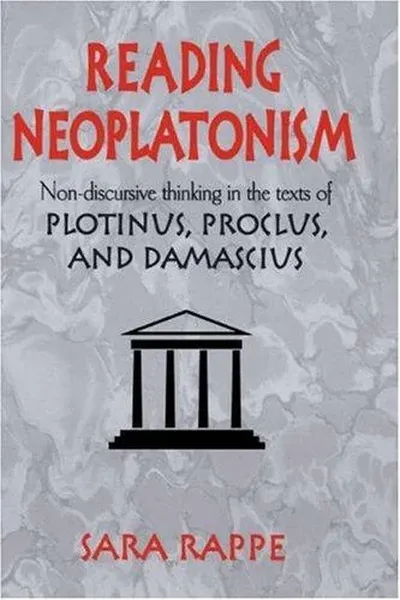
More Free Occult Philosophy Books
View all →