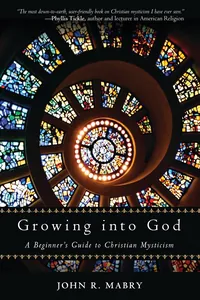
Two Worlds are Ours

 81
81

Two Worlds are Ours
John Macquarrie’s "Two Worlds are Ours" attempts to reframe Christian mysticism, moving it from the periphery of ecstatic visions to the common ground of human spiritual seeking. The author compellingly argues that the "radiant core" of experience, where mystics commune with God, is accessible through ordinary human curiosity. This perspective is particularly strong when Macquarrie discusses the historical figures, showing their engagement with theological concepts of their time. However, the book occasionally feels overly academic, at times abstracting the lived experience it seeks to illuminate. The discussion of Teresa of Ávila, for instance, highlights her theological framework but could benefit from more direct engagement with the visceral nature of her reported visions. Macquarrie's assertion that mysticism is fundamentally about "common human curiosity" is a valuable reorientation, challenging sensationalized views. Ultimately, the work serves as a solid academic defense of the experiential dimension of faith.
📝 Description
81
John Macquarrie's 2005 book argues Christian mysticism is an extension of common human longing for God.
Published in 2005, John Macquarrie's "Two Worlds are Ours" examines Christian mysticism from a historical perspective. Macquarrie proposes that the experiences of mystics, such as Julian of Norwich and Teresa of Ávila, are not alien phenomena but rather expressions of human curiosity directed towards the divine. He frames mystical experience as a natural human drive for connection, finding its ultimate fulfillment in God.
The book situates this inquiry within the broader history of Christian theological thought, tracing connections from early Christianity through the Reformation and Counter-Reformation. Macquarrie engages with biblical interpretations and theological doctrines that shaped these mystical traditions. His approach offers a theological counterpoint to explanations that focus solely on psychological or sociological factors, stressing the importance of the theological framework in understanding mystical encounters.
Macquarrie identifies the "radiant core" of human experience as the site of divine encounter, driven by "common human curiosity." He suggests that deep spiritual longing is an inherent human impulse. Furthermore, he redefines "religious mystery" not as an enigma but as a profound reality to be experienced, leading to a closer relationship with God.
Macquarrie's study places Christian mysticism within a long tradition of seeking direct experience of the divine. While often perceived as esoteric, he argues for its grounding in common human experience and theological frameworks. This work connects the contemplative practices and theological reflections of Christian mystics to a universal human impulse for transcendence, positioning it as a theological discipline rather than purely subjective phenomenon.
💡 Why Read This Book?
• You will learn how figures like Julian of Norwich understood their ecstatic visions not as supernatural anomalies but as an exploration of "religious mystery" rooted in common human curiosity, offering a unique theological perspective. • Gain insight into Macquarrie's concept of the "radiant core" of human experience as the specific locus where mystics achieve a "deep personal relationship with God," a framework for understanding spiritual intimacy. • Understand the historical development of Christian mysticism by examining the theological context and intellectual currents that shaped the experiences of mystics discussed, such as those from the 16th century.
⭐ Reader Reviews
Honest opinions from readers who have explored this book.
❓ Frequently Asked Questions
What is the main argument of John Macquarrie's 'Two Worlds are Ours'?
The book argues that Christian mystics, far from being extraordinary outliers, experience the presence of God through an extension of common human curiosity and a longing to explore religious mystery, finding a deep personal relationship with the divine.
When was 'Two Worlds are Ours' first published?
'Two Worlds are Ours' by John Macquarrie was first published in 2005.
Which Christian mystics are discussed in the book?
The book discusses various Christian mystics, highlighting figures like Julian of Norwich and Teresa of Ávila to illustrate how they experienced the love and presence of God within their own 'radiant core'.
Does the book focus on ecstatic visions or more grounded experiences?
While acknowledging ecstatic visions, Macquarrie emphasizes that mystics are better understood as individuals exhibiting common human curiosity who explore religious mystery, leading to a deep personal relationship with God.
What is meant by the 'radiant core' in the context of the book?
The 'radiant core' refers to the innermost aspect of a person's being where they can directly experience the love and presence of God, as described by Christian mystics.
What historical period does 'Two Worlds are Ours' primarily cover?
The book provides a historical survey of Christian mysticism, examining experiences and theological interpretations across various periods, from early Christian thought through to later figures.
🔮 Key Themes & Symbolism
The Mystic's Radiant Core
Macquarrie posits that the "radiant core" of human existence is the primary site for experiencing God's presence. This is not an external phenomenon but an internal communion. He argues that figures like Teresa of Ávila tapped into this core through intense focus and exploration of their faith. The concept reframes mystical experience as an intrinsic human capacity rather than solely a divine imposition, linking it to an individual's deepest self.
Common Curiosity as Spiritual Driver
A central thesis is that "common human curiosity" fuels mystical inquiry. This de-exoticizes mystics, portraying them as individuals driven by a deep desire to understand ultimate reality, much like any explorer or philosopher. Macquarrie suggests this innate curiosity, when directed towards faith, leads to profound spiritual discoveries and a personal relationship with God, accessible even outside formal ascetic practices.
Religious Mystery as Exploration
The book reinterprets "religious mystery" not as an unknowable enigma but as a profound reality that invites exploration. Macquarrie's approach suggests that mystics are engaged in a lifelong journey of discovery within the divine. This active engagement, rather than passive reception, characterizes their spiritual path, leading to a deeper, lived understanding of theological truths.
Historical Survey of Experience
Macquarrie provides a historical overview, examining how Christian mystics across centuries have articulated their experiences. By referencing figures from various epochs, he demonstrates a continuity in the fundamental human longing for divine connection. This historical grounding allows him to trace the evolution of theological language used to describe these profound encounters.
💬 Memorable Quotes
Direct passages from the work, attributed to the author.
“mystics are better thought of as people who exhibit common human curiosity, long to explore religious mystery, and ultimately find a deep personal relationship with God”
— This statement reframes mysticism away from the sensational and toward the relatable. It suggests that the drive to seek and understand the divine is a fundamental aspect of human nature, accessible to many, not just a select few with extraordinary gifts.
“Christians... have experienced at their own 'radiant core' the love and presence of God”
— This interpretation of the 'radiant core' points to an internal, personal space of divine encounter. It suggests that God's presence is not only transcendent but also immanent, experienced within the deepest part of the human self.
“The word mysticism evokes ecstatic visions, asceticism, and esoteric teaching.”
— This acknowledges the popular perception of mysticism, which often conjures images of extreme practices and hidden knowledge. Macquarrie uses this as a starting point to then offer his alternative, more grounded perspective on the nature of mystical experience.
“common human curiosity”
— This phrase captures Macquarrie's core argument: that the engine of mystical exploration is the same innate curiosity that drives scientific and philosophical inquiry, simply directed toward the spiritual realm.
“deep personal relationship with God”
— This highlights the ultimate outcome of the mystical journey as presented by Macquarrie – not just intellectual understanding or fleeting visions, but a profound, ongoing connection with the divine.
🌙 Esoteric Significance
Tradition
This work primarily situates itself within the Western Christian contemplative tradition. While not strictly an 'esoteric' text in the sense of Gnosticism or Hermeticism, it explores mystical experiences that often reside at the fringes of orthodox theology. Macquarrie bridges academic theology with the lived experience of mystics, presenting their insights as integral to Christian understanding, albeit often overlooked or misunderstood.
Symbolism
The book frequently references the "radiant core" as a symbolic representation of the innermost self, the divine spark within humanity where direct experience of God occurs. It also implicitly engages with the symbolism of "light" often associated with divine presence and illumination in Christian mysticism. The concept of "religious mystery" itself functions symbolically, representing the vastness and depth of the divine that continually invites human exploration.
Modern Relevance
Macquarrie’s work remains relevant for contemporary contemplative practitioners and theologians seeking to understand the historical roots of spiritual experience within Christianity. Thinkers and groups focused on Christian meditation, contemplative prayer, and the integration of faith and psychology often draw upon such historical theological surveys to ground their practices and interpretations in established traditions.
👥 Who Should Read This Book
• Students of Christian theology and history seeking a scholarly yet accessible overview of mystical traditions, particularly those interested in the experiential dimension of faith. • Individuals exploring contemplative practices who wish to understand the theological underpinnings and historical context of figures like Julian of Norwich and Teresa of Ávila. • Readers curious about the nature of religious experience who want to move beyond sensationalized portrayals of mysticism toward a more grounded understanding rooted in human curiosity and divine relationship.
📜 Historical Context
Published in 2005, John Macquarrie's "Two Worlds are Ours" emerged in an era where studies of religion often leaned towards sociological or psychological analyses, sometimes marginalizing theological and experiential dimensions. Macquarrie’s work offers a robust counter-narrative, drawing heavily on historical theology and the tradition of Christian contemplation. He engages with figures and concepts prominent in Christian thought for centuries, providing a lineage for his interpretations. The book can be seen as a response to, or at least a dialogue with, the secularizing trends in academia and the popular fascination with non-Christian esoteric traditions that often overshadowed Christian mysticism. While not directly engaging with a specific contemporary rival, Macquarrie’s approach implicitly challenges approaches that reduce spiritual experience to purely psychological phenomena, as championed by thinkers like Sigmund Freud earlier in the 20th century.
📔 Journal Prompts
The 'radiant core' as a locus of divine encounter.
Common human curiosity driving spiritual exploration.
The nature of 'religious mystery' as an invitation to discovery.
Interpreting the experiences of specific mystics through the lens of their historical context.
Reflecting on the balance between personal experience and theological framework in spiritual understanding.
🗂️ Glossary
Mysticism
In the context of Macquarrie's work, mysticism refers to the direct, experiential apprehension of the divine presence, often characterized by a deep personal relationship with God, rooted in common human curiosity and exploration of religious mystery.
Radiant Core
The innermost aspect of human consciousness or being where individuals can experience the love and presence of God directly. It is the seat of profound spiritual experience described by Christian mystics.
Common Human Curiosity
Macquarrie's term for the innate human drive to explore, question, and understand the world, which he posits is a primary motivator for mystical seeking and spiritual inquiry.
Religious Mystery
Not an unsolvable enigma, but the profound, awe-inspiring reality of the divine that invites exploration and deeper understanding through faith and experience.
Asceticism
A practice of rigorous self-discipline and self-denial, often undertaken for religious reasons. While associated with mysticism, Macquarrie argues it's not the defining characteristic.
Ecstatic Visions
Intense, often overwhelming spiritual experiences characterized by a perceived union with the divine, sometimes accompanied by altered states of consciousness. Macquarrie discusses these but emphasizes a broader understanding of mystical experience.
Theologian
An expert in theology, the study of the nature of God and religious belief. Macquarrie, as a theologian, analyzes mystical experiences within a Christian doctrinal framework.
This book appears in 1 collection
🔮 Readers Also Liked
Browse all →![The mystic oracle, or, The complete fortune-teller and dream book / [F.M. Lupton].](/img/thumb/the-mystic-oracle-or-the-complete-fortune-teller-and-dream-book-f-m-lupton.webp)







From the “Christian Mysticism” Collection
View all →






More Free Mysticism & Contemplation Books
View all →