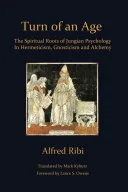
Turn of an Age: The Spiritual Roots of Jungian Psychology in Hermeticism, Gnosticism and Alchemy
 72
72

Turn of an Age: The Spiritual Roots of Jungian Psychology in Hermeticism, Gnosticism and Alchemy
Alfred Ribi's "Turn of an Age" offers a scholarly yet accessible connection between Jungian psychology and its ancient esoteric forebears. The strength of this work lies in Ribi's dual expertise as a practicing psychologist and a scholar of Hermeticism and Gnosticism, allowing him to bridge arcane symbolism with clinical observation. His engagement with the alchemical text *Mutus Liber* to illustrate the stages of psychological transformation is particularly illuminating, demonstrating a concrete link between ancient practice and modern theory. A potential limitation for some readers might be the dense scholarly apparatus required to fully appreciate the historical nuances, though Ribi does his best to render them comprehensible. The book's exploration of how Gnostic cosmology informs Jung's concept of the Pleroma provides a fresh perspective on the psychic totality. It is a valuable contribution for those seeking the deep roots of Jung's visionary work.
📝 Description
72
Alfred Ribi's 2019 book connects Jungian psychology to Hermeticism, Gnosticism, and alchemy.
Alfred Ribi's "Turn of an Age" examines the spiritual and philosophical currents that shaped Carl Jung's analytical psychology. Ribi, an experienced analytical psychologist, traces connections through Hellenistic Egypt, Gnostic thought, and alchemical symbolism. He argues that these ancient traditions provide a framework for Jung's ideas on archetypes and individuation. The book is for students and practitioners of Jungian psychology, scholars of religion, and anyone interested in the historical roots of Western esoteric thought. Readers seeking to grasp the philosophical basis of concepts like the shadow or the anima/animus will find value. It also speaks to those curious about how mystical practices from antiquity inform modern psychology.
The work engages with primary texts and movements from the Hellenistic period through the Renaissance. Ribi places Jung's theories within this historical lineage, referencing texts like the Corpus Hermeticum. The book highlights alchemy's role as a precursor to psychological transformation, a concept central to Jung's later work. This historical grounding helps readers appreciate the depth of Jung's synthesis.
This book situates Jungian psychology within a lineage of Western esoteric traditions. It examines how concepts found in Hermeticism, particularly the principle of "As above, so below," and Gnosticism, with its ideas of *pleroma* and *kenoma*, influenced Jung's understanding of the psyche. The alchemical tradition is presented not just as proto-chemistry, but as a symbolic language for inner transformation, mirroring processes Jung identified in individuation. Ribi connects these streams of thought, showing how they form a spiritual and philosophical bedrock for analytical psychology.
💡 Why Read This Book?
• Understand the alchemical stages of *nigredo*, *albedo*, and *rubedo* as direct metaphors for psychological integration, a concept Ribi details throughout the book. • Gain insight into how Gnostic cosmology, particularly the concepts of Pleroma and Kenoma, provides a framework for Jung's theories on psychic totality and individuation. • Discover the Hermetic principle of "As above, so below" and its application to understanding the relationship between the external world and the internal psyche as presented in Ribi's analysis.
⭐ Reader Reviews
Honest opinions from readers who have explored this book.
❓ Frequently Asked Questions
What ancient traditions are discussed in "Turn of an Age"?
The book explores the spiritual roots of Jungian psychology in Hellenistic Gnosticism, Hermeticism, and Alchemy, drawing connections to texts like the Corpus Hermeticum.
Who is Alfred Ribi and what is his background?
Alfred Ribi is an analytical psychologist with over fifty years of experience, bringing a practitioner's insight to his scholarly examination of esoteric traditions.
How does alchemy relate to Jungian psychology in this book?
Ribi illustrates how alchemical processes and symbolism, such as the stages of transformation, serve as powerful metaphors for the individuation journey in Jungian psychology.
What is the significance of Gnosticism for Jung's work according to Ribi?
Ribi explores how Gnostic cosmologies, with their dualistic concepts and quest for gnosis, inform Jung's ideas about the psyche, the unconscious, and the pursuit of wholeness.
Is this book suitable for beginners in esoteric studies?
While it engages with complex ancient texts, Ribi's clear prose and practical psychological insights make it accessible to serious students of esotericism and Jungian thought.
When was "Turn of an Age" first published?
The book was first published on August 20, 2019.
🔮 Key Themes & Symbolism
Alchemy as Psychological Process
Ribi elucidates alchemy not merely as proto-chemistry but as a symbolic map of psychological transformation. He meticulously details stages like the *nigredo* (blackening, dissolution) and *albedo* (whitening, purification), correlating them with Jungian concepts of confronting the shadow and initial stages of individuation. The *coniunctio*, or alchemical marriage, is presented as a symbol for the integration of opposites within the psyche, a core Jungian aim. This theme highlights how ancient alchemists, through their material operations, were engaging with profound psychological dynamics.
Gnostic Cosmology and the Psyche
The book examines how Gnostic dualism—the stark separation between a transcendent, perfect God and an imperfect material world created by a lesser demiurge—informs Jung's understanding of the psyche's inherent tension. Ribi connects the Gnostic quest for *gnosis* (knowledge) to Jung's concept of individuation, the process of becoming whole. The exploration of Gnostic myths of descent and ascent provides a framework for understanding the journey into the unconscious and the reintegration of fragmented psychic elements.
Hermetic Wisdom and Inner Work
Ribi draws upon the Hermetic tradition, particularly the *Corpus Hermeticum*, to underscore the principle of "As above, so below." This maxim is interpreted as a reflection of the macrocosm-microcosm relationship, where the human psyche mirrors the structure of the universe. The Hermetic emphasis on self-knowledge and the pursuit of divine wisdom through inner contemplation is presented as a direct precursor to Jung's analytical methods and his focus on understanding the soul's inherent divine spark.
Jung's Synthesis of Ancient Thought
This theme focuses on how C. G. Jung synthesized these disparate ancient traditions into his psychological framework. Ribi demonstrates that Jung did not merely draw inspiration but found in Hermeticism, Gnosticism, and Alchemy a coherent symbolic language that articulated his discoveries about the collective unconscious and archetypes. The book argues that understanding these roots is essential for a complete appreciation of Jung's revolutionary psychological theories.
💬 Memorable Quotes
Direct passages from the work, attributed to the author.
“Alchemy provided Jung with a symbolic language for the process of individuation.”
— This interpretation highlights how Jung found in alchemical texts a pre-existing symbolic system that mirrored his observations of psychological development and the integration of the unconscious.
“Hermeticism's 'As above, so below' speaks to the psyche's mirroring of universal order.”
— This concept emphasizes the Hermetic principle as a key to understanding how the structure and dynamics of the individual soul reflect the greater cosmic order, a foundational idea in Jungian thought.
“The *coniunctio* in alchemy symbolizes the integration of conscious and unconscious.”
— This highlights a specific alchemical symbol, the union of opposites, and its direct application within Jungian psychology to represent the crucial process of integrating disparate psychic elements into a unified whole.
💡 Key Ideas
Editorial paraphrase of the work's core concepts — not direct quotes.
The Gnostic separation of spirit and matter reflects psychic fragmentation.
This paraphrase suggests that the Gnostic worldview, with its division between the divine and the material, offers a cosmological parallel to the internal divisions and conflicts experienced within the human psyche.
Ribi demonstrates the historical continuity of transformative psychological ideas.
This statement summarizes Ribi's core thesis: that the deep psychological work explored in ancient esoteric traditions did not disappear but directly influenced and informed the development of modern depth psychology.
🌙 Esoteric Significance
Tradition
This work primarily belongs to the Hermetic and Gnostic traditions, viewed through the lens of Jungian psychology. Ribi positions Jung's analytical psychology not as a modern invention but as a rediscovery and re-articulation of ancient wisdom concerning the soul's journey. It fits within these traditions by validating their symbolic language and psychological depth, while departing by framing them within a systematic, therapeutic psychological model rather than a purely religious or philosophical one.
Symbolism
Key symbols explored include the alchemical stages of *nigredo*, *albedo*, and *rubedo*, representing psychological states of dissolution, purification, and integration. The Gnostic concept of the *Pleroma* (divine fullness) and *Kenoma* (emptiness) relates to the psyche's potential and its perceived lack. The Hermetic principle of "As above, so below" is a central motif, illustrating the interconnectedness of the cosmos and the individual soul, a core concept for Jung.
Modern Relevance
Contemporary thinkers and practitioners in depth psychology, transpersonal psychology, and various schools of esoteric study continue to draw on the connections Ribi illuminates. Jungian analysts still use alchemical symbolism to discuss individuation. Modern Hermetic and Gnostic revival movements find validation for their practices in Ribi's work, seeing Jungian psychology as a contemporary echo of their ancient paths. The book remains relevant for anyone exploring the intersection of spirituality, consciousness, and psychological well-being.
👥 Who Should Read This Book
• Students of C. G. Jung's analytical psychology seeking to understand the historical and philosophical origins of his core concepts like archetypes and individuation. • Scholars of comparative religion and Western esoteric traditions interested in the cross-pollination between ancient mystical practices and modern psychological theory. • Individuals engaged in personal spiritual or psychological development who are drawn to the wisdom of Hermeticism, Gnosticism, and Alchemy and wish to see their relevance to the inner life.
📜 Historical Context
Alfred Ribi's "Turn of an Age" emerges from a scholarly milieu interested in the historical and philosophical underpinnings of depth psychology, particularly during the mid-to-late 20th century when Jung's work gained wider academic traction. The book revisits the intellectual currents of Hellenistic Egypt (roughly 300 BCE - 300 CE), the flourishing of Gnosticism and Hermeticism during the early centuries CE, and the continued symbolic life of alchemy through the Renaissance and beyond. Ribi engages with primary sources like the *Corpus Hermeticum* and various Gnostic texts, situating them as vital precursors to Jung's theories. This engagement occurs in a landscape where scholars like Frances Yates were also exploring the Hermetic tradition's influence on the Renaissance, and where Jung himself was actively citing these ancient schools. The reception of Jung's work, while broad, often faced skepticism from purely materialistic scientific circles, making works that explored its esoteric roots crucial for a comprehensive understanding.
📔 Journal Prompts
The alchemical *nigredo* as a symbol for confronting the shadow.
Gnostic concepts of the Demiurge and their potential psychic correlates.
Reflecting on the Hermetic principle 'As above, so below' in personal experience.
The *coniunctio* as a metaphor for integrating psychological opposites.
How does the idea of *gnosis* relate to personal psychological insight?
🗂️ Glossary
Hermeticism
A religious, philosophical, and esoteric tradition based primarily upon writings attributed to Hermes Trismegistus. It emphasizes gnosis (knowledge) and the interconnectedness of the cosmos and the individual.
Gnosticism
A diverse set of religious and philosophical movements from the early centuries CE characterized by a belief in salvation through secret knowledge (*gnosis*) and a dualistic worldview separating spirit from matter.
Alchemy
An ancient tradition focused on the transformation of matter, often interpreted as a symbolic process for spiritual purification and the attainment of wholeness or enlightenment.
Corpus Hermeticum
A collection of Greek philosophical and religious texts, dating from the 2nd and 3rd centuries CE, attributed to the legendary figure Hermes Trismegistus.
Individuation
In Jungian psychology, the lifelong process of psychological development whereby a person becomes an individual, whole, and integrated self, distinct from the collective unconscious.
Archetype
According to Jung, universal, archaic patterns and images that derive from the collective unconscious and are the psychic counterpart of the instinct. Examples include the Mother, the Hero, the Shadow.
Coniunctio
An alchemical term, often translated as 'union' or 'marriage,' symbolizing the integration of opposites within the psyche, a key stage in the individuation process.