Practising the Power of Now
 73
73

Practising the Power of Now
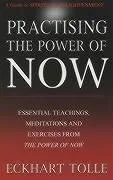
Eckhart Tolle's *Practising the Power of Now* offers a necessary, if somewhat repetitive, distillation of his core message for readers who need more than just theory. Its strength lies in the directness of its exercises, particularly those aimed at grounding oneself in the physical sensations of the body to circumvent the incessant mental dialogue. The section on observing the pain-body, while conceptually challenging, is rendered with Tolle's characteristic clarity. However, the book occasionally struggles to escape the very conceptual frameworks it seeks to transcend; the language, while intended to point beyond thought, can sometimes feel like a slightly more elaborate restatement of *The Power of Now*. A limitation is that the consistent focus on internal states might overlook external systemic factors contributing to psychological distress for some readers. The repeated encouragement to 'feel the inner body' serves as a potent, concrete anchor amidst abstract concepts. It functions as a practical manual for those ready to move from intellectual assent to embodied realization.
📝 Description
73
Eckhart Tolle published Practising the Power of Now in 2001 to translate spiritual presence into daily life.
This book offers practical exercises and meditations that build upon Eckhart Tolle's 1999 work, The Power of Now. Its aim is to help readers move beyond intellectual understanding of spiritual concepts and toward an embodied experience of presence. The text guides individuals in disengaging from constant mental chatter to connect with a deeper sense of stillness.
It is intended for those seeking to integrate spiritual teachings into their everyday lives. Readers who appreciated Tolle's earlier book will find more applied techniques here. It also speaks to newcomers struggling with anxiety, overthinking, or dissatisfaction, and those interested in mindfulness and personal development who want a direct path to inner peace.
The book emerged in 2001, following the substantial impact of The Power of Now. Tolle's work gained attention during a period of growing interest in spiritual self-help and psychological well-being in the West. Its focus on the present moment provided an accessible approach compared to more complex spiritual systems, resonating with a cultural move toward secular spirituality and personal empowerment.
Practising the Power of Now draws from traditions that emphasize direct experience over dogma. It aligns with non-dual philosophies that posit a fundamental unity underlying reality, accessible through present-moment awareness. The book's approach echoes practices found in Advaita Vedanta and certain forms of Buddhism, which advocate for recognizing the true nature of consciousness by observing the mind without identification. Tolle's work translates these often abstract concepts into actionable steps for contemporary life, seeking liberation from psychological suffering through immediate presence.
💡 Why Read This Book?
• You will learn to actively disengage from habitual negative thought patterns by practicing specific presence techniques, moving beyond intellectual understanding of mindfulness to direct experience, as detailed in the exercises for observing the 'pain-body'. • You will discover methods for grounding yourself in the 'Now' through somatic awareness, cultivating a connection to your 'inner body' which offers a tangible escape from the mind's anxiety-inducing projections. • You will gain practical tools for recognizing and reducing the influence of the ego, a key concept in Tolle's teachings, thereby fostering a greater sense of inner peace and acceptance in daily situations.
⭐ Reader Reviews
Honest opinions from readers who have explored this book.
❓ Frequently Asked Questions
What is the primary difference between *The Power of Now* and *Practising the Power of Now*?
*The Power of Now* lays out the philosophical framework for presence, while *Practising the Power of Now* provides more direct, actionable exercises and meditations to integrate those principles into daily life, focusing on embodied experience.
How does Eckhart Tolle define the 'pain-body' in his work?
Tolle describes the 'pain-body' as an accumulation of past emotional pain that resides within individuals. It can be triggered by external events and temporarily taken over, leading to emotional reactivity and suffering beyond the immediate situation.
Are there specific meditation techniques recommended in *Practising the Power of Now*?
Yes, the book emphasizes techniques such as 'feeling the inner body,' conscious breathing, and observing thoughts and emotions without judgment. These practices are designed to anchor the reader in the present moment.
What does Tolle mean by identifying with the 'Now'?
Identifying with the 'Now' means recognizing that the present moment is the only reality. Tolle encourages shifting awareness away from dwelling on the past (memory) or projecting into the future (anticipation) and instead fully inhabiting the current experience.
Is this book suitable for beginners to spiritual concepts?
While it builds on *The Power of Now*, *Practising the Power of Now* is accessible to beginners seeking practical methods. Its focus on direct experience rather than complex doctrine makes it approachable for those new to these ideas.
What is the concept of the 'inner body' in Tolle's teachings?
The 'inner body' refers to the sense of vital life energy or consciousness that is felt within the physical body. Tolle suggests turning attention inward to this sensation as a pathway to presence and stillness, away from mental activity.
🔮 Key Themes & Symbolism
The Supremacy of the Present Moment
This theme underscores the core teaching that only the 'Now' is real; past and future exist only as thoughts. The book guides readers to shift their focus from mental constructs to the direct, unmediated experience of the present. This involves learning to disidentify from the stream of thoughts that often obscure the reality of the moment, thereby reducing psychological suffering that arises from dwelling on what was or worrying about what might be.
Understanding and Dissolving the Pain-Body
Tolle introduces the concept of the 'pain-body' as a psychic energy field comprised of past emotional hurts. This theme explores how individuals unconsciously feed and perpetuate their pain-body, often seeking out situations or people that resonate with its frequency. The book offers methods for recognizing the pain-body when it arises and preventing it from taking over, facilitating its eventual dissolution through conscious presence.
The Ego and True Self
A significant theme is the distinction between the ego – the false sense of self constructed from identification with thoughts, possessions, and history – and the true Self, which is pure consciousness. The work illustrates how the ego thrives on conflict, comparison, and a continuous narrative, leading to dissatisfaction. Practising the presence of the 'Now' is presented as the path to transcending the limitations of the ego and realizing one's inherent wholeness.
Embodied Presence and Inner Body Awareness
This theme focuses on the practical application of presence through cultivating awareness of the 'inner body.' This is not the physical form as an object but the felt sense of life energy within. By turning attention inward to this sensation, readers can access a state of stillness and peace that is independent of external circumstances or mental activity, providing a stable anchor in the midst of life's flux.
💬 Memorable Quotes
Direct passages from the work, attributed to the author.
“The present moment is the only reality.”
— This statement captures the fundamental principle that all experience occurs now. Tolle argues that conceptualizing time as past or future distracts from the direct experience of life, which is always unfolding in the present.
“Your 'pain-body' is the name I give to the accumulated pain of your past.”
— This defines the pain-body as a reservoir of past emotional suffering that can become activated. Understanding it as a distinct entity helps in observing and disidentifying from it, rather than being consumed by it.
“The ego says, 'One day, I will be happy.' The enlightened person says, 'I am happy now.'”
— This highlights the ego's tendency to postpone fulfillment into the future, contrasting it with the enlightened state's recognition that happiness is an experience of the present moment, not a future attainment.
“To be attached to the outcome is to be in the ego.”
— This points to the ego's need for control and its focus on future results. True presence involves engaging fully in the action without being fixated on whether it will lead to a desired outcome.
“You are not your mind.”
— This is a foundational statement encouraging disidentification from one's thoughts. It suggests that the true self is the awareness that observes the mind, rather than being identified with the mental processes themselves.
🌙 Esoteric Significance
Tradition
Tolle's work draws heavily from Advaita Vedanta, a school of Hindu philosophy emphasizing non-duality and the unity of consciousness. It also aligns with certain streams of Gnosticism, particularly in its focus on recognizing the illusory nature of the material world and the egoic self, and the importance of direct inner knowing over external dogma. The emphasis on transcending thought and identifying with pure consciousness connects it to perennial philosophies found across mystical traditions.
Symbolism
The 'Now' itself functions as a central symbol, representing the portal to ultimate reality, distinct from the linear progression of clock time. The concept of the 'inner body' can be seen as a symbol for the felt sense of spirit or life force within the physical vessel, a refuge from the conceptual mind. The 'pain-body' symbolizes the collective and individual accumulation of unresolved emotional suffering, a psychic entity that obscures true perception.
Modern Relevance
Tolle's teachings, and the practical application offered in this book, profoundly influence contemporary mindfulness movements, coaching practices, and therapeutic approaches focused on cognitive behavioral therapy and acceptance and commitment therapy. Thinkers and practitioners in fields ranging from positive psychology to secular Buddhism often reference Tolle's work for its accessible articulation of presence and ego-transcendence. His ideas continue to be a touchstone for those seeking spiritual awakening outside traditional religious structures.
👥 Who Should Read This Book
• Individuals experiencing persistent anxiety or overthinking who seek practical methods to calm the mind and anchor themselves in the present moment. • Students of spirituality and consciousness who have read *The Power of Now* and desire actionable exercises to deepen their practice and embodied understanding. • Those feeling disconnected from themselves or their lives, looking for tangible techniques to reconnect with their inner being and cultivate a greater sense of peace and acceptance.
📜 Historical Context
Published in the wake of the immense success of *The Power of Now* (1999), *Practising the Power of Now* arrived in a cultural landscape increasingly receptive to spiritual and mindfulness practices, particularly in Western Europe and North America. The late 1990s and early 2000s saw a surge in interest in Eastern philosophies and non-dualistic thought, often presented in accessible, secular formats. Tolle’s work emerged alongside figures like Thich Nhat Hanh, whose mindfulness teachings gained widespread recognition. Unlike more academic explorations of consciousness or specific religious doctrines, Tolle’s approach offered a direct, experiential path to inner peace, resonating with a generation seeking practical solutions to modern stress and existential unease. The book's practical, workbook-like structure further distinguished it, appealing to readers who desired concrete steps beyond theoretical understanding.
📔 Journal Prompts
The nature of the 'pain-body' and its manifestation in your daily reactions.
Identifying moments when you are fully present versus when the mind has taken over.
The practice of feeling the 'inner body' and its effect on your state of being.
Observing your thoughts without identification, noting the space between them.
Recognizing the ego's demands and desires versus the stillness of true presence.
🗂️ Glossary
The Now
The present moment, considered the only reality. Tolle emphasizes that past and future are mental constructs, and true life is experienced only in the present.
Pain-Body
An accumulation of past emotional pain, held within the human psyche. It can be triggered by external events, leading to identification with negative emotions and suffering.
Ego
The false sense of self, constructed from identification with thoughts, memories, possessions, and personal history. It operates from a place of separation and often seeks validation.
Inner Body
The felt sense of life energy or consciousness within the physical body. Connecting with the inner body is presented as a gateway to presence and stillness.
Consciousness
The fundamental awareness or presence that underlies all existence. Tolle distinguishes this from the contents of the mind (thoughts, emotions) and the ego.
Presence
The state of being fully aware and awake in the present moment, free from identification with the thinking mind and its projections.
Enlightenment
A state of liberation from the ego and the suffering it creates, characterized by continuous presence and a deep sense of peace and oneness.
🔮 Readers Also Liked
Browse all →









More by Eckhart Tolle
All books →




More Free Spiritual Development Books
View all →