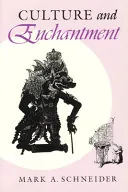
Tuck Everlasting

 73
73

Tuck Everlasting
Natalie Babbitt’s Tuck Everlasting presents a deceptively simple premise that quickly unfurls into a meditation on the very essence of living. The narrative’s strength lies in its quiet insistence on the value of a finite existence. Winnie’s internal conflict, as she weighs the allure of eternal youth against the messy, beautiful reality of a mortal life, is rendered with a delicate touch. The character of Jesse Tuck, forever seventeen, embodies the peculiar melancholy of unending existence, a concept explored in various mythologies but rarely so effectively rendered for a younger audience. A potential limitation is the somewhat abrupt resolution, which, while thematically sound, might leave some readers desiring a more prolonged exploration of the implications of Winnie's final choice. The scene where Winnie considers the implications of telling the secret of the spring, realizing the chaos it could unleash, is particularly potent. Babbitt’s work is a gentle yet firm reminder that life’s meaning is often found precisely in its impermanence.
📝 Description
73
Natalie Babbitt's 1985 novel Tuck Everlasting questions the cost of eternal life.
Tuck Everlasting, published in 1985, follows Winnie Foster as she discovers a hidden spring that grants immortality. She encounters the Tuck family, who have lived for centuries due to the spring's waters. Winnie faces a choice: join the Tucks in their unending existence or accept the natural cycle of life and death. The narrative explores the implications of living forever versus embracing a finite life with its inherent beauty and sorrow.
The novel is suited for young readers and adults who appreciate stories that prompt thought about life's meaning. It appeals to those who grapple with change, consequence, and the ethics of immortality. Readers looking for literature that encourages reflection on life's value and the inevitability of death will find it engaging. Babbitt's approach contrasts with more action-oriented stories, offering a quiet contemplation on fundamental human questions.
The novel engages with the perennial human fascination with overcoming death, a theme found across mythologies and philosophical traditions. It contrasts the desire for an 'Immortal Life,' which brings detachment, with the richness of 'Natural Life,' defined by its limits and emotional depth. This exploration touches on ancient ideas about the balance of existence and the acceptance of natural cycles, rather than a pursuit of unending physical being.
💡 Why Read This Book?
• You will gain a profound appreciation for the value of mortality by exploring the consequences of the Tuck family's eternal life, a concept that contrasts sharply with the fleeting nature of human existence. • You will understand the ethical quandaries of immortality through Winnie Foster's central dilemma, a choice that challenges the very notion of what it means to live fully. • You will engage with the symbolism of the "magical spring" and its representation of unending life, which serves as a powerful counterpoint to the natural cycles of growth and decay central to the human experience.
⭐ Reader Reviews
Honest opinions from readers who have explored this book.
❓ Frequently Asked Questions
What is the original publication year of Tuck Everlasting?
Tuck Everlasting was first published in 1985. It has since been translated into numerous languages and adapted into films, solidifying its place as a significant work of children's and young adult literature.
Who are the main characters in Tuck Everlasting?
The central characters are Winnie Foster, a curious young girl, and the Tuck family: Angus Tuck, Mae Tuck, Jesse Tuck, and Miles Tuck, who possess the secret of eternal life.
What is the central conflict of Tuck Everlasting?
The central conflict revolves around Winnie Foster's discovery of the immortal Tuck family and her subsequent struggle with the choice of whether to drink from the magical spring and live forever, or embrace a mortal life.
What is the significance of the Tuck family's immortality?
The Tuck family's immortality highlights the idea that while eternal life might seem desirable, it comes with the profound drawback of being unable to experience natural growth, change, and the full spectrum of life and death.
Does Tuck Everlasting have a happy ending?
The ending is often interpreted as bittersweet. Winnie chooses not to drink from the spring, opting for a mortal life, but the narrative suggests she eventually finds peace and fulfillment within the natural cycle of existence.
What themes does Tuck Everlasting explore?
The novel explores themes of life and death, mortality and immortality, the natural order, the passage of time, choice, and consequence, all within a narrative that questions the desirability of living forever.
🔮 Key Themes & Symbolism
The Burden of Eternal Life
The work examines the paradox of immortality, presenting it not as a blessing but as a curse. The Tuck family, having drunk from the spring in 1689, are trapped in a cycle of unending existence, unable to age or die. This state leads to profound detachment from the world and a perpetual melancholy. Babbitt uses their plight to illustrate how the finite nature of life imbues it with meaning and urgency, a concept echoing philosophical inquiries into existentialism and the appreciation of ephemerality. Their inability to participate fully in the 'wheel of life' underscores the esoteric understanding that true existence involves cycles of birth, death, and renewal.
The Natural Order and the Wheel of Life
Central to the narrative is the concept of the 'Wheel of Life,' an esoteric principle that posits a natural, cyclical progression of existence. The spring's waters disrupt this order, creating an anomaly that the Tuck family observes with quiet despair. They understand that true living involves growth, change, and eventual death, elements denied to them. This theme speaks to ancient philosophies that emphasize harmony with natural cycles, such as Taoism or certain interpretations of Hermeticism, which view disruption of natural flow as a source of suffering. The story suggests that embracing this natural order, even with its inherent pain, is essential for a meaningful existence.
Choice and Consequence
Winnie Foster's journey is defined by a key choice: to drink from the spring and achieve immortality, or to live out her natural lifespan. This choice is fraught with complex consequences, both personal and potentially global. The narrative explores the immense responsibility that comes with such a decision, particularly the potential chaos if the secret of eternal life were widely known. This aligns with esoteric teachings that often caution against seeking unnatural power or knowledge without understanding the full ramifications, emphasizing wisdom and balance over mere acquisition of abilities. Winnie’s ultimate decision to embrace mortality is presented as an act of profound understanding.
The Aesthetics of Mortality
Babbitt contrasts the sterile, unchanging existence of the immortal Tucks with the vibrant, albeit fleeting, beauty of the mortal world. The narrative subtly suggests that the ephemeral nature of life—its seasons, its changes, its eventual end—is what makes it precious and beautiful. This perspective aligns with certain aesthetic philosophies that find beauty in transience, similar to the Japanese concept of 'mono no aware.' The 'ordinary' moments of life, which the Tucks can only observe from a distance, are revealed to be the true treasures. The novel encourages readers to find profound meaning and beauty in the transient experiences of a finite life.
💬 Memorable Quotes
Direct passages from the work, attributed to the author.
““If you live forever, you learn that there is no one, not in all the world, whom you can really call your own.””
— Spoken by Mae Tuck, this highlights the profound isolation that accompanies immortality. The inability to form lasting bonds, as loved ones inevitably age and die, underscores the social and emotional cost of unending life.
““The water is what makes us that way. It’s been in the woods, on the side of the road, in the lake, everywhere. It’s just that nobody ever noticed it.””
— Jesse Tuck explains the source of their immortality. This statement points to the hidden, often overlooked, powers and mysteries present in the natural world, a common theme in esoteric literature.
““You have to be careful of this, though. Getting involved with people who have something to hide. It’s a dangerous business.””
— This cautionary remark, likely from Winnie's grandmother, foreshadows the perilous situation Winnie finds herself in. It speaks to the hidden dangers and moral complexities that arise when encountering hidden truths or unconventional existences.
““The woods were deep and dark and mysterious, and it was easy to get lost. But it was also beautiful and peaceful and quiet.””
— This description of the woods where the spring is hidden reflects the dual nature of the unknown. It is both a place of potential danger and profound beauty, mirroring the allure and peril of the immortality the spring offers.
💡 Key Ideas
Editorial paraphrase of the work's core concepts — not direct quotes.
“Don't be afraid of death, Winnie. Be afraid of the way you might live your life—too carefully.”
This quote, attributed to Angus Tuck, captures the novel's core message. It warns against a life lived in fear of mortality, suggesting that true living involves embracing risks and experiences, rather than merely preserving oneself indefinitely.
🌙 Esoteric Significance
Tradition
Tuck Everlasting engages with themes that echo across various esoteric traditions, particularly those concerned with the nature of existence and the pursuit of longevity or immortality. While not explicitly Gnostic, Hermetic, or Kabbalistic, it speaks to the Gnostic idea of the physical world as a prison and the desire for liberation, here inverted as the 'liberation' of immortality becomes a form of entrapment. It also touches on Hermetic principles of correspondence, suggesting that the 'as above, so below' applies to the natural cycles of life and death, which the Tucks disrupt. The work departs from these traditions by presenting immortality not as a spiritual goal but as a natural anomaly with inherent drawbacks.
Symbolism
The 'magical spring' is the primary symbol, representing the allure and ultimate corruption of unnatural immortality. It is a source of life that paradoxically leads to stagnation and detachment from the living world. The 'Wheel of Life' symbolizes the natural, cyclical order of existence—birth, growth, death, and renewal—which the Tucks are excluded from. The 'Tuck's home,' a secluded and unchanging dwelling, symbolizes the static nature of their eternal existence, a stark contrast to the dynamic, changing world outside. These symbols collectively explore the esoteric concept that true fulfillment lies in harmony with natural cycles, not in their evasion.
Modern Relevance
Contemporary discussions around transhumanism, life extension technologies, and the ethical implications of radical life extension echo the core dilemmas presented in Tuck Everlasting. Thinkers and communities exploring bioethics, existential philosophy, and the meaning of a finite life find the novel’s allegorical framework still potent. Its gentle yet firm critique of immortality as a desirable state provides a counter-narrative to the modern pursuit of indefinite youth and life, prompting reflection on what truly constitutes a well-lived life in the face of inevitable mortality. The book remains relevant for anyone questioning the ultimate goals of technological advancement versus natural human experience.
👥 Who Should Read This Book
• Students of comparative mythology and folklore: Those interested in how universal themes of immortality, hidden springs, and the cyclical nature of life are presented in a modern, accessible narrative. • Young adults exploring existential themes: Readers grappling with questions of life, death, change, and the significance of their own existence will find Winnie's journey particularly resonant. • Philosophical fiction enthusiasts: Individuals who appreciate allegorical storytelling that prompts deep reflection on life's fundamental questions, without resorting to overt dogma.
📜 Historical Context
Published in 1985, Natalie Babbitt's Tuck Everlasting arrived during a period of significant evolution in young adult literature. The decade saw a move towards more complex thematic explorations, with authors like Ursula K. Le Guin and Madeleine L'Engle already pushing boundaries. Babbitt’s novel contributed to this trend by tackling weighty philosophical questions about life, death, and immortality, themes often reserved for adult fiction. While not directly aligned with a specific esoteric movement, the book taps into enduring human fascinations with eternal life, a concept explored in Gnostic texts, alchemical traditions, and folklore across cultures. Its reception was largely positive, praised for its gentle handling of profound subject matter, though some critics noted its quiet introspection might not appeal to readers seeking fast-paced action. The book stands as a counterpoint to more overtly fantastical or adventure-driven narratives, offering a contemplative fable that has endured.
📔 Journal Prompts
The Tuck family's perpetual seventeen-year-old existence.
Winnie Foster's choice between the spring and mortal life.
The symbolism of the "Wheel of Life" as presented in the narrative.
Angus Tuck's advice to "be afraid of the way you might live your life—too carefully."
The concept of the "magical spring" as a source of unnatural immortality.
🗂️ Glossary
The Spring
A hidden source of water in the woods that grants eternal life to anyone who drinks from it. It represents the allure and the ultimate cost of unnatural immortality.
Tuck Family
The family that discovered the spring and has been living for over a century without aging or dying. They serve as cautionary figures regarding the burden of immortality.
Winnie Foster
The young protagonist who discovers the secret of the Tucks and faces the dilemma of choosing between eternal life and a natural, finite existence.
Eternal Life
The state of living forever, without aging or dying, as experienced by the Tuck family due to drinking from the magical spring.
Natural Life
A life lived within the natural cycles of growth, aging, and eventual death, which the novel posits as the source of life's true meaning and beauty.
The Wheel of Life
An implicit concept representing the natural, cyclical order of existence—birth, life, death, and renewal—which the Tucks are excluded from participating in.
The Man in the Yellow Suit
An antagonist who discovers the secret of the spring and seeks to exploit it for personal gain, representing the dangers of greed and the misuse of hidden knowledge.
🔮 Readers Also Liked
Browse all →







More by Natalie Babbitt
All books →


More Free Occult Philosophy Books
View all →