Too Many Golems
 77
77

Too Many Golems
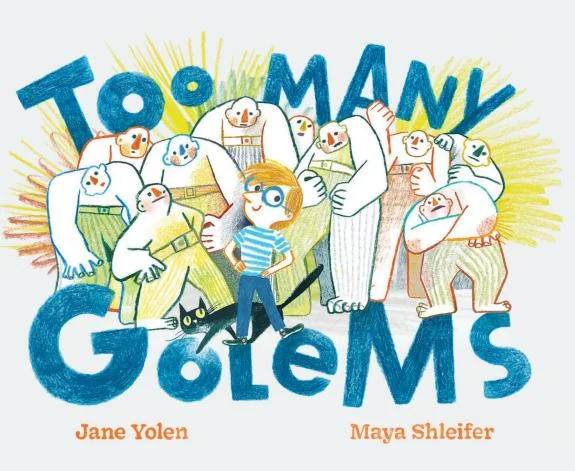
Jane Yolen, a celebrated author whose work often touches on folklore and myth, delivers "Too Many Golems" with her characteristic wit. The book’s premise—a boy accidentally creating ten golems—is immediately engaging and promises a delightful romp. Yolen masterfully handles the inherent humor in such a situation, particularly in the early pages where the sheer volume of golems begins to create comical predicaments. A standout element is the nuanced portrayal of the boy’s well-meaning but ultimately overwhelming efforts. However, the narrative, while charming, occasionally feels a touch too brief, leaving one wishing for deeper exploration of the golems' individual personalities or more extensive magical mishaps. The pacing, though brisk, could have benefited from a few more moments of quiet reflection amidst the chaos. Despite this, the story’s affectionate nod to Jewish folklore and its ability to evoke genuine smiles makes it a success. It's a charmingly executed, if slightly condensed, exploration of magical overabundance.
📝 Description
77
Jane Yolen's 'Too Many Golems' arrived in April 2024, humorously re-imagining a classic Jewish legend.
This story follows a young boy who accidentally summons ten golems, drawing inspiration from Jewish folklore. Instead of the serious protector often depicted in golem tales, these beings bring about a charming kind of chaos. The narrative focuses on the amusing results of having too many of these magical constructs around.
The book is well suited for young readers, families, and anyone interested in Jewish mythology. It will particularly appeal to those who enjoy stories about well-intentioned actions leading to unexpected, funny outcomes. Those new to the golem concept will find it an easy and enjoyable introduction.
The golem legend has deep roots in Jewish mysticism, appearing in texts like the Sefer Yetzirah and developing through Kabbalistic traditions. The tale of Rabbi Judah Loew ben Bezalel's golem in 16th century Prague, who protected the ghetto, is a well known example. Yolen's work engages with this historical motif, presenting a lighter, more numerous take on the animated clay figure for today's readers.
💡 Why Read This Book?
• Learn how an abundance of golems can lead to humorous chaos, offering a fresh, lighthearted perspective on the traditional Jewish folklore figure of the golem. • Experience Jane Yolen’s unique storytelling, characterized by a gentle touch and keen observational humor, as seen in her handling of the boy’s unintended magical spree. • Discover the concept of animated clay figures from Jewish tradition through a modern, accessible lens, prompting contemplation on creation and responsibility.
⭐ Reader Reviews
Honest opinions from readers who have explored this book.
❓ Frequently Asked Questions
What is a golem inspired by Jewish folklore?
A golem is a figure from Jewish folklore, typically an animated anthropomorphic being created entirely from inanimate matter, such as clay or mud, and brought to life through mystical means, often involving Hebrew letters or divine names.
Who is the author of Too Many Golems?
The author is Jane Yolen, an award-winning writer known for her contributions to children's literature and her engagement with folklore and fantasy.
When was Too Many Golems first published?
The book was first published on April 23, 2024.
What is the main theme of Too Many Golems?
The main theme revolves around the humorous consequences of a boy accidentally summoning too many golems, exploring themes of responsibility and unintended outcomes of magical actions.
Does the book feature complex magical systems?
No, the book focuses on a simple, folkloric magical act of golem creation, emphasizing the narrative and humorous aspects rather than intricate magical rules.
Is this book suitable for young children?
Yes, the book is described as a "delightfully humorous tale" inspired by folklore, making it suitable for younger readers and families who enjoy accessible stories.
🔮 Key Themes & Symbolism
The Many Golems
The core of the narrative lies in the proliferation of golems, a departure from the singular, often solitary golem of traditional lore. This abundance transforms the potential for protection or servitude into a source of comical disarray. The story uses this multiplicity to explore how even well-intentioned magical creations can become unmanageable, highlighting the delicate balance between power and control within mystical frameworks.
Accidental Magic and Responsibility
The boy's unintended summoning of ten golems underscores the theme of accidental magic, a common trope in folklore. It probes the recipient's sudden burden of responsibility for creations they did not fully intend or comprehend. This aspect connects to broader esoteric ideas about the consequences of invoking forces beyond one's immediate understanding, emphasizing foresight and careful intention in magical practice.
Humor in Folklore
Yolen injects significant humor into a subject often treated with solemnity. By focusing on the lighter side of golem creation and its ensuing chaos, the book makes Jewish folklore accessible and entertaining. This approach demonstrates how traditional narratives can be reinterpreted to resonate with contemporary audiences through wit and charm, proving that even ancient mystical concepts can be sources of laughter.
Jewish Mystical Traditions
The book serves as an accessible entry point to the rich world of Jewish mystical traditions, specifically the concept of the golem. While not a scholarly treatise, it playfully engages with motifs found in Kabbalistic thought, such as animation through divine language or intent. It offers a gateway for readers to become curious about the deeper mystical and philosophical underpinnings of these ancient stories.
💬 Memorable Quotes
Direct passages from the work, attributed to the author.
“A well-intentioned but mischievous boy who accidentally summons ten golems.”
— This captures the central conflict and charm of the story: the protagonist's earnestness colliding with magical mishap, leading to an abundance of animated clay figures.
“A delightful reimagining of Jewish folklore!”
— This speaks to the author's skillful adaptation of traditional narratives, presenting familiar elements in a fresh, appealing, and contemporary manner.
“Magic that will captivate children”
— This suggests the book's effectiveness in engaging a young audience with its magical elements and imaginative storytelling.
“This book put a big smile on my face!”
— Expresses the emotional impact of the book, emphasizing its ability to evoke joy and lightheartedness through its narrative and humor.
💡 Key Ideas
Editorial paraphrase of the work's core concepts — not direct quotes.
A truly original story that charmed me from start to finish.
This quote highlights the book's unique approach and its success in creating a delightful and engaging reading experience for its audience.
🌙 Esoteric Significance
Tradition
This work draws inspiration from the Kabbalistic tradition within Jewish mysticism, specifically the legend of the golem. Traditionally, the golem is an artificial being animated through divine names or Hebrew letters, representing a human attempt to replicate divine creation. Yolen's interpretation shifts the focus from the solemnity of this act to its humorous potential, recontextualizing the golem as a subject of lighthearted folklore rather than deep mystical practice.
Symbolism
The primary symbol is the golem itself, representing artificial life and the consequences of tampering with creation. The multiplicity of ten golems signifies an overwhelming, unmanageable force born from a simple act, symbolizing how intention can become distorted through excess. The clay from which golems are traditionally made symbolizes earthly matter, the raw material of existence waiting for animation or purpose.
Modern Relevance
In contemporary esoteric circles, the golem narrative continues to fascinate thinkers exploring artificial intelligence, creation myths, and the ethics of creation. While Yolen's book is a children's tale, it sparks curiosity about these deeper themes. Modern practitioners of Jewish mysticism or comparative mythology might use the story as a relatable entry point to discuss the historical golem legend and its symbolic interpretations regarding human agency and the divine.
👥 Who Should Read This Book
• Families seeking engaging stories that introduce children to Jewish culture and folklore in a fun, accessible way. • Readers interested in mythology and folklore who want to explore the concept of golems beyond more somber interpretations. • Educators and librarians looking for humorous, well-written books that touch upon cultural heritage and the consequences of actions.
📜 Historical Context
Jane Yolen's "Too Many Golems" emerges from a lineage of authors who have engaged with Jewish folklore, notably figures like Isaac Bashevis Singer, whose tales often explored mystical themes for adult and younger readers alike. The golem legend itself, famously associated with Rabbi Judah Loew ben Bezalel of Prague in the 16th century, gained widespread literary attention throughout the 19th and 20th centuries, appearing in works by Gustav Meyrink and later influencing science fiction. Yolen's 2024 publication participates in this ongoing reinterpretation of ancient motifs. While not directly engaging with contemporaneous esoteric movements of the late 20th century, such as the New Age surge, her work benefits from a broader cultural acceptance and interest in mythology and folklore studies that flourished from the mid-20th century onwards. The book's reception, as indicated by early praise, aligns with a contemporary appreciation for culturally specific narratives presented with warmth and accessibility.
📔 Journal Prompts
The accidental summoning of ten golems, reflect on the boy's initial intentions versus the outcome.
The nature of clay as a golem's material, consider its symbolic connection to earthly existence.
The proliferation of magical creations, explore the balance between power and control.
The humor derived from folkloric retellings, analyze how tradition can be reimagined.
The boy's responsibility for his golems, consider the weight of unintended consequences.
🗂️ Glossary
Golem
An animated anthropomorphic being, typically created from inanimate matter such as clay or mud, central to Jewish folklore and mysticism.
Jewish Folklore
The body of traditional stories, legends, customs, and beliefs originating from the Jewish people, often containing moral, mystical, or historical elements.
Kabbalah
A system of Jewish mysticism that explores the nature of God and the universe, often involving symbolic interpretations of religious texts and concepts.
Animation
The process of bringing something inanimate to life or seeming to make it move, often achieved through magical or mystical means in folklore.
Mysticism
The pursuit of achieving direct, intuitive knowledge of or communion with ultimate reality or divine truth, often through spiritual practices.
Folklore
The traditional beliefs, customs, and stories of a community, passed through the generations by word of mouth or practice.
Summon
To call upon or bring forth a spirit, entity, or magical being, often through ritual or invocation.
This book appears in 1 collection
🔮 Readers Also Liked
Browse all →






From the “Folklore Magic” Collection
View all →




More Free Magic & Ritual Books
View all →