Star in the east
 77
77

Star in the east
Vernon's "Star in the East" attempts a broad survey of esoteric thought, a task fraught with peril and often resulting in superficiality. Here, however, Vernon demonstrates a commendable grasp of the material, particularly in his tracing of influences from ancient mystery schools to 20th-century occult revivalists. His discussion of the symbolic language within alchemical texts, especially regarding the Great Work, offers a clear distillation of complex ideas. The work's primary limitation lies in its sheer scope; certain traditions receive only brief mention, leaving the reader with an incomplete picture. Vernon’s analysis of the Rosicrucian manifestos, for instance, while accurate, feels somewhat condensed. Despite this, the book provides a solid foundation for understanding the interconnectedness of various esoteric paths. It serves as a valuable, albeit brief, primer on the historical and conceptual landscape of Western mysticism.
📝 Description
77
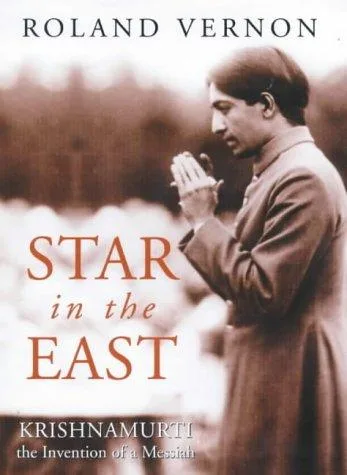
Roland Vernon's 2000 book, "Star in the East," examines esoteric traditions and their Western thought influence.
Roland Vernon's "Star in the East" is a comparative study of esoteric traditions and their impact on Western intellectual history. Published in 2000, it offers a synthesis of ideas that have shaped mystical inquiry for centuries. The book is not a narrative account but a detailed analysis that seeks to identify common threads within diverse esoteric systems. Vernon investigates how spiritual and philosophical currents connect, illuminating the shared foundations of various mystical paths.
The work is suited for readers with a background in comparative religion, occult history, and the philosophical basis of Western esotericism. It will appeal to those who value close textual analysis and the tracing of intellectual lineages across different traditions. Individuals looking for a comprehensive view of how various mystical paths intersect will find this volume particularly useful. Vernon's study engages with scholarly discussions on the evolution of Western occultism.
Published during a period of renewed interest in spirituality outside mainstream institutions, "Star in the East" joined a growing body of literature contextualizing esoteric traditions. The late 20th century saw increased popular engagement with these subjects. Vernon's work contributed to ongoing debates about the origins and development of Western occultism, a field shaped by figures like Eliphas Lévi and the Theosophical Society.
💡 Why Read This Book?
• Gain a structured understanding of how ancient mystery traditions informed later esoteric movements, specifically referencing the influence of Hermeticism on alchemical symbolism discussed in the text. • Appreciate the comparative analysis of spiritual concepts across diverse cultures and eras, focusing on the perennial philosophy as presented by Vernon. • Grasp the significance of symbolic language in esoteric texts, with particular attention to the alchemical Great Work as detailed in a specific chapter.
⭐ Reader Reviews
Honest opinions from readers who have explored this book.
❓ Frequently Asked Questions
What is the primary focus of Roland Vernon's "Star in the East"?
The book primarily focuses on the historical and conceptual connections between various Western esoteric traditions, examining how they have influenced each other and broader philosophical thought since antiquity.
When was "Star in the East" first published?
"Star in the East" by Roland Vernon was first published in the year 2000.
Who would benefit most from reading "Star in the East"?
Readers interested in comparative religion, occult history, Western esotericism, and the philosophical underpinnings of mystical traditions will find this book particularly beneficial.
Does the book discuss specific esoteric orders or movements?
Yes, the work explores various movements and traditions, including Hermeticism, alchemy, and references to the Rosicrucian manifestos, tracing their historical development and interconnections.
Is "Star in the East" a practical guide to occult practices?
No, it is primarily an academic and philosophical examination rather than a practical manual. It focuses on the history, concepts, and symbolism within esoteric traditions.
What makes "Star in the East" stand out from other books on esotericism?
Its strength lies in its structured approach to comparative analysis, drawing explicit links between disparate traditions and historical periods, offering a cohesive view of esoteric thought.
🔮 Key Themes & Symbolism
Esoteric Transmission
The work examines how knowledge and practices within esoteric traditions are passed down through generations. This includes initiatory lineages, symbolic language, and the preservation of core doctrines across diverse schools of thought. Vernon analyzes the mechanisms by which concepts from ancient mystery schools found their way into later systems like Hermeticism and alchemy, highlighting the continuity and adaptation of these ideas over centuries. The emphasis is on the enduring nature of certain spiritual insights, irrespective of their specific historical manifestation.
Symbolic Language of Alchemy
A significant portion of "Star in the East" is dedicated to deciphering the symbolic lexicon of alchemy. Vernon explores how alchemical texts utilized allegorical language, not merely for chemical processes, but as a vehicle for spiritual transformation. Concepts like the 'Great Work' are presented as encompassing both material transmutation and inner enlightenment, drawing parallels with psychological individuation. The book elucidates how symbols such as the Ouroboros and the Philosopher's Stone served as potent metaphors for cosmic principles and personal spiritual development.
Comparative Mystical Frameworks
Vernon undertakes a comparative study of various mystical traditions, seeking to identify commonalities and overarching patterns. The book investigates the concept of the perennial philosophy, suggesting a universal wisdom underlying diverse spiritual expressions. By contrasting and correlating ideas from Hermeticism, Gnosticism, and other esoteric currents, the author builds a framework for understanding their shared quest for knowledge of the divine or ultimate reality. This approach aims to reveal the interconnectedness of humanity's spiritual aspirations across history.
The Role of Cosmology
The book underscores the importance of cosmology in shaping esoteric worldviews. Vernon discusses how different traditions construct models of the universe to explain creation, divine order, and humanity's place within it. These cosmological frameworks often serve as blueprints for spiritual practice, guiding the seeker's understanding of macrocosmic and microcosmic correspondences. The work explores how celestial patterns, divine hierarchies, and the structure of the cosmos are mirrored in human consciousness and the path to spiritual attainment.
💬 Memorable Quotes
Direct passages from the work, attributed to the author.
“Hermetic principles, though ancient, find echoes in modern psychological theories of self-discovery.”
— This interpretation highlights Vernon's view that ancient Hermetic philosophy, with its emphasis on 'as above, so below,' contains universal truths that resonate with contemporary understandings of the human psyche and its development.
“Symbolism is the language through which the ineffable aspects of reality are communicated.”
— This concept underscores the book's focus on symbolic interpretation within esoteric traditions. It posits that symbols are essential tools for conveying spiritual or metaphysical truths that transcend ordinary language.
“The search for the 'Star in the East' represents an inner quest for divine knowledge.”
— This conceptual quote reflects the book's title and its underlying theme: the pursuit of spiritual awakening or gnosis, often symbolized by a guiding celestial light or inner revelation.
💡 Key Ideas
Editorial paraphrase of the work's core concepts — not direct quotes.
The Great Work encompasses both the transformation of base metals and the refinement of the human soul.
This paraphrase captures the dualistic interpretation of alchemy often presented in esoteric literature. It suggests that alchemical processes were understood not just as physical experiments but as allegorical representations of spiritual purification and enlightenment.
Interconnectedness is a foundational tenet, linking the microcosm of man to the macrocosm of the universe.
This paraphrased concept emphasizes the Hermetic principle of correspondence, suggesting that understanding the larger universe is achieved by studying the human being, and vice versa, a core idea explored throughout the book.
🌙 Esoteric Significance
Tradition
The work primarily engages with the Western Esoteric Tradition, drawing heavily from Hermeticism, Gnosticism, and alchemy. It seeks to synthesize these distinct yet interconnected lineages, presenting them not as isolated phenomena but as parts of a continuous stream of spiritual inquiry. Vernon's approach aligns with the 'traditionalist' school of thought, emphasizing a perennial wisdom that underlies diverse religious and mystical expressions, while critically examining their historical manifestations.
Symbolism
Key symbols explored include the Ouroboros, representing cyclical time, wholeness, and self-regeneration, often found in alchemical and Hermetic contexts. The 'Star in the East' itself functions as a potent symbol of divine guidance, enlightenment, or the manifestation of higher consciousness, echoing nativity narratives but reinterpreted esoterically. The Philosopher's Stone is discussed not merely as an alchemical agent but as a metaphor for spiritual perfection and the attainment of gnosis.
Modern Relevance
Contemporary practitioners of Hermeticism, ceremonial magic, and depth psychology often reference the foundational texts and concepts discussed in "Star in the East." Thinkers and groups exploring the perennial philosophy, such as those influenced by René Guénon or Ananda Coomaraswamy, find Vernon's comparative analysis relevant. The book's insights into alchemical symbolism also continue to inform contemporary esoteric studies and psychological interpretations of archetypes.
👥 Who Should Read This Book
• Students of Western Esotericism: Those seeking to understand the historical connections and core concepts of traditions like Hermeticism, alchemy, and Gnosticism will find a structured overview. • Comparative Religion Scholars: Individuals interested in tracing the influence of mystical thought across different cultures and historical periods will benefit from the book's analytical approach. • Spiritual Seekers Exploring Symbolism: Readers drawn to the metaphorical and symbolic language of spiritual traditions, particularly alchemy, will gain insights into their esoteric meanings.
📜 Historical Context
Roland Vernon's "Star in the East" was published in 2000, a period marked by widespread interest in New Age spirituality and a resurgence of academic attention to occultism. The late 20th century saw scholars like Frances Yates and Antoine Faivre re-examining the historical significance of Hermeticism, Kabbalah, and Renaissance magic, providing a fertile ground for works like Vernon's. Published amidst this intellectual climate, "Star in the East" engaged with the ongoing scholarly discourse on the continuity and evolution of Western esoteric traditions. It emerged alongside a broader cultural trend that sought alternative spiritual frameworks outside conventional religious structures. While not directly engaging in public debate, its publication contributed to the discourse initiated by figures like Manly P. Hall and the Theosophical Society, which had previously popularized many of these subjects for a wider audience.
📔 Journal Prompts
The symbolic meaning of the 'Star in the East' in your personal spiritual journey.
Reflect on the concept of 'esoteric transmission' and its role in preserving ancient wisdom.
Analyze the parallels between alchemical processes and personal psychological development.
Consider how cosmological frameworks shape spiritual understanding.
Explore the idea of the 'Great Work' as both an inner and outer transformation.
🗂️ Glossary
Hermeticism
A religious, philosophical, and esoteric tradition based on writings attributed to Hermes Trismegistus. It emphasizes principles like 'as above, so below,' and the interconnectedness of all things.
Alchemy
An ancient tradition of chemical philosophy and mystical practice, concerned with the transmutation of substances, the creation of the elixir of life, and spiritual purification.
Gnosticism
A complex set of religious ideas and systems that emerged in the first centuries CE, emphasizing spiritual knowledge (gnosis) for salvation, often involving a dualistic worldview.
Perennial Philosophy
The idea that all major religious traditions share a common, underlying spiritual truth or wisdom, often attributed to Aldous Huxley.
Great Work (Main work)
In alchemy, the process of creating the Philosopher's Stone, often interpreted as a metaphor for spiritual transformation and enlightenment.
Cosmology
The study or theory of the origin, nature, and development of the universe. In esoteric contexts, it often involves divine hierarchies and cosmic principles.
Ouroboros
An ancient symbol depicting a serpent or dragon eating its own tail, symbolizing cyclicality, eternity, and the unity of opposites.
🔮 Readers Also Liked
Browse all →


More by Roland Vernon
All books →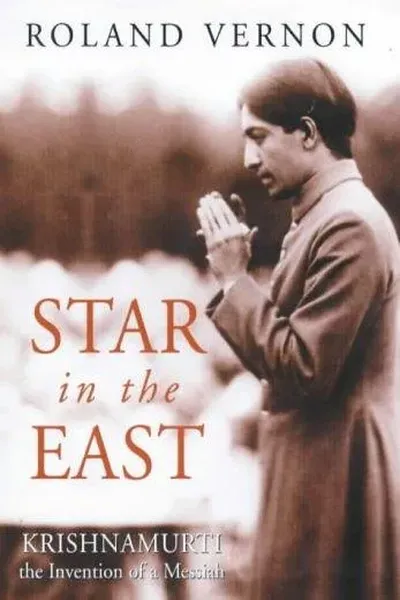
More Free Theosophy & Anthroposophy Books
View all →