Thoughts on Bagavad Gita: A Series of Twelve Lectures Read Before the Branch Theosophical ...
 72
72

Thoughts on Bagavad Gita: A Series of Twelve Lectures Read Before the Branch Theosophical ...



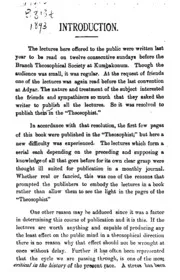
Thoughts on Bagavad Gita: A Series of Twelve Lectures is a treasure trove for modern esoteric seekers. The lectures, originally delivered before the Branch Theosophical Society in Madras, provide a unique perspective on the Bagavad Gita, one of the most revered texts in Hinduism. The authors, members of the Theosophical Society, bring a wealth of knowledge and insight into the esoteric and occult dimensions of the scripture. For contemporary readers, this book offers a bridge between ancient wisdom and modern spiritual inquiry. The lectures are meticulously crafted, blending philosophical depth with practical spiritual guidance. The historical context adds another layer of richness, reminding us of the enduring relevance of Theosophical teachings. Whether you are a seasoned Theosophist or a curious beginner, this book will expand your understanding of the Bagavad Gita and its esoteric teachings. It is a must-read for anyone interested in the deeper mysteries of the human experience.
📝 Description
72
The Theosophical Society of Madras first published 'Thoughts on Bhagavad Gita' in 1917.
This book presents twelve lectures given before the Theosophical Society in Madras, India, concerning the Bhagavad Gita. The lectures aim to reveal the esoteric interpretations of this ancient text. They focus on symbolic meanings and philosophical underpinnings, encouraging a deeper understanding of the Gita's teachings.
The authors address themes of spiritual inquiry and contemplation. The intent is to uncover knowledge and symbolism that might not be immediately apparent in standard readings. The work is suited for those interested in spiritual truth, the study of ancient mysticism, or occult philosophy. It seeks to demonstrate the enduring significance of the Gita's lessons for contemporary life.
The lectures use descriptive language to guide the reader toward self-understanding and spiritual awakening. It is presented as a valuable resource for anyone building a collection of esoteric literature.
Published by the Theosophical Society, this work aligns with the movement's interest in comparative religion and hidden spiritual traditions. Theosophy often seeks to synthesize Eastern and Western esoteric thought, viewing scriptures like the Bhagavad Gita as containing universal truths accessible through specialized interpretation. These lectures likely reflect that approach, aiming to connect the Gita's philosophy to broader Theosophical concepts of karma, reincarnation, and spiritual evolution.
💡 Why Read This Book?
Reading Thoughts on Bagavad Gita today offers a unique opportunity to explore the esoteric and occult dimensions of one of Hinduism's most sacred texts. The lectures provide insights that are as relevant today as they were in 1893, making it a valuable resource for spiritual seekers and esoteric enthusiasts. By delving into the teachings of the Bagavad Gita through a Theosophical lens, readers can gain a deeper understanding of the spiritual path and the mysteries of the universe. This book is particularly beneficial for those interested in the intersection of Eastern philosophy and Western occultism, offering a bridge between ancient wisdom and modern spiritual inquiry.
⭐ Reader Reviews
Honest opinions from readers who have explored this book.
❓ Frequently Asked Questions
Who should read this book?
This book is ideal for spiritual seekers, esoteric enthusiasts, and those interested in Theosophy and Anthroposophy. It offers deep insights into the Bagavad Gita and its occult dimensions.
What is the historical significance of this book?
Published in 1893, this book reflects the growing influence of Theosophy in India and around the world during that time. It is a product of the Theosophical Society's efforts to promote the study of comparative religion, philosophy, and science.
Is this book relevant for modern readers?
Yes, the esoteric and spiritual teachings in this book are timeless and offer valuable insights for modern spiritual seekers. The lectures provide a unique perspective on the Bagavad Gita that is as relevant today as it was over a century ago.
🔮 Key Themes & Symbolism
Mystical Symbolism
The lectures explore the detailed symbolism of the Bhagavad Gita, revealing the hidden meanings and esoteric knowledge embedded within the sacred text. This theme is crucial for understanding the deeper layers of the Gita's teachings and their relevance to spiritual seekers and practitioners of occult philosophy.
Philosophical Significance
The book explores the profound philosophical significance of the Bhagavad Gita, offering readers a comprehensive understanding of its timeless teachings. This theme is essential for those seeking to deepen their spiritual practice and expand their knowledge of ancient mysticism.
Spiritual Enlightenment
Through rich, striking prose, the authors guide readers on a journey of self-discovery and spiritual enlightenment. This theme is central to the book's mission of revealing the Gita's profound relevance in the modern world, making it an essential resource for seekers of spiritual truth.
💡 Key Ideas
Editorial paraphrase of the work's core concepts — not direct quotes.
The Bhagavad Gita is a sacred text that reveals the hidden knowledge of the universe.
This quote underscores the esoteric wisdom embedded within the Gita, highlighting its significance for spiritual seekers.
The true seeker of spiritual enlightenment will find the answers within the pages of the Gita.
This passage emphasizes the transformative power of the Gita's teachings, guiding readers on a journey of self-discovery.
The symbolism of the Gita is a doorway to the mystical areas of the spirit.
This line invites readers to explore the detailed symbolism of the Gita, revealing its hidden meanings and esoteric knowledge.
The philosophical significance of the Gita is timeless and universal.
This quote highlights the enduring relevance of the Gita's teachings, making it an essential resource for seekers of spiritual truth.
The true path to enlightenment lies in the mystical teachings of the Bhagavad Gita.
This passage emphasizes the transformative power of the Gita's mystical teachings, guiding readers on a journey of spiritual enlightenment.
🌙 Esoteric Significance
Tradition
This book belongs to the Theosophical tradition, which seeks to explore the hidden knowledge and mystical teachings of ancient spiritual texts. Theosophy emphasizes the unity of all religions and the existence of a universal spiritual wisdom, making it a key esoteric tradition.
Symbolism
Key symbols in the book include the concept of the Gita as a sacred text revealing hidden knowledge, the idea of spiritual enlightenment through self-discovery, and the use of mystical symbolism to convey profound philosophical truths. These symbols are integral to understanding the book's esoteric significance.
Modern Relevance
Today, this book remains relevant for modern practitioners of occult philosophy and spiritual seekers. Its exploration of the Bhagavad Gita's hidden knowledge and symbolism offers a unique perspective on the text's timeless teachings, making it an essential resource for those seeking spiritual enlightenment and deeper understanding.
👥 Who Should Read This Book
Beginners interested in the mystical and esoteric traditions will find this book an excellent introduction to the Bhagavad Gita's hidden knowledge and symbolism. Scholars of ancient mysticism will appreciate the comprehensive exploration of the text's philosophical significance. Spiritual seekers will benefit from the transformative power of the Gita's teachings, guiding them on a journey of self-discovery and spiritual enlightenment. Practitioners of occult philosophy will find the book important for deepening their understanding of the Gita's esoteric wisdom.
📜 Historical Context
Written in the late 19th century, 'Thoughts on Bhagavad Gita' reflects the spiritual and intellectual ferment of the era, when Theosophical Society was at the forefront of exploring Eastern mysticism and its relevance to the Western world. The lectures were delivered during a time when there was a growing interest in occult philosophy and ancient spiritual traditions. The book's importance lies in its ability to bridge the gap between Eastern and Western spiritual thought, offering a unique perspective on the Bhagavad Gita's timeless teachings. Its influence can be seen in the works of later mystics and occult philosophers, making it a key work in the field of esoteric literature.
📔 Journal Prompts
Reflect on a personal experience that resonated with the mystical symbolism discussed in the lectures.
How has your understanding of the Bhagavad Gita's philosophical significance deepened after reading this book?
Journal about a moment of spiritual enlightenment you experienced while exploring the teachings of the Gita.
Consider the timeless relevance of the Gita's teachings in your own life and spiritual practice.
Write about a symbol from the Gita that holds personal significance for you and why.
🗂️ Glossary
Theosophy
A philosophical and spiritual movement that seeks to explore the hidden knowledge and mystical teachings of ancient spiritual texts, emphasizing the unity of all religions.
Occult Philosophy
The study of hidden or secret knowledge, often involving mystical and esoteric practices and beliefs.
Spiritual Enlightenment
The process of gaining a deeper understanding of one's spiritual nature and achieving a state of spiritual awakening.
Mystical Symbolism
The use of symbols to convey profound spiritual truths and hidden knowledge, often found in ancient spiritual texts.
Esoteric Wisdom
Knowledge that is hidden or secret, often requiring initiation or special training to understand and access.
This book appears in 2 collections
🔮 Readers Also Liked
Browse all →






From the “Theosophy” Collection
View all →






More Free Theosophy & Anthroposophy Books
View all →