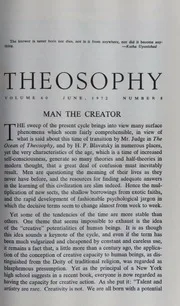
Theosophy
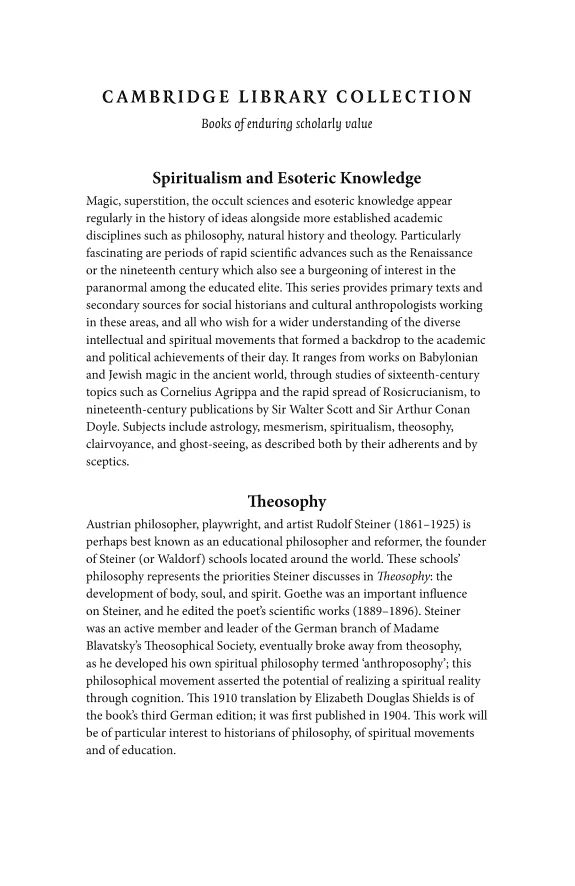
 78
78

Theosophy
The collection titled 'Theosophy' offers a direct encounter with the foundational ideas that propelled a significant spiritual movement of the late 19th and early 20th centuries. The inclusion of essays by Rudolf Steiner, Elizabeth Douglas Shields, and Henry B. Monges provides a multi-faceted view of the early Theosophical landscape. Steiner’s contributions, in particular, reveal his distinct approach to spiritual science, which would later blossom into Anthroposophy. A strength lies in the unvarnished presentation of complex concepts like karma and reincarnation, allowing readers to grapple with them directly. However, the dense prose and the inherent philosophical challenges of Theosophy can make it a demanding read for newcomers. The discussion of 'root races' in some Theosophical literature, while historically significant to the movement, requires careful contextualization due to its problematic implications. Despite these challenges, the book serves as an essential primary source for understanding the intellectual currents that shaped modern esotericism. It is a valuable, albeit dense, exploration of theosophical origins.
📝 Description
78
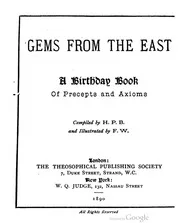
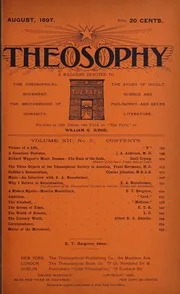
This 1890s collection gathers essays by Steiner, Shields, and Monges on theosophy.
This volume presents early writings on theosophy, a movement that emerged in the late 19th century. It sought to unite Eastern and Western religious, philosophical, and scientific ideas, suggesting a common wisdom beneath all traditions. The book includes key essays and lectures from figures central to its initial development.
Readers will find discussions on esoteric principles, the nature of consciousness, and the development of humanity and the cosmos. The writings aim to establish a way of understanding spiritual realities that go beyond physical perception. This work is suitable for students and scholars of comparative religion, Western esotericism, and the history of ideas. It will interest those curious about movements that try to connect science and spirituality, especially during the intellectually active late Victorian and Edwardian periods.
Theosophy, as represented here, emerged from a late 19th-century desire to bridge Western and Eastern spiritual thought. It offered an alternative cosmology to prevailing materialism and orthodox religion, emphasizing universal brotherhood and the investigation of latent human powers. Figures like Helena Blavatsky were instrumental in its founding and early growth. This collection reflects that foundational period, placing these ideas within the broader context of Western esoteric traditions that sought to understand spiritual dimensions of existence.
💡 Why Read This Book?
• Learn about the concept of karma and reincarnation as foundational principles of spiritual evolution, as explored in the early writings of Theosophy, providing a basis for understanding cyclical existence. • Discover the historical context of the Theosophical Society's founding in 1875, understanding its aims to synthesize Eastern and Western thought amidst Victorian intellectual currents. • Grasp the idea of subtle bodies—etheric, astral, and mental—and their proposed functions in human consciousness and spiritual development, as outlined in foundational theosophical texts.
⭐ Reader Reviews
Honest opinions from readers who have explored this book.
❓ Frequently Asked Questions
What is the primary goal of Theosophy as presented in this book?
The primary goal of Theosophy, as explored in this volume, is to reveal a universal wisdom underlying all religions and philosophies, fostering brotherhood and investigating the esoteric laws of nature and human potential.
Who were some key figures associated with the early Theosophical movement featured in this book?
Key figures include Rudolf Steiner, who developed his own spiritual science, and contributions from Elizabeth Douglas Shields and Henry B. Monges, all central to disseminating Theosophical ideas in the early period.
Does this book explain the concept of reincarnation?
Yes, the book discusses reincarnation as a fundamental principle within Theosophy, presenting it as a process of soul evolution across multiple lifetimes, influenced by karma.
What is the historical significance of Theosophy's emergence?
Theosophy emerged in 1875, a period of intense interest in spiritualism and Eastern philosophies in the West. It offered an alternative to materialism and orthodox religion, influencing subsequent esoteric movements.
Are there specific symbols or motifs explained in this collection?
While not a primary focus of all sections, the text implicitly engages with symbols of cosmic and human evolution, the concept of spiritual hierarchies, and the idea of hidden wisdom that permeates existence.
Is this book suitable for beginners interested in esoteric philosophy?
This book offers foundational material but is written in a scholarly style. Beginners may find it dense and might benefit from introductory texts on Theosophy before engaging with these primary essays.
🔮 Key Themes & Symbolism
Spiritual Evolution of Humanity
The collection explores the Theosophical concept of humanity's long evolutionary path, not merely biological but spiritual. It posits that consciousness evolves through successive stages, often conceptualized as 'root races' and 'rounds,' guided by spiritual hierarchies. This evolutionary framework extends beyond a single lifetime, incorporating principles of karma and reincarnation to explain individual and collective progress towards higher states of being and awareness.
The Nature of Karma and Reincarnation
Central to Theosophical thought presented here is the law of karma, understood as the principle of cause and effect governing all actions and their consequences. This is inextricably linked to reincarnation, the process by which the soul (or Monad) takes on new physical bodies over many lifetimes to learn lessons and work through karmic debts. The texts aim to elucidate these laws as fundamental to understanding existence and spiritual development.
Esoteric Cosmology and Hierarchies
The work studies a complex cosmology that posits multiple planes of existence beyond the physical, inhabited by various spiritual beings and hierarchies. These unseen forces and intelligences, including the purported Mahatmas or Masters, are seen as guiding the evolutionary process of the planet and its inhabitants. Understanding these hidden structures is presented as key to comprehending the deeper workings of the universe.
The Synthesis of Religions and Sciences
A core tenet of Theosophy, as represented in these writings, is the belief in a singular, ancient wisdom tradition ('Sophia') from which all world religions and philosophies have sprung. The movement sought to demonstrate the common esoteric truths underlying diverse faiths and to reconcile these with emerging scientific discoveries, proposing a spiritual science that could explain phenomena beyond the scope of conventional materialism.
💬 Memorable Quotes
Direct passages from the work, attributed to the author.
“Karma is the unerring law of cause and effect in the moral and spiritual realms.”
— This captures the essence of the karmic principle as presented in Theosophy: every action generates a corresponding reaction, shaping an individual's destiny across lifetimes.
“Humanity undergoes a long process of evolution through successive incarnations.”
— This reflects the Theosophical belief in reincarnation as a mechanism for the soul's gradual development and learning across numerous physical existences.
“There are spiritual hierarchies that guide the development of the cosmos.”
— This conveys the Theosophical idea of unseen, advanced beings or masters who play a role in the overarching plan for the evolution of the universe and its inhabitants.
“Spiritual science investigates realities beyond the physical senses.”
— This points to Theosophy's ambition to establish a system of knowledge that expands beyond empirical observation, exploring inner and subtle dimensions of existence.
💡 Key Ideas
Editorial paraphrase of the work's core concepts — not direct quotes.
Theosophy seeks to establish the fundamental unity of all religions.
This paraphrased concept highlights Theosophy's aim to uncover the common spiritual source and underlying truths shared by diverse religious and philosophical traditions worldwide.
🌙 Esoteric Significance
Tradition
This work is intrinsically linked to the Theosophical tradition, a syncretic esoteric movement founded in the late 19th century. It draws heavily on Eastern concepts such as karma, reincarnation, and cyclical cosmology, while also incorporating elements from Hermeticism, Neoplatonism, and Gnosticism. Theosophy sought to present itself as the 'Ancient Wisdom' underlying all religions and sciences, aiming to provide a coherent spiritual philosophy for the modern age.
Symbolism
The texts implicitly engage with symbolism related to cosmic and human evolution, often represented through cyclical diagrams and concepts of ascending and descending spiritual forces. The idea of 'root races' can be seen as a symbolic representation of humanity's developmental stages. The concept of the 'Mahatmas' or Masters functions symbolically as guides and exemplars of spiritual attainment, representing the hidden wisdom and benevolent direction of the universe.
Modern Relevance
Theosophy's ideas profoundly influenced numerous subsequent esoteric and New Age movements throughout the 20th century. Thinkers like Rudolf Steiner, who later founded Anthroposophy, developed Theosophical concepts into distinct systems. Modern spiritual seekers, practitioners of meditation, and those interested in comparative religion often encounter Theosophical concepts such as karma, subtle bodies, and spiritual evolution, demonstrating its enduring, albeit often indirect, impact on contemporary spiritual thought.
👥 Who Should Read This Book
• Students of comparative religion and Western esotericism seeking to understand the origins and core tenets of the Theosophical movement. • Scholars of intellectual history interested in the philosophical and spiritual currents of the late 19th and early 20th centuries that challenged materialism. • Individuals exploring concepts like karma, reincarnation, and spiritual evolution who wish to engage with foundational texts of a major esoteric tradition.
📜 Historical Context
Theosophy emerged in New York City in 1875, a fertile ground for spiritual and intellectual exploration during the late 19th century. This era was marked by widespread fascination with spiritualism, mesmerism, and a growing interest in Eastern religions like Hinduism and Buddhism, often filtered through a Western lens. The founding of the Theosophical Society by Helena Blavatsky, Henry Steel Olcott, and William Quan Judge aimed to create a global brotherhood, promote the study of comparative religion, and investigate unexplained phenomena. This movement stood in contrast to the prevailing scientific materialism and orthodox religious doctrines of Victorian England and America. Key contemporaries included figures like Helena Blavatsky herself, whose 'Isis Unveiled' (1877) became a foundational text, and later Annie Besant. Theosophy engaged with and influenced a range of esoteric thinkers and movements, challenging established paradigms and advocating for a universal wisdom tradition.
📔 Journal Prompts
The concept of spiritual evolution across root races.
Rudolf Steiner's interpretation of the human subtle bodies.
The foundational principles of the Theosophical Society's mission.
Investigating the law of karma as presented in the text.
The synthesis of Eastern and Western thought in early Theosophy.
🗂️ Glossary
Theosophy
A spiritual philosophy and movement founded in the late 19th century, aiming to reveal a universal wisdom underlying all religions, philosophies, and sciences, and to promote universal brotherhood.
Karma
The esoteric principle of cause and effect, where actions in one life influence the circumstances and experiences of future lives.
Reincarnation
The cyclical process by which a soul or spiritual essence is reborn into a new physical body after death, to continue its evolutionary journey.
Mahatmas
In Theosophy, highly evolved spiritual beings or masters who are said to guide humanity's spiritual evolution from behind the scenes.
Root Races
A Theosophical concept describing distinct stages in the evolutionary development of humanity, each characterized by specific physical and spiritual attributes.
Subtle Bodies
Non-physical aspects of the human constitution, such as the etheric, astral, and mental bodies, believed to interpenetrate the physical body and be vehicles for consciousness.
Spiritual Science
A term used by Theosophists, particularly Rudolf Steiner, to describe a method of investigating spiritual realities and laws through inner perception and higher consciousness.
🔮 Readers Also Liked
Browse all →







More Free Theosophy & Anthroposophy Books
View all →