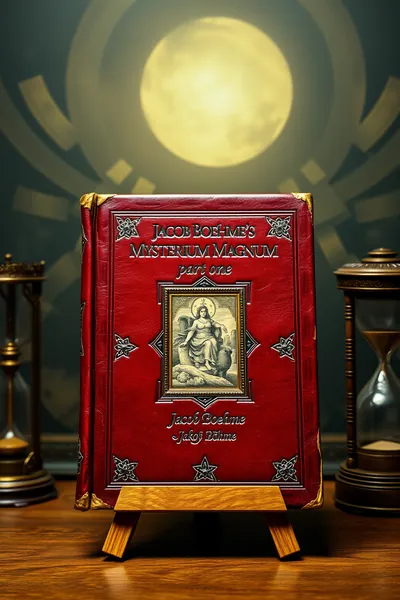
Theosophy answers some problems of life

 79
79

Theosophy answers some problems of life
Geoffrey Hodson's "Theosophy Answers Some Problems of Life" attempts to distill complex Theosophical doctrines into accessible answers for common human anxieties. Hodson, a significant figure in the Theosophical Society, writes with a measured, authoritative tone that seeks to reassure rather than challenge. The book's strength lies in its consistent application of Theosophical principles—karma, reincarnation, the multifaceted nature of consciousness—to issues like suffering and personal responsibility. For instance, the explanation of life's challenges as lessons in karmic progression offers a coherent, albeit deterministic, perspective. However, the work's limitation is its inherent reliance on presupposing the validity of Theosophical cosmology. Readers unfamiliar with or skeptical of its foundational tenets, such as the existence of subtle bodies or specific spiritual hierarchies, may find the explanations circular or unconvincing. A passage discussing the "Law of Sacrifice" as a cosmic principle driving evolution, while conceptually rich, requires a significant leap of faith for the uninitiated. Ultimately, it serves as a clear exposition of Theosophical solutions for those already within its framework.
📝 Description
79
Geoffrey Hodson's 2003 book addresses life's fundamental questions through Theosophy.
First published in 2003, "Theosophy Answers Some Problems of Life" by Geoffrey Hodson offers a Theosophical perspective on enduring human concerns. Hodson frames existence, consciousness, and reality through established Theosophical principles like karma, reincarnation, and the subtle bodies. He presents these ideas not as rigid doctrines, but as reasoned conclusions drawn from a spiritual viewpoint. The book aims to provide clarity and comfort to individuals seeking a deeper understanding of life's challenges, such as suffering and the search for purpose.
This work is best suited for those already familiar with or curious about Theosophy, the spiritual philosophy that Helena Blavatsky introduced in the late 19th century. Readers who ponder existential questions and are receptive to non-material explanations will find value here. It will also interest those studying comparative religion, esoteric psychology, or seeking to apply spiritual principles to daily life. The book suits students of spiritual science and anyone examining alternative views on consciousness and human development.
Theosophy, originating in the late Victorian era with Helena Blavatsky's influential works like "Isis Unveiled" and "The Secret Doctrine," sought to reconcile ancient spiritual traditions with contemporary thought. It drew heavily on Eastern philosophies and Western esotericism. Geoffrey Hodson, a notable 20th-century Theosophist, continued this intellectual lineage. Published in 2003, this book represents a later articulation of Theosophical ideas, aiming to address modern existential issues using its core tenets.
💡 Why Read This Book?
• You will gain a structured Theosophical perspective on life's difficulties, understanding how concepts like karma and reincarnation, as presented in the book, offer a framework for interpreting personal challenges. • You will learn how Hodson articulates the function of "subtle bodies" in relation to consciousness and experience, providing a model for understanding inner states beyond the purely physical. • You will explore the Theosophical view of "divine purpose" in human life, offering a spiritual rationale for existence and evolution that contrasts with purely materialistic or existentialist viewpoints.
⭐ Reader Reviews
Honest opinions from readers who have explored this book.
❓ Frequently Asked Questions
What is the primary goal of Geoffrey Hodson's "Theosophy Answers Some Problems of Life"?
The book aims to address common human existential questions and life challenges by applying the principles of Theosophy, offering a spiritual framework for understanding suffering, purpose, and the nature of reality.
When was "Theosophy Answers Some Problems of Life" first published?
The work was first published in 2003, reflecting a later articulation of Theosophical thought by Geoffrey Hodson, a notable figure in the movement.
What role does karma play in the book's explanations?
Karma is presented as a fundamental law of cause and effect, explaining the origin of present circumstances and individual experiences as consequences of past actions, guiding the process of soul evolution.
Does the book discuss reincarnation?
Yes, reincarnation is a central concept, explained as the process through which the soul progresses over multiple lifetimes, learning lessons and evolving towards spiritual realization.
Who was Helena Blavatsky in relation to this book?
Helena Blavatsky is the founder of the Theosophical movement, whose seminal works laid the philosophical and doctrinal foundation upon which Geoffrey Hodson builds his explanations in "Theosophy Answers Some Problems of Life."
What are "subtle bodies" according to the book?
Subtle bodies are described as non-physical vehicles of consciousness, such as the astral and mental bodies, through which individuals experience different states of being and interact with various planes of existence.
🔮 Key Themes & Symbolism
Karma and Reincarnation
The book posits karma not as arbitrary fate, but as an impersonal, unerring law of cause and effect that shapes individual destinies across lifetimes. Reincarnation is the vehicle for this process, allowing the soul to learn and evolve through successive physical lives. Hodson explains how current life circumstances, including challenges and opportunities, are viewed as direct outcomes of past actions, offering a framework for understanding personal responsibility and the long-term arc of spiritual development.
The Nature of Consciousness
Hodson elaborates on the Theosophical understanding of consciousness extending beyond the physical brain. The work explores the concept of "subtle bodies"—astral, mental, and causal—as distinct vehicles through which consciousness operates on different planes of existence. This multi-layered view of the self is presented as essential for comprehending experiences like dreams, intuition, and the transition between physical lives, suggesting a richer, non-material dimension to human awareness.
Spiritual Purpose and Evolution
A core theme is the idea that human life serves a grander, divinely orchestrated purpose within a cosmic evolutionary plan. The book suggests that individual struggles and the collective progress of humanity are integral to this unfolding. This perspective imbues existence with meaning, framing challenges as necessary steps in the soul's journey towards higher states of awareness and unity with the divine, guided by unseen spiritual forces.
Solving Life's Problems
The book directly addresses the reader's search for answers to suffering, injustice, and the apparent meaninglessness of life. By applying Theosophical principles, Hodson offers a coherent system that reframes these issues not as random misfortunes, but as opportunities for karmic balancing and spiritual growth. The emphasis is on understanding the underlying spiritual laws that govern existence, thereby providing a basis for inner peace and constructive action.
💬 Memorable Quotes
Direct passages from the work, attributed to the author.
“Life's problems are lessons in disguise.”
— This expresses the book's view of adversity not as punishment, but as essential opportunities for the soul's learning and karmic progression. It suggests that perceived difficulties are precisely designed to foster spiritual growth.
“The subtle bodies are vehicles for the evolving consciousness.”
— This highlights the Theosophical concept that human awareness is not confined to the physical form. These non-physical "bodies" are presented as instrumental in experiencing different realities and facilitating the soul's journey through various states of existence.
“Reincarnation provides the stage for the soul's unfolding.”
— This interpretation frames reincarnation as the necessary process for the soul's continuous development. It implies that a single lifetime is insufficient for the complete learning and evolution intended for the spiritual self.
“The universe operates according to divine, intelligent law.”
— This reflects the book's assertion that existence is not chaotic or accidental, but governed by rational, spiritual principles. It points to an underlying order and purpose driving the cosmos and all its inhabitants.
💡 Key Ideas
Editorial paraphrase of the work's core concepts — not direct quotes.
Karma ensures that every action has a consequence that shapes future experience.
This paraphrased concept emphasizes the law of cause and effect as a fundamental principle. It suggests that our present reality is a direct result of our past choices and actions, underscoring personal responsibility within a cosmic order.
🌙 Esoteric Significance
Tradition
This work is firmly rooted in the Theosophical tradition, initiated by Helena Blavatsky in the late 19th century. It adheres to Theosophy's core tenets: the universality of spiritual truth, the interconnectedness of all life, and the cyclical nature of existence through karma and reincarnation. Hodson's writing represents a continuation and popularization of these ideas, seeking to make them relevant for contemporary spiritual seekers by addressing practical life concerns through this specific esoteric lens.
Symbolism
The book frequently engages with symbolic representations of spiritual concepts. For instance, the "Tree of Life" (though not explicitly detailed in this summary, it's a common Theosophical symbol) often represents cosmic order and evolution. "Light" is consistently used to symbolize knowledge, consciousness, and the divine. The concept of "planes of existence" can be seen as a symbolic map of reality, illustrating the multi-dimensional nature of the cosmos and consciousness beyond the physical.
Modern Relevance
Contemporary spiritual seekers, particularly those interested in New Age thought, comparative religion, and esoteric psychology, continue to draw upon Theosophical concepts articulated by figures like Hodson. His explanations of karma, reincarnation, and subtle bodies echo in modern discussions on mindfulness, consciousness studies, and personal growth. Thinkers exploring the integration of spirituality and science, or those seeking frameworks for understanding suffering and purpose outside traditional religious doctrines, often find Hodson's work a foundational text.
👥 Who Should Read This Book
• Students of esoteric philosophy seeking a clear explanation of Theosophical doctrines like karma and reincarnation as applied to life's difficulties. • Individuals grappling with existential questions who are open to non-materialistic explanations for suffering and purpose, and are looking for a structured spiritual viewpoint. • Researchers of comparative religion and spiritual movements interested in understanding the evolution and practical application of Theosophical thought in the 20th century.
📜 Historical Context
Geoffrey Hodson's "Theosophy Answers Some Problems of Life," published in 2003, emerged long after the initial fervor surrounding Theosophy in the late 19th and early 20th centuries. The movement, spearheaded by Helena Blavatsky, sought to synthesize Eastern mysticism with Western thought, challenging prevailing materialism. By the time of this book's publication, Theosophy had evolved through influential figures like Annie Besant and Charles Leadbeater, and had seen schisms, notably Rudolf Steiner's departure to found Anthroposophy. Hodson himself was a prominent Theosophist and lecturer, active for much of the 20th century. This work reflects a more mature, perhaps less polemical, phase of Theosophical writing, aiming to provide reasoned explanations for persistent human questions within the established framework. It engaged with intellectual currents that valued psychological depth and spiritual inquiry, continuing a tradition that sought to bridge science, philosophy, and religion, though its reception was primarily within its dedicated following rather than mainstream academia.
📔 Journal Prompts
The concept of karmic lessons: How might your current challenges be viewed as opportunities for growth?
Reflecting on subtle bodies: What sensations or intuitions might relate to experiences beyond the physical form?
Theosophical purpose: How does the idea of a grand evolutionary plan influence your sense of personal direction?
The law of cause and effect: Identify one recent action and its perceived consequence, considering its karmic implications.
Hodson's answers to life's problems: Which aspect of the Theosophical framework offers the most compelling perspective for you?
🗂️ Glossary
Theosophy
A spiritual philosophy founded in the late 19th century, aiming to synthesize ancient wisdom traditions with modern scientific and philosophical understanding, emphasizing universal brotherhood, comparative religion, and the study of occult phenomena.
Karma
In Theosophy, the universal law of cause and effect that governs all actions and their consequences, influencing the experiences and evolution of souls across multiple lifetimes.
Reincarnation
The Theosophical doctrine that the soul (or essential self) passes through a series of physical lives, each offering opportunities for learning, development, and karmic resolution.
Subtle Bodies
Non-physical vehicles of consciousness described in Theosophy, such as the astral, mental, and causal bodies, through which the soul experiences different planes of existence.
Spiritual Hierarchies
In Theosophical cosmology, organized groups of spiritual beings or intelligences who guide the evolution of the cosmos and humanity, working through various cosmic and planetary processes.
Planes of Existence
Different levels or domains of reality beyond the physical, each characterized by its own substance, laws, and types of consciousness, through which spiritual evolution occurs.
Divine Purpose
The overarching, intelligent plan or intention believed to guide the evolution of the universe and all beings within it, suggesting that life is inherently meaningful and directed.
🔮 Readers Also Liked
Browse all →





More by Geoffrey Hodson
All books →





More Free Theosophy & Anthroposophy Books
View all →