Theosophy across Boundaries
 72
72

Theosophy across Boundaries
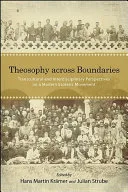
Hans Martin Krämer and Julian Strube’s edited volume offers a welcome corrective to Eurocentric accounts of esoteric movements. Rather than presenting Theosophy as a static doctrine, the contributors map its energetic, often contradictory, global diffusion. The strength lies in the granular, regional studies, particularly the examination of Theosophical activities in Vietnam and China, which reveal fascinating adaptations of Western esoteric ideas to distinct cultural matrices. A limitation, perhaps inherent in such a wide-ranging survey, is that the depth of analysis varies between essays. One particularly striking section details the Theosophical Society's engagement with Buddhist modernism in Sri Lanka, illustrating how figures like H.P. Blavatsky herself were localized and recontextualized. The book serves as a vital resource for understanding the complex entanglements of spiritual movements and global modernity.
📝 Description
72
This 2023 collection reveals Theosophy as a global phenomenon, not just a Western import.
Hans Martin Krämer and Julian Strube's collection examines Theosophy beyond its European origins. It details how Helena Blavatsky's ideas were received and altered in diverse cultural settings worldwide. The essays move past a simple narrative of Western influence, showing how local traditions and spiritual desires shaped Theosophical thought.
The book highlights Theosophy's reach into areas often ignored by scholarship on esotericism. Its connections with Indian philosophy, East Asian cultures, and the Middle East are discussed. The collection also positions the Theosophical Society as a significant point in the emergence of modern religious, scientific, philosophical, and political ideas. It shows how Theosophical concepts affected art and intellectual discussions in the late 19th and early 20th centuries. By using a global history perspective, the volume provides a framework for understanding esotericism as something that crosses local boundaries. It questions the usual divisions between 'East' and 'West,' illustrating the movement and change of spiritual ideas during a time of global exchange and colonialism.
This work places Theosophy within the broader context of modern esotericism, particularly the period following Helena Blavatsky's foundational texts. It engages with how esoteric movements developed transnationally, interacting with local philosophies and religions. The collection's global history approach contrasts with earlier scholarship that often focused on European or American centers of esoteric activity. It considers Theosophy's role in shaping new spiritual and intellectual currents that arose alongside modernity, colonialism, and increased global contact.
💡 Why Read This Book?
• Gain specific insights into Theosophy's reception in India and East Asia, understanding how concepts like karma were localized beyond their initial Western interpretations. • Learn about the Theosophical Society's engagement with political movements in regions like Israel and Vietnam during the early 20th century, challenging assumptions about esotericism's apolitical nature. • Discover how the 1907 establishment of the Theosophical Society's headquarters in Adyar, India, became a focal point for intercultural exchange and spiritual syncretism.
⭐ Reader Reviews
Honest opinions from readers who have explored this book.
❓ Frequently Asked Questions
What is the primary focus of "Theosophy across Boundaries"?
The book focuses on the global history of Theosophy, examining its presence and adaptation in diverse regional contexts like India, East Asia, and the Middle East, moving beyond a purely Western-centric view.
Who are the main authors and editors of this work?
The book is edited by Hans Martin Krämer and Julian Strube. It features contributions from various scholars presenting different perspectives on Theosophy's global activities.
When was "Theosophy across Boundaries" first published?
The original publication date for "Theosophy across Boundaries" was November 1, 2020.
What historical period does the book primarily cover?
The book covers the late 19th and early 20th centuries, a period of significant global exchange and the expansion of movements like Theosophy across different continents.
Does the book discuss Helena Blavatsky's role?
Yes, the book explores the impact and reception of Helena Blavatsky's ideas and the activities of the Theosophical Society she co-founded, highlighting how her work was interpreted globally.
What is a key contribution of this book to the study of esotericism?
Its key contribution is advocating a global history approach to esotericism, demonstrating how movements like Theosophy were not simply exported but actively transformed through local interactions.
🔮 Key Themes & Symbolism
Theosophy as a Global Network
This theme investigates how the Theosophical Society, founded in New York in 1875, rapidly established branches across the globe, becoming a significant network for spiritual and intellectual exchange. The book details its presence in India, Japan, China, Vietnam, and Israel, showing how local conditions influenced the Society's activities and how Theosophical ideas were integrated into existing religious and philosophical frameworks. It highlights the tension between the universalist aims of figures like Helena Blavatsky and the specific cultural adaptations that occurred in these diverse regions.
East-West Syncretism and Adaptation
A core focus is the complex process of syncretism, where Western esoteric ideas met Eastern spiritual traditions. The work analyzes how Theosophy engaged with Hinduism, Buddhism, and other Asian philosophies, often reinterpreting them through a Western lens or, conversely, presenting Eastern concepts to Western audiences. The essays explore instances where Theosophical teachings were localized, leading to unique hybrid spiritualities and intellectual movements, such as Buddhist modernism in Sri Lanka.
Theosophy and Modern Sociopolitical Currents
This theme examines the often-overlooked connections between Theosophy and broader historical developments in religion, science, art, and politics. The book demonstrates how Theosophical ideas influenced artistic movements, scientific inquiry (particularly in areas like parapsychology), and even political discourse in various regions. It reveals how Theosophists navigated and contributed to the intellectual and social transformations of the late 19th and early 20th centuries, challenging the notion of esotericism as solely a private spiritual pursuit.
Historiography of Esotericism
The volume proposes a methodological shift towards a global history approach for studying esotericism. It argues for moving beyond national or civilizational boundaries to understand spiritual movements as translocal phenomena. By tracing the circulation and transformation of ideas across different cultural contexts, the book offers a new framework for analyzing the intricate entanglements of Western and 'Oriental' spiritualities and their impact on global modernity.
💬 Memorable Quotes
Direct passages from the work, attributed to the author.
“Theosophy's activities in Vietnam demonstrate a unique fusion with local religious syncretism.”
— This highlights how Theosophical ideas were not passively received but actively merged with existing spiritual practices in Vietnam, creating distinct local expressions of the movement.
“The establishment of the Theosophical Society in Adyar, India, became a significant hub for intercultural dialogue.”
— This points to Adyar as more than just a headquarters; it was a dynamic center where diverse spiritual traditions and thinkers from East and West interacted and influenced each other.
“Theosophy provided a framework for intellectual engagement with both ancient philosophies and emerging scientific theories.”
— This suggests Theosophy's role in bridging perceived divides between traditional wisdom and modern scientific understanding, offering a syncretic worldview.
“Regional studies reveal the adaptation of Theosophical concepts to distinct cultural and political landscapes.”
— This emphasizes that Theosophy's global spread involved significant local modifications, showing its flexibility and responsiveness to diverse societal contexts.
“The Theosophical Society's influence extended into artistic and political spheres in various parts of the world.”
— This indicates that the impact of Theosophy was not confined to religion or philosophy but permeated broader cultural and civic life, influencing creative expression and public discourse.
🌙 Esoteric Significance
Tradition
This work is firmly situated within the study of modern Theosophy, a significant esoteric movement founded in the late 19th century by Helena Blavatsky and others. It departs from purely doctrinal analyses by foregrounding the Theosophical Society's global institutional history and its interactions with diverse cultural and religious traditions. While rooted in the Theosophical lineage, the book contributes to a broader understanding of how esoteric ideas function as translocal phenomena, influencing and being influenced by various spiritual and intellectual currents worldwide.
Symbolism
While not focused on symbolic interpretation in a devotional sense, the book implicitly engages with key Theosophical symbols and concepts that facilitated its global spread. For instance, the concept of 'karma' and 'reincarnation' served as universalizing principles that resonated with existing Indian philosophies, allowing for adaptation. Similarly, the notion of 'root races' and 'planes of existence,' central to Blavatsky's cosmology, provided a complex framework that was reinterpreted in various cultural contexts, sometimes controversially, as explored in the discussions on Theosophy in East Asia.
Modern Relevance
Contemporary scholars of global religions, comparative spirituality, and the history of science draw upon the insights presented in "Theosophy across Boundaries." The book’s emphasis on the translocal nature of esoteric movements informs current discussions on globalization and spirituality. Thinkers exploring the intersection of esotericism with postcolonial studies or the history of art and literature find valuable case studies here. The work's approach also provides a model for understanding how spiritual ideas continue to circulate and transform in our increasingly interconnected world.
👥 Who Should Read This Book
• Scholars of religion and esotericism seeking a global perspective on spiritual movements, particularly those interested in the history of the Theosophical Society beyond its Western origins. • Researchers in comparative religion and cultural studies interested in how ideas cross cultural boundaries and are adapted in diverse contexts like India, China, and Vietnam. • Students of intellectual history and the history of science, art, and politics who want to understand the broader societal impact and entanglements of esoteric philosophies in the late 19th and early 20th centuries.
📜 Historical Context
Published in 2020, "Theosophy across Boundaries" emerges during a period of renewed scholarly interest in the global dimensions of esotericism, moving away from earlier Western-centric analyses. The late 19th and early 20th centuries, the primary focus of the book's case studies, witnessed unprecedented global interconnectivity driven by colonialism, trade, and burgeoning communication technologies. This era also saw intense intellectual ferment, with challenges to traditional religious authority and the rise of new scientific paradigms. Competing schools of thought, such as the Anthroposophy developing out of Theosophy under Rudolf Steiner, offered alternative esoteric frameworks. The book implicitly engages with scholars like Antoine Faivre, who pioneered the academic study of Western esotericism, by expanding its geographical scope and methodological approach to encompass non-Western contexts and inter-cultural dynamics.
📔 Journal Prompts
The Theosophical Society's activities in Vietnam and their fusion with local syncretism.
Global circulation of Theosophical concepts like karma and reincarnation.
The role of Adyar, India, as a nexus for intercultural spiritual exchange.
Theosophy's influence on artistic expression and political movements.
Comparing the reception of Theosophy in different regional contexts explored in the book.
🗂️ Glossary
Theosophical Society
An organization founded in New York City in 1875 by Helena Blavatsky, William Quan Judge, and others, dedicated to the study of comparative religion, philosophy, and science, and to the promotion of universal brotherhood.
Esotericism
A broad category of religious and spiritual traditions characterized by their focus on inner experience, hidden knowledge, and the pursuit of spiritual transformation, often transmitted through specific lineages or teachings.
Syncretism
The merging or blending of different, often opposing, religious or philosophical beliefs, symbols, and practices, typically occurring when cultures come into contact.
Global History Approach
A historiographical method that emphasizes the interconnectedness of historical events and processes across different regions and cultures, moving beyond national or regional frameworks.
Buddhist Modernism
A movement originating in the late 19th century that sought to reform and revitalize Buddhist traditions by engaging with Western science, philosophy, and social and political ideals.
Translocal Phenomenon
An event, idea, or movement that operates and gains significance across multiple local contexts, transcending geographical boundaries while still being shaped by specific places.
Orientalism
A term coined by Edward Said referring to the way Western cultures have historically represented and perceived Eastern societies, often in stereotypical or exoticized terms, influencing academic discourse and cultural production.