The Kabbalah code

 62
62

The Kabbalah code

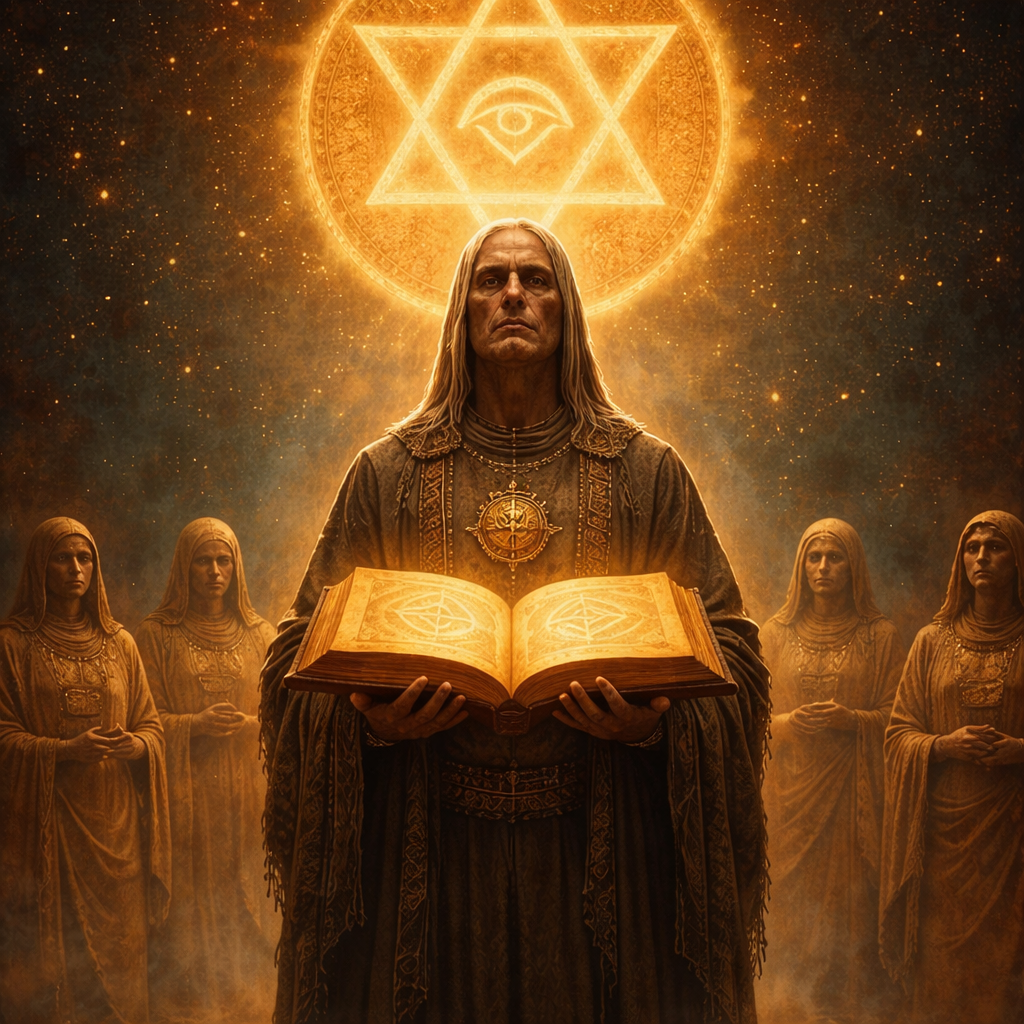

Marcus Thorne (Esoteric Sciences Reviewer) — James F. Twyman's 'The Kabbalah Code' is a significant contribution to accessible Kabbalistic literature. Twyman skillfully demystifies the profound complexities of this ancient tradition, presenting its core tenets with clarity and spiritual depth. He shines a light on the symbolic language and meditative practices, offering readers tangible tools for personal transformation. The book excels in its ability to bridge the gap between academic study and experiential understanding, making it an invaluable resource for both neophyte seekers and seasoned practitioners looking to deepen their connection to the Tree of Life. A highly recommended exploration of divine wisdom.
📝 Description
62
In 1997, James F. Twyman published 'The Kabbalah Code,' aiming to demystify Jewish mysticism.
James F. Twyman's 'The Kabbalah Code' examines the Kabbalistic Tree of Life, a central concept in Jewish esoteric thought. The book discusses divine emanations, sacred geometry, and the use of numerology within this framework. Twyman interprets these elements as a blueprint for understanding existence, bridging the earthly and divine. The text aims to guide readers through the symbolic pathways of Kabbalah, encouraging a personal connection to its principles.
It focuses on the symbolic meanings of each sephirah and the paths connecting them on the Tree of Life. The author's intent is to make these ancient truths accessible to a wider audience. The book invites readers interested in spiritual comprehension and the transformative aspects of Kabbalistic ideas to engage with its material.
This book engages with Kabbalah, a form of Jewish mysticism that emerged in the Middle Ages. Kabbalistic traditions interpret the Torah and the nature of God through symbolic systems, including the Sephirot (divine emanations) often depicted in the Tree of Life. Its teachings explore cosmology, divine providence, and the human soul's path toward God. The Kabbalah Code places itself within this lineage, seeking to explain these complex ideas.
💡 Why Read This Book?
Embark on a transformative exploration of the Kabbalah and uncover the hidden architecture of reality. 'The Kabbalah Code' offers profound insights into divine consciousness, spiritual evolution, and the interconnectedness of all things. Ideal for seekers of profound truth, students of mysticism, and anyone yearning to decode the sacred language of the universe and integrate its wisdom into their lives.
⭐ Reader Reviews
Honest opinions from readers who have explored this book.
❓ Frequently Asked Questions
What is the Kabbalah?
The Kabbalah is an esoteric tradition within Judaism that explores the divine nature and the creation of the universe through symbolic interpretation of the Torah and mystical contemplation.
What is the Tree of Life in Kabbalah?
The Tree of Life (Etz Chaim) is a central diagram in Kabbalah, representing the ten sephirot (divine emanations) and the pathways connecting them, symbolizing the structure of the cosmos and the human soul.
Is this book suitable for beginners?
Yes, 'The Kabbalah Code' is designed to be accessible to beginners while offering depth for those with prior knowledge, making it a welcoming entry point into Kabbalistic studies.
What kind of symbolism is discussed?
The book delves into the rich symbolism of Hebrew letters, divine names, gematria (numerology), and the archetypal meanings of the sephirot and pathways on the Tree of Life.
How can I apply Kabbalistic teachings from this book?
The book encourages practical application through meditation, contemplation of symbols, and mindful integration of Kabbalistic principles into daily life for spiritual growth and self-awareness.
🔮 Key Themes & Symbolism
The Tree of Life as a Cosmic Map
This theme explores the Kabbalistic Tree of Life not merely as a diagram, but as a profound cosmological map depicting the emanation of the divine into creation. It details the ten sephirot as distinct aspects of God's nature and consciousness, and the twenty-two pathways as the energetic bridges connecting them. The book elucidates how this structure serves as a blueprint for the universe, human consciousness, and the journey of the soul towards reunification with the divine source. It emphasizes the interconnectedness of all levels of existence as represented by this sacred geometry, offering a framework for understanding spiritual evolution.
Sacred Geometry and Divine Numerology
Dive into the intricate relationship between form and spirit as 'The Kabbalah Code' illuminates the role of sacred geometry and gematria within Kabbalistic tradition. The book reveals how numerical values assigned to Hebrew letters and words are not arbitrary but hold profound spiritual significance, offering keys to unlocking hidden meanings within ancient texts and the fabric of reality itself. It explores how geometric patterns inherent in the Tree of Life manifest divine order and harmony, providing a visual language for understanding the subtle energies that govern existence and the journey of spiritual awakening.
The Path of Spiritual Awakening and Transformation
This central theme guides the reader on a personal journey of spiritual awakening and transformation through the lens of Kabbalistic principles. The book posits that understanding and internalizing the wisdom of the Tree of Life offers a direct path to self-realization and divine connection. It explores how contemplating the attributes of each sephirah and reading through the pathways can lead to the dissolution of ego, the purification of the soul, and the cultivation of higher consciousness. The emphasis is on practical application, encouraging readers to integrate these ancient teachings into their lives for profound personal growth and a deeper understanding of their divine essence.
💬 Memorable Quotes
Direct passages from the work, attributed to the author.
“Within each letter lies a universe of meaning.”
— This emphasizes the profound depth and spiritual significance embedded within the Hebrew alphabet, suggesting that each character is a gateway to cosmic understanding.
“To know the self is to know the divine.”
— This expresses a core tenet of Kabbalah, suggesting that self-discovery and the exploration of one's inner landscape lead to a direct experience of the divine.
“The pathways are journeys of the soul.”
— This interprets the paths on the Tree of Life as metaphorical and spiritual routes that the soul undertakes in its quest for enlightenment and connection.
“Harmony is found in the balance of opposites.”
— This points to a fundamental Kabbalistic concept of divine unity arising from the interplay and reconciliation of seemingly opposing forces in creation.
💡 Key Ideas
Editorial paraphrase of the work's core concepts — not direct quotes.
The Tree of Life is the blueprint of all creation.
This quote highlights the foundational role of the Kabbalistic Tree of Life as the divine pattern from which the entire universe and all existence originates.
🌙 Esoteric Significance
Tradition
This book is firmly rooted in the Western Esoteric tradition, specifically drawing from Jewish Kabbalah. It explores the mystical dimensions of Judaism, focusing on the Tree of Life, the sephirot, and the pathways as a system for understanding divine emanation and spiritual ascent. The work bridges the gap between ancient Kabbalistic teachings and modern seekers, offering a pathway to self-discovery and cosmic understanding through these sacred principles.
Symbolism
The core symbolism revolves around the Kabbalistic Tree of Life, a diagram of ten sephirot and twenty-two paths representing divine attributes and the structure of reality. Other key symbols include Hebrew letters, divine names, and gematria (numerology), all of which are interpreted as carriers of profound spiritual information. The book elucidates how these symbols function not just as representations, but as energetic keys to unlocking deeper levels of consciousness and understanding the divine order.
Modern Relevance
In an age of spiritual seeking and a desire for deeper meaning, 'The Kabbalah Code' offers profound relevance. It provides a timeless framework for understanding the interconnectedness of all things, the nature of consciousness, and the potential for personal transformation. The book's emphasis on introspection, symbolic interpretation, and the journey towards divine union appeals to contemporary individuals seeking to navigate complex spiritual landscapes and find inner peace and purpose.
👥 Who Should Read This Book
This book is a treasure for a wide spectrum of spiritual explorers. For beginners, it serves as an accessible and engaging introduction to the foundational concepts of Kabbalah, clarifying its complex symbolism. Scholars of comparative religion and mysticism will find its insightful interpretations valuable for deepening their understanding. Spiritual seekers yearning for a profound connection to the divine and a map for their inner journey will find guidance and inspiration. Practitioners of meditation and contemplative arts will discover new dimensions and techniques to enhance their practice through the Kabbalistic framework.
📜 Historical Context
The Kabbalah, with roots stretching back to ancient Jewish mysticism, experienced significant florescence during the Middle Ages, particularly in Spain and later in Safed, Palestine. 'The Kabbalah Code' draws upon this rich historical range, a period marked by intense intellectual and spiritual inquiry into the nature of God, creation, and humanity's place within the cosmos. Thinkers like Moses Cordovero and Isaac Luria in Safed developed sophisticated systems of Kabbalistic thought, emphasizing concepts like tzimtzum (divine contraction) and tikkun (rectification). The dissemination of Kabbalistic texts, such as the Zohar, profoundly influenced Jewish philosophy, mysticism, and even Christian and Hermetic traditions. Twyman's work stands as a modern echo of this enduring legacy, making these complex ideas accessible to a contemporary audience.
📔 Journal Prompts
Reflect on your understanding of the first sephirah, Keter. How does it relate to your concept of the ultimate source?
Choose one pathway on the Tree of Life and journal about its symbolic meaning and how it might manifest in your life.
Explore the numerical value of your own name using gematria principles, and journal on any insights that arise.
Consider the concept of 'Tikkun' (rectification) as presented in Kabbalah. How can you apply this to your personal growth?
Write about a time you experienced a moment of profound interconnectedness. How does this relate to the Kabbalistic understanding of Malkuth?
🗂️ Glossary
Sephirah
One of the ten divine emanations or attributes of God, forming the structure of the Kabbalistic Tree of Life, representing different aspects of divine consciousness and creation.
Etz Chaim
Hebrew for 'Tree of Life,' the central symbolic diagram in Kabbalah, depicting the ten sephirot and their interconnections, representing the universe and the spiritual journey.
Gematria
A system of numerological interpretation in Kabbalah, where Hebrew letters are assigned numerical values to reveal hidden meanings in words and phrases from sacred texts.
Ayin Sof
The Kabbalistic concept of the 'Infinite' or 'Without End,' representing God in its absolute, unknowable, and transcendent state before any emanation.
Malkuth
The tenth sephirah on the Tree of Life, often translated as 'Kingdom,' representing the material world, manifestation, and the divine presence in its lowest form.
This book appears in 1 collection
🔮 Readers Also Liked
Browse all →








From the “Kabbalah” Collection
View all →






More Free Kabbalah & Jewish Mysticism Books
View all →