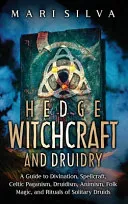
Thelema in Christentum, Logentradition und New Aeon
 76
76

Thelema in Christentum, Logentradition und New Aeon
Federico Tolli's exploration of 'thelema' is a commendable exercise in philological diligence, tracing a single, potent word through millennia of theological and esoteric discourse. The book's strength lies in its granular examination of the term's semantic shifts, particularly its dual nature as divine mandate and human impulse, a tension Tolli effectively illustrates from New Testament usage onward. However, the sheer density of the academic approach, while precise, occasionally risks obscuring the broader spiritual implications for a reader less inclined toward linguistic deconstruction. A particularly illuminating section details the term's appropriation by early 20th-century occultists, demonstrating how abstract philosophical concepts become potent sigils for new spiritual movements. While the work excels in historical mapping, its engagement with the *lived experience* of these traditions feels secondary to its textual analysis. Nevertheless, "Thelema in Christentum, Logentradition und New Aeon" serves as an indispensable scholarly resource for understanding a foundational concept in Western esotericism.
📝 Description
76
Federico Tolli's 2004 book traces the concept of 'thelema' from ancient Greek to modern occultism.
Federico Tolli's "Thelema in Christentum, Logentradition und New Aeon" examines the Hellenistic term 'thelema,' meaning will. The book details its appearance in Koine Greek, notably in the New Testament where it signified both divine and human volition, and traces its subsequent interpretations. Tolli investigates how this concept evolved and was adopted by various neo-religious movements.
The work offers a thorough analysis of the term's semantic range. It contrasts its divine implications with its more human or instinctual connotations. This examination highlights the tensions arising from these varied meanings across different historical and religious settings. The book also discusses the term's reinterpretation within modern occult traditions, particularly as it relates to Aleister Crowley's system.
Published in 2004, this study situates itself within a growing academic engagement with Western esotericism. It moves beyond sensationalism to a close reading of textual sources. By focusing on a single term, 'thelema,' Tolli demonstrates its significant trajectory across antiquity and into early Christianity, before its resurgence in 20th-century occult philosophy. The book contributes to understanding the historical development of ideas that underpin many esoteric systems.
💡 Why Read This Book?
• Understand the precise evolution of the term 'thelema' from its Koine Greek origins in the New Testament to its modern esoteric applications, providing a clarity often missing in general occult literature. • Gain insight into the specific ways Aleister Crowley and subsequent New Aeon movements recontextualized the concept of divine versus human will, moving beyond superficial interpretations. • Appreciate the scholarly methodology of tracing a single concept through historical periods, exemplified by Tolli's detailed analysis of early Christian texts and their philosophical underpinnings.
⭐ Reader Reviews
Honest opinions from readers who have explored this book.
❓ Frequently Asked Questions
What is the original meaning of 'thelema'?
Originally, in Hellenistic Koine Greek, 'thelema' signified 'will.' In the New Testament, it denotes God's will or divine decree, but depending on context, it could also refer to human volition or desire.
How does the book connect 'thelema' to Christianity?
The work analyzes the presence and interpretation of 'thelema' within the New Testament, exploring the inherent tension between divine will and human will as it appears in early Christian discourse.
What is the 'New Aeon' mentioned in the title?
The 'New Aeon' refers to a concept, popularized by Aleister Crowley, of a new spiritual or evolutionary epoch. The book examines how 'thelema' functions within these new religious and esoteric movements.
Who is Federico Tolli?
Federico Tolli is the author of "Thelema in Christentum, Logentradition und New Aeon," first published in 2004. He is known for his scholarly work on esoteric traditions and the history of religious concepts.
What historical periods does the book cover?
The book spans from ancient Greek and New Testament usage of 'thelema' through its historical reception and interpretation, up to its significance in contemporary neo-religious movements of the early 21st century.
Is this book suitable for beginners in esoteric studies?
While informative, the book's academic rigor and focus on philology make it more suitable for advanced students or scholars of esotericism and comparative religion rather than absolute beginners.
🔮 Key Themes & Symbolism
The Dual Nature of Will
The central theme is the inherent duality of 'thelema' (will). Tolli meticulously documents how the term, originating in Hellenistic Greek, carried a semantic range encompassing both the supreme, divine will of God and the often conflicting, instinctual will of humanity. This tension is explored from its earliest appearances in the Koine Greek of the New Testament, where divine intention clashes with human desire, and its subsequent interpretations across philosophical and religious traditions.
Christianity and Thelema
The book critically examines the reception and interpretation of 'thelema' within Christian theological discourse. It scrutinizes how the concept of divine will, as expressed in scripture and early church writings, interacts with or diverges from understandings of human agency and volition. This section lays the groundwork for understanding later esoteric reappropriations by highlighting the historical theological landscape.
Logentradition and Esoteric Will
Tolli investigates the concept of 'thelema' within esoteric traditions, particularly those influenced by figures like Aleister Crowley and the 'Logentradition' (likely referring to the tradition of the Word or Logos). It details how the term was adopted and re-contextualized to signify individual spiritual striving, the 'True Will,' and its alignment with cosmic principles, forming a core tenet of modern magical and occult systems.
The New Aeon
The final thematic focus is the 'New Aeon,' a concept signifying a new era of spiritual evolution. The book analyzes how 'thelema' serves as a foundational concept for various neo-religious movements and esoteric philosophies that emerged in the 20th and 21st centuries, representing a rethinking in understanding human potential and its relationship to universal forces.
💬 Memorable Quotes
Direct passages from the work, attributed to the author.
“Already in the ancient Greek 'Koine' of the New Testament, the tension field of our time was indicated.”
— This concept, derived from the blurb, suggests that the fundamental conflicts and dualities associated with the concept of 'will' – divine versus human – were present even in early Christian texts, foreshadowing later developments.
“Through detective-like diligence, a...”
— This phrase from the blurb implies a detailed, meticulous, and investigative approach to the subject matter. It suggests Tolli's research uncovers hidden connections and nuances in the historical usage and interpretation of 'thelema'.
💡 Key Ideas
Editorial paraphrase of the work's core concepts — not direct quotes.
The term 'thelema' indicated the will of God that a person does, but depending on the context, also signified the 'instinctive' will of man.
This paraphrased concept highlights the core semantic ambiguity of 'thelema' that Tolli explores. It points to the term's historical capacity to signify both divine imperative and inherent human drives, setting the stage for its complex reception.
In our epoch, 'thelema' stands for a wide spectrum of neo-religious currents.
This statement, a paraphrase of the blurb, underscores the book's contemporary relevance. It suggests that the ancient concept of will has found new life and diverse applications within modern spiritual and occult movements.
The book traces the reception and interpretation history of the originally Hellenistic term for will.
This is a direct paraphrase of the blurb, emphasizing the book's methodological approach: a historical and comparative study focused on the semantic journey of 'thelema' across different eras and traditions.
🌙 Esoteric Significance
Tradition
This work is deeply rooted in the study of Western Esotericism, specifically tracing concepts relevant to Hermeticism and the magical traditions influenced by Aleister Crowley's Thelema. It positions itself as a scholarly bridge, examining how ancient philosophical and religious concepts, particularly concerning volition, were transmitted, reinterpreted, and ultimately became foundational for later occult systems.
Symbolism
While the book's primary focus is etymological and historical, the concept of 'Thelema' itself functions symbolically. It represents the striving for alignment with a higher purpose or divine plan ('Will of God') while simultaneously acknowledging the potent force of individual human desire and ambition ('human will'). This symbolic tension is central to understanding the individual's path within esoteric traditions.
Modern Relevance
Contemporary thinkers and practitioners within various branches of Western Esotericism, particularly those engaged with the legacy of Aleister Crowley and the 'New Aeon' philosophies, continue to draw upon nuanced understandings of 'thelema.' Tolli's work provides a scholarly basis for exploring the concept's roots, aiding modern occultists in refining their understanding of individual will, destiny, and spiritual purpose.
👥 Who Should Read This Book
• Advanced students of comparative religion and theology seeking to understand the historical semantics of 'will' across ancient and early Christian texts. • Practitioners of Western Esotericism, especially those involved with Thelemic or New Aeon traditions, who desire a scholarly foundation for the concept of 'thelema.' • Researchers in intellectual history and philosophy interested in the evolution of concepts related to volition, divine command, and human agency.
📜 Historical Context
Published in 2004, Federico Tolli's "Thelema in Christentum, Logentradition und New Aeon" arrived during a resurgence of academic interest in Western esotericism. The early 21st century saw scholars like Wouter J. Hanegraaff and Antoine Faivre actively charting the field, moving it from the fringes of occult studies into more established university departments. Tolli's work fits within this milieu by applying rigorous philological analysis to a core concept previously discussed more broadly within occult circles. It engaged with, rather than directly competed against, the burgeoning scholarship on figures like Aleister Crowley, whose system heavily relies on the concept of 'True Will.' The book's detailed examination of the term's trajectory from antiquity through early Christianity to modern esoteric movements provided a much-needed historical grounding for discussions often dominated by contemporary interpretations.
📔 Journal Prompts
The dual nature of 'thelema' as divine versus human will, as discussed in the New Testament context.
The reinterpretation of 'thelema' within the 'Logentradition' and its impact on modern esoteric thought.
The specific ways 'thelema' signifies a 'New Aeon' and its associated spiritual currents.
The historical reception of 'thelema' from Hellenistic Greece to early Christianity.
The detective-like approach Tolli uses to trace the concept's semantic journey.
🗂️ Glossary
Thelema
A Greek word meaning 'will.' In the context of the book, it refers to the concept of will as it appears in Hellenistic Greek, the New Testament, and later esoteric traditions, encompassing divine will, human will, and individual volition.
Koine Greek
The common form of Greek spoken and written in the Hellenistic and Roman periods, particularly significant as the language of the New Testament and the Septuagint.
New Aeon
A term associated with Aleister Crowley and subsequent esoteric movements, signifying a new spiritual epoch or era characterized by a distinct set of philosophical and magical principles.
Logentradition
A term likely referring to esoteric traditions or systems that emphasize the concept of the 'Logos' (Word) or divine utterance, and its relationship to will and manifestation.
Hellenistic
Pertaining to the period of Greek history and culture from the death of Alexander the Great (323 BCE) to the rise of the Roman Empire (c. 31 BCE), characterized by the spread of Greek language and culture.
Esotericism
Systems of thought and practice concerned with concealed knowledge, spiritual insight, and transformative experience, often diverging from mainstream religious or philosophical traditions.
Volition
The power of using one's will; the faculty of the mind that is the source of decisions and actions.
This book appears in 1 collection
🔮 Readers Also Liked
Browse all →








From the “Thelema” Collection
View all →





More Free Occult Philosophy Books
View all →