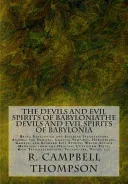
The Devils and Evil Spirits of BabyloniaThe Devils and Evil Spirits of Babylonia
 81
81

The Devils and Evil Spirits of BabyloniaThe Devils and Evil Spirits of Babylonia
Thompson's compilation is a stark, unvarnished look at ancient Mesopotamian anxieties. The sheer volume of specific demonic classifications—from the ubiquitous *gallu* to more obscure apparitions—is staggering, revealing a cultural landscape saturated with the fear of unseen malevolence. The strength lies in its direct engagement with the cuneiform texts, offering translations that feel raw and immediate, unburdened by modern interpretive filters. However, the scholarly apparatus, while thorough, can sometimes obscure the visceral power of the spells themselves. The section detailing incantations against the *rabisu*, a demon that lies in wait, is particularly chilling in its directness. This is not an introduction for the faint of heart, but a vital resource for serious students of ancient magic.
📝 Description
81
R. Campbell Thompson translated Mesopotamian incantations against evil spirits in 1903.
This volume presents R. Campbell Thompson's academic translation and analysis of ancient Mesopotamian incantations. Thompson, an Assyriologist, gathered cuneiform texts that detail spells and rituals designed to ward off malevolent entities. The book focuses on the various demons, ghouls, and spirits that ancient Babylonians and Assyrians believed affected human lives.
Scholars of ancient Near Eastern religions, historians of magic, and students of comparative mythology will find this book valuable. It provides direct access to primary source material, crucial for understanding the practical application of belief systems in Babylonian and Assyrian societies. Those interested in the origins of demonology and early spiritual warfare will also benefit from its detailed contents.
Compiled from original cuneiform tablets, this work offers insight into the spiritual worldview of ancient Mesopotamia. The incantations reflect a belief in unseen forces influencing health, fortune, and daily life. Thompson's meticulous work, including vocabulary and notes, situates it within early 20th-century Assyriology, a field dedicated to decoding the textual heritage of these ancient cultures.
This book belongs to the tradition of scholarly engagement with ancient magical and religious practices. It examines Mesopotamian beliefs concerning spiritual warfare and the use of ritual to counter malevolent forces. The text highlights the historical practice of invoking divine protection and employing sympathetic magic, revealing how ancient peoples sought to manage perceived supernatural threats to their well-being and daily lives.
💡 Why Read This Book?
• Understand the specific nature of Babylonian and Assyrian demonology, learning about entities like the *gallu* and their perceived influence on human affairs, as detailed in the original incantations. • Gain insight into ancient Mesopotamian magical practices, including the types of spells and rituals employed to combat spiritual threats, as presented in the translated cuneiform texts. • Appreciate the historical context of Assyriology and the meticulous work of scholars like R. Campbell Thompson in preserving and translating these ancient texts, first published in the early 20th century.
⭐ Reader Reviews
Honest opinions from readers who have explored this book.
❓ Frequently Asked Questions
What are the primary types of evil spirits mentioned in 'The Devils and Evil Spirits of Babylonia'?
The book details various malevolent entities including demons (*gallu*, *utukku*), ghouls, vampires, hobgoblins, and ghosts, all believed to attack mankind according to Babylonian and Assyrian incantations.
Who was R. Campbell Thompson and what was his contribution?
R. Campbell Thompson was a notable Assyriologist who dedicated himself to translating ancient Mesopotamian texts. His work in this volume provides direct access to cuneiform incantations against evil spirits.
When was the original publication of R. Campbell Thompson's work on Babylonian demons?
While this edition is from 2014, R. Campbell Thompson's extensive research and compilation of these Babylonian and Assyrian incantations was first published in the early to mid-20th century, reflecting decades of scholarly effort.
What is the significance of the cuneiform texts translated in this book?
The cuneiform texts are primary source documents offering direct evidence of ancient Mesopotamian beliefs about the supernatural, demonology, and the magical practices used for protection.
Does the book provide context for the historical period of these incantations?
Yes, the book's introduction and Thompson's notes place the incantations within the historical and cultural context of ancient Babylonia and Assyria, offering insights into their society and worldview.
What are some of the key concepts related to spiritual warfare in ancient Mesopotamia covered?
Key concepts include the nature of specific demons like the *gallu* and *rabisu*, the role of divine protection (*hūtu*), and the efficacy of spoken spells and ritual actions against malevolent forces.
🔮 Key Themes & Symbolism
Demonology and Spirit Classification
The work meticulously categorizes a vast array of malevolent entities that populated the Babylonian and Assyrian spiritual landscape. Beyond generic 'demons,' Thompson identifies specific classes such as *gallu*, *rabisu*, and *utukku*, detailing their perceived characteristics and modes of operation. These classifications reveal a complex cosmology where spiritual threats were not monolithic but complex, requiring specific knowledge and countermeasures. The incantations themselves are designed to name and repel these distinct entities, underscoring the belief that precise identification was crucial for effective warding.
The Power of Incantation and Ritual
Central to combating these spirits is the power of the spoken word and ritual action. The translated texts demonstrate a profound reliance on incantations, where invoking divine names, curses, and protective formulas was believed to hold genuine efficacy. The book showcases how rituals often involved purification, the use of amulets, and specific gestures, all designed to create a barrier against demonic intrusion. This highlights an ancient understanding of magic as a practical, actionable system for maintaining cosmic order and personal safety against perceived supernatural dangers.
Ancient Mesopotamian Worldview
This collection offers an invaluable window into the daily anxieties and spiritual framework of ancient Mesopotamian civilization. The pervasive presence of evil spirits in their incantations reflects a worldview where the boundary between the mundane and the supernatural was fluid. Health, fortune, and even sanity were seen as constantly under threat from unseen forces, necessitating a robust system of magical and religious defense. The texts provide tangible evidence of how these beliefs shaped their societal practices and understanding of the human condition.
💬 Memorable Quotes
Direct passages from the work, attributed to the author.
“The *gallu* demon, which drags men down to the netherworld.”
— This phrase succinctly captures the terrifying function attributed to the *gallu*, a specific type of demon in Mesopotamian lore. It emphasizes the tangible threat of eternal damnation or descent into the underworld that these beings represented to the ancient mind.
“Incantations against the *rabisu*, who lies in wait to attack.”
— This points to a stealthy, predatory demonic entity. The description implies a constant state of vigilance required by individuals, as the *rabisu* represents a lurking, unexpected danger that traditional wards might not always prevent.
“The use of specific divine names to repel evil.”
— This highlights a core principle of ancient magic: the belief that invoking the power and authority of deities through their names could directly counteract demonic influence. It underscores the interconnectedness of the divine and human realms in protection.
“Spells for purification and protection of the home.”
— This indicates the practical application of these incantations not just for personal warding, but for securing domestic spaces. It reveals a concern for the sanctity and safety of the household as a primary target for malevolent forces.
“The comprehensive vocabulary and notes for understanding the cuneiform.”
— This refers to the scholarly apparatus provided by R. Campbell Thompson. It signifies the detailed linguistic and contextual support offered to the reader, enabling a deeper comprehension of the original texts beyond simple translation.
🌙 Esoteric Significance
Tradition
While not strictly a Hermetic, Gnostic, or Kabbalistic text, this work provides crucial source material for understanding the pre-Abrahamic roots of Western esotericism. Its focus on demonology, protective magic, and the power of spoken word aligns with themes found in later magical traditions, offering historical context for the evolution of these concepts. It represents a foundational element in the study of ancient magical systems that would eventually influence various occult lineages.
Symbolism
The symbolism is deeply embedded in the names and functions of the spirits themselves. The *gallu*, as a soul-snatcher, symbolizes the ultimate fear of oblivion and the loss of essence. The *rabisu*, the lurker, represents the ever-present threat of the unknown and unexpected misfortune. The incantations often employ symbols of light, divine authority, and purity to counteract the darkness and chaos associated with these entities, reflecting a dualistic struggle.
Modern Relevance
Contemporary practitioners of ceremonial magic, demonology studies, and comparative religion scholars frequently reference Thompson's work. It serves as a primary source for understanding the historical development of spirit classification and banishing rituals. Modern occultists may draw inspiration from the specific names and methods described, seeking to understand the archetypal nature of these ancient entities and their enduring presence in the human psyche.
👥 Who Should Read This Book
• Students of ancient Mesopotamian cultures and religions seeking primary source material on their belief systems regarding malevolent spirits. • Practitioners of comparative magic and historical occultism interested in the origins of demonology and protective incantations. • Academic researchers in fields such as religious studies, folklore, and Near Eastern archaeology requiring detailed translations of cuneiform magical texts.
📜 Historical Context
The compilation of 'The Devils and Evil Spirits of Babylonia' by R. Campbell Thompson places it within the burgeoning field of Assyriology in the early 20th century. This era saw intense efforts to decipher and translate the vast corpus of cuneiform literature discovered in Mesopotamia. Thompson, a significant figure in this discipline, worked during a time when scholars like Sidney Smith and later, E.A. Speiser, were also producing foundational works on Mesopotamian history and religion. Unlike purely mythological or religious studies of the time, Thompson's focus was on the *practical* application of beliefs—the spells and rituals used in daily life. The reception of such works contributed to a broader academic and public fascination with ancient Near Eastern cultures, moving beyond biblical narratives to explore the secular and magical aspects of these societies. There was no significant documented censorship or banning of Thompson's specific work, but the study of Mesopotamian magic was often approached with a mix of academic rigor and sensationalism by the public.
📔 Journal Prompts
The specific names and roles of Babylonian and Assyrian demons.
Ancient methods of spiritual defense as detailed in the incantations.
The concept of *hūtu* (divine protection) versus demonic influence.
The perceived impact of spirits like the *gallu* on daily life.
Ritualistic elements employed to ward off malevolent entities.
🗂️ Glossary
Gallu
A class of demons in Babylonian and Assyrian mythology, often depicted as underworld spirits tasked with dragging souls to the netherworld.
Utukku
A general term for spirits in Mesopotamian belief, which could be benevolent or malevolent, but often referred to in incantations as harmful entities.
Rabisu
A specific type of demon described as lurking or lying in wait to attack individuals, representing a hidden or unexpected threat.
Hūtu
The concept of divine protection or a protective spirit, often invoked in incantations as a force that counters demonic influence.
Cuneiform
An ancient writing system characterized by wedge-shaped marks, used in Mesopotamia for administrative, religious, and literary purposes.
Incantation
A series of words used as a magical spell or charm, believed to have the power to produce a magical effect when spoken or recited.
Netherworld
In Mesopotamian cosmology, the underworld or land of the dead, often depicted as a dark and dismal place from which there was no return.