The Enlightenment

 81
81

The Enlightenment
Peter Gay's *The Enlightenment* offers a comprehensive survey of the 18th century's intellectual ferment, presenting a robust defense of its enduring relevance. The author skillfully navigates the sprawling debates, from the salons of Paris to the philosophical treatises. A particular strength lies in Gay's ability to connect abstract ideas to their tangible social and political consequences, illustrating how the era's thinkers sought to reshape society. However, the sheer breadth of coverage occasionally leads to a somewhat generalized treatment of complex philosophical schools, leaving some nuances underdeveloped. The discussion of skepticism, for instance, could benefit from a deeper dive into figures like David Hume. Despite this, the work remains a vital resource for understanding the foundational principles of modern Western thought, making a strong case for the Enlightenment's continued importance.
📝 Description
81
Peter Gay's 1985 book analyzes the 18th century's intellectual currents and lived experiences.
Published in 1985, Peter Gay's study examines the 18th century, the Age of Reason. It moves beyond listing philosophical ideas to detail the actual lives and arguments of Enlightenment figures, and the societal changes they sparked. Gay dissects the era's belief in human perfectibility and the power of reason. He analyzes how these ideals conflicted with existing social structures and religious beliefs. The work engages with scholarly discussions about the Enlightenment's achievements and shortcomings, especially after the rise of 20th-century totalitarianism. It places the period within the larger history of Western thought, referencing thinkers like Kant and Diderot, and the broader cultural context.
Gay focuses on central Enlightenment ideas: empiricism, rationalism, and the pursuit of happiness. He scrutinizes the period's concept of progress, the challenges from religious authority, and the growing ideas of individual rights. The book also acknowledges the limitations and internal conflicts within Enlightenment thinking, such as the tension between reason and tradition.
While Peter Gay's *The Enlightenment* is primarily a work of intellectual history, its focus on the rationalist and secular underpinnings of modernity can be seen as indirectly related to esoteric traditions. Many esoteric systems, particularly those that emerged or were reinterpreted during and after the Enlightenment, often grapple with the relationship between reason and revelation, the nature of human perfectibility, and the critique of established dogma. Gay's examination of the era's intellectual ferment, its questioning of traditional authority, and its belief in human agency offers a historical backdrop against which the development of certain esoteric philosophies can be understood.
💡 Why Read This Book?
• Gain a concrete understanding of the 18th century's intellectual currents, specifically the impact of figures like Immanuel Kant on the concept of human autonomy, allowing you to trace the origins of modern selfhood. • Discover the historical debates surrounding the role of reason versus tradition, informed by Gay's analysis of the clash between Enlightenment ideals and established religious institutions in the 1700s. • Grasp the practical implications of Enlightenment philosophy on societal structures, as the book details how concepts like individual rights, first articulated in this era, began to reshape governance and social order.
⭐ Reader Reviews
Honest opinions from readers who have explored this book.
❓ Frequently Asked Questions
When was Peter Gay's *The Enlightenment* first published?
Peter Gay's *The Enlightenment* was first published in 1985. This edition provides a comprehensive overview of the intellectual and cultural movements of the 18th century.
What are the main subjects covered in *The Enlightenment* by Peter Gay?
The book covers the major philosophical ideas, cultural shifts, and intellectual debates of the 18th-century Enlightenment, focusing on reason, progress, secularism, and individual rights.
Is *The Enlightenment* by Peter Gay suitable for beginners?
Yes, while comprehensive, the book is written accessibly for those new to the period. It effectively introduces key thinkers and concepts of the 18th century without assuming prior specialized knowledge.
What historical period does Peter Gay's *The Enlightenment* focus on?
The book primarily focuses on the 18th century, often termed the Age of Reason, exploring its intellectual landscape and the philosophical underpinnings of modernity.
Where does Peter Gay discuss the concept of progress in *The Enlightenment*?
Gay addresses the Enlightenment's pervasive belief in progress throughout the text, examining how thinkers of the era envisioned human perfectibility and societal advancement.
What is the significance of the year 1985 in relation to *The Enlightenment*?
The year 1985 marks the original publication date of Peter Gay's seminal work, *The Enlightenment*, establishing its place within late 20th-century historical scholarship.
🔮 Key Themes & Symbolism
The Cult of Reason
Gay meticulously details the 18th century's fervent embrace of rationality as the primary tool for understanding the universe and improving human life. This theme examines how thinkers like Voltaire championed reason against superstition and dogma. The work explores the optimistic belief that through logical inquiry and empirical observation, humanity could overcome its limitations and achieve progress. It highlights the shift from divinely ordained truths to human-centered understanding, a core part of the secular worldview that emerged during this period.
The Idea of Progress
Central to *The Enlightenment* is the era's profound faith in the concept of progress. The book illustrates how thinkers envisioned a continuous upward trajectory for humanity, driven by scientific discovery and the dissemination of knowledge. Gay analyzes the optimism surrounding perfectibility and the belief that society could be rationally reconstructed. This theme contrasts with earlier eras' cyclical or static views of history, presenting the Enlightenment's forward-looking perspective as a radical departure that shaped modern aspirations for societal improvement.
Secularization and Its Discontents
The work confronts the growing challenge to religious authority and the rise of secular thought during the Enlightenment. Gay explores how philosophers advocated for religious tolerance and the separation of church and state, yet also grapples with the resistance and internal contradictions this movement faced. The text examines the anxieties and debates that arose as traditional faith systems were questioned, and how new ethical frameworks were sought to replace them in an increasingly rationalist society.
The Public Sphere and Dissemination of Ideas
This theme focuses on how Enlightenment ideas moved beyond academic circles to influence broader society. Gay discusses the proliferation of printed materials, the rise of coffee houses and salons as intellectual hubs, and the development of a public sphere where ideas could be debated. The book illustrates how thinkers sought to educate the populace and foster critical thinking, thereby democratizing knowledge and challenging established hierarchies through widespread discourse.
💬 Memorable Quotes
Direct passages from the work, attributed to the author.
“The Enlightenment was, above all, a matter of the mind.”
— This statement expresses the book's focus on intellectual history. It suggests that the core of the Enlightenment movement resided in its philosophical and conceptual shifts, rather than solely in political revolutions or technological advancements, emphasizing the primacy of ideas.
“The pursuit of happiness became a legitimate goal.”
— This interpretation points to a significant shift in moral and philosophical aims. It reflects the Enlightenment's emphasis on human well-being in this life, moving away from solely focusing on salvation or divine will, and positioning personal contentment as a valid objective.
“Philosophers sought to reform society through education.”
— This statement reflects the practical application of Enlightenment ideals. It underscores the belief that widespread knowledge and critical thinking were essential tools for dismantling ignorance, superstition, and oppressive structures, thereby paving the way for social progress.
“Skepticism questioned established certainties.”
— This interpretation captures the critical spirit of the Enlightenment. It refers to the era's tendency to doubt traditional authorities and dogmas, particularly in religion and politics, encouraging individuals to seek evidence and rational justification for beliefs.
💡 Key Ideas
Editorial paraphrase of the work's core concepts — not direct quotes.
Reason was the great god of the Enlightenment.
This paraphrased concept highlights the central role of rationality in the 18th century. It signifies the era's faith in logic, empirical evidence, and critical thinking as the ultimate arbiters of truth and the primary means for societal betterment.
🌙 Esoteric Significance
Tradition
While *The Enlightenment* primarily focuses on secular philosophy, its examination of reason, individual autonomy, and the pursuit of knowledge indirectly engages with esoteric traditions. The era's emphasis on inner illumination through rational inquiry can be seen as a secular parallel to mystical quests for gnosis or divine understanding. The critique of dogma and superstition also aligns with certain esoteric critiques of organized religion, though Gay's focus remains firmly on historical and philosophical analysis rather than spiritual practice.
Symbolism
The book implicitly engages with symbols of reason and light, central to many esoteric paths. The 'light' of reason itself serves as a potent metaphor for overcoming ignorance, akin to the divine light sought in Hermeticism or Gnosticism. The recurring motif of the 'temple of reason' or the ideal of constructing a rational society can be interpreted as a secularized version of building a sacred space or achieving spiritual order.
Modern Relevance
Contemporary thinkers and practitioners in fields like critical theory, secular humanism, and even certain forms of rational esotericism draw upon the Enlightenment's intellectual heritage explored in Gay's work. The ongoing debates about the role of science, the nature of progress, and the balance between individual liberty and societal order continue to resonate with the philosophical questions first rigorously examined during the 18th century and detailed in this book.
👥 Who Should Read This Book
• Students of intellectual history seeking a foundational text on the 18th century's dominant philosophical movements and their impact on Western thought. • Readers interested in the origins of modern secularism and democratic ideals, wanting to understand the historical context of concepts like human rights and tolerance. • Individuals curious about the philosophical underpinnings of Western modernity, particularly how the emphasis on reason and progress shaped subsequent cultural and political developments.
📜 Historical Context
Peter Gay's *The Enlightenment*, published in 1985, emerged from a late 20th-century academic landscape grappling with the legacy of the 18th century. The era was marked by intellectual currents that sought to re-evaluate the Enlightenment's impact, moving beyond triumphalist narratives. Contemporaries like Michel Foucault were exploring power structures and knowledge systems in ways that offered a more critical lens on Enlightenment rationality. Gay's work positions itself within this discourse, defending the Enlightenment's contributions to human freedom and progress while acknowledging its complexities. The book engaged with ongoing debates about secularism and the foundations of modern democracy, responding to a world that had witnessed both the triumphs and the profound failures of reason-driven ideologies throughout the 20th century.
📔 Journal Prompts
The Enlightenment's definition of 'reason' and its contrast with faith.
The concept of 'progress' as envisioned by 18th-century thinkers.
The social impact of disseminating ideas in the 18th century.
The tension between reason and tradition as presented in the text.
The 'pursuit of happiness' as a philosophical goal.
🗂️ Glossary
Age of Reason
A historical period, primarily the 18th century, characterized by a strong emphasis on reason, logic, and empirical observation as the primary means of acquiring knowledge and improving society.
Empiricism
A philosophical theory asserting that knowledge comes primarily or solely from sensory experience. It was a dominant mode of thought during the Enlightenment.
Rationalism
A philosophical approach that emphasizes reason as the chief source and test of knowledge, often contrasting with empiricism but also complementary in Enlightenment thought.
Secularism
The principle of separating state affairs from religious institutions. The Enlightenment saw a significant rise in secular thought and the advocacy for religious tolerance.
Human Perfectibility
The belief, prevalent during the Enlightenment, that human beings and society could be continuously improved through education, reason, and social reform.
Public Sphere
An area in social life where individuals can come together to freely discuss and express opinions about common matters. The Enlightenment saw the expansion of this through print media and salons.
Skepticism
An attitude of doubt towards knowledge, facts, or opinions. Enlightenment thinkers often employed skepticism to question traditional beliefs and authorities.
🔮 Readers Also Liked
Browse all →






More by Peter Gay
All books →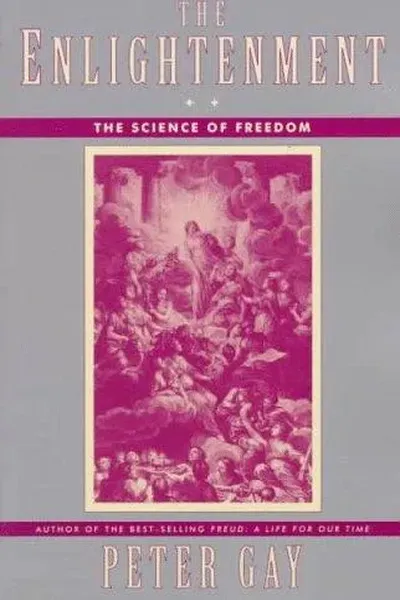
More Free Witchcraft & Paganism Books
View all →