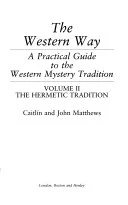
The Western Way: The hermetic tradition
 79
79

The Western Way: The hermetic tradition
Caitlin and John Matthews’ 1985 work, The Western Way: The Hermetic Tradition, serves as a robust introduction to a lineage often obscured by myth. Its strength lies in its clear exposition of complex philosophical ideas, particularly its detailed breakdown of the macrocosm-microcosm relationship central to Hermetic thought. The authors adeptly connect disparate historical threads, showing how Hermeticism influenced Renaissance alchemy and later esoteric revivals. However, the text, while informative, can sometimes feel like a catalog of concepts rather than a deeply experiential guide. A passage detailing the alchemical stages, for instance, is intellectually precise but lacks the visceral texture one might hope for in discussions of transmutation. Despite this, the book remains a solid, scholarly entry point for understanding the foundational ideas of Western esotericism.
Verdict: An indispensable scholarly survey for serious students of Hermeticism.
📝 Description
79
First published in 1985, The Western Way examines the Hermetic tradition's influence on Western thought.
Caitlin and John Matthews' 1985 book traces the lineage of Hermeticism, the mystical philosophy attributed to Hermes Trismegistus. They detail how these teachings permeated historical periods, influencing alchemy, magic, astrology, and Gnosticism. The authors systematically unpack core Hermetic tenets, including the principle of 'As Above, So Below,' which suggests a correspondence between the macrocosm and microcosm. They also discuss the nature of the divine, the universe's creation, and human spiritual development, referencing key texts like the Corpus Hermeticum and the Emerald Tablet. This work is valuable for students of Western esotericism, comparative religion, and ancient philosophy. It offers a comprehensive overview of Hermeticism's historical development and its impact on later mystical and occult movements. Those interested in the roots of alchemy or ceremonial magic will find a deeper understanding of their philosophical underpinnings here. The Matthews' book underscores the continuing relevance of Hermetic thought. It shows how ancient concepts inspired thinkers and practitioners from the Renaissance onward. By presenting a clear narrative of this tradition, The Western Way offers a key for understanding its persistent presence in Western intellectual history.
The Hermetic tradition, attributed to Hermes Trismegistus, is a syncretic body of wisdom that combines Greek and Egyptian religious and philosophical ideas. It has been a significant undercurrent in Western esotericism since antiquity, influencing various mystical and occult movements. Its core texts, such as the Corpus Hermeticum and the Emerald Tablet, contain teachings on cosmology, divine nature, and spiritual transformation. The Western Way places this tradition within the broader scope of Western intellectual history, showing its connections to alchemy, astrology, and Gnosticism.
💡 Why Read This Book?
• Gain a foundational understanding of the macrocosm-microcosm principle, a core Hermetic concept, and its implications for personal spiritual development, as explored in the book’s analysis of the Corpus Hermeticum. • Trace the historical influence of Hermeticism from its ancient roots through the Renaissance, understanding its impact on figures like Giordano Bruno and movements such as alchemy. • Grasp the symbolic language of key Hermetic texts like the Emerald Tablet, learning how its terse pronouncements have been interpreted across centuries of esoteric practice.
⭐ Reader Reviews
Honest opinions from readers who have explored this book.
❓ Frequently Asked Questions
What is the primary source text discussed in The Western Way: The Hermetic Tradition?
The primary source text is the Corpus Hermeticum, a collection of Greco-Egyptian philosophical and religious writings attributed to Hermes Trismegistus, which forms the bedrock of Hermetic philosophy.
When was The Western Way: The Hermetic Tradition first published?
The book was first published in 1985, making it a significant contribution to esoteric studies during a period of renewed interest in Western mystical traditions.
Who are the authors of The Western Way: The Hermetic Tradition?
The authors are Caitlin Matthews and John Matthews, recognized scholars and practitioners in the field of Western esotericism and mythology.
What historical period does the book cover regarding Hermeticism?
The book spans from the Hellenistic period, when the Hermetic texts likely emerged, through the Renaissance and beyond, tracing the tradition's influence over centuries.
Does the book explain the concept of 'As Above, So Below'?
Yes, the book extensively explains the principle of 'As Above, So Below,' a fundamental tenet of Hermeticism that posits a direct correlation between the celestial and terrestrial realms.
Is this book suitable for beginners in esoteric studies?
Yes, it is considered an excellent starting point for beginners due to its clear structure and comprehensive overview of Hermeticism's history and core concepts.
🔮 Key Themes & Symbolism
The Hermetic Corpus
The book meticulously examines the foundational texts attributed to Hermes Trismegistus, primarily the Corpus Hermeticum. It explores the philosophical and theological ideas presented within these dialogues, which posit a divine creator, the nature of the soul, and the path to gnosis. The Matthews’ analysis highlights how these ancient writings became a starting point for later esoteric traditions, offering a framework for understanding the universe and humanity's place within it through a lens of divine wisdom and cosmic order.
Alchemy and Transformation
Central to the Hermetic tradition is the concept of alchemy, not merely as a proto-chemical practice, but as a spiritual discipline aimed at the transformation of the self. The Western Way details how alchemical symbolism, such as the Great Work (Main work), represents the purification and perfection of the soul, mirroring the cosmic processes described in Hermetic philosophy. The book connects this transformative aspiration to the Hermetic principles of correspondence and the pursuit of divine knowledge.
Macrocosm and Microcosm
The principle of 'As Above, So Below' is a recurring motif, emphasizing the interconnectedness of all levels of reality. The book explains how the patterns and laws governing the cosmos (macrocosm) are reflected in the human being and the earthly realm (microcosm). This understanding is presented as crucial for spiritual development, enabling individuals to align themselves with divine forces and achieve a state of harmony and enlightenment through self-knowledge.
Hermeticism's Historical Reach
The work charts the enduring influence of Hermetic thought across Western history. It demonstrates how Hermetic ideas resurfaced and were reinterpreted during periods like the Renaissance, influencing philosophers, artists, and mystics. The book illustrates the tradition's adaptability, showing how its core tenets informed various movements, including Kabbalah, Rosicrucianism, and Freemasonry, solidifying its role as a persistent undercurrent in Western esoteric and philosophical discourse.
💬 Memorable Quotes
Direct passages from the work, attributed to the author.
“The Emerald Tablet contains the secrets of the Great Work.”
— This statement highlights the key importance of the Emerald Tablet within Hermetic and alchemical traditions. It suggests that this concise text holds profound keys to spiritual and material transformation, central to the alchemical pursuit.
“The goal is to become like God, through understanding.”
— This concept reflects the Hermetic aspiration towards deification or spiritual perfection. It posits that knowledge and comprehension of divine principles are the means by which an individual can elevate their consciousness.
“The soul's journey mirrors the cosmic dance.”
— This metaphorical interpretation relates the individual spiritual path to the grand movements of the universe. It suggests that personal growth and evolution are part of a larger, divinely orchestrated cosmic process.
💡 Key Ideas
Editorial paraphrase of the work's core concepts — not direct quotes.
The universe is a book written by God, and man must learn to read it.
This paraphrased concept underscores the Hermetic view of creation as a divine text, accessible through study and contemplation. It suggests that understanding the natural world and its principles is a path to divine knowledge.
Hermeticism teaches that all things are connected, from the stars to the smallest particle.
This paraphrased idea captures the Hermetic doctrine of correspondence, emphasizing the unity of existence. It implies that studying any part of the universe can reveal truths about the whole, including the divine order.
🌙 Esoteric Significance
Tradition
This work is firmly rooted in the Western Hermetic tradition, tracing its lineage directly from the Hermetic texts of late antiquity. It positions Hermeticism as a foundational pillar of Western esotericism, distinct from, yet influential upon, Gnosticism, Kabbalah, and later Renaissance magic. The book emphasizes its role as a unifying current, providing a philosophical and spiritual framework that bridges diverse mystical expressions.
Symbolism
Key symbols explored include the Caduceus of Hermes, representing mediation, balance, and the union of opposites; the Ouroboros, symbolizing cyclical nature, eternity, and the Great Work of alchemical transformation; and the concept of the divine Mind (Nous), representing the ultimate creative intelligence from which all existence emanates.
Modern Relevance
Contemporary practitioners of ceremonial magic, Western astrology, and modern alchemy frequently draw upon the historical and philosophical grounding provided by this book. Thinkers in comparative mysticism and scholars of Renaissance intellectual history also cite its clear exposition of Hermetic principles and their historical impact.
👥 Who Should Read This Book
• Students of Western Esotericism: Those seeking a comprehensive and historically informed introduction to the Hermetic tradition, its origins, and its key texts like the Corpus Hermeticum. • Comparative Religion Scholars: Researchers interested in understanding the cross-pollination of ideas between ancient Greek philosophy, Egyptian religion, and later mystical movements in the West. • Aspiring Alchemists and Magicians: Individuals beginning their study of practical or philosophical alchemy and ceremonial magic who need to grasp the foundational cosmology and principles.
📜 Historical Context
Published in 1985, The Western Way: The Hermetic Tradition emerged during a period of significant resurgence in esoteric studies, following the counter-cultural movements of the 1960s and 70s. The field saw increased academic interest alongside popular engagement with occultism and mysticism. This era was marked by scholars like Frances Yates whose work on the Hermetic tradition and the Renaissance, particularly her 1964 book 'Giordano Bruno and the Hermetic Tradition,' had already laid crucial groundwork. The Matthews’ book tapped into this scholarly momentum, providing a more accessible synthesis. It offered an alternative to more spiritualist interpretations prevalent in earlier decades, grounding Hermeticism in historical and philosophical analysis. While not facing overt censorship, the esoteric field often navigated a delicate balance between academic acceptance and popular mystique, a path the Matthews navigated with scholarly rigor.
📔 Journal Prompts
The concept of 'As Above, So Below' as presented in the book’s analysis of the Emerald Tablet.
Reflect on the symbolic meaning of the Ouroboros and its connection to cyclical transformation.
Consider the role of Hermes Trismegistus as a syncretic figure bridging cultures.
Examine the historical influence of Hermeticism during the Renaissance period.
Analyze the pursuit of gnosis as depicted in the Corpus Hermeticum.
🗂️ Glossary
Hermes Trismegistus
A legendary Greco-Egyptian figure, syncretizing the Greek god Hermes and the Egyptian god Thoth. He is considered the legendary author of the Hermetic texts, a body of esoteric wisdom literature.
Corpus Hermeticum
A collection of twenty-one philosophical and religious treatises written in Greek, attributed to Hermes Trismegistus. It forms the core of Hermetic literature and discusses cosmology, theology, and ethics.
Emerald Tablet
A short, cryptic text considered a foundational work of alchemy and Hermetic philosophy. It is believed to contain the secret of the 'Great Work' and the principle of 'As Above, So Below'.
Macrocosm
The greater universe or cosmos, considered as a whole. In Hermeticism, it refers to the divine order and the celestial realms, which are seen as reflected in the microcosm.
Microcosm
The human being, considered as a miniature or small universe. Hermetic philosophy posits that the structure and principles of the macrocosm are mirrored within the human individual.
Gnosis
Knowledge, particularly spiritual or esoteric insight. In Hermeticism and related traditions, gnosis refers to direct, intuitive understanding of divine truths and the nature of reality.
Alchemy
An ancient tradition involving the study of matter, the universe, and the self, often associated with the transmutation of base metals into gold. Spiritually, it represents the process of purifying and perfecting the soul.
This book appears in 1 collection
🔮 Readers Also Liked
Browse all →








From the “Western Esotericism” Collection
View all →




More Free Occult Philosophy Books
View all →