La Genèse Hermétique
 73
73

La Genèse Hermétique
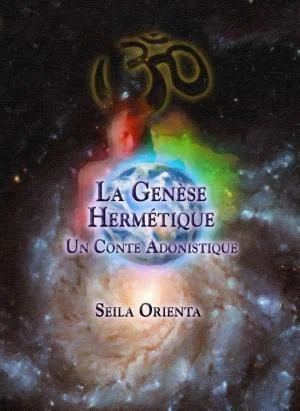
Seila Orienta’s *La Genèse Hermétique* attempts to chart a Hermetic creation story, positioning figures like Jesus and Franz Bardon as participants in a cosmic genesis. The primary strength lies in its audacious attempt to synthesize these disparate elements into a unified, albeit symbolic, narrative of existence. The book effectively employs allegorical language, a tradition deeply ingrained in Hermetic texts, to describe creation as an internal, unfolding process rather than an external event. However, the work's conciseness sometimes hinders its depth. For instance, the brief mention of Master Arion, clearly a reference to Franz Bardon, feels underdeveloped, leaving the reader with more questions than answers regarding Bardon's specific role in this genesis narrative. The text’s reliance on metaphor, while central to its Hermetic framework, can at times obscure rather than illuminate the precise nature of the 'secret mission' it describes. It is a work that prompts contemplation but offers few concrete anchors for those unfamiliar with the esoteric currents it draws upon. Ultimately, *La Genèse Hermétique* offers a unique, if somewhat opaque, perspective on creation for dedicated students of occult philosophy.
📝 Description
73
Seila Orienta's 2023 book, La Genèse Hermétique, reinterprets creation through Hermetic philosophy.
La Genèse Hermétique proposes a unique cosmological narrative rooted in Hermetic philosophy. The book details a secret mission undertaken by figures including the Blue Monks, Urgaya, Sham-Balla, Master Yoshuah (Christ), and Master Arion (Franz Bardon). Instead of relying on traditional religious dogma, it uses symbolic language and metaphor from alchemical and Hermetic principles to explain the origin of existence. The text seeks to clarify the beginning of our reality and our place within the universal order.
This work is suited for individuals already familiar with esoteric traditions, especially Hermeticism, Gnosticism, and alchemy. It appeals to those looking for alternative perspectives on creation myths and cosmological origins, moving past literal interpretations. Students of comparative religion and metaphysics interested in how different traditions conceptualize the universe's genesis will find it valuable. It also serves those who wish to explore the philosophical underpinnings of figures like Jesus Christ and Franz Bardon in a broader esoteric framework.
Published in 2023, La Genèse Hermétique contributes to a growing interest in esoteric philosophy and alternative cosmologies. Its subject matter engages with perennial philosophical questions about creation, a lineage tracing back to the Corpus Hermeticum and Renaissance Hermeticism. The book's allegorical method for conveying cosmic truths aligns with approaches found in Gnostic texts and alchemical treatises.
💡 Why Read This Book?
• Gain insight into a Hermetic interpretation of creation, distinct from Abrahamic cosmogonies, by examining the symbolic narrative presented regarding the 'mission' of figures like Maître Yoshuah. • Understand the role of allegory in esoteric traditions by analyzing how *La Genèse Hermétique* uses metaphor to explain universal principles and existence. • Explore the esoteric lineage connecting figures like Jesus Christ and Franz Bardon, as presented in the book's framework of a secret cosmic undertaking.
⭐ Reader Reviews
Honest opinions from readers who have explored this book.
❓ Frequently Asked Questions
What is the primary philosophical framework of La Genèse Hermétique?
The book is primarily framed by Hermetic philosophy, interpreting the genesis of the universe through symbolic and allegorical language rooted in alchemical and esoteric traditions, rather than literal or dogmatic accounts.
Who are the key figures involved in the secret mission described in the book?
The book mentions the Blue Monks, Urgaya, Maître Yoshuah (identified as Christ), and Maître Arion (identified as Franz Bardon) as central to the secret mission concerning the creation narrative.
When was La Genèse Hermétique first published?
La Genèse Hermétique was first published on August 31, 2023, making it a contemporary work engaging with esoteric themes.
Does the book provide a literal account of creation?
No, the book explicitly states it uses symbolism and metaphors to explain the genesis of existence and humanity's purpose, offering an esoteric rather than a literal interpretation.
What is the relationship between Maître Arion and Franz Bardon?
The book identifies Maître Arion as Franz Bardon, suggesting his involvement in the secret mission and the Hermetic understanding of creation presented in the work.
What is the main goal of the 'secret mission' mentioned?
The secret mission, as described in the book, aims to inform the reader about the Hermetic perspective on the genesis of existence and humanity's fundamental purpose within the universe.
🔮 Key Themes & Symbolism
Hermetic Cosmology
The work posits a creation narrative grounded in Hermetic principles, diverging from traditional religious accounts. It frames genesis not as a singular event but as an ongoing process of emanation and unfoldment, driven by universal laws. This perspective aligns with ancient Hermetic texts like the *Corpus Hermeticum*, which describe the cosmos as a divine manifestation. The book uses symbolic language to represent these complex ideas, inviting readers to perceive the underlying order of existence through an esoteric lens.
Secret Missions and Masters
Central to the narrative is the concept of a long-held secret mission involving specific spiritual masters: Urgaya, Sham-Balla, Maître Yoshuah (Christ), and Maître Arion (Franz Bardon). This framing suggests a hidden history or an esoteric lineage responsible for guiding humanity's understanding of creation. By naming figures like Christ and Franz Bardon, the book seeks to integrate their esoteric teachings or roles into a unified cosmological vision, implying a shared purpose across different eras and traditions.
Symbolism and Allegory
The book's primary mode of communication is through symbolism and metaphor, a hallmark of Hermetic literature. It avoids literal descriptions of creation, instead employing allegorical representations to convey profound truths about existence and purpose. This approach mirrors alchemical treatises and Gnostic scriptures, where physical processes and figures often represent spiritual or cosmic realities. Readers are encouraged to engage with these symbols to grasp the deeper meaning behind the genesis of our reality.
Human Purpose in the Universe
Beyond explaining the origin of the universe, *La Genèse Hermétique* aims to clarify humanity's fundamental purpose within this cosmic framework. The narrative of the secret mission and the Hermetic genesis implies that human existence is not accidental but integral to the universal design. The work encourages introspection on one's role in this grand unfolding, suggesting that understanding creation is intrinsically linked to understanding one's own destiny and potential for spiritual evolution.
💬 Memorable Quotes
Direct passages from the work, attributed to the author.
“The genesis is approached from the perspective of Hermeticism.”
— This statement expresses the book's core thesis, positioning Hermetic philosophy as the interpretive key to understanding the creation of the universe, distinct from other theological or scientific models.
“It relates precisely the genesis of our existence and our purpose in this universe.”
— This highlights the book's dual aim: to explain the origins of reality and simultaneously define humanity's inherent function or destiny within that reality, using esoteric principles.
“The work uses symbolism and metaphors.”
— This emphasizes the allegorical and non-literal approach taken by the author, signaling that the text requires interpretation of its symbolic language to access its intended meaning.
“The secret mission of the Blue Monks, Urgaya, Master Yoshuah (Christ), and Master Arion (Franz Bardon) is revealed.”
— This points to the narrative structure, framing the esoteric revelations about creation as part of a clandestine undertaking by significant spiritual figures from various traditions.
“The book informs the reader about the long-kept secret mission.”
— This indicates the book's didactic purpose, aiming to impart hidden knowledge about cosmic origins and human purpose that has been deliberately concealed or esoteric until its publication.
🌙 Esoteric Significance
Tradition
The work is firmly rooted in the Western Esoteric Tradition, specifically drawing from Hermeticism, Gnosticism, and potentially Kabbalistic concepts of emanation. It presents a creation narrative that aligns with Hermetic principles of an ordered, intelligent cosmos, often viewed as an unfolding divine consciousness or process, rather than a creation ex nihilo. This approach positions it within a lineage that interprets Genesis and cosmic origins through symbolic and allegorical means, prioritizing inner gnosis over external revelation.
Symbolism
Key symbols likely employed include alchemical imagery, representing the transformation and refinement of primordial substance into manifest reality. The number seven, often significant in creation myths and Hermetic numerology, may feature. The concept of the 'Logos' or divine word, central to many creation accounts including Hermetic ones, is likely alluded to, perhaps through the 'mission' of figures like Maître Yoshuah, representing divine utterance or creative force.
Modern Relevance
Contemporary practitioners of Hermetic magic, students of comparative religion, and those exploring consciousness studies find value in such works. Thinkers and groups focused on integrating ancient wisdom traditions with modern understanding of physics and psychology, or those seeking non-dogmatic spiritual frameworks, engage with Hermetic texts. The book's approach to creation and purpose may resonate with individuals disillusioned by traditional religious narratives, offering a symbolic and philosophical alternative.
👥 Who Should Read This Book
• Students of Hermeticism and Western Esotericism seeking alternative creation narratives beyond standard theological or scientific accounts. • Comparative religion scholars interested in how figures like Christ and Franz Bardon are interpreted within esoteric cosmologies. • Individuals exploring personal spiritual development who are drawn to symbolic interpretations of existence and purpose.
📜 Historical Context
Published in 2023, *La Genèse Hermétique* arrives at a time of renewed popular interest in esoteric thought, occultism, and alternative spiritualities, often fueled by online communities and accessible digital publishing. The work's focus on Hermeticism places it within a continuous, albeit sometimes subterranean, Western esoteric tradition that gained significant traction during the Renaissance and saw further revivals in the 19th and 20th centuries, influenced by figures like Eliphas Lévi and Manly P. Hall. The book’s specific mention of Franz Bardon, a 20th-century magician whose works on Hermetic magic gained considerable posthumous popularity starting in the late 1970s, anchors it to a more recent manifestation of this lineage. While not directly engaging with contemporary academic historiography of religion or philosophy, its subject matter engages with perennial questions about creation that have been explored by Gnostic sects, Renaissance Neoplatonists, and Kabbalists for centuries. The Hermetic tradition itself traces its roots to Hellenistic Egypt, with the *Corpus Hermeticum* being a foundational text, and its ideas have periodically challenged more orthodox theological and philosophical frameworks throughout history.
📔 Journal Prompts
The concept of the Blue Monks' secret mission and its connection to universal genesis.
Maître Arion's role in the Hermetic creation narrative presented.
The symbolic interpretation of existence as described in the book.
Reflecting on the purpose of existence as framed by Maître Yoshuah's mission.
Urgaya's contribution to the Hermetic genesis.
🗂️ Glossary
Hermeticism
A philosophical and spiritual tradition based on writings attributed to Hermes Trismegistus, emphasizing divine wisdom, the interconnectedness of all things, and the principle of 'As Above, So Below'.
Genesis
The origin or mode of formation of something; in this context, referring to the creation of the universe and existence from an esoteric and Hermetic perspective.
Maître Yoshuah
The book's designation for Jesus Christ within its Hermetic framework, suggesting a role or interpretation beyond conventional religious understanding, likely as a spiritual master or divine emanation.
Maître Arion
The book's designation for Franz Bardon, a 20th-century German occultist known for his works on Hermetic magic, identifying him as a key figure in the esoteric genesis narrative.
Symbolism
The use of symbols or symbolic representations to express abstract ideas or spiritual truths, a primary method employed in the book to convey its cosmological teachings.
Urgaya
One of the figures mentioned as part of the secret mission related to the Hermetic genesis, representing an esoteric master or entity within the book's narrative.
Sham-Balla
Another individual named as part of the secret mission, contributing to the esoteric account of creation presented in the work.
This book appears in 1 collection
🔮 Readers Also Liked
Browse all →









From the “Ancient Mysteries” Collection
View all →


More Free Occult Philosophy Books
View all →