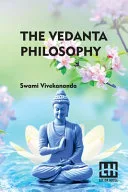
The Vedanta Philosophy
 73
73

The Vedanta Philosophy
Swami Vivekananda's 1896 address, "The Vedanta Philosophy," remains a remarkably lucid introduction to Advaita Vedanta, especially given its academic setting at Harvard. The strength lies in Vivekananda's ability to translate profound metaphysical concepts into language accessible to a Western philosophical audience of the late 19th century. His reframing of Vedanta not as a mere religion but as a universal philosophy of existence is compelling. A notable limitation is the inherent brevity required for an address; some nuances of Maya, for instance, could benefit from more extensive elaboration than this format allows. The passage where he discusses the relationship between the individual soul and the Universal Soul, suggesting "we are one" beneath apparent diversity, is particularly impactful. It's a foundational text for understanding the introduction of Vedanta to the West.
📝 Description
73
Swami Vivekananda's 1896 address at Harvard University laid out the core of Vedanta philosophy.
Delivered to the Graduate Philosophical Society at Harvard University on March 25, 1896, this publication contains Swami Vivekananda's significant lecture on Vedanta philosophy. It serves as a clear introduction to the main ideas of Advaita Vedanta, a prominent school within Hindu thought. Vivekananda's presentation aimed to make these complex concepts accessible to a Western academic audience. The lecture took place during a time of growing Western fascination with Eastern religions, following the 1893 Parliament of Religions in Chicago. Vivekananda's speech at Harvard helped introduce Vedanta to Western intellectual circles, presenting it as a philosophical system distinct from materialism and Western theology.
This work distills complex philosophical ideas into understandable terms. It examines the nature of reality (Brahman), the individual self (Atman), the concept of illusion (Maya), and the path to liberation (Moksha). Vivekananda highlights the fundamental unity of all existence and the possibility of recognizing one's inherent divinity. The book is suitable for students of comparative philosophy, those interested in Eastern spirituality, and anyone seeking to grasp the essential concepts of Vedanta from a key modern exponent, especially those drawn to monistic and non-dualistic philosophies.
Vivekananda's lecture at Harvard in 1896 places Vedanta within the broader context of Hindu mystical traditions, specifically the Advaita Vedanta school. This school emphasizes the non-dual nature of reality, positing that the individual soul (Atman) is identical to the ultimate reality (Brahman). The lecture aimed to articulate these teachings, including the concept of Maya or illusion, to a Western audience. It represents a significant moment where Eastern esoteric thought was formally presented in Western academic settings, bridging philosophical traditions and challenging Western perceptions of Eastern spirituality.
💡 Why Read This Book?
• Gain a foundational understanding of Advaita Vedanta's core principles, such as Brahman and Atman, as articulated by Swami Vivekananda during his pivotal 1896 Harvard address. • Grasp the concept of Maya and its implications for perceived reality, offering a unique lens through which to examine personal experience and the material world. • Explore the philosophical underpinnings of spiritual liberation (Moksha) within the Vedanta tradition, providing a non-dualistic perspective on human potential and existence.
⭐ Reader Reviews
Honest opinions from readers who have explored this book.
❓ Frequently Asked Questions
When was Swami Vivekananda's "The Vedanta Philosophy" first published?
The original publication date for "The Vedanta Philosophy: An Address Before The Graduate Philosophical Society Of Harvard University" was December 2, 1896.
Where did Swami Vivekananda deliver his address on Vedanta Philosophy?
Swami Vivekananda delivered his address on Vedanta Philosophy at the Graduate Philosophical Society of Harvard University on March 25, 1896.
What is the primary philosophical school discussed in Vivekananda's address?
The primary philosophical school discussed is Advaita Vedanta, a prominent school of Hindu philosophy emphasizing non-duality and the oneness of the individual soul (Atman) with the ultimate reality (Brahman).
What is Maya in the context of Vedanta as presented by Vivekananda?
In Vivekananda's exposition, Maya refers to the cosmic illusion or the principle that creates the appearance of multiplicity and separateness, obscuring the underlying unity of Brahman.
What does Vivekananda suggest is the ultimate goal of Vedanta philosophy?
Vivekananda suggests the ultimate goal is Moksha, or liberation, achieved through the realization of the true nature of the self (Atman) as identical with the Universal Self (Brahman).
Who wrote the introduction for this specific edition of Vivekananda's address?
This specific edition, published in 2024, features an introduction by Charles Carroll Everett, who was a professor at Harvard Divinity School.
🔮 Key Themes & Symbolism
The Unity of Existence
Vivekananda powerfully argues for the fundamental oneness of all reality, positing that the apparent diversity of the universe is a projection of a single, undifferentiated consciousness, Brahman. He presents this not as a mystical assertion but as a logical philosophical conclusion, challenging the Western tendency towards dualistic thinking. This theme underscores the esoteric idea that separation is an illusion and true understanding comes from recognizing the underlying unity that connects all beings and phenomena.
The Nature of the Self
Central to Vedanta is the concept of Atman, the true Self, which Vivekananda explains as being identical with Brahman. He contrasts this eternal, unchanging Self with the empirical ego, which is subject to the limitations of the body and mind. The esoteric significance lies in the pursuit of self-realization, where the individual recognizes their divine essence, transcending personal limitations and achieving a state of liberation from suffering and ignorance.
The Role of Illusion (Maya)
Maya is presented as the cosmic power that veils the true nature of reality, creating the world of names and forms that we perceive. Vivekananda clarifies that Maya is not mere nothingness but a positive creative power that makes the One appear as many. Esoterically, understanding Maya is crucial for spiritual progress, as it allows practitioners to see through the phenomenal world and recognize the underlying spiritual truth, preventing attachment to transient experiences.
Paths to Liberation
While this address focuses on the philosophical exposition, it implicitly points towards the goal of Moksha, liberation from the cycle of birth and death. Vivekananda's presentation of Vedanta as a rational philosophy suggests that intellectual understanding and direct realization are key. The esoteric implication is that by comprehending the true nature of reality and the self, one can dismantle the ignorance that binds them, achieving spiritual freedom and union with the Absolute.
💬 Memorable Quotes
Direct passages from the work, attributed to the author.
“The goal of man is to know himself.”
— This statement expresses the core of Vedanta's philosophical inquiry: the ultimate purpose of human existence is the direct realization of one's true nature, beyond the superficial identity with the body and mind.
“All religions are but different expressions of the one truth.”
— Vivekananda suggests a universalist perspective, implying that diverse spiritual paths, when understood deeply, converge on a single, ultimate reality, fostering interfaith understanding and respect.
“We are not the body, nor the senses, nor the mind.”
— This assertion highlights the Vedantic distinction between the transient physical and mental apparatus and the eternal, unchanging Self (Atman) that underlies them.
“The Absolute is the only reality.”
— This phrase points to the monistic foundation of Advaita Vedanta, asserting that only the ultimate, unchanging reality (Brahman) truly exists, while the phenomenal world possesses only a dependent or illusory existence.
“Knowledge is the path to freedom.”
— Vivekananda emphasizes the power of 'Jnana' (knowledge) as a means to achieve spiritual liberation, suggesting that understanding the true nature of reality is the key to overcoming ignorance and bondage.
🌙 Esoteric Significance
Tradition
Vivekananda's work directly engages with the Advaita Vedanta tradition, a major school of Hindu philosophy. While not strictly an 'esoteric' tradition in the Western sense (like Hermeticism or Kabbalah), Advaita Vedanta contains profound inner teachings concerning the nature of reality and consciousness. Vivekananda's presentation bridges this ancient Indian wisdom with Western philosophical discourse, making its non-dualistic insights accessible to a broader audience interested in spiritual and metaphysical exploration.
Symbolism
While this specific address is primarily philosophical, the underlying concepts of Vedanta are rich with symbolism. Brahman, the Absolute, is often described ineffably, but its manifestation can be understood through symbols of unity and infinitude. Atman, the individual soul, is symbolized by the inner fire or the lotus of the heart, representing the divine spark within. Maya, the illusion of multiplicity, is sometimes symbolized by a dream or a magician's trick, highlighting the deceptive nature of the phenomenal world.
Modern Relevance
Contemporary spiritual teachers and philosophical movements, particularly those focusing on non-duality, mindfulness, and consciousness studies, frequently draw upon Vivekananda's interpretations of Vedanta. His emphasis on the inherent divinity within each individual and the unity of existence continues to resonate with modern seekers exploring paths of self-discovery, consciousness expansion, and interfaith dialogue, influencing fields from psychology to New Age spirituality.
👥 Who Should Read This Book
• Students of comparative religion and philosophy seeking a clear introduction to Hindu thought, particularly Advaita Vedanta, presented by a key historical figure. • Individuals interested in non-dualistic philosophies and metaphysics who wish to understand the foundational concepts of Brahman, Atman, and Maya. • Seekers of spiritual wisdom looking for a rational and philosophical approach to understanding consciousness, reality, and the nature of the self.
📜 Historical Context
Swami Vivekananda's 1896 address at Harvard University occurred at a central moment for the reception of Eastern philosophies in the West. Following his impactful participation in the 1893 Parliament of Religions in Chicago, Vivekananda became a prominent figure, introducing Hindu thought to Western academic and public spheres. His lecture before the Graduate Philosophical Society provided a sophisticated philosophical framework for Vedanta, challenging prevailing notions often characterized by Orientalist perspectives or superficial understandings of Indian spirituality. This was a period when figures like Helena Blavatsky and the Theosophical Society were also popularizing Eastern concepts, though often through a syncretic and sometimes esoteric lens. Vivekananda, however, presented a more philosophically rigorous and academically grounded exposition. His ability to articulate complex Vedantic principles, particularly Advaita Vedanta, in a manner comprehensible to Western intellectuals was crucial in establishing its legitimacy, contrasting with contemporary Western philosophical trends like Idealism and Materialism.
📔 Journal Prompts
The concept of Brahman as the sole reality, as explained by Vivekananda.
The distinction between Atman and the empirical self.
The implications of Maya for understanding everyday experience.
The relationship between the address's philosophical arguments and personal spiritual realization.
Vivekananda's presentation of Vedanta in the context of Western philosophical thought in 1896.
🗂️ Glossary
Vedanta
A school of Hindu philosophy based on the Upanishads, exploring themes of ultimate reality, consciousness, and the self. It encompasses various sub-schools, including Advaita Vedanta.
Advaita Vedanta
A prominent school of Vedanta, meaning 'non-dualism'. It asserts that the individual soul (Atman) is identical with the ultimate reality (Brahman), and that the perceived world of multiplicity is an illusion (Maya).
Brahman
The ultimate, unchanging, infinite, and absolute reality in Hindu philosophy. It is the fundamental substratum of all existence, often described as pure consciousness.
Atman
The individual self or soul. In Advaita Vedanta, Atman is understood to be identical with Brahman, the true, eternal essence of a being.
Maya
A Sanskrit term referring to illusion, magic, or the cosmic power that conceals the true nature of reality, creating the appearance of a diverse and changing world.
Moksha
Liberation or release from the cycle of birth, death, and rebirth (samsara). It is the ultimate goal in many Indian religions, achieved through spiritual knowledge and realization.
Upanishads
Ancient Sanskrit texts forming the core of Vedanta philosophy. They contain philosophical discussions on the nature of reality, the self, and the relationship between the individual and the divine.