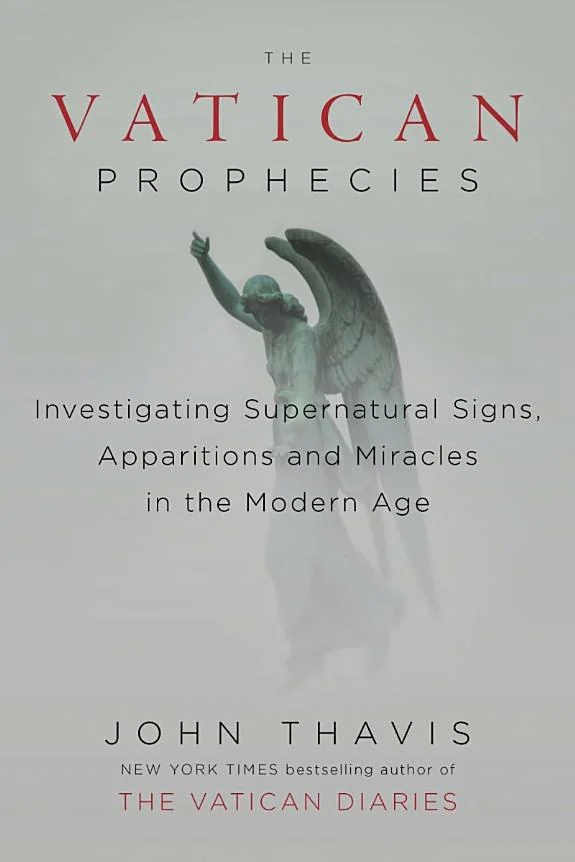
The Vatican Prophecies
 79
79

The Vatican Prophecies
John Thavis’s The Vatican Prophecies offers a dispassionate look at how the Catholic Church handles claims of the miraculous, a subject ripe for sensationalism but here treated with academic rigor. The book’s strength lies in its detailed exposition of the Church’s internal processes, particularly its discernment of private revelations and the historical development of its investigative bodies. Thavis avoids taking sides, presenting the mechanisms of verification as a complex bureaucratic and theological undertaking. A notable limitation is the occasional dryness of the prose, which, while accurate, can sometimes obscure the profound human drama inherent in claims of divine intervention. The section discussing the criteria for recognizing Marian apparitions, for instance, meticulously outlines theological and scientific checks but could benefit from more direct engagement with the lived experiences of believers and doubters. Ultimately, The Vatican Prophecies serves as an informative, if somewhat detached, guide to the Church’s official engagement with the extraordinary.
📝 Description
79
John Thavis's 2013 book scrutinizes how the Roman Catholic Church investigates claims of miraculous events.
The Vatican Prophecies examines the rigorous processes the Roman Catholic Church uses to authenticate claims of miraculous events. John Thavis details how the institution moves beyond simple narratives to assess theological, historical, and procedural frameworks for discerning genuine divine intervention from human fabrication or psychological explanations.
The book covers official processes, developed over centuries, that apply to phenomena such as Marian apparitions, the power of relics, and exorcism. It reveals a complex system of evaluation, tracing the Church's engagement with the extraordinary from early Christian accounts to modern scrutiny. Thavis situates these practices within historical periods, including the Counter-Reformation and the impact of contemporary scientific and psychological perspectives.
This work is for readers interested in the intersection of faith, history, and skepticism, particularly concerning institutional responses to the supernatural within a major global religion. Scholars of comparative religion, students of Vatican history, and anyone curious about the criteria for accepting or rejecting claims of miracles will find valuable insights.
This book delves into the institutional mechanisms that manage and validate supernatural claims within a major Western religion. It examines how a structured hierarchy, steeped in centuries of tradition and theological debate, approaches phenomena that lie outside ordinary experience. The focus is on the discernment process, the criteria for belief, and the historical evolution of these practices, situating them within a broader context of how societies grapple with the extraordinary and the divine.
💡 Why Read This Book?
• Learn the specific criteria the Catholic Church employs to evaluate alleged miracles, such as those concerning the Virgin Mary, as detailed in the book's examination of discernment processes. • Understand the historical evolution of the Church's approach to relics and private revelations, tracing shifts in policy and theological interpretation from earlier centuries to contemporary practices. • Gain insight into the formal procedures for exorcism as described by Thavis, revealing the structured, investigative nature of this often misunderstood rite.
⭐ Reader Reviews
Honest opinions from readers who have explored this book.
❓ Frequently Asked Questions
What are the main criteria the Catholic Church uses to judge miraculous events?
The Church employs a multi-faceted approach involving theological, historical, and scientific scrutiny. Key factors include the apparent absence of natural explanations, the conformity of the event to Catholic doctrine, and the spiritual fruits it produces. Investigations often involve commissions of experts.
How does John Thavis's book differ from sensationalized accounts of Vatican secrets?
Thavis's work is characterized by its academic and objective tone, focusing on documented processes and internal Church debates rather than speculative conspiracy theories. It aims to explain the 'how' of Vatican investigations, not to uncover hidden agendas.
When was the book 'The Vatican Prophecies' first published?
The book 'The Vatican Prophecies' by John Thavis was first published on September 15, 2015.
Does the book discuss the authenticity of specific miracles or relics?
Yes, the book examines how the Church evaluates claims related to miracles and relics. It details the historical context and procedural frameworks used to assess their authenticity, rather than definitively declaring specific events or objects as genuinely miraculous.
What is the role of skepticism within the Catholic Church regarding miracles?
Thavis illustrates that skepticism is an integral part of the Church's investigative process. There is a recognized need for critical examination to ensure that reported miracles are not mistaken or fraudulent, reflecting a balance between faith and reason.
Are exorcisms a central focus of 'The Vatican Prophecies'?
Exorcisms are a significant component discussed within the book. Thavis details the Church's rigorous approach to identifying and conducting exorcisms, including the theological considerations and investigative protocols involved.
🔮 Key Themes & Symbolism
Discernment of Miracles
The core of Thavis's work lies in the systematic analysis of how the Catholic Church distinguishes authentic divine manifestations from misinterpretations or fabrications. This involves examining historical precedents, theological frameworks, and procedural methodologies employed by Vatican bodies. The book details the cautious, often lengthy, processes undertaken to verify claims of apparitions, healings, or other supernatural occurrences, emphasizing the Church's commitment to rigorous investigation before pronouncements of authenticity.
Theology of Relics
The book explores the spiritual and theological significance the Catholic Church attributes to relics. It moves beyond mere veneration of objects associated with saints to discuss the underlying beliefs about divine grace and intercession that make relics potent symbols and conduits of faith. Thavis examines how the Church evaluates the provenance and purported efficacy of these sacred items, reading through the fine line between genuine devotion and potential superstition.
Private Revelations
Thavis investigates the Church's approach to private revelations—communications believed to be from God or divine figures to individuals outside of scripture. The work clarifies the criteria used to assess the credibility and orthodoxy of such revelations, differentiating them from public revelation contained in the Bible and tradition. This theme highlights the Church's internal mechanisms for vetting extraordinary claims and ensuring they align with established doctrine.
Exorcism Procedures
A significant aspect of the book involves detailing the Church's formal procedures for diagnosing and performing exorcisms. Thavis sheds light on the rigorous diagnostic process, the theological understanding of demonic influence, and the careful protocols observed by authorized exorcists. This section explains a practice often sensationalized, presenting it as a carefully managed spiritual and pastoral ministry within the Church's structure.
💬 Memorable Quotes
Direct passages from the work, attributed to the author.
“The Church has developed a sophisticated apparatus for investigating claims of the miraculous.”
— This statement underscores the book's central thesis: that the Catholic Church possesses established, intricate systems for examining supernatural phenomena, moving beyond simple acceptance or rejection towards a structured discernment process.
“Skepticism is an essential component in the Church's process of discerning divine authenticity.”
— This highlights the internal checks and balances within the Church's approach to miracles, indicating that critical inquiry and a degree of doubt are integral to ensuring that claims are thoroughly vetted before being accepted.
“The evaluation of private revelations must align with the established truths of public revelation.”
— This concept emphasizes the hierarchical nature of Catholic doctrine, asserting that any new spiritual claims or experiences must be congruent with the foundational teachings found in scripture and tradition.
“Relics are understood not just as objects, but as focal points for grace and remembrance.”
— This interpretation moves beyond the material aspect of relics, explaining their theological importance as aids to faith, connecting believers to the lives of saints and the divine presence.
“The process of determining authenticity requires patience and meticulous attention to detail.”
— This speaks to the careful, often prolonged, nature of the Vatican's investigations into alleged miracles, emphasizing the commitment to thoroughness and avoiding hasty conclusions.
🌙 Esoteric Significance
Tradition
While not explicitly aligned with a single esoteric lineage like Hermeticism or Gnosticism, Thavis's work touches upon themes relevant to esoteric traditions that explore divine intervention and hidden knowledge. The Catholic Church's formal processes for discerning miracles can be seen as a structured, albeit orthodox, approach to identifying manifestations of the transcendent, a concern shared by many esoteric paths. It represents an institutionalized method of engaging with phenomena that lie beyond ordinary perception, seeking to authenticate spiritual currents within a defined theological framework.
Symbolism
The book implicitly engages with potent Catholic symbols such as Marian apparitions, which carry deep symbolic weight related to purity, divine mothering, and spiritual guidance. Relics, too, are symbolic, representing tangible connections to the sacred, the enduring power of faith, and the miraculous potential within the material world. The very act of exorcism, while often viewed literally, can also symbolize the ongoing spiritual battle between light and darkness, order and chaos, a theme resonant in various esoteric cosmologies.
Modern Relevance
Contemporary interest in the supernatural, spiritual healing, and the intersection of faith and science finds a crucial reference point in Thavis's analysis. Thinkers and practitioners exploring comparative religion, the psychology of belief, or the sociology of religious institutions can draw on his detailed account of the Vatican's official stance. The book provides a factual counterpoint to more speculative or New Age interpretations of divine phenomena, offering a grounded perspective on how a major religious tradition manages and interprets the extraordinary.
👥 Who Should Read This Book
• Comparative religion scholars and students seeking to understand institutional approaches to the supernatural within a major world religion. • Individuals interested in Vatican history and the sociology of belief, particularly those curious about the mechanisms behind official Church pronouncements on miracles. • Skeptics and the faithful alike who wish to comprehend the rigorous, often complex, processes involved in discerning alleged divine interventions, relics, and private revelations.
📜 Historical Context
John Thavis's The Vatican Prophecies emerges from a long tradition within the Catholic Church of scrutinizing extraordinary claims, a practice that intensified significantly during and after the Counter-Reformation. In the 16th century, the Council of Trent (1545-1563) reinforced the importance of saints and relics while also demanding greater control over devotional practices, laying groundwork for later investigative bodies. The 20th century, particularly the post-Vatican II era, saw continued evolution in these procedures, influenced by both increased global communication of alleged miracles and a growing awareness of psychological and sociological factors. Thavis's work engages with this history, implicitly contrasting with more mystical or less regulated periods. While not directly engaging in polemics with specific contemporary authors, the book situates itself against a backdrop where figures like Jacques Maritain explored the nature of supernatural knowledge, and where the Church’s pronouncements on phenomena like Fatima (1917) underwent extensive review. The reception of such Church pronouncements has often been debated, with critics questioning the institutional bias towards affirmation.
📔 Journal Prompts
The Church's evaluation of relics and their spiritual significance.
Private revelations and their alignment with public revelation.
The procedural framework for investigating miraculous claims.
The role of skepticism in discerning divine authenticity.
The theological basis for understanding exorcism.
🗂️ Glossary
Private Revelation
Communications believed to be from God or divine figures to individuals, outside of the public revelation found in Scripture and Tradition. The Church meticulously evaluates these for authenticity and conformity to doctrine.
Relics
Objects associated with saints or events in salvation history, venerated by Catholics as tangible connections to holiness and potential conduits of divine grace or intercession.
Discernment Process
The systematic investigation and evaluation undertaken by the Church to determine the authenticity and theological soundness of alleged miraculous events or private revelations.
Exorcism
A rite performed by authorized clergy to expel demonic entities from a person or place, following specific theological guidelines and investigative protocols.
Public Revelation
The divinely revealed truths considered essential for salvation, contained in Sacred Scripture and Sacred Tradition, which the Church is obliged to teach.
Congregation for the Doctrine of the Faith
A dicastery of the Roman Curia responsible for promoting and protecting Catholic doctrine and morals worldwide; historically involved in scrutinizing alleged miracles.
Canonization
The formal process by which the Catholic Church declares a deceased person to be a saint, often involving investigation into their life and miracles attributed to their intercession.
This book appears in 1 collection
🔮 Readers Also Liked
Browse all →









From the “Apparitions” Collection
View all →


More Free Occult Philosophy Books
View all →