Paradise Lost
 76
76

Paradise Lost
Milton's "Paradise Lost" remains a monumental achievement, even when approached from an esoteric perspective. The sheer scale of its ambition, charting cosmic rebellion and human downfall, is breathtaking. The characterization of Satan, presented not merely as a villain but as a complex, defiant figure, offers fertile ground for analyzing archetypal rebellion against divine authority. However, the poem's dense theological arguments and archaic language can present a formidable barrier. A specific passage that continues to provoke thought is Satan's assertion, "Better to reign in Hell than serve in Heav'n." While its literary artistry is undeniable, the extensive theological discourse requires dedicated engagement. Ultimately, "Paradise Lost" is an essential, albeit challenging, exploration of cosmic order and existential choice.
📝 Description
76
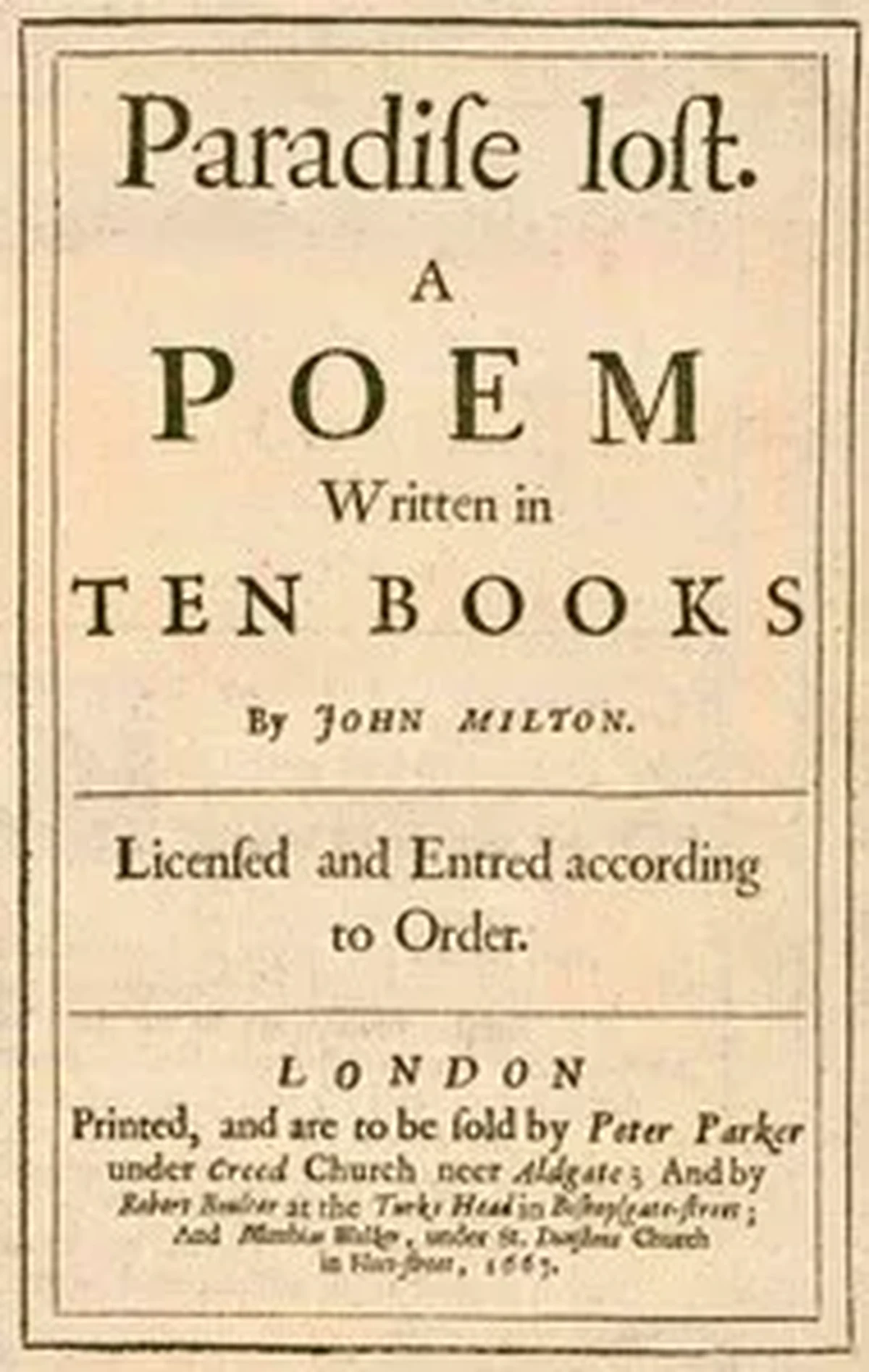
John Milton published Paradise Lost in 1667, retelling the biblical Genesis narrative.
Milton's epic poem, first appearing in 1667, recounts the biblical story of the Fall of Man. It details Satan's temptation of Adam and Eve, their expulsion from the Garden of Eden, and the lasting consequences for humanity. The work is known for its complex story, theological arguments, and broad scope.
This poem appeals to students of literature, theology, and philosophy. It is relevant for those interested in the historical development of Christian thought, the nature of free will, the problem of evil, and the literary traditions of epic poetry. Readers seeking a core text in Western mythology and cosmology will find it valuable.
Written during a time of significant upheaval in England, including the 1660 Restoration, Milton's poem reflects anxieties and theological debates of the late 17th century. Its publication followed a period of political and personal trouble for Milton, who was a prominent figure during the English Commonwealth. The work engages with classical epic conventions while reinterpreting biblical narratives through a distinct theological viewpoint.
While framed within Christian scripture, Paradise Lost engages with Gnostic themes concerning knowledge, rebellion, and the nature of the divine. Satan's character, often interpreted as a figure of intellectual rebellion against divine authority, resonates with Gnostic narratives of a demiurge or rebellious aeons. The poem's focus on free will and the consequences of disobedience also touches upon Gnostic ideas about the soul's struggle within a material world, seeking liberation from flawed creation.
💡 Why Read This Book?
• Understand the theological underpinnings of the Fall of Man as presented in Milton's epic, gaining insight into concepts of free will and divine justice explored in Book III. • Analyze the character of Satan beyond simple allegory, recognizing his complex portrayal as a symbol of rebellion and pride, a facet often discussed by later occult thinkers. • Grasp the historical and literary context of 1667, appreciating how Milton's work engaged with both classical epic traditions and contemporary theological debates.
⭐ Reader Reviews
Honest opinions from readers who have explored this book.
❓ Frequently Asked Questions
What is the primary subject of John Milton's "Paradise Lost"?
The primary subject is the biblical story of the Fall of Man, detailing Satan's rebellion, the temptation of Adam and Eve, and their subsequent expulsion from the Garden of Eden.
When was "Paradise Lost" first published?
John Milton's "Paradise Lost" was first published in 1667, a significant year in English literary history.
What theological concepts does "Paradise Lost" explore?
The poem extensively explores concepts such as free will, divine providence, obedience, sin, redemption, and the nature of good and evil.
How is Satan portrayed in "Paradise Lost"?
Satan is portrayed as a complex, defiant figure, an archetypal rebel against divine authority, often interpreted through various philosophical and esoteric lenses.
Is "Paradise Lost" considered an esoteric text?
While primarily a literary and theological epic, its profound exploration of cosmic order, rebellion, and the nature of consciousness has led many esoteric traditions to interpret its themes and symbols.
What is the significance of Adam and Eve's choice in the poem?
Their choice represents the exercise of free will leading to the introduction of sin and mortality into the world, a pivotal event in Christian theology and the poem's narrative.
🔮 Key Themes & Symbolism
Cosmic Rebellion and Authority
The poem's central conflict arises from Satan's rebellion against God's authority, a theme resonating with esoteric concepts of challenging established hierarchies and the nature of power. Satan's descent from Heaven to Hell, and his subsequent plotting, can be viewed as a metaphor for the struggle against imposed order and the assertion of individual will, even if that assertion leads to suffering. The poem questions the nature of divine sovereignty and the origins of evil, presenting a complex theological landscape.
Free Will and Predestination
Milton meticulously explores the tension between divine foreknowledge and human free will. God's omniscience is presented not as dictating human actions, but as understanding their outcomes. Adam and Eve's choice to disobey is portrayed as a genuine exercise of their free will, leading to their downfall. This theme is crucial for understanding the poem's theological framework and its implications for moral responsibility, a concept deeply examined in many mystical traditions.
The Nature of Sin and Temptation
The poem offers a profound examination of sin, not as an inherent corruption, but as a consequence of disobedience and a departure from divine love. Satan's temptation of Eve is a deep study in psychological manipulation, highlighting the allure of forbidden knowledge and the deceptive nature of worldly desires. The serpent's cunning, coupled with Eve's own rationalizations, serves as a potent symbol of how external forces and internal weaknesses can lead to spiritual error.
The Fall and Redemption
The expulsion from Eden marks the 'Fall' of humanity, introducing mortality, suffering, and separation from God. However, the poem also looks forward to redemption, with the promise of a Messiah. This dual focus on loss and eventual restoration aligns with cyclical views of cosmic and human history found in various esoteric traditions, suggesting that even from profound failure, a path towards spiritual reintegration can emerge.
💬 Memorable Quotes
Direct passages from the work, attributed to the author.
“The mind is its own place, and in itself Can make a Heav'n of Hell, a Hell of Heav'n.”
— This powerful assertion from Satan highlights the subjective nature of reality and the power of perception. It suggests that internal states can dictate one's experience of external circumstances, a concept explored in many meditative and psychological practices.
“Better to reign in Hell than serve in Heav'n.”
— This defiant declaration by Satan embodies the spirit of rebellion and the rejection of subservience. It speaks to a profound pride and a willingness to endure suffering in exchange for autonomy, a complex motif in discussions of power and resistance.
“To know / That which before us lies in daily life / Is the prime wisdom.”
— Spoken by Adam, this reflects a grounded wisdom that prioritizes practical knowledge and present duties over abstract speculation or forbidden pursuits. It suggests a balanced approach to understanding the world.
“Love not the falling study of revenge, / Nor deeper malice.”
— Eve cautions Adam against dwelling on vengeance and harboring malice. This points to the destructive nature of negative emotions and the importance of forgiveness and moving beyond past grievances.
“What God by creation meant / When he made Man, and his own image him Express'd.”
— This reflects on the divine intention behind humanity's creation. It touches upon the concept of imago Dei, the idea that humans reflect the divine nature, and the purpose of existence as ordained by the Creator.
🌙 Esoteric Significance
Tradition
While not originating from a specific esoteric lineage like Kabbalah or Hermeticism, "Paradise Lost" has been extensively analyzed through various esoteric lenses due to its profound exploration of cosmic order, rebellion, and the human condition. Its dualistic themes of light and darkness, divine will and fallen will, and the archetypal battle between God and Satan provide fertile ground for Gnostic, Neoplatonic, and even Luciferian interpretations, where the narrative is seen as a symbolic representation of spiritual struggles.
Symbolism
Key symbols include the Garden of Eden, representing primordial innocence and divine harmony, and its expulsion symbolizing humanity's separation from this state. The serpent is a potent symbol of temptation, deception, and the allure of forbidden knowledge, often interpreted as a Luciferian archetype. Satan himself, in his grandeur and defiance, is frequently analyzed as a symbol of the rebel spirit, the ego's struggle against divine authority, and the embodiment of pride.
Modern Relevance
Contemporary esoteric thinkers and practitioners continue to draw upon "Paradise Lost." Movements focusing on individuation and self-deification often interpret Satan's rebellion as a metaphor for the assertion of individual consciousness against oppressive systems, be they religious or societal. Furthermore, discussions on the nature of consciousness, the origin of evil, and the archetypal struggle between order and chaos, as depicted in Milton's epic, remain relevant in fields like depth psychology and comparative mythology.
👥 Who Should Read This Book
• Students of comparative mythology and religious studies seeking to understand the Western literary tradition's engagement with biblical narratives and their symbolic interpretations. • Scholars of English literature interested in the epic poem form, 17th-century intellectual history, and Milton's profound influence on subsequent literary works. • Individuals exploring philosophical concepts of free will, the problem of evil, and the nature of authority, looking for a foundational text that grapples with these profound questions.
📜 Historical Context
John Milton's "Paradise Lost," first published in 1667, emerged from the tumultuous intellectual and political field of post-Restoration England. Having been a staunch supporter of the English Commonwealth, Milton faced personal and professional challenges after the monarchy's return. The poem, written in blank verse and drawing heavily on classical epics like Virgil's Aeneid, reinterpreted biblical narratives for a new era. It engaged with prevailing theological debates, particularly concerning free will and divine providence, which were subjects of intense discussion among thinkers like John Locke, though Locke's major works on understanding would appear later. The work's reception was initially mixed; some lauded its ambition, while others found its theological depth challenging or even heretical. Despite its complexities, it quickly became a core part of English literature, influencing subsequent generations of poets and thinkers.
📔 Journal Prompts
The concept of Satan's rebellion and its implications for challenging divine authority.
Adam and Eve's exercise of free will in Book IX, and its consequences.
The symbolic meaning of the serpent's temptation of Eve.
The contrast between the celestial realm and Hell as depicted by Milton.
Reflections on the 'imago Dei' and the purpose of humanity's creation.
🗂️ Glossary
Fall of Man
The theological concept describing the transition of the first human beings, Adam and Eve, from a state of innocence to a state of sin, leading to their expulsion from the Garden of Eden.
Free Will
The capacity of agents to choose between different possible courses of action unimpeded. In "Paradise Lost," it's central to humanity's moral responsibility and the problem of sin.
Divine Providence
The doctrine that God has foresight of all events and guides them to His own purposes. Milton explores how this relates to human choice and the unfolding of cosmic history.
Imago Dei
Latin for 'image of God,' referring to the belief that humans were created in God's likeness, reflecting divine attributes and purpose.
Restoration
The historical period in England (starting 1660) when the monarchy was restored after the period of the Commonwealth and the Protectorate, a significant political context for Milton.
Blank Verse
Poetry written in unrhymed iambic pentameter. Milton famously employed this form for "Paradise Lost" to achieve a grand, classical effect.
Epic Poem
A long narrative poem, typically concerning the deeds of heroic figures and events significant to a culture or nation. "Paradise Lost" adapts this form to a theological narrative.
🔮 Readers Also Liked
Browse all →








More by John Milton
All books →

More Free Occult Philosophy Books
View all →