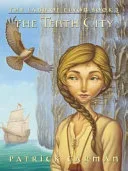
The Tenth City
 83
83

The Tenth City
Patrick Carman's *The Tenth City* presents a lore-heavy continuation that, while engaging, occasionally buckles under its own narrative weight. The strength of the novel lies in its ambitious attempt to flesh out the origins of the Land of Elyon, moving beyond simple adventuring to explore the very bedrock of its existence. Alexa's struggle against Abaddon and the forces threatening the last Jocasta is compelling, particularly when the author grounds the conflict in the land's fundamental nature. However, the pacing can feel uneven, with exposition sometimes overshadowing action. A notable limitation is the dense world-building, which, while rich, can sometimes alienate readers unfamiliar with the preceding installments or the intricate mythology being established. The concept of the Tenth City itself, while intriguing, remains somewhat elusive throughout the narrative. Despite these challenges, the book offers a satisfying, if occasionally dense, conclusion to this arc of Alexa's story.
📝 Description
83
Patrick Carman's 2006 novel, *The Tenth City*, continues Alexa's fight to protect the mystical Land of Elyon.
In Patrick Carman's 2006 novel, *The Tenth City*, Alexa must safeguard the Land of Elyon. The conflict escalates beyond simple good versus evil, as the land's existence and the fate of its last Jocasta depend on stopping an encroaching darkness. The story examines the origins of Elyon, revealing a cosmology that explains its magical properties and its inhabitants. This installment builds upon the established lore and character arcs from previous books in the Land of Elyon series.
Young adult readers who appreciate fantasy narratives with themes of spiritual warfare and world preservation will find this book engaging. It appeals to those interested in ancient origins, hidden realms, and the repercussions of clashing cosmic forces. The novel is particularly suited for readers who enjoy narratives where a young protagonist bears the heavy responsibility for a world's survival.
Published in 2006, *The Tenth City* arrived during a period of renewed interest in spiritual and esoteric themes within popular culture. While firmly rooted in young adult fantasy, the narrative incorporates elements of creation myths and the struggle against encroaching void-like forces. The concept of a vital lineage or entity, the Jocasta, responsible for a world's existence, echoes archetypal motifs found in various creation traditions. The book engages with the idea of a sentient or divinely influenced setting, aligning with certain Gnostic or Neoplatonic concepts of a living cosmos.
💡 Why Read This Book?
• Gain insight into the foundational lore of the Land of Elyon, understanding its creation myths and the significance of the Jocasta lineage as presented in the novel. • Experience the narrative tension of a world's existence being threatened by primal forces, focusing on Alexa's defense of Elyon against Abaddon's dark influence. • Explore the symbolic weight of the "Tenth City" as a concept, reflecting on its potential meaning within the broader mythology of the series and its connection to the land's nature.
⭐ Reader Reviews
Honest opinions from readers who have explored this book.
❓ Frequently Asked Questions
What is the main conflict in The Tenth City?
The primary conflict involves Alexa defending the Land of Elyon from the evil Abaddon and his forces. This defense is critical not only for the survival of the last Jocasta but also for the fundamental nature of Elyon itself.
Who is Alexa in The Tenth City?
Alexa is the protagonist tasked with protecting the Land of Elyon. Her role in this installment is to reveal the land's origins while simultaneously defending it against destructive forces.
What is the significance of the Jocasta in this book?
The Jocasta represents a vital element or lineage within the Land of Elyon. The survival of the 'last Jocasta' is presented as a crucial stake in the conflict, directly tied to the land's fate.
Who is Abaddon?
Abaddon is depicted as the primary antagonist in *The Tenth City*, leading sinister forces against the Land of Elyon. He represents a destructive or chaotic element threatening the realm's existence.
What does the title 'The Tenth City' refer to?
While not explicitly detailed in all summaries, the title likely refers to a significant, perhaps hidden or foundational, location within the Land of Elyon, hinting at its deeper history and the core of the conflict.
When was The Tenth City first published?
The Tenth City was first published in 2006, as part of Patrick Carman's larger series set in the Land of Elyon.
🔮 Key Themes & Symbolism
Preservation of Sacred Lands
The narrative centers on the urgent need to protect the Land of Elyon, not merely as a physical territory but as a realm with a distinct and vital nature. Alexa's mission highlights the responsibility individuals have to safeguard places of spiritual or mystical significance from corruption and destruction. The conflict with Abaddon underscores the fragility of such realms and the constant vigilance required to maintain their integrity.
The Nature of Origins
A significant focus of the book is revealing the genesis of the Land of Elyon. This exploration explores the foundational myths and cosmology that define the realm. Understanding its origins is presented as key to understanding its present threats and vulnerabilities, suggesting that knowledge of a place's past is essential for its future survival.
Existential Threats and Last Stands
The presence of Abaddon and his forces represents an existential threat to Elyon and the last Jocasta. This theme emphasizes the gravity of the situation, where the stakes are the highest possible: the complete annihilation or fundamental alteration of a world. Alexa's role becomes one of a last line of defense, embodying courage in the face of overwhelming odds.
The Role of the Jocasta
The Jocasta, particularly the 'last Jocasta,' serves as a crucial element tied to the land's continued existence. This concept suggests a lineage, a guardian, or a vital component whose fate is inextricably linked to Elyon's. Its vulnerability highlights a critical weakness that the antagonist seeks to exploit, making its protection paramount.
💬 Memorable Quotes
Direct passages from the work, attributed to the author.
“Alexa reveals the origin of the Land of Elyon.”
— This highlights the book's function as an origin story, providing foundational mythology and cosmological details for the fantasy world, which is central to understanding the ongoing conflict.
“defending it against the evil Abaddon and his sinister forces”
— This phrase establishes the core conflict: a battle between a benevolent, perhaps divinely-ordained, realm and a malevolent, destructive entity embodying chaos.
“not only the last Jocasta at stake but also the nature of the land itself”
— This emphasizes that the conflict transcends mere survival; it involves preserving the very essence and fundamental being of the Land of Elyon, raising the stakes considerably.
“The Tenth City”
— This title suggests a specific, potentially foundational or lost, element within the world of Elyon, hinting at a deeper layer of history or a critical location central to the plot.
“The original blurb mentions Patrick Carman as the author.”
— Acknowledging the author grounds the work in its creator's vision, providing a point of reference for readers familiar with his style or other contributions to the fantasy genre.
🌙 Esoteric Significance
Tradition
While not strictly adhering to a single lineage, *The Tenth City* draws from archetypal narratives found in Gnostic and Hermetic traditions, particularly in its exploration of a divine or sacred land (Elyon) threatened by a primal force of darkness (Abaddon). The concept of a hidden, pure realm needing protection and the idea of revealing foundational origins echo Gnostic creation myths and the quest for true knowledge.
Symbolism
The 'Land of Elyon' functions as a symbol of a pure, possibly divine, creation that requires safeguarding. 'Abaddon' represents the entropic or destructive principle, a common motif in dualistic cosmologies. The 'Jocasta' likely symbolizes a vital life force, a spiritual lineage, or a guardian spirit essential for the land's continued existence and integrity.
Modern Relevance
Contemporary fantasy authors and world-builders continue to explore themes of sacred geography and the defense of pristine realms against encroaching corruption, echoing the core conflicts in *The Tenth City*. The narrative's focus on uncovering origins and confronting existential threats speaks to modern quests for meaning and authenticity in speculative fiction.
👥 Who Should Read This Book
• Young adult fantasy readers seeking narratives with rich world-building and clear moral dichotomies, particularly those who enjoy stories about protecting magical realms. • Fans of the Land of Elyon series looking to understand the deeper origins and lore of the world, especially concerning the Jocasta and the land's fundamental nature. • Readers interested in allegorical tales exploring themes of creation, destruction, and the courage required to defend what is sacred against overwhelming dark forces.
📜 Historical Context
Published in 2006, Patrick Carman's *The Tenth City* arrived during a zenith for young adult fantasy, a period dominated by the massive success of J.K. Rowling's *Harry Potter* series and the enduring popularity of epic fantasies. The early to mid-2000s saw a proliferation of authors exploring complex mythologies and intricate world-building within the YA space. While Carman's work isn't directly tied to a specific esoteric movement like Theosophy or Gnosticism, it tapped into a broader cultural fascination with hidden worlds, spiritual undertones, and the battle between good and evil, themes prevalent in contemporary works by authors such as Philip Pullman or Garth Nix. The book's reception was part of a larger trend where fantastical narratives were increasingly scrutinized for their thematic depth and moral explorations, contributing to the ongoing conversation about the literary merit of genre fiction.
📔 Journal Prompts
The origins of the Land of Elyon and their implications for its current state.
Alexa's role in defending the last Jocasta and the nature of Elyon.
The destructive potential of Abaddon and his forces.
Reflections on the symbolism of the 'Tenth City' within the narrative.
Contemplating the balance between revealing origins and protecting a realm's essence.
🗂️ Glossary
Land of Elyon
A mystical realm that serves as the central setting for the narrative. It possesses a unique nature that is under threat and whose origins are explored within the book.
Jocasta
A significant entity, lineage, or concept within the Land of Elyon, the survival of the 'last Jocasta' being a critical element of the plot's stakes.
Abaddon
The primary antagonist leading sinister forces, representing a destructive influence or evil power that threatens the Land of Elyon and its inhabitants.
Tenth City
A titular element of the book, likely referring to a specific, possibly foundational or hidden, location within the Land of Elyon that plays a key role in the story's events.
Alexa
The protagonist tasked with protecting the Land of Elyon, who also plays a role in revealing its origins during the events of the novel.
Sinister Forces
The malevolent entities or agents led by Abaddon, actively working to corrupt, destroy, or conquer the Land of Elyon.
Nature of the Land
Refers to the fundamental essence, creation, or inherent qualities of the Land of Elyon, which is itself at stake in the conflict.