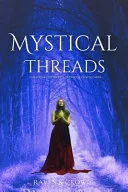
Mystical Threads
 80
80

Mystical Threads
Raven And Crow's "Mystical Threads" offers a grounded, academic approach to the often-sensationalized world of Tarot and oracle cards. Unlike many contemporary guides, it anchors its instruction in historical development, tracing the cards' journey from Renaissance Italy to their modern proliferation. The author's strength lies in dissecting the symbolic lexicon of the Rider-Waite-Smith deck, explaining its archetypal underpinnings with admirable clarity. A notable passage details the connection between the Fool's journey and the Hermetic concept of the *Anthropos*, a concept often overlooked. However, the book occasionally feels overly focused on historical minutiae, sometimes at the expense of dynamic, intuitive reading techniques that many modern practitioners seek. While comprehensive, it could benefit from more contemporary case studies beyond the usual historical figures. Nevertheless, "Mystical Threads" serves as an essential, well-researched primer for understanding the lineage and structure of divinatory cartomancy.
📝 Description
80
Published in 2023, Raven And Crow's 'Mystical Threads' examines Tarot and oracle decks.
Raven And Crow's 'Mystical Threads' covers the history and use of Tarot and oracle cards. The book traces how these divination tools developed from their earliest origins, looking at their symbolic language and place in spiritual practices. It offers practical advice on using card layouts for personal understanding, intuition, and spiritual growth. The text discusses the Rider-Waite-Smith deck, a common choice today, alongside a wider variety of oracle decks.
This book is for anyone wanting a thorough grasp of cartomancy. It suits beginners who need a firm understanding of the basics, and experienced readers seeking to expand their knowledge of historical background and symbol interpretation. Those interested in the connections between esoteric history, psychology, and personal development will find it useful. Readers who prefer a clear, structured method for learning divination will appreciate its explanations.
The book connects Tarot to a tradition of visual storytelling and divination that began before its 15th-century Italian appearance. It notes the impact of Renaissance occultism and Hermetic philosophy on early Tarot images, evident in decks like the Visconti-Sforza. The shift of Tarot from a game to a divinatory tool in the 18th century, influenced by figures like Antoine Court de Gébelin and his theories linking Tarot to ancient Egyptian ideas, is examined. The rise of specialized oracle decks in the late 20th and early 21st centuries also receives attention.
💡 Why Read This Book?
• Gain a historically informed perspective on cartomancy, understanding how Tarot evolved from a 15th-century Italian game into a spiritual tool, a context often missing in modern guides. • Master the foundational symbolism of the Rider-Waite-Smith deck, recognizing its connection to Renaissance Hermeticism and archetypal psychology, enabling deeper personal interpretations. • Learn practical, structured methods for card interpretation and spread application, moving beyond simple fortune-telling to use cards for self-discovery and spiritual growth.
⭐ Reader Reviews
Honest opinions from readers who have explored this book.
❓ Frequently Asked Questions
When was "Mystical Threads" first published?
"Mystical Threads" by Raven And Crow was first published on April 23, 2024, making it a contemporary exploration of ancient divination arts.
What is the primary focus of "Mystical Threads"?
The book's primary focus is on the history, symbolism, and practical application of Tarot and Oracle cards for personal insight and spiritual growth.
Does "Mystical Threads" cover specific Tarot decks?
Yes, it provides detailed coverage of the Rider-Waite-Smith deck, a cornerstone of modern Tarot, and also discusses various oracle decks.
Is this book suitable for beginners in Tarot?
Absolutely. "Mystical Threads" is designed for both beginners seeking foundational knowledge and experienced practitioners aiming to deepen their understanding of historical context and symbolism.
What historical periods are discussed in relation to Tarot?
The book examines Tarot's origins in 15th-century Italy, its transformation in the 18th century through occultists like Antoine Court de Gébelin, and its modern development.
What esoteric concepts are explored in "Mystical Threads"?
Key concepts include archetypal symbolism, the principle of 'as above, so below,' the spiritual significance of the Major Arcana, and using cards for accessing inner wisdom.
🔮 Key Themes & Symbolism
Cartomantic History
The work meticulously charts the lineage of Tarot and oracle cards, beginning with their documented emergence in 15th-century Italy. It contrasts early forms, potentially used for games, with their later adoption as divinatory tools. The influence of Renaissance occultism and figures like Antoine Court de Gébelin, who linked Tarot to ancient Egyptian wisdom in the 18th century, are explored, providing a crucial historical framework for understanding contemporary practices.
Archetypal Symbolism
Central to the book is the interpretation of card imagery through the lens of universal archetypes. The Major Arcana are presented as symbolic representations of profound life stages and spiritual lessons, echoing concepts found in Jungian psychology and Hermetic philosophy. This approach moves beyond literal interpretations to uncover deeper layers of meaning relevant to personal growth and the human condition.
Practical Divination
Beyond theory, "Mystical Threads" offers actionable guidance on using Tarot and oracle cards. It details various spread configurations and interpretation techniques, emphasizing intuition alongside symbolic knowledge. The book advocates for using card readings as a tool for self-reflection, problem-solving, and accessing subconscious insights, positioning divination as a practice for empowerment rather than passive prediction.
Spiritual Illumination
The ultimate aim presented is spiritual development. By engaging with the symbolic language of the cards and applying their wisdom, readers are encouraged to begin a path of self-discovery. The book frames cartomancy as a spiritual discipline that can illuminate one's life path, foster inner peace, and connect individuals more profoundly with their inner guidance and the universal energies.
💬 Memorable Quotes
Direct passages from the work, attributed to the author.
“Tarot's visual language predates its formalization in 15th-century Italy.”
— This statement points to the deep roots of symbolic representation in divination, suggesting that the archetypes found in Tarot have a history that extends beyond the earliest known decks, connecting to older forms of visual mysticism.
“Oracle decks offer a more fluid, less structured approach to intuitive guidance.”
— This interpretation contrasts oracle cards with the more codified structure of Tarot, emphasizing their greater flexibility and direct appeal to intuition, making them accessible for different types of inquiry.
“Understanding the Rider-Waite-Smith symbolism unlocks decades of esoteric interpretation.”
— This highlights the specific importance of the Rider-Waite-Smith deck, suggesting that a thorough grasp of its imagery is key to accessing a vast body of esoteric knowledge and commentary developed around it since its creation.
💡 Key Ideas
Editorial paraphrase of the work's core concepts — not direct quotes.
The Fool's journey mirrors the Hermetic principle of spiritual descent and ascent.
This paraphrased concept highlights how the archetypal journey of the Fool card in Tarot is seen as a microcosm of the soul's experience, moving from innocence through trials to enlightenment, a core theme in Hermetic teachings.
The principle 'As above, so below' is fundamental to card reading.
This core Hermetic concept, paraphrased here, explains how practitioners view the card spread as a reflection of cosmic patterns and inner states, linking the macrocosm to the microcosm for insight.
🌙 Esoteric Significance
Tradition
This work fits squarely within the Western Esoteric Tradition, specifically drawing from Hermeticism and Neoplatonism, which emphasize symbolic language and the correspondence between the macrocosm and microcosm. It aligns with the Theosophical and later New Age movements' interest in Tarot as a key to spiritual wisdom and self-understanding. The book departs from purely historical accounts by framing Tarot and oracle cards as active tools for spiritual evolution, akin to alchemical processes of transformation.
Symbolism
Key symbols explored include The Fool's journey, representing the soul's path through life's lessons, and the archetypal figures of the Major Arcana, which echo universal human experiences and spiritual stages. The concept of 'As Above, So Below,' a foundational Hermetic tenet, is central, explaining how celestial patterns and inner states are mirrored in card spreads, facilitating self-reflection and insight.
Modern Relevance
Contemporary practitioners, life coaches, and mental health professionals increasingly integrate Tarot and oracle cards into their work, echoing the practical applications discussed in "Mystical Threads." Schools of modern witchcraft, psychological astrologers, and seekers of personalized spiritual guidance find value in the book's approach to archetypal symbolism and intuitive development, applying these concepts to contemporary challenges.
👥 Who Should Read This Book
• Aspiring Cartomancers: Individuals new to Tarot and oracle cards seeking a structured introduction to their history, core symbolism, and foundational reading techniques. • Esoteric History Enthusiasts: Readers interested in the evolution of divination tools within Western occult traditions, particularly the lineage from Renaissance Italy to modern esoteric thought. • Self-Discovery Practitioners: Those looking for practical methods to enhance intuition, gain self-awareness, and explore personal or spiritual questions through symbolic interpretation.
📜 Historical Context
Published in 2024, "Mystical Threads" emerges in an era saturated with divination resources, yet it distinguishes itself by grounding its exploration in historical fact. The book situates Tarot not merely as a modern spiritual tool but traces its origins to 15th-century Italy, likely evolving from playing cards. It engages with the 18th-century esoteric revival, particularly the work of Antoine Court de Gébelin, who controversially linked Tarot to ancient Egyptian mysteries, a key moment in Tarot's transition to occultism. This contrasts with earlier, purely recreational uses and later, more psychological interpretations championed by figures like A.E. Waite and Pamela Colman Smith in the early 20th century, whose Rider-Waite-Smith deck remains a benchmark. The book acknowledges the parallel development of diverse oracle decks throughout the 20th and 21st centuries, providing a comparative lens against the more structured Tarot tradition, potentially engaging with contemporary spiritual movements seeking accessible, personalized divination methods.
📔 Journal Prompts
The Fool's journey through the Major Arcana: Map your own symbolic progression.
Analyze the symbolism of The High Priestess in relation to intuition.
Connect the 'As Above, So Below' principle to a recent card reading.
Compare the structure of a Tarot spread to an oracle spread you've used.
Reflect on how archetypal symbolism in "Mystical Threads" informs your understanding of the World card.
🗂️ Glossary
Cartomancy
The practice of divination using playing cards or, more broadly, any form of card divination including Tarot and oracle cards.
Divination
The practice of seeking knowledge of the future or the unknown by supernatural means, often through symbolic interpretation.
Archetype
A universal, inherited pattern of thought or image derived from the collective unconscious, as described by Carl Jung, often represented in myths and symbols.
Major Arcana
The 22 trump cards of a standard Tarot deck, representing significant life lessons, archetypal situations, and spiritual stages.
Rider-Waite-Smith Deck
A highly influential Tarot deck first published in 1909, known for its fully illustrated Minor Arcana and its significant impact on modern Tarot symbolism.
Oracle Cards
A type of divination card deck, typically featuring a less standardized structure than Tarot, often with unique themes and designed for intuitive guidance.
Hermeticism
A religious, philosophical, and esoteric tradition based on writings attributed to Hermes Trismegistus, emphasizing principles like 'As Above, So Below'.