The t'ai chi boxing chronicle

 80
80

The t'ai chi boxing chronicle
Kuo Lien Ying's chronicle offers a rare glimpse into the martial art of t'ai chi, presented not as a mere set of physical exercises, but as a profound system deeply interwoven with historical narrative and philosophical discourse. The strength of this work lies in its detailed tracing of the art's lineage, connecting movements and principles to specific historical periods and figures, thereby grounding the practice in a tangible past. A particularly resonant aspect is the exploration of 'qi' not as an abstract concept, but as a tangible force to be cultivated and directed within the martial context, as seen in discussions surrounding the 'push hands' techniques. However, the prose, while informative, can at times feel dense, requiring a reader already familiar with martial arts terminology to fully appreciate its nuances. The work is a valuable historical document for dedicated students of Tai Chi.
📝 Description
80
Kuo Lien Ying's 1997 chronicle traces Tai Chi Chuan's lineage and philosophical underpinnings.
The T'ai Chi Boxing Chronicle by Kuo Lien Ying is not simply a manual for physical technique. It traces the lineage and evolution of Tai Chi Chuan, connecting the martial art's movements to broader cosmological ideas. The book examines the principles that govern its practice, offering a perspective that goes beyond mere mechanics.
This work is for Tai Chi practitioners seeking a deeper understanding of their art. Martial artists interested in historical narratives and philosophical dimensions will find it valuable. Scholars of East Asian martial traditions and those studying mind-body integration will also discover relevant material. The text situates t'ai chi boxing within Chinese martial arts history, acknowledging its roots and honoring the individuals who contributed to its refinement over centuries.
This chronicle places Tai Chi Chuan within a tradition of internal martial arts that emphasize cultivation of vital energy, or 'qi'. It connects the physical practice to Taoist principles, particularly the interplay of yin and yang, as a means of understanding both martial application and personal development. The book views the art not just as a fighting system but as a path for harmonizing with natural forces and achieving inner balance.
💡 Why Read This Book?
• Gain insight into the historical lineage of Tai Chi Chuan, understanding its development from specific martial applications discussed within the text, rather than just its modern forms. • Comprehend the role of 'qi' as presented in the chronicle, learning how this internal energy is conceptualized and applied in practice as described by Kuo Lien Ying. • Explore the philosophical underpinnings of t'ai chi boxing, such as the application of Yin and Yang principles to martial strategy, offering a distinct perspective not always found in technical manuals.
⭐ Reader Reviews
Honest opinions from readers who have explored this book.
❓ Frequently Asked Questions
When was The t'ai chi boxing chronicle first published?
The t'ai chi boxing chronicle by Kuo Lien Ying was first published in 1994, making it a relatively modern text that draws on historical martial arts traditions.
What is the primary focus of the book?
The book's primary focus is on the historical development and philosophical underpinnings of t'ai chi boxing, rather than solely on instructional techniques.
Does the book explain t'ai chi movements?
While not a step-by-step instructional manual, the book explores the principles and historical context of t'ai chi movements, providing a deeper understanding of their application.
Who is the author, Kuo Lien Ying?
Kuo Lien Ying is an author recognized for their work on martial arts, particularly Tai Chi Chuan, contributing to the literature on its history and philosophy.
What esoteric concepts are discussed in the book?
The book discusses esoteric concepts such as the cultivation and application of 'qi' (internal energy) and the philosophical principles of Yin and Yang within the context of t'ai chi boxing.
Is this book suitable for beginners in martial arts?
It is best suited for those with some familiarity with martial arts, especially Tai Chi, as it delves into historical and philosophical aspects rather than basic instruction.
🔮 Key Themes & Symbolism
Lineage and Historical Roots
The chronicle meticulously traces the lineage of t'ai chi boxing, connecting its practice to specific historical periods and influential figures in Chinese martial arts history. This approach grounds the art in a tangible past, moving beyond abstract principles to show its evolution. It highlights how martial traditions are passed down and adapted, offering a scholarly perspective on the development of this discipline over centuries. The text aims to preserve the historical integrity of the art.
The Concept of Qi
A central theme is the exploration of 'qi' (or chi), the vital life force. The book discusses how this internal energy is cultivated, directed, and applied within the practice of t'ai chi boxing. It moves beyond a purely spiritual interpretation to demonstrate its practical martial applications, such as in generating power and maintaining balance. Understanding 'qi' is presented as fundamental to achieving the art's full potential, both physically and energetically.
Yin and Yang in Combat
The philosophical framework of Yin and Yang is extensively applied to the martial aspects of t'ai chi. The text examines how principles of softness and hardness, yielding and asserting, emptiness and fullness, are dynamically employed in combat. This duality is not seen as contradictory but as complementary forces that govern effective strategy and movement. The interplay of these forces provides a sophisticated understanding of martial engagement.
Mind-Body Integration
The chronicle emphasizes the profound integration of mind and body required for t'ai chi boxing. It suggests that true mastery involves not only physical proficiency but also mental focus, intention, and energetic awareness. The practice is presented as a holistic discipline that cultivates internal harmony, which in turn enhances external efficacy. This mind-body connection is crucial for developing sensitivity, responsiveness, and rootedness.
💬 Memorable Quotes
Direct passages from the work, attributed to the author.
“The movements themselves are but the vessel; the true art lies in the internal cultivation.”
— This statement highlights the book's emphasis on the internal aspects of Tai Chi. It suggests that the physical forms are secondary to the development of internal energy (qi) and mental focus, which are the core of the practice.
“Root yourself as the ancient tree, yet flow like the river.”
— This illustrates the dual nature of Tai Chi practice: maintaining a stable, grounded posture (rooting) while remaining fluid and adaptable in movement, embodying the balance of opposing forces.
“The opponent's strength becomes your own leverage.”
— This captures the essence of yielding and redirecting force in Tai Chi, a key martial application where an attacker's momentum is used against them, demonstrating strategic application of principles.
“Beyond technique, there is the transmission of spirit.”
— This interpretation suggests that the author views Tai Chi not just as a physical skill but as a tradition carrying a deeper energetic and philosophical essence, passed down through dedicated practice and lineage.
💡 Key Ideas
Editorial paraphrase of the work's core concepts — not direct quotes.
To listen is to feel the intention before the force arrives.
This paraphrased concept points to the principle of 'listening energy' in Tai Chi, where practitioners develop sensitivity to an opponent's movements and intentions, allowing for preemptive responses rather than reactive ones.
🌙 Esoteric Significance
Tradition
This work fits within the broad tradition of Daoist martial arts and internal cultivation practices. It explores concepts such as Qi, Yin and Yang, and the cultivation of internal energy, which are central to Daoist philosophy and its application in physical disciplines. It departs from purely philosophical texts by grounding these concepts in the practical, historical lineage of a specific martial art, offering a bridge between abstract principles and embodied practice.
Symbolism
The 'ancient tree' symbolizes rootedness, stability, and deep connection to the earth, essential for maintaining balance and power in t'ai chi. The 'river' represents fluidity, adaptability, and the constant flow of energy (Qi), embodying the principle of yielding and responding. Together, they symbolize the essential duality of stillness and motion inherent in the art.
Modern Relevance
Contemporary practitioners of Tai Chi, Qigong, and other internal martial arts continue to draw on historical texts like this for deeper understanding. Thinkers exploring embodied cognition and the intersection of philosophy and physical practice also find value in its detailed accounts. The work's emphasis on historical lineage and authentic transmission remains relevant for those seeking to understand the art beyond contemporary interpretations.
👥 Who Should Read This Book
• Dedicated practitioners of Tai Chi Chuan seeking to deepen their theoretical understanding beyond form and technique, connecting their practice to its historical roots and philosophical underpinnings. • Students of East Asian martial arts history interested in tracing the lineage and evolution of combat systems, particularly those with a focus on internal cultivation. • Scholars of comparative religion and philosophy examining the practical applications of Daoist principles, such as Qi and Yin/Yang, within a structured martial discipline.
📜 Historical Context
Published in 1994, Kuo Lien Ying's chronicle emerged during a period when Western interest in Eastern martial arts and philosophies was significant, yet often focused on superficial aspects. The late 20th century saw a growing academic and popular engagement with practices like Tai Chi, moving beyond mere combat applications to explore their health and spiritual benefits. This work aimed to provide a more historically grounded and philosophically nuanced account, situating t'ai chi boxing within the broader context of Chinese martial traditions, which were often romanticized or misunderstood. It offered an alternative to purely technical manuals, engaging with the lineage and underlying principles that informed the art’s development. Contemporary discussions in martial arts circles often debated the historical authenticity of various lineages, making Kuo's contribution valuable for its textual exploration of these contested narratives.
📔 Journal Prompts
The concept of 'listening energy' as described in the chronicle.
How the principles of Yin and Yang manifest in t'ai chi movements.
The historical transmission of martial arts knowledge.
Personal cultivation of 'qi' through practice.
The relationship between rootedness and fluidity in your own experience.
🗂️ Glossary
Qi (Chi)
Vital life force or internal energy, believed in Chinese philosophy and medicine to animate all living things and be central to martial arts practice and health.
Yin and Yang
The fundamental Daoist concept of dual, complementary forces that govern the universe. In martial arts, it represents principles like softness/hardness, yielding/asserting, and stillness/motion.
Rootedness
A fundamental principle in Tai Chi, referring to a stable, grounded posture and connection to the earth, providing a strong base for movement and defense.
Lineage
The traceable succession of teachers and students in a particular martial art or philosophical tradition, indicating direct transmission of knowledge and technique.
Internal Cultivation
Practices focused on developing internal energy (Qi), mental focus, and spiritual awareness, as opposed to solely external physical conditioning.
T'ai Chi Boxing
A specific term for Tai Chi Chuan emphasizing its martial applications and combat effectiveness, as distinguished from its health and meditative aspects.
Listening Energy
The ability to sense an opponent's intentions, force, and balance through subtle physical contact, allowing for preemptive and responsive action.
🔮 Readers Also Liked
Browse all →









More by Kuo, Lien Ying.
All books →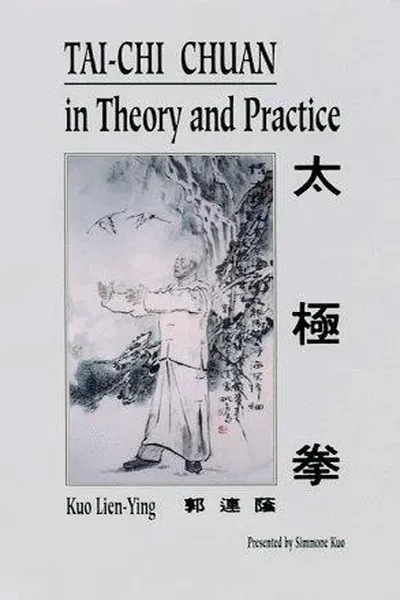
More Free Occult Philosophy Books
View all →