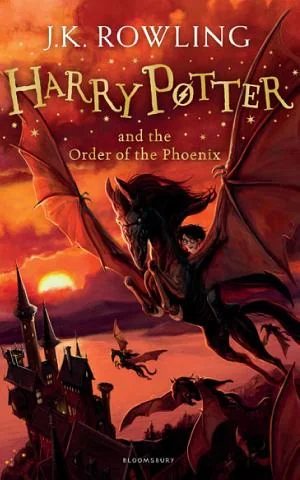
Harry Potter and the Order of the Phoenix
 74
74

Harry Potter and the Order of the Phoenix
The sheer density of "Harry Potter and the Order of the Phoenix" often feels like its primary challenge. Rowling's decision to expand the narrative significantly beyond the previous installments, culminating in a 870-page volume for the original UK edition, tests the reader's endurance. While this expanded scope allows for deeper exploration of character psychology, particularly Harry's justifiable anger and disillusionment, it also leads to pacing issues. The Ministry's pervasive denial, embodied by the odious Dolores Umbridge, serves as a potent allegory for political gaslighting, a particularly strong element of the novel. However, the prolonged focus on the minutiae of school administration and infighting, while perhaps realistic, can detract from the overarching magical conflict. The climax at the Department of Mysteries, though action-packed, feels somewhat compressed following the preceding narrative sprawl. Nevertheless, the book’s unflinching portrayal of adolescent frustration and the necessity of private conviction against public falsehoods remains its most compelling aspect. It is a necessary, if sometimes arduous, step in the series' dark trajectory.
📝 Description
74
Published in 2007, Harry Potter and the Order of the Phoenix details Harry's fifth year at Hogwarts.
The fifth installment of J. K. Rowling's series finds Harry Potter in his fifth year at Hogwarts. The Ministry of Magic refuses to acknowledge Lord Voldemort's return, creating an atmosphere of disbelief and isolation for Harry and his friends. This denial impacts Harry's reputation and forces him to confront difficult truths alone.
The narrative focuses on Harry's struggle with this isolation and the growing threat of Voldemort. He faces skepticism from the wizarding world, including figures at the Ministry like Cornelius Fudge. This period is marked by Harry's psychological development as he grapples with the consequences of institutional denial and the increasing danger.
The book examines how widespread disbelief can empower dark forces. It shows the formation of secret groups and the personal cost of standing against a powerful, unacknowledged enemy. Harry's own mental resilience is tested through challenging lessons and his connection to Voldemort.
While not explicitly occult, "Order of the Phoenix" touches on themes resonating with esoteric traditions. The Ministry's willful ignorance of Voldemort's return mirrors societal resistance to uncomfortable truths or hidden knowledge. Harry's mental defenses, particularly his Occlumency lessons with Severus Snape, represent a personal struggle for mental fortitude and control against invasive psychological influence, a concept found in various contemplative and magical practices.
💡 Why Read This Book?
• Understand the esoteric concept of 'mindspeak' and psychic defense through Harry's Occlumency lessons with Professor Snape, revealing techniques for mental shielding against external influence. • Witness the practical application of secret societies and clandestine resistance through the Order of the Phoenix, mirroring historical movements against oppressive regimes. • Explore the symbolism of the Department of Mysteries, representing the perilous pursuit of hidden knowledge and the consequences of confronting the unknown.
⭐ Reader Reviews
Honest opinions from readers who have explored this book.
❓ Frequently Asked Questions
What is the significance of the Department of Mysteries in Harry Potter and the Order of the Phoenix?
The Department of Mysteries is a clandestine branch of the Ministry of Magic where arcane magical research occurs. In "Order of the Phoenix," it becomes the site of a pivotal confrontation, holding objects like the Deathly Hallows and housing prophecies, symbolizing the dangerous allure of forbidden knowledge.
Who is Dolores Umbridge and what does she represent in the book?
Dolores Umbridge is a Senior Undersecretary to the Minister for Magic who becomes Defence Against the Dark Arts professor and later, effectively, Headmistress of Hogwarts. She embodies bureaucratic tyranny, the abuse of power, and institutionalized prejudice, enforcing oppressive policies with a veneer of authority.
How does Harry Potter and the Order of the Phoenix explore themes of isolation?
Harry experiences profound isolation as the wizarding world, influenced by the Ministry, dismisses Voldemort's return. His ostracization is amplified by his own frustration and the perceived betrayal by figures he trusted, forcing him to rely on a select few and a secret resistance group.
What is Occlumency and why is it important in this book?
Occlumency is the magical art of defending one's mind against Legilimency, the practice of extracting feelings and memories. Harry is taught Occlumency by Severus Snape to protect himself from Voldemort's intrusive mental assaults, highlighting the importance of mental discipline.
What role does the prophecy play in the plot of Order of the Phoenix?
A prophecy made by Sybill Trelawney states that neither Harry nor Voldemort can live while the other survives. This prophecy binds their fates and fuels Voldemort's obsession with destroying Harry, making the retrieval and protection of this prophecy a central plot driver.
When was Harry Potter and the Order of the Phoenix first published?
Harry Potter and the Order of the Phoenix was first published on June 21, 2003, in the United Kingdom and on June 21, 2003, in the United States. (Note: The provided prompt date of 2014-09-01 seems to refer to a specific edition, not the original publication.)
🔮 Key Themes & Symbolism
The Power of Belief and Denial
The narrative critically examines how collective denial, fueled by political agendas within the Ministry of Magic, can actively suppress truth. This societal phenomenon creates an environment where Harry's verifiable experiences are dismissed as delusion, forcing him and his allies into isolation. The theme explores the psychological impact of being disbelieved and the strength required to maintain one's conviction against pervasive societal skepticism, echoing historical instances where inconvenient truths were actively suppressed by authorities.
Clandestine Resistance and Secret Societies
The formation of the Order of the Phoenix as a secret organization fighting against the resurgence of dark forces mirrors historical and esoteric traditions of hidden orders working to preserve balance. This theme highlights the necessity of covert action when legitimate institutions fail or become corrupted. It underscores the courage of individuals who operate outside established structures to combat perceived evil, emphasizing loyalty, sacrifice, and the moral complexities of operating in secrecy.
Mental Fortitude and Psychic Warfare
The intense focus on Harry's Occlumency lessons with Severus Snape introduces the concept of mental defense as a crucial battlefield. This aspect studies the esoteric notion of protecting one's consciousness from external intrusion and manipulation. The struggle to control one's thoughts and emotions under duress reflects ancient practices aimed at achieving inner mastery and resilience against psychological attacks, a vital skill when facing a foe who wields dark magic.
The Perils of Forbidden Knowledge
The climax within the Department of Mysteries underscores the dangerous allure of hidden knowledge and prophecies. The pursuit of these arcane secrets by Harry and his friends, though initially motivated by a desire to understand, leads to perilous consequences. This theme serves as a cautionary tale, reminiscent of various mystical traditions that warn against seeking power or knowledge beyond one's preparedness, emphasizing that some truths are best approached with profound wisdom and caution.
💬 Memorable Quotes
Direct passages from the work, attributed to the author.
“The truth. It is a beautiful and terrible thing, and should therefore be treated with great caution.”
— Albus Dumbledore's sentiment highlights the dual nature of truth. While valuable, its revelation can cause immense pain or disruption, implying that the timing and manner of its disclosure are as critical as the truth itself.
“We are only as strong as we are united, as weak as we are divided.”
— This statement, often attributed to Albus Dumbledore, emphasizes the critical importance of solidarity. It suggests that collective strength, achieved through unity, is essential for overcoming adversity, while division leads to vulnerability.
“It is the unknown we fear when we look upon death and darkness, nothing more.”
— This interpretation of fear, spoken by Albus Dumbledore, posits that apprehension stems not from the inherent nature of death or darkness, but from our lack of understanding or control over them. It suggests confronting the unknown can alleviate fear.
💡 Key Ideas
Editorial paraphrase of the work's core concepts — not direct quotes.
There is no 'good' or 'evil', there is only power and those too weak to seek it.
This quote, attributed to Voldemort, captures his nihilistic philosophy. It suggests a worldview devoid of moral absolutes, where the only driving force is the acquisition of power, and those who shy away from it are inherently flawed or insignificant.
The mind is a powerful tool. It can construct worlds, or it can destroy them.
This paraphrased concept, reflecting themes around Occlumency, points to the profound influence of one's mental state. It highlights the capacity for imagination and creation, as well as self-destruction, underscoring the importance of mental discipline and control.
🌙 Esoteric Significance
Tradition
While not explicitly aligned with a single esoteric lineage, "Order of the Phoenix" draws heavily on archetypal themes found across Hermeticism, Gnosticism, and Western esotericism. The concept of a hidden war between light and darkness, the importance of inner knowledge (Occlumency), and the existence of secret societies like the Order of the Phoenix echo Gnostic narratives of spiritual struggle and Hermetic principles of correspondence between the inner and outer worlds.
Symbolism
The Phoenix itself symbolizes rebirth, resurrection, and immortality, a recurring motif in various mystical traditions. The Department of Mysteries represents the perilous quest for gnosis or hidden knowledge, a central theme in Gnosticism, where the pursuit of forbidden truths can lead to enlightenment or destruction. The Veil in the Department of Mysteries can be interpreted as a threshold between life and death, a liminal space found in many shamanic and esoteric cosmologies.
Modern Relevance
Contemporary discussions on psychological resilience, combating misinformation, and the ethics of covert resistance movements often reference the dynamics presented in "Order of the Phoenix." Thinkers and practitioners in fields such as critical psychology and sociology of knowledge find parallels in the novel's exploration of institutional gaslighting and the power of collective belief. The book's depiction of mental defense through Occlumency also finds resonance in modern mindfulness and cognitive behavioral therapy techniques focused on mental control.
👥 Who Should Read This Book
• Students of comparative mythology and folklore, seeking to analyze modern retellings of ancient archetypes like the hero's journey and the hidden war. • Individuals interested in the psychology of power and resistance, particularly how institutions wield influence through denial and propaganda. • Readers exploring the esoteric concept of mental defense and psychic resilience, examining fictional portrayals of shielding the mind against external manipulation.
📜 Historical Context
Published in 2007, "Harry Potter and the Order of the Phoenix" emerged during a period marked by increasing global anxieties surrounding terrorism, political misinformation, and the erosion of trust in institutions. The novel's central conflict, revolving around the Ministry of Magic's denial of Lord Voldemort's return, served as a potent allegory for contemporary issues of denialism and propaganda. The book's substantial length and its darker, more complex themes prompted considerable critical discussion, with some reviewers, like A.O. Scott in The New York Times, noting its challenging nature for younger readers while acknowledging its thematic depth. This era also saw a surge in dystopian literature for young adults, with authors like Suzanne Collins beginning to explore similar themes of oppressive regimes and rebellion, though Rowling's work remained distinct in its integration of traditional magical lore and its focus on adolescent psychological development within a public school setting.
📔 Journal Prompts
The Ministry's pervasive denial of Voldemort's return contrasted with Harry's direct experience.
Severus Snape's role as both antagonist and reluctant mentor in teaching Occlumency.
The symbolic significance of the Order of the Phoenix as a clandestine resistance group.
Dolores Umbridge's methods of control and the corrupting nature of bureaucratic power.
The prophecy concerning Harry and Voldemort and its binding influence on their destinies.
🗂️ Glossary
Occlumency
The magical art of clearing one's mind to prevent intrusion by Legilimency, which involves extracting feelings and memories. It is a form of mental defense.
Legilimency
The magical art of mentally penetrating another person's mind to discover their thoughts and intentions. It is often described as 'mind-reading'.
Order of the Phoenix
A secret society founded by Albus Dumbledore to fight Lord Voldemort and his Death Eaters. It operates in secrecy due to the Ministry's denial.
Prophecy
A prediction concerning the future, often of great significance. In this book, a prophecy binds Harry and Voldemort's fates, making their conflict inevitable.
Department of Mysteries
A mysterious department within the Ministry of Magic where complex magical experiments and research are conducted, housing objects of great power and significance.
Umbridge
Dolores Umbridge, a tyrannical Ministry official who usurps control at Hogwarts, representing bureaucratic oppression and the abuse of power.
Horcrux
A dark magical object in which a wizard or witch has hidden a fragment of their soul to achieve immortality. (Introduced conceptually and relevant to later books).
🔮 Readers Also Liked
Browse all →









More Free Occult Philosophy Books
View all →