The Story of Alchemy and the Beginnings of Chemistry

 75
75

The Story of Alchemy and the Beginnings of Chemistry
M. M. Pattison Muir's examination of alchemy's trajectory toward chemistry offers a commendable, if dry, account of a fascinating historical transition. The author meticulously details the theoretical shifts and experimental efforts that characterized the alchemical era, particularly highlighting the foundational work of figures like Jabir ibn Hayyan. Muir’s strength lies in presenting the intellectual continuity, showing how alchemical inquiries, however esoteric, directly fed into the systematic investigations of early chemists. However, the work occasionally struggles to convey the sheer wonder and often mystical fervor that drove many alchemists, presenting the subject with a somewhat detached academic gaze. A particularly illustrative section details the evolving understanding of distillation, demonstrating a concrete progression from symbolic representation to practical technique. While not an easy read for the casual enthusiast, it provides a solid, fact-based overview for the serious student of scientific history.
📝 Description
75
M. M. Pattison Muir's 1997 book charts alchemy's transition into modern chemistry.
This scholarly work examines the historical evolution of alchemical thought and practice, tracing its development into the early field of modern chemistry. Muir analyzes the philosophical ideas and experimental methods of alchemists, many of whom pursued both material change and spiritual understanding. The text clarifies the fundamental concepts and techniques that, despite being often presented through allegory, provided an essential basis for later scientific investigation.
The book is suited for students and enthusiasts of scientific history, philosophy, and esoteric studies. It will appeal to those interested in the intellectual lineage of chemistry, particularly the era when its origins were intertwined with alchemical practices. Readers looking to grasp the symbolic language and conceptual frameworks used by early practitioners will find abundant material within its pages. Muir's study situates itself within a late 20th-century academic reevaluation of pre-modern science. It appeared at a time when scholars increasingly recognized alchemy's complex contributions to metallurgy, medicine, and proto-chemical understanding, moving beyond simplistic views of it as mere charlatanry. The work covers the period from ancient Greece through the Enlightenment.
Alchemy, as presented in Muir's work, was not solely a proto-scientific endeavor but also a spiritual discipline. It operated within hermetic traditions that sought correspondences between the material world, the human psyche, and the divine. The alchemical pursuit of transmutation was often a metaphor for personal purification and spiritual enlightenment, linking the transformation of metals to the transformation of the soul. This context highlights alchemy's role as a bridge between ancient philosophical systems and the empirical methods that would eventually define modern science.
💡 Why Read This Book?
• Gain an understanding of the alchemical quest for the Philosopher's Stone, appreciating its role as a conceptual driver before modern chemistry's formalization. • Learn about the practical contributions of figures like Jabir ibn Hayyan, whose experimental work in the 8th-9th centuries significantly influenced subsequent metallurgical and chemical practices. • Trace the evolution of laboratory techniques, such as distillation, from their alchemical origins to their adoption by early chemists, as detailed in the text.
⭐ Reader Reviews
Honest opinions from readers who have explored this book.
❓ Frequently Asked Questions
What is the primary historical period covered by "The Story of Alchemy and the Beginnings of Chemistry"?
The book spans from ancient Greek thought through the medieval and Renaissance periods, extending into the early Enlightenment, detailing the transition from alchemical arts to systematic chemistry.
Who were some key figures discussed in relation to alchemy's development?
M. M. Pattison Muir discusses influential figures such as Jabir ibn Hayyan, known for his extensive alchemical writings, and Paracelsus, who integrated alchemical principles with medicine.
Does the book focus on the spiritual aspects of alchemy?
While acknowledging the spiritual and philosophical dimensions pursued by many alchemists, the book's primary focus is on the historical and conceptual evolution leading to modern chemistry.
What is the 'prima materia' concept as explored in the book?
The 'prima materia' refers to the fundamental substance from which all other materials are believed to originate in alchemical theory, a concept the book examines within its historical context.
When was "The Story of Alchemy and the Beginnings of Chemistry" first published?
The original publication date for M. M. Pattison Muir's work is 1997, placing its scholarly analysis within late 20th-century historical research.
What specific alchemical concept is linked to the development of chemical understanding?
The book explores how the alchemical quest for transmutation and the Philosopher's Stone, driven by specific conceptual frameworks, eventually paved the way for the empirical investigations of early chemistry.
🔮 Key Themes & Symbolism
Philosopher's Stone Quest
The book examines the enduring alchemical pursuit of the Philosopher's Stone, not merely as a substance for transmuting base metals into gold, but as a symbol of perfection and spiritual attainment. Muir details how this central objective, deeply embedded in esoteric philosophy, drove centuries of experimentation and theoretical development, influencing early chemical investigations into material properties and reactions.
Prima Materia
Central to alchemical cosmology was the concept of 'prima materia,' the primordial, undifferentiated substance from which all matter was believed to arise. This work explores how alchemists conceptualized this fundamental element, often shrouded in symbolic language, and how their attempts to identify and manipulate it contributed to early understandings of elemental composition and transformation.
Symbolic Language of Alchemy
Muir looks at the rich symbolic lexicon employed by alchemists, where processes like calcination, dissolution, and distillation were often represented through allegorical figures and narratives. The book analyzes how this symbolic framework, essential for esoteric transmission, gradually gave way to more empirical descriptions as alchemy evolved into chemistry.
Transition to Modern Chemistry
A primary focus is charting the historical lineage from alchemical practice to the formal discipline of chemistry. The work illustrates how foundational alchemical research, including the development of laboratory apparatus and precise measurement techniques, provided the necessary groundwork for the systematic, evidence-based approach that defines modern chemistry.
💬 Memorable Quotes
Direct passages from the work, attributed to the author.
“The alchemists sought the Philosopher's Stone.”
— This concise statement expresses the central, driving ambition of alchemical practice throughout history, representing both a material goal and a symbolic ideal of perfection.
“The concept of prima materia was fundamental to alchemical theory.”
— This highlights the foundational philosophical element that underpinned alchemical attempts to understand the origins and transformations of matter, a concept explored extensively in the book.
“Jabir ibn Hayyan's work contributed significantly to early chemical understanding.”
— This points to the concrete influence of key historical figures, acknowledging their role in developing practical techniques and theoretical frameworks that informed later scientific disciplines.
“The transition from alchemy to chemistry involved a shift in methodology.”
— This emphasizes the evolution of scientific inquiry, noting how the symbolic and often secretive methods of alchemy gradually yielded to the more empirical and systematic approaches of early chemistry.
“Laboratory apparatus evolved from alchemical tools.”
— This statement signifies the material continuity between the two fields, showing how the practical equipment developed by alchemists for their experiments formed the basis for the tools used in nascent chemical laboratories.
🌙 Esoteric Significance
Tradition
This work sits within the broad tradition of Western Esotericism, particularly Hermeticism, which views the material world as a reflection of divine principles and seeks knowledge through correspondence between macrocosm and microcosm. While Muir approaches the subject from a historical and scientific perspective, the book inherently discusses the alchemical worldview, a significant stream within esoteric thought aiming for spiritual transformation alongside material manipulation.
Symbolism
Key symbols explored include the Ouroboros, representing cyclical completion and the unity of all things, and the Philosopher's Stone, symbolizing perfected matter and spiritual enlightenment. The book also touches upon the symbolic meaning of metals (e.g., gold for perfection, lead for imperfection) and processes like distillation, which held both literal and metaphorical significance in the alchemical quest for purity and transformation.
Modern Relevance
Contemporary practitioners of Hermeticism, Rosicrucianism, and certain schools of depth psychology (e.g., Jungian analysis, which extensively studied alchemical symbolism) continue to draw upon the foundational concepts detailed in Muir's work. The book's historical analysis provides essential context for understanding the symbolic language and philosophical underpinnings that still inform these esoteric traditions and their interpretations of transformation.
👥 Who Should Read This Book
• Students of the history of science interested in the pre-modern roots of chemistry and the philosophical underpinnings of early experimentation. • Enthusiasts of Western Esotericism seeking to understand the historical development and conceptual framework of alchemy beyond purely mystical interpretations. • Scholars of comparative religion and philosophy looking to analyze the intersection of material science, spiritual aspiration, and symbolic language in historical thought.
📜 Historical Context
M. M. Pattison Muir's "The Story of Alchemy and the Beginnings of Chemistry," originally published in 1997, entered a scholarly landscape that had long moved past viewing alchemy as mere pseudoscience. The late 20th century saw a surge in academic interest in the history of science, recognizing the complex intellectual and experimental contributions of alchemists. Muir's work engages with this re-evaluation, positioning alchemy not as a dead end but as a crucial precursor to modern chemistry. It emerged during a period when scholars like Allen Debus were also highlighting the Paracelsian influence on early modern medicine and chemistry. The book addresses the historical period from ancient Greece through the European Renaissance and into the Enlightenment, a timeframe rife with intellectual ferment and the gradual separation of empirical science from philosophical speculation. It implicitly discusses the broader intellectual currents of Hermeticism and Neoplatonism that underpinned much alchemical thought, contrasting it with the burgeoning mechanistic philosophy.
📔 Journal Prompts
The alchemical quest for the Philosopher's Stone: explore its dual material and spiritual significance.
Analyze the symbolic representation of 'prima materia' in historical alchemical texts.
Reflect on the evolution of laboratory techniques discussed, from alchemical to early chemical practice.
Consider the influence of figures like Jabir ibn Hayyan on the trajectory of chemical understanding.
Examine the transition in methodology from alchemical allegory to scientific description.
🗂️ Glossary
Philosopher's Stone
A legendary alchemical substance believed to be capable of transmuting base metals into gold or silver, and often associated with the elixir of life, symbolizing perfection and ultimate knowledge.
Prima Materia
The primordial, undifferentiated matter from which all substances are believed to have originated in alchemical philosophy. It represents potentiality and the fundamental substrate of the universe.
Transmutation
In alchemy, the process of changing one element or substance into another, most famously the conversion of base metals like lead into noble metals like gold.
Calcination
An alchemical process involving heating a substance to high temperatures, often to purify it or reduce it to a powder or ash. It symbolized breaking down matter to its essential components.
Distillation
A process of separating components of a liquid mixture by selective boiling and condensation. In alchemy, it was used to purify substances and was imbued with symbolic meaning related to spiritual refinement.
Jabir ibn Hayyan
An influential 8th-9th century Persian alchemist and scholar whose extensive writings on chemical processes, apparatus, and theory laid foundational principles for later Islamic and European alchemy and chemistry.
Paracelsus
A 16th-century Swiss physician and alchemist who integrated alchemy with medicine (iatrochemistry), emphasizing the use of chemical remedies and challenging traditional medical doctrines.
🔮 Readers Also Liked
Browse all →









More by M. M. Pattison Muir
All books →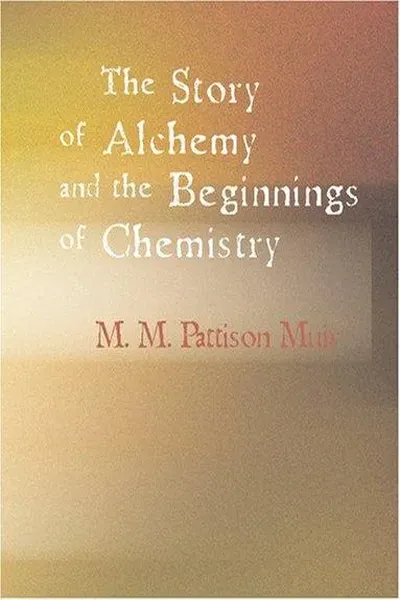

More Free Alchemy & Hermeticism Books
View all →