The Song Celestial; Or, Bhagavad-Gita (from the Mahabharata)
 80
80

The Song Celestial; Or, Bhagavad-Gita (from the Mahabharata)
Sir Arnold's rendering of the Bhagavad Gita, "The Song Celestial," offers a lucid entry point into a text that has guided countless seekers. The translation successfully conveys the urgency of Arjuna's dilemma on the battlefield of Kurukshetra, and the serene authority of Krishna's counsel. A particular strength lies in the clear articulation of Karma Yoga, the path of action performed without attachment to results, which feels particularly accessible here. However, some of the subtler philosophical nuances, especially those concerning the ultimate non-duality, might be less pronounced compared to more scholarly editions. The prose, while clear, occasionally leans towards a slightly anachronistic feel, which, while not a fatal flaw, does distinguish it from more contemporary academic translations. Nevertheless, for those new to the Gita's profound teachings, this edition provides a valuable and engaging perspective on fulfilling one's duty while pursuing spiritual realization.
📝 Description
80
Sir Arnold's 1885 translation of the Bhagavad Gita brings its 700 verses to English readers.
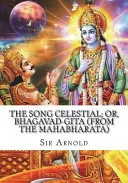
This volume contains Sir Arnold's English translation of the Bhagavad Gita, a section of the ancient Indian epic, the Mahabharata. The text presents a dialogue between the warrior Arjuna and his charioteer, Lord Krishna. Arjuna faces a moral dilemma on the battlefield, and Krishna instructs him on duty, action, and spiritual freedom.
The Bhagavad Gita, composed between the 5th and 2nd centuries BCE, is a significant part of the Mahabharata's sixth book. Its inclusion within the larger epic highlights its role in conveying ethical and spiritual ideas through narrative. For centuries, it has been studied and revered by various philosophical traditions in India.
This edition is suitable for those interested in classical Hindu philosophy and its less common interpretations. It will appeal to students of religion, individuals drawn to yogic practices, and academics focused on ancient Indian literature. The translation offers a clear path for understanding concepts like dharma, karma, and moksha.
Within the broader Hindu tradition, the Bhagavad Gita is understood through various lenses, including those that emphasize inner realization and direct spiritual experience. Its teachings on yoga, particularly Karma Yoga and Jnana Yoga, point toward methods for transcending the material world and achieving union with the divine. The text's exploration of the soul's eternal nature and the illusion of the material world aligns with concepts found in Gnostic traditions that seek liberation through gnosis, or special knowledge.
💡 Why Read This Book?
• Learn about the concept of Karma Yoga, the path of selfless action as taught by Krishna to Arjuna before the Kurukshetra war, to understand how to act in the world without attachment to outcomes. • Explore the philosophical underpinnings of duty (Dharma) as presented in the Mahabharata, gaining insight into how ancient Indian thought addressed moral and existential conflicts. • Understand the role of devotion (Bhakti Yoga) as a spiritual path, as Krishna instructs Arjuna on the nature of the divine and the importance of surrender.
⭐ Reader Reviews
Honest opinions from readers who have explored this book.
❓ Frequently Asked Questions
When was the Bhagavad Gita originally composed?
Scholarly consensus places the original composition of the Bhagavad Gita between the 5th and 2nd centuries BCE, making it an ancient scripture integral to the Mahabharata epic.
Who are the main characters in the Bhagavad Gita?
The central figures are Arjuna, a Pandava prince facing a moral crisis, and Lord Krishna, his charioteer and divine guide, who imparts spiritual wisdom.
What is the central conflict presented in the Bhagavad Gita?
The primary conflict is Arjuna's reluctance to fight his kin in a righteous war (Dharma Yudhha), leading Krishna to counsel him on duty, action, and spiritual truth.
What are the three main paths to liberation discussed in the Gita?
The Bhagavad Gita outlines three primary paths: Karma Yoga (selfless action), Bhakti Yoga (devotion), and Jnana Yoga (knowledge or wisdom).
What does 'Dharma Yudhha' mean in the context of the Bhagavad Gita?
'Dharma Yudhha' refers to a righteous war or a conflict fought for the sake of upholding moral and spiritual principles, as Arjuna is called to do.
Is 'The Song Celestial' a direct translation or an interpretation?
'The Song Celestial' is Sir Arnold's translation of the Bhagavad Gita, aiming to convey the original Sanskrit text's meaning and spiritual essence.
🔮 Key Themes & Symbolism
Dharma and Duty
The text places significant emphasis on Dharma, understood as one's inherent duty or righteous path. Arjuna's struggle to fulfill his Kshatriya (warrior) duty exemplifies the core tension between personal inclination and societal or cosmic obligation. Krishna's teachings guide Arjuna, and by extension the reader, toward understanding that fulfilling one's Dharma with detachment is a key spiritual practice, even when it involves difficult actions.
Paths of Yoga
The Bhagavad Gita elaborates on multiple yogic disciplines as means to spiritual realization. Karma Yoga, the path of action performed without attachment to its fruits, is prominently featured, urging individuals to act selflessly. Bhakti Yoga, the path of devotion and love towards the divine, offers solace and connection. Jnana Yoga, the pursuit of wisdom through philosophical inquiry, is also presented as a valid route to understanding the true nature of reality.
The Nature of the Self
A central theme is the distinction between the transient physical body and the eternal, immutable soul (Atman). Krishna explains that the soul is unborn, undying, and unaffected by birth or death. This understanding is crucial for overcoming fear and attachment to worldly experiences, enabling one to face life's challenges with equanimity and spiritual resolve.
The Divine Presence
The Bhagavad Gita posits Krishna as the Supreme Being, the source of all existence. The text explores the concept of the divine manifesting in the material world and interacting with humanity. Krishna's divine nature and his role as a guide underscore the importance of recognizing the sacred in all aspects of life and cultivating a devotional relationship with the Absolute.
💬 Memorable Quotes
Direct passages from the work, attributed to the author.
“He who has taken his birth is certain to die, and after death, he is certain to take birth again.”
— This verse highlights the cyclical nature of existence as understood in many Eastern philosophies. It emphasizes the soul's immortality and the impermanence of the physical form, a core teaching for detaching from worldly fears.
“Perform your prescribed duty, O Arjuna, for in doing so you will attain the highest good.”
— This expresses the principle of Dharma. It suggests that fulfilling one's role and responsibilities in life, without selfish motive, is a spiritual practice leading to ultimate fulfillment.
“The mind is restless and agitated, difficult to control. But by practice and detachment, O son of Kunti, it can be subdued.”
— This is a practical teaching on mental discipline. It acknowledges the difficulty of controlling the mind while offering the keys: consistent effort (practice) and non-attachment to thoughts and desires.
“I am the gambling of the fraudulent, and the splendor of the splendid.”
— An example of Krishna revealing his omnipresence, stating he is the essence or the divine principle within all phenomena, both positive and seemingly negative.
“Those who are motivated by the fruits of their actions and are anxious about the results are severely bound.”
— This is a direct explanation of the danger of attachment in Karma Yoga. It warns that focusing on rewards rather than the action itself creates bondage and hinders spiritual progress.
🌙 Esoteric Significance
Tradition
The Bhagavad Gita is a cornerstone text for understanding the yogic and Vedanta traditions within Hinduism, which have profound esoteric dimensions. Its teachings on the nature of consciousness, the self, and the divine resonate with broader esoteric currents, including Neoplatonism and Hermeticism, particularly in its emphasis on inner transformation and the realization of a higher reality beyond the material world.
Symbolism
Key symbols include the battlefield of Kurukshetra, representing the inner human struggle between higher and lower impulses. Arjuna's chariot symbolizes the human body, with Krishna as the guiding intellect or divine presence, and the horses representing the senses that must be controlled. The concept of the lotus flower, unsoiled by the water it grows in, symbolizes a person acting in the world without being tainted by attachment or negativity.
Modern Relevance
Contemporary esoteric practitioners and thinkers, particularly within the yoga and mindfulness movements, frequently draw upon the Gita's teachings. Concepts like Karma Yoga and the disciplined control of the mind remain central to various modern spiritual disciplines and psychological approaches aimed at personal growth and well-being.
👥 Who Should Read This Book
• Students of Eastern philosophy and comparative religion seeking a foundational text that bridges narrative and spiritual doctrine. • Practitioners of yoga and meditation looking to deepen their understanding of the philosophical underpinnings of their practice, particularly Karma Yoga and the nature of the mind. • Seekers of wisdom interested in exploring ethical dilemmas, the concept of duty (Dharma), and the pursuit of spiritual liberation through action and devotion.
📜 Historical Context
The Bhagavad Gita, embedded within the colossal Mahabharata, emerged from the intellectual ferment of ancient India, likely between the 5th and 2nd centuries BCE. This period saw the flourishing of various philosophical schools, including early Upanishadic thought and nascent forms of asceticism and devotional practices. The Gita synthesized existing traditions, presenting a complex yet accessible synthesis of ritualistic action (karma), philosophical inquiry (jnana), and devotion (bhakti). Its integration into the Mahabharata, a narrative exploring dharma and conflict, provided a compelling context for its ethical and spiritual teachings. While the Mahabharata was compiled over centuries, the Gita itself represents a sophisticated articulation of spiritual ideals that would influence subsequent Hindu thought for millennia, contrasting with purely ritualistic Vedic traditions by emphasizing inner realization.
📔 Journal Prompts
Arjuna's crisis on the battlefield, reflecting on his duty as a warrior.
Krishna's discourse on the impermanence of the physical body versus the eternal soul.
The practice of Karma Yoga, performing actions without attachment to results.
The concept of Bhakti Yoga and cultivating devotion to the divine.
The challenge of controlling the restless human mind through practice and detachment.
🗂️ Glossary
Bhagavad Gita
A 700-verse Hindu scripture in Sanskrit, part of the Mahabharata, containing a dialogue between Prince Arjuna and Lord Krishna on duty, action, and spiritual truth.
Mahabharata
One of the two major Sanskrit epics of ancient India, the Mahabharata narrates the struggle for the throne between the Kaurava and the Pandava princes and contains the Bhagavad Gita.
Arjuna
A principal character in the Mahabharata and the Bhagavad Gita, a warrior prince who receives spiritual instruction from Lord Krishna.
Krishna
A major deity in Hinduism, revered as the eighth avatar of Vishnu and the divine charioteer and teacher in the Bhagavad Gita.
Dharma
In Hinduism, Dharma refers to the inherent nature of things, one's duty, righteousness, law, or virtuous conduct.
Karma Yoga
The spiritual path of selfless action, performing one's duties without attachment to the results or fruits of those actions.
Atman
The eternal, unchanging self or soul within an individual, distinct from the physical body and mind.