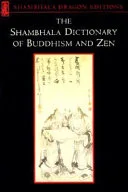
The Shambhala Dictionary of Buddhism and Zen
 82
82

The Shambhala Dictionary of Buddhism and Zen
Stephan Schuhmacher and Gert Woerner’s Shambhala Dictionary of Buddhism and Zen offers a commendable, if somewhat encyclopedic, survey of Buddhist and Zen terminology. Its strength lies in its sheer breadth, cataloging over 1500 terms with admirable conciseness. For instance, the entry on 'Bodhisattva' clearly delineates the Mahayana ideal of delaying personal enlightenment for the benefit of all sentient beings, a crucial distinction for any serious student. However, its compact nature occasionally leads to brevity where deeper nuance might be beneficial; the explanation of 'emptiness' (sunyata), while accurate, might leave a beginner seeking more contextual depth. The inclusion of forty-six illustrations is a welcome addition, providing visual anchors for abstract concepts. Ultimately, this dictionary functions effectively as a reliable first point of reference for navigating the often-complex lexicon of Buddhism and Zen.
📝 Description
82
Published in 1991, The Shambhala Dictionary of Buddhism and Zen compiled over fifteen hundred terms.
The Shambhala Dictionary of Buddhism and Zen, by Stephan Schuhmacher and Gert Woerner, offers a lexicon for Buddhist and Zen terminology. It contains more than fifteen hundred entries and forty-six illustrations. The book explains concepts from basic principles like karma and nirvana to specific practices and figures.
This dictionary is useful for students of Buddhism and Zen, meditators, and general readers who encounter these terms in literature and philosophy. Its scope makes it appropriate for both newcomers and experienced practitioners. The work was created during a time of growing Western interest in Eastern spiritual traditions, aiming to clarify concepts that were appearing in various fields.
This dictionary addresses the increasing Western engagement with Eastern spiritual traditions that grew in the late 20th century. It provides a reference point for terms encountered in Buddhist philosophy and Zen practice, systems often characterized by their complex doctrines and meditative techniques. The book aims to clarify concepts that were becoming more prevalent in Western thought and culture, serving as a guide to these specific traditions.
💡 Why Read This Book?
• Gain precise definitions for over fifteen hundred Buddhist and Zen terms, understanding concepts like 'karma' and 'nirvana' beyond their popular, often diluted, usage. • Explore the historical and philosophical underpinnings of practices introduced in the 1991 publication, contextualizing them within their original traditions. • Utilize the forty-six illustrations to visually grasp complex ideas, making abstract concepts such as 'chakra' more tangible for study.
⭐ Reader Reviews
Honest opinions from readers who have explored this book.
❓ Frequently Asked Questions
When was The Shambhala Dictionary of Buddhism and Zen first published?
The Shambhala Dictionary of Buddhism and Zen was first published in 1991. This edition provides a comprehensive overview of terms relevant to Buddhist and Zen traditions.
What is the primary purpose of The Shambhala Dictionary of Buddhism and Zen?
Its primary purpose is to serve as a compact, complete reference work for students, meditators, and general readers encountering Buddhist terms and concepts in various fields of literature and study.
How many entries does the dictionary contain?
The dictionary contains over fifteen hundred entries, covering a wide spectrum of terms and concepts within Buddhism and Zen.
Who are the authors of The Shambhala Dictionary of Buddhism and Zen?
The authors are Stephan Schuhmacher and Gert Woerner. The work was first published under their names in 1991.
What kind of concepts are explained in the dictionary?
It explains fundamental concepts like 'chakra', 'karma', 'koan', 'nirvana', and 'tantra', alongside many others encountered in Buddhist and Zen literature.
Does the dictionary include visual aids?
Yes, the dictionary features forty-six illustrations to aid in understanding the various terms and concepts presented.
🔮 Key Themes & Symbolism
Foundational Buddhist Principles
The dictionary meticulously defines core Buddhist concepts that form the bedrock of spiritual practice and philosophy. Terms like 'karma', the law of cause and effect, are explained not just as fate, but as an intricate web of actions and consequences. Similarly, 'nirvana' is presented as the cessation of suffering and the cycle of rebirth, rather than a mere afterlife. This systematic exposition aids in understanding the ethical and soteriological dimensions central to Buddhist thought, providing clarity on concepts that often appear in esoteric literature.
Zen Practice and Koans
A significant portion of the lexicon is dedicated to Zen Buddhism, a school emphasizing direct experience and meditation. The concept of 'koan', the paradoxical riddles posed by Zen masters to break down discursive thought, is thoroughly explored. Entries also clarify practices like Zazen (seated meditation) and the role of the master-disciple relationship. This focus clarifies the seemingly austere path of Zen, highlighting its psychological and experiential dimensions for Western practitioners.
Esoteric and Tantric Concepts
Beyond mainstream tenets, the dictionary addresses more specialized subjects, including 'tantra' and 'chakra'. Tantra is explained not solely in its ritualistic or sexualized Western interpretations, but within its broader Indian context as a system of spiritual techniques aimed at transformation. 'Chakra' is detailed as a psycho-energetic center within the subtle body. This inclusion acknowledges the esoteric currents within Buddhism that have fascinated Western occultists and seekers since the early 20th century.
Comparative Religious Vocabulary
By providing definitions for terms like 'bodhisattva' and 'dharma', the dictionary implicitly facilitates comparative study. Readers can identify parallels and divergences with other spiritual and philosophical systems. The work’s utility extends to understanding how Buddhist terminology has permeated global discourse, making it a valuable tool for anyone interested in the cross-pollination of ideas across cultures and belief systems.
💬 Memorable Quotes
Direct passages from the work, attributed to the author.
“Karma: The law of moral causation.”
— This concise definition highlights the fundamental principle of action and consequence that underpins much of Buddhist ethics and cosmology. It emphasizes a natural law rather than divine judgment, central to understanding the individual's responsibility within the cycle of existence.
“Nirvana: The goal of Buddhist practice, the cessation of suffering.”
— This interpretation clarifies that Nirvana is not a place, but a state of being – the ultimate liberation from the cycle of death and rebirth (samsara) and the attendant suffering (dukkha).
“Koan: A paradoxical question or statement used in Zen Buddhism to provoke enlightenment.”
— This entry points to the unique pedagogical method within Zen, utilizing seemingly illogical queries to bypass rational intellect and foster direct, intuitive understanding.
“Chakra: Psychic centers in the subtle body.”
— This definition situates chakras within the esoteric physiology of Indian traditions, describing them as energy vortexes that influence both physical and mental states, often referenced in yogic and tantric contexts.
“Tantra: A complex system of spiritual practices originating in India.”
— This interpretation emphasizes the many-sided nature of Tantra, encompassing ritual, meditation, and yoga, aimed at achieving spiritual realization, often through the transformation of mundane experiences.
🌙 Esoteric Significance
Tradition
This dictionary primarily engages with the Buddhist and Zen traditions, which, while not typically categorized under Western esoteric lineages like Hermeticism or Kabbalah, possess their own rich esoteric dimensions, particularly within Vajrayana (Tibetan Buddhism) and certain schools of Zen. It serves as a bridge, providing clear definitions for concepts that Western esotericists often encounter or integrate into their own syncretic practices, such as the subtle body concepts found in Tantra.
Symbolism
Key symbols explained include 'chakra', representing the energetic centers within the subtle body, crucial in Tantric and yogic traditions for understanding consciousness and spiritual development. The 'koan', a paradoxical riddle, functions as a symbolic tool in Zen to dismantle logical constructs and point towards direct insight. 'Mandala', though not explicitly detailed in the original blurb's examples, is a fundamental symbolic representation of the cosmos and the enlightened mind, often found within Buddhist art and practice.
Modern Relevance
Contemporary thinkers and practitioners in mindfulness, contemplative studies, and even certain branches of depth psychology draw heavily on the terminology clarified in this dictionary. Therapists exploring Buddhist-derived interventions, scholars of comparative religion, and individuals practicing modern forms of meditation often rely on such foundational lexicons. The work's clear, factual approach makes it relevant for anyone seeking to understand the authentic roots of practices that have become globally popular.
👥 Who Should Read This Book
['• Students of comparative religion and philosophy seeking precise definitions for Buddhist and Zen terminology encountered in academic texts.', '• Meditators and practitioners of mindfulness or Zen Buddhism needing to clarify core concepts like karma, nirvana, or koan from their practice.', '• Readers of literature, art history, or cultural studies interested in understanding the Buddhist and Zen influences within various creative and intellectual fields.']
📜 Historical Context
The Shambhala Dictionary of Buddhism and Zen, published in 1991, emerged during a period of heightened Western engagement with Eastern spirituality, accelerated by figures like Alan Watts in the mid-20th century and the continued influence of the Beat Generation's exploration of Zen. The early 1990s saw a significant mainstreaming of Buddhist concepts, often filtered through popular psychology and New Age movements. This work by Schuhmacher and Woerner provided a much-needed scholarly yet accessible anchor amidst the often-unsubstantiated claims circulating about Buddhism. It offered a counterpoint to more esoteric or romanticized interpretations, grounding readers in the actual terminology and philosophical structures. While authors like D.T. Suzuki had already introduced Zen to the West decades earlier, this dictionary served a broader audience seeking comprehensive definitions for terms that were increasingly prevalent in academic and popular texts, without the need to consult multiple specialized volumes.
📔 Journal Prompts
The concept of karma as described in the dictionary, how does it relate to personal agency?
Reflecting on the definition of nirvana, what obstacles prevent its realization in daily life?
Consider the function of a koan as presented; how might paradox challenge your assumptions?
How does the explanation of chakra align with or differ from other models of human energy systems you know?
The role of the Bodhisattva ideal, what does it imply about compassion in practice?
🗂️ Glossary
Buddhism
A religion and philosophy originating in ancient India with Siddhartha Gautama (the Buddha), focusing on understanding suffering and achieving enlightenment through practices like meditation and ethical conduct.
Zen
A school of Mahayana Buddhism that originated in China (as Chan) and emphasizes meditation (zazen) and direct experience of enlightenment, often using koans.
Chakra
In yogic and Tantric traditions, these are psycho-energetic centers within the subtle body, often visualized as wheels of energy, influencing physical and spiritual well-being.
Karma
The principle of cause and effect; actions (karma) generate consequences that shape an individual's present and future experiences within the cycle of rebirth (samsara).
Koan
A paradoxical anecdote or riddle used in Zen Buddhism to disrupt logical thought processes and provoke a direct, intuitive understanding of reality.
Nirvana
The ultimate goal of Buddhist practice; the cessation of suffering, desire, and the cycle of rebirth, leading to liberation and profound peace.
Tantra
A complex system of esoteric traditions originating in India, involving rituals, meditation, yoga, and visualization techniques aimed at spiritual transformation and liberation.