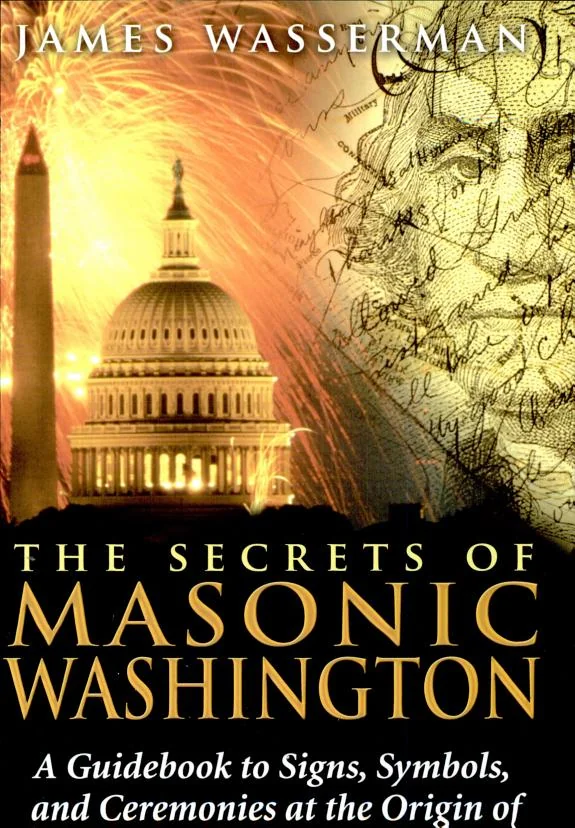
The Secrets of Masonic Washington
 72
72

The Secrets of Masonic Washington
Wasserman's "The Secrets of Masonic Washington" offers a compelling, if sometimes dense, visual and textual tour of the capital's hidden symbolic language. The book’s strength lies in its detailed photographic evidence and straightforward explanations of symbols like the Square and Compasses, or the ubiquitous Eye of Providence, connecting them directly to Masonic tenets and founding principles. One particularly striking section details the symbolism embedded in the L'Enfant Plan, illustrating how early American leaders consciously incorporated esoteric geometry. However, the work occasionally falters in its narrative flow, sometimes feeling more like an annotated atlas than a cohesive argument. While it successfully demystifies many common symbols, it could benefit from broader engagement with non-Masonic esoteric traditions present in the era. Nevertheless, for anyone seeking to understand the esoteric underpinnings of Washington D.C., this remains a valuable, visually rich resource.
📝 Description
72
James Wasserman's 2003 book decodes the Masonic symbolism embedded in Washington D.C.'s design.
This book examines the esoteric symbolism woven into the fabric of Washington D.C., moving beyond its public image to reveal hidden meanings. Wasserman provides a guide for understanding the deeper currents present in the American capital's architecture and urban planning. The text offers a systematic way to uncover these layers, making it suitable for those with prior knowledge of symbology as well as newcomers.
Wasserman writes for individuals interested in the symbolic language found in architecture and city design, with a particular focus on Freemasonry and Hermeticism. The book also connects with those drawn to historical puzzles and coded messages, drawing parallels to fictional explorations of secret societies. It situates its analysis within the context of esoteric thought that influenced the United States' founding, showing how Masonic principles and symbols were integrated into the capital's design.
The book connects the physical layout of Washington D.C. to philosophical and spiritual currents from the late 18th and early 19th centuries. It highlights how Masonic principles and symbolism were intentionally integrated into the nation's capital during its formation. This perspective links the city's design to esoteric traditions that influenced the founding of the United States, offering a look at a period of significant intellectual and symbolic construction.
💡 Why Read This Book?
• Gain a new perspective on Washington D.C.'s architecture, understanding how Masonic symbolism, such as the Square and Compasses, was intentionally woven into its design by figures like Pierre Charles L'Enfant. • Decipher the meaning behind specific esoteric symbols frequently encountered in the capital, like the All-Seeing Eye, and learn their historical context within Hermetic and Masonic traditions. • Develop a practical method for visual analysis of urban landscapes, enabling you to identify and interpret symbolic elements in your own environment beyond the specific sites mentioned in the book.
⭐ Reader Reviews
Honest opinions from readers who have explored this book.
❓ Frequently Asked Questions
What is the primary focus of 'The Secrets of Masonic Washington'?
The book focuses on the esoteric symbols and Masonic influences embedded within the architecture and urban planning of Washington D.C., offering a guided tour of these hidden meanings.
Who is the author, James Wasserman, and what is his background?
James Wasserman is an author and publisher known for his work in esoteric and occult literature. He founded the publishing house Weiser Books, which specialized in these subjects.
Does the book require prior knowledge of Freemasonry?
While prior knowledge is helpful, the book is designed to be accessible. It explains symbols and concepts clearly, making it suitable for those new to Masonic symbolism as well as experienced students.
What kind of symbols are discussed in the book?
The book discusses various symbols including the Square and Compasses, the All-Seeing Eye, obelisks, pyramids, and geometric patterns integrated into D.C.'s layout.
Is this book similar to Dan Brown's novels?
Yes, the book shares thematic similarities with novels like 'The Da Vinci Code' by exploring hidden symbols and secret societies within historical and architectural contexts, though it is a non-fiction guidebook.
What historical period does the book primarily cover regarding Washington D.C.'s symbolism?
The book primarily focuses on the late 18th and early 19th centuries, the period of the city's initial planning and construction, and the influence of Masonic ideals during that era.
🔮 Key Themes & Symbolism
Masonic Symbolism in Urban Design
This theme explores the deliberate integration of Masonic symbols and principles into the foundational design of Washington D.C. It details how architects and city planners, often members of the fraternity, imbued the capital with specific geometric patterns and iconic imagery. The work examines sites like the Capitol Building and the White House, interpreting their layouts and architectural features through the lens of Masonic allegory and ritual, revealing a hidden layer of meaning intended for those initiated into its symbolic language.
Esoteric Geometry and Sacred Space
The book emphasizes the role of sacred geometry and its connection to the creation of a symbolic 'sacred space' in the design of Washington D.C. It discusses how principles derived from Hermeticism and Freemasonry informed the alignment of monuments, the placement of buildings, and the overall layout, often referencing celestial or divine proportions. The concept of the city as a microcosm, reflecting cosmic order, is central to this theme, suggesting that the physical arrangement itself carries a potent esoteric message.
The All-Seeing Eye and Divine Providence
A significant motif examined is the All-Seeing Eye, a symbol frequently associated with Divine Providence and omnipresence. Wasserman connects its appearance in various locations within the capital to Masonic teachings and the broader spiritual philosophy of the Enlightenment era. The book interprets this symbol not merely as decoration but as a powerful reminder of a higher power overseeing the nation's affairs, intended to inspire virtue and vigilance among its citizens and leaders.
Public vs. Esoteric Knowledge
This theme addresses the duality of knowledge, distinguishing between the exoteric (publicly visible) and esoteric (hidden, inner) dimensions of symbols and institutions. The book positions itself as a guide to unlocking this esoteric layer, suggesting that much of the capital's design holds meaning accessible only to those familiar with specific symbolic vocabularies, particularly those of Freemasonry. It highlights how seemingly mundane structures or decorative elements can function as carriers of profound, veiled teachings.
💬 Memorable Quotes
Direct passages from the work, attributed to the author.
“The layout of Washington D.C. was not accidental; it was a deliberate act of symbolic expression.”
— This statement underscores the book's central thesis: that the physical arrangement of the nation's capital is imbued with intentional esoteric meaning, reflecting the philosophical and spiritual ideals of its creators.
“Masonic symbols are embedded in the very fabric of the city, waiting to be recognized.”
— This highlights the idea that the esoteric messages within Washington D.C. are not hidden in secret vaults but are openly displayed in its architecture, accessible to those with the knowledge to interpret them.
“Understanding the city's symbols offers insight into the minds of its founders.”
— This interpretation suggests that by deciphering the esoteric symbols present in Washington D.C., readers can gain a deeper understanding of the philosophical and spiritual motivations that drove the nation's early leaders.
“The pyramid and the eye represent foundational concepts of creation and divine oversight.”
— This concept links the prominent symbols of the pyramid and the All-Seeing Eye to fundamental esoteric ideas about the origins of the universe and the watchful presence of a higher power.
💡 Key Ideas
Editorial paraphrase of the work's core concepts — not direct quotes.
The Square and Compasses are more than tools; they represent moral and spiritual principles.
This paraphrased concept emphasizes the symbolic weight of Masonic tools, suggesting they represent ethical conduct and spiritual guidance, principles Wasserman argues were intended to be reflected in the nation's capital.
🌙 Esoteric Significance
Tradition
This work primarily engages with the Western Esoteric Tradition, specifically focusing on Freemasonry and its historical intersection with Hermeticism and Neoplatonism. It positions Masonic symbolism as a continuation of ancient mystery traditions, applying their principles to the founding and design of a modern nation. The book interprets the architecture of Washington D.C. as a manifestation of these esoteric ideals, viewing the city itself as a symbolic temple or a microcosm of a divinely ordered universe.
Symbolism
Key symbols explored include the Square and Compasses, representing morality and the regulation of human conduct; the All-Seeing Eye, symbolizing Divine Providence and enlightenment; and the Pyramid, often linked to ancient Egyptian mysteries and the concept of divine perfection or ascent. Wasserman interprets these symbols not just as decorative elements but as carriers of profound teachings about governance, spirituality, and the cosmic order intended by the nation's founders.
Modern Relevance
In contemporary times, Wasserman's work is relevant to students of Western Esotericism, urban planning enthusiasts, and those interested in the philosophical underpinnings of American institutions. Thinkers and practitioners exploring sacred geometry, theosophy, and the hidden history of symbols find value in its detailed analysis. Its approach to decoding symbolic landscapes continues to inform contemporary discussions on the intentionality behind public monuments and architecture.
👥 Who Should Read This Book
• Students of Western Esotericism and Hermeticism seeking to understand the practical application of symbolic language in civic architecture. • Enthusiasts of American history and conspiracy theories interested in the potential hidden meanings behind the nation's capital, beyond conventional historical narratives. • Travelers and residents of Washington D.C. who wish to view the city through an esoteric lens, enriching their understanding of its landmarks and layout.
📜 Historical Context
Published in 2008, James Wasserman's "The Secrets of Masonic Washington" emerged during a resurgence of popular interest in esoteric symbolism, partly fueled by works like Dan Brown's novels. The early republic, particularly the period of Washington D.C.'s planning in the late 18th century, was a fertile ground for blending Enlightenment rationalism with Hermetic and Masonic philosophies. Architects like Pierre Charles L'Enfant, a Freemason himself, were influenced by esoteric traditions when designing the capital. This era also saw the influence of figures like Benjamin Franklin, another prominent Mason, who was deeply involved in intellectual currents of the time. While Wasserman's work draws on existing scholarship regarding Masonic influence, its accessible, illustrated format aimed to bring these complex ideas to a wider audience, contrasting with more academic treatments of the subject prevalent in the early 20th century from scholars like Manly P. Hall.
📔 Journal Prompts
Reflect on the intentionality behind placing specific Masonic symbols, such as the Square and Compasses, within the public spaces of Washington D.C.
Consider how the concept of the All-Seeing Eye might inform your personal sense of responsibility or oversight in your daily life.
Analyze a local landmark or building for potential symbolic meanings, drawing parallels to the methods used in 'The Secrets of Masonic Washington'.
Explore the relationship between esoteric geometry and the perceived harmony or order of a cityscape, using the L'Enfant Plan as a reference.
Ponder the idea of a city designed as a 'sacred space' and its implications for the collective consciousness of its inhabitants.
🗂️ Glossary
Freemasonry
A fraternal organization with a hierarchical structure of degrees, originating in the late 16th to early 17th century. It uses allegorical rituals and symbols derived from stonemasonry to teach moral and philosophical lessons.
Hermeticism
A philosophical and religious tradition based on writings attributed to Hermes Trismegistus. It emphasizes esoteric knowledge, spiritual alchemy, astrology, and the principle 'As above, so below.'
Esoteric Symbolism
The use of signs, images, or motifs that carry hidden or inner meanings, typically understood only by a select group initiated into a particular tradition or system of thought.
Square and Compasses
The principal symbol of Freemasonry, representing moral rectitude (the square) and the regulation of passions and desires (the compasses). Often shown with the letter 'G' at the center, representing God or Geometry.
All-Seeing Eye
A symbol depicting an eye, often enclosed in a triangle and surrounded by rays of light. It represents divine providence, omniscience, and the watchful presence of a higher power.
L'Enfant Plan
The original design for the city of Washington D.C., created by Pierre Charles L'Enfant in 1791. It features a grid system overlaid with diagonal avenues and grand vistas, incorporating symbolic elements.
Sacred Geometry
The study of the spiritual or mystical qualities attributed to certain geometric shapes and proportions, often believed to underlie the structure of the universe and found in sacred architecture.
This book appears in 1 collection
🔮 Readers Also Liked
Browse all →






From the “Freemasonry” Collection
View all →



More Free Freemasonry & Secret Societies Books
View all →