The secret language of tarot
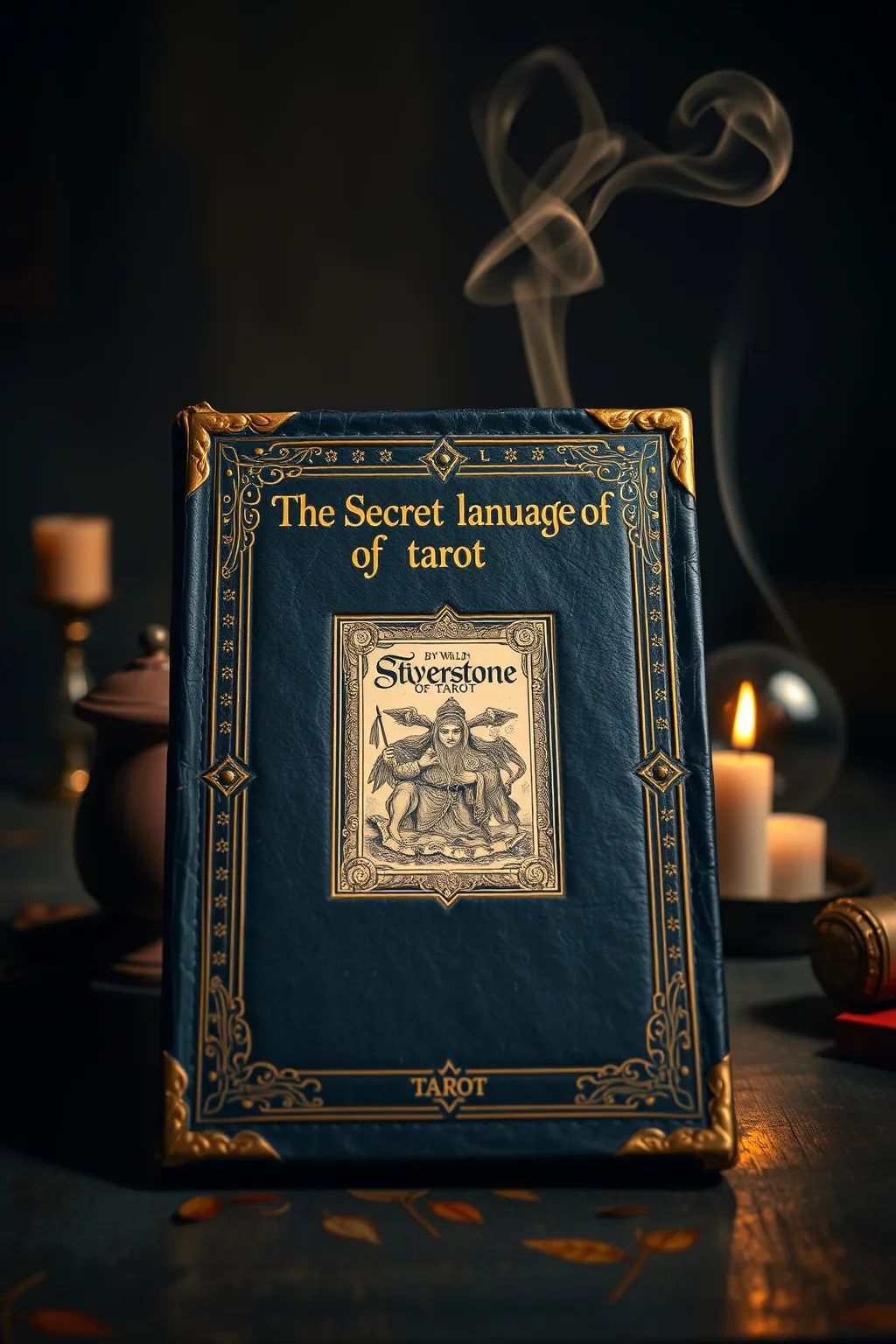
 76
76

The secret language of tarot
The Amberstones' "The Secret Language of Tarot" distinguishes itself by treating the deck as a coherent symbolic language rather than a collection of disconnected divinatory meanings. Its strength lies in the systematic way it unpacks the relationships between the cards, particularly the archetypal narrative of the Major Arcana. I found the discussion of the Minor Arcana's suit themes particularly illuminating, moving beyond simple pips to understand their inherent energies. However, the sheer density of information can be overwhelming for a complete novice; it presumes a certain familiarity with esoteric concepts. A passage detailing the symbolism of the number 7 across various cards, for instance, demonstrates the book's depth but might require prior knowledge of numerology. For those willing to engage deeply, it offers a robust framework for understanding Tarot's symbolic architecture.
📝 Description
76
Published in 2008, 'The Secret Language of Tarot' examines the Tarot as a symbolic system.
Wald and Ruth Ann Amberstone's 2008 book moves past simple card meanings to analyze the Tarot as a symbolic language. It investigates the archetypal narratives and psychological connections within the Major and Minor Arcana. The authors see the cards as a reflection of the human condition and a guide for personal growth, respecting their historical roots and enduring symbolic power.
This work is for those who want to understand the Tarot's structure and meaning more deeply. It will interest readers curious about the Tarot's links to mythology, psychology, and esoteric thought. Those looking to engage with the Tarot on a philosophical and symbolic level, rather than just memorizing meanings, will find it valuable. It also helps practitioners enhance their readings with a more detailed interpretive approach.
Emerging in 2008 during a renewed interest in esoteric studies, 'The Secret Language of Tarot' contributed to a more systematic analysis of the cards. While many books focused on divination or specific historical decks, the Amberstones approached Tarot as a complex symbolic system. This aligns with scholarship that treats occult symbolism seriously, similar to Gertrude Moakley's work on Renaissance Tarot or Jungian psychological interpretations of archetypes.
💡 Why Read This Book?
• Learn how the Tarot's structure, particularly the Fool's Journey as detailed in the Major Arcana, mirrors stages of psychological development, offering a unique lens for self-understanding. • Gain practical insight into interpreting the Minor Arcana not just as events, but as expressions of elemental energies, as explored through the suit correspondences. • Develop a method for personal engagement with Tarot symbolism, moving beyond rote memorization to a deeper, intuitive understanding of card meanings, inspired by the book's approach to "active imagination."
⭐ Reader Reviews
Honest opinions from readers who have explored this book.
❓ Frequently Asked Questions
What is the core philosophy behind "The Secret Language of Tarot"?
The book posits that Tarot is a structured symbolic language, not just a fortune-telling device. It explores the archetypal narratives and psychological underpinnings of the cards, viewing them as a map for inner exploration and self-understanding.
Who are Wald Amberstone and Ruth Ann Amberstone?
They are the authors of "The Secret Language of Tarot," first published in 2008. Together, they have authored significant works exploring Tarot's deeper symbolic and esoteric dimensions.
How does this book differ from other Tarot guides published around 2008?
Unlike many contemporary guides focusing on simple divinatory meanings or specific decks, "The Secret Language of Tarot" emphasizes a systematic, symbolic, and psychological approach, treating the deck as a coherent esoteric system.
What is the 'Fool's Journey' as presented in the book?
It's the archetypal narrative traced through the Major Arcana, representing a soul's progression through various stages of life, experience, and spiritual development. The book details this journey systematically.
Does the book focus on a specific Tarot deck?
While the principles discussed are applicable to many decks, the book's systematic approach to symbolism and archetypes is designed to enhance understanding of the underlying structure common to most decks, particularly those with traditional imagery.
What is 'active imagination' in the context of this Tarot book?
The Amberstones propose using 'active imagination' as a technique to personally engage with the archetypal figures and symbols within the Tarot cards, fostering a dialogue that unlocks deeper personal meaning.
🔮 Key Themes & Symbolism
Archetypal Narratives
The work meticulously unpacks the overarching narrative of the Fool's Journey across the Major Arcana. It positions these cards not as isolated events but as sequential stages in a universal human or spiritual progression. The symbolism of each archetype, from The Magician to The World, is explored for its psychological and esoteric significance, offering a framework for understanding life's challenges and transformations as part of a larger, meaningful sequence.
Symbolic Structure of Suits
Beyond the Majors, the book examines the symbolic language of the Minor Arcana. It examines the elemental correspondences of Wands, Cups, Swords, and Pentacles, and how these energies manifest in the numbered cards. This systematic approach allows readers to see the interconnectedness of the entire deck, understanding how the court cards and pip cards contribute to the overall symbolic discourse, providing a richer interpretive lens than mere divinatory meanings.
Psychological Resonance
A central theme is the Tarot's function as a mirror to the human psyche. The Amberstones highlight how the archetypes and scenarios depicted on the cards can evoke deep psychological responses and offer insights into the reader's inner world. The concept of 'active imagination' is introduced as a method to engage with these symbols, fostering a dialogue between the conscious mind and the unconscious, thereby facilitating personal growth and self-awareness.
Esoteric Foundations
The book grounds its interpretations in the broader context of esoteric traditions, drawing connections to numerology, astrology, and mythology. It treats the Tarot as a repository of ancient wisdom, a complex symbolic system that encodes profound spiritual and philosophical concepts. This perspective encourages readers to view the Tarot not just as a tool for divination but as a key to unlocking deeper layers of meaning within themselves and the universe.
💬 Memorable Quotes
Direct passages from the work, attributed to the author.
“The Tarot is a mirror reflecting the human condition.”
— This captures the book's core philosophy: that the cards offer a symbolic representation of universal human experiences, challenges, and potentials, serving as a tool for introspection and understanding.
“The Fool's Journey is a map of the soul.”
— This highlights the book's emphasis on the Major Arcana's narrative structure, presenting it as a metaphorical path of development and spiritual evolution that individuals can relate to their own lives.
“Each suit represents a fundamental force or mode of experience.”
— This points to the structured analysis of the Minor Arcana, explaining how the energies of Wands, Cups, Swords, and Pentacles provide a framework for understanding different aspects of life and consciousness.
“Engage the symbols through active imagination.”
— This suggests a method for deeper connection with the Tarot, encouraging readers to move beyond intellectual understanding and interact imaginatively with the card imagery for personal insight.
“The numbers and symbols are a coherent language.”
— This emphasizes the book's approach to Tarot as a systematic and interconnected symbolic system, where each element contributes to a larger, meaningful dialogue.
🌙 Esoteric Significance
Tradition
The work aligns with the Western Esoteric tradition, particularly Hermeticism and Jungian psychology, treating the Tarot as a repository of archetypal wisdom. It departs from purely historical or divinatory approaches by emphasizing the Tarot's role as a psychological and spiritual map. The structured interpretation of the Major and Minor Arcana reflects a Kabbalistic influence in its systemic approach, though not explicitly tied to the Tree of Life in this particular text.
Symbolism
Key symbols explored include the Fool, representing new beginnings and the uninitiated journey; the concept of the Four Suits (Wands, Cups, Swords, Pentacles) as elemental forces governing different domains of experience; and the archetypal figures within the Major Arcana, seen as personifications of universal psychological and spiritual principles guiding the 'Fool's Journey'.
Modern Relevance
Contemporary practitioners of Jungian psychology and archetypal studies frequently reference the Amberstones' approach to the Tarot as a tool for understanding the unconscious. The book's emphasis on symbolic language also informs modern approaches to visual literacy and comparative mythology, making its insights relevant for those exploring the power of symbolic systems in the digital age.
👥 Who Should Read This Book
• Tarot enthusiasts seeking a deeper, symbolic understanding beyond basic meanings, particularly those interested in the psychological and archetypal dimensions of the cards. • Students of esoteric traditions interested in how systems of divination function as symbolic languages reflecting universal wisdom. • Individuals undergoing personal development who wish to use the Tarot as a tool for self-reflection and understanding life's symbolic patterns.
📜 Historical Context
Published in 2008, "The Secret Language of Tarot" emerged during a period of significant popular and academic interest in esoteric subjects. The early 21st century saw a proliferation of Tarot literature, much of which focused on practical divination or specific historical decks. The Amberstones' work distinguished itself by offering a more systematic and symbolic analysis, contributing to the ongoing discourse that viewed Tarot as a complex semiotic system. This approach resonated with scholarship exploring the Tarot's roots, such as Gertrude Moakley’s research into its Renaissance origins, and echoed the psychological interpretations of figures influenced by Carl Jung. While not directly engaging with specific contemporaries in its text, the book implicitly responded to the prevailing trends by advocating for a deeper, more structured understanding of the deck's esoteric architecture, moving beyond superficial divinatory practices.
📔 Journal Prompts
Reflect on the Fool's Journey as a map of personal growth.
How do the elemental energies of the suits manifest in your daily life?
Identify an archetype from the Major Arcana that currently speaks to your experience.
Explore the symbolic meaning of a specific number card in the Tarot.
Consider how the Tarot's symbolic language can inform your understanding of the human condition.
🗂️ Glossary
Major Arcana
The set of 22 trump cards in a Tarot deck, typically depicting archetypal figures and significant life events, representing major spiritual or psychological lessons.
Minor Arcana
The 56 cards in a Tarot deck divided into four suits (Wands, Cups, Swords, Pentacles), representing everyday events, challenges, and circumstances.
Fool's Journey
The symbolic progression of the Fool through the 22 Major Arcana cards, interpreted as a metaphor for the soul's journey through life, experience, and spiritual development.
Archetype
In Jungian psychology and Tarot symbolism, a universal, archaic pattern or image that derives from the collective unconscious and is communicated through art, literature, and myth.
Active Imagination
A technique, notably used in Jungian psychology, to engage with unconscious material by consciously interacting with fantasies, dreams, and symbols.
Symbolic Language
A system of communication that uses symbols to represent ideas, concepts, or forces, often conveying deeper meanings beyond literal interpretation.
Elemental Correspondences
The association of Tarot suits (Wands, Cups, Swords, Pentacles) with the four classical elements (Fire, Water, Air, Earth) and their respective energies and qualities.
🔮 Readers Also Liked
Browse all →
More by Wald Amberstone, Ruth Ann Amberstone, Wald Amerstone
All books →
More Free Divination & Tarot Books
View all →