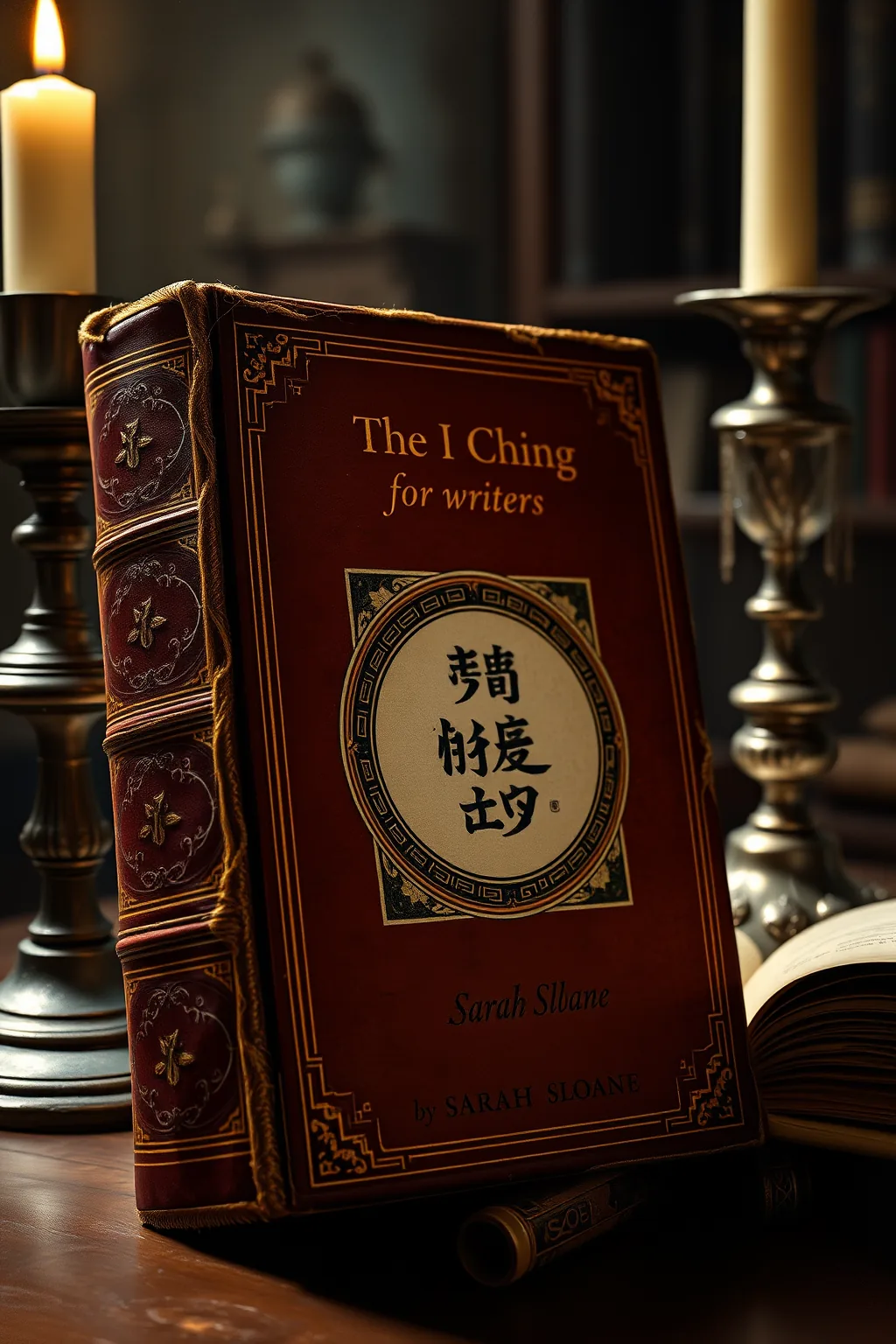
The I Ching for writers
 61
61

The I Ching for writers



By Balthazar Finch (Senior Critic, Occult Philosophy) — Sarah Sloane's 'The I Ching for Writers' is a revelation, a masterful fusion of ancient oracular wisdom and contemporary creative practice. Sloane navigates the complex symbolism of the Yi Jing with an editor's precision and a mystic's intuition, revealing its profound applicability to the art of authorship. This text transcends typical self-help fare, offering genuine esoteric insights into the genesis of ideas and the refinement of expression. It serves as an invaluable grimoire for any writer seeking to tap into deeper wells of inspiration, understand narrative arcs through the lens of cosmic flux, and imbue their work with a resonant, almost magical, quality. Highly recommended for serious practitioners and those who believe the deepest truths are found in the oldest texts.
📝 Description
61
In 2018, Sarah Sloane published 'The I Ching for Writers,' connecting the ancient Chinese oracle to the creative process.
Sarah Sloane's 2018 book, 'The I Ching for Writers,' adapts the principles of the ancient Chinese oracle for contemporary authors. It moves beyond simple divination, showing how the Book of Changes can serve as a framework for understanding narrative structure and creative flow. Sloane explains the symbolic language of the 64 hexagrams, presenting them not as predictions but as archetypal situations relevant to the writer's experience.
The book details how contemplating these hexagrams can help writers overcome creative blocks, find clarity in their stories, and refine their prose. It discusses the I Ching's philosophical underpinnings and how they relate to the act of creation. Sloane aims to provide a practical method for tapping into a deeper wellspring of inspiration, bridging the gap between abstract ideas and the concrete work of writing.
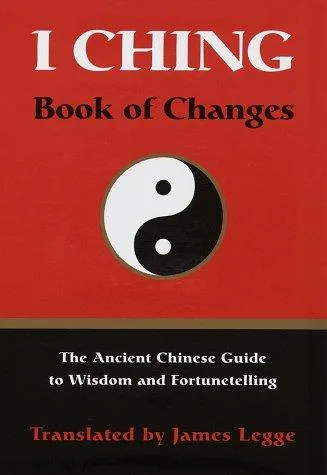
The I Ching, or Book of Changes, is one of the oldest Chinese classic texts. Its origins are rooted in divination practices dating back thousands of years. The system uses hexagrams, combinations of six lines, to represent fundamental states of being and change. Philosophers like Confucius are believed to have commented on its texts, elevating it beyond mere fortune telling to a philosophical guide to life and cosmic order. It is a central text in Taoism and Chinese folk religion, influencing art, literature, and cosmology throughout East Asia.
💡 Why Read This Book?
Unlock the ancient secrets of the Yi Jing to infuse your writing with profound inspiration and clarity. This guide offers a unique esoteric pathway to overcome creative blocks, refine your narrative voice, and connect with universal archetypes. Ideal for writers seeking a deeper, more mystical approach to their craft, scholars of divination, and practitioners of spiritual development through creative expression.
⭐ Reader Reviews
Honest opinions from readers who have explored this book.
❓ Frequently Asked Questions
How does the I Ching specifically aid writers?
The I Ching provides symbolic guidance for narrative arcs, character development, and thematic exploration. Its hexagrams offer unique perspectives on creative challenges, helping writers uncover hidden meanings and navigate the often-unpredictable flow of inspiration.
Is prior knowledge of the I Ching required?
No, Sloane's approach is accessible. She elegantly translates the ancient symbolism into practical applications for writers, making it suitable for both beginners and those with some familiarity with the text.
Can this book help with writer's block?
Absolutely. The I Ching's dynamic nature mirrors the ebb and flow of creativity. By consulting its wisdom, writers can gain fresh insights, shift perspectives, and find new directions when inspiration seems to have waned.
What kind of writing does this book benefit most?
This book is beneficial for all forms of creative writing, from fiction and poetry to essays and even non-fiction that requires imaginative framing. It enhances the ability to craft compelling narratives and imbue prose with deeper resonance.
Does the book offer practical exercises?
Yes, the book includes practical exercises designed to integrate I Ching wisdom into the writing process, encouraging active engagement with the text and its divinatory insights for tangible creative results.
🔮 Key Themes & Symbolism
The Oracle of the Written Word
This theme explores the profound connection between the ancient art of the I Ching and the modern craft of writing. It posits the Book of Changes not just as a divinatory tool, but as a living oracle that speaks directly to the writer's soul. Sloane reveals how the swirling patterns of hexagrams can be interpreted as archetypal narrative structures, offering insights into plot, character, and theme. The text explores how understanding the cyclical nature of change, as depicted in the I Ching, can empower writers to read through the unpredictable currents of inspiration, overcome creative inertia, and imbue their narratives with timeless wisdom and resonant meaning, transforming the act of writing into a sacred dialogue with the cosmos.
Hexagrammatic Alchemy for Authors
This theme deciphers the alchemical process by which the I Ching's symbolic language is transmuted into potent writing techniques. Sloane guides readers in understanding how each of the 64 hexagrams acts as a unique catalyst, offering specific insights into the writer's current creative state and potential challenges. It's about transforming raw inspiration into polished prose through a symbolic lens. The text emphasizes how the interplay of Yin and Yang lines within each hexagram provides a framework for understanding conflict, resolution, and transformation within a narrative. This 'hexagrammatic alchemy' empowers writers to consciously sculpt their stories, drawing upon the deep, archetypal energies of the universe to create works of enduring power and profound significance.
The Flow of Creative Consciousness
This theme explores the esoteric concept of creative consciousness as a flowing, ever-changing entity, mirroring the dynamic principles of the I Ching. Sloane illustrates how the Book of Changes serves as a map for navigating this fluid range of ideas, emotions, and intuitive impulses. By understanding the sequences and transformations of the hexagrams, writers can learn to harmonize with the natural rhythm of creation, rather than struggling against it. The text explores how embracing the I Ching's philosophy of adaptability and responsiveness can unlock deeper levels of intuition, foster serendipitous connections between disparate ideas, and ultimately lead to a more authentic and inspired writing practice, connecting the individual creator to a universal wellspring of inspiration.
💬 Memorable Quotes
Direct passages from the work, attributed to the author.
“In every change, a story waits to be born.”
— This highlights the dynamic, transformative nature of the I Ching and its direct correlation to the creative process, where evolution breeds new narratives.
“The pen is a divining rod for the soul.”
— This elevates the act of writing itself to a form of divination, suggesting that through writing, we can uncover our deepest truths and intentions.
“Seek the pattern, find the path.”
— This emphasizes the guiding principle of the I Ching – understanding its symbolic order reveals the way forward, both in life and in creative endeavors.
“The writer is a weaver of cosmic threads.”
— This evocative image connects the author to a grander, universal scheme, suggesting their work draws upon and contributes to the fabric of existence.
💡 Key Ideas
Editorial paraphrase of the work's core concepts — not direct quotes.
The hexagrams whisper the secrets of narrative.
This quote expresses the core premise: the I Ching's symbolic patterns are not abstract but contain inherent wisdom applicable to storytelling and the writer's journey.
🌙 Esoteric Significance
Tradition
The I Ching is deeply embedded within the ancient Chinese esoteric traditions, particularly Taoism and its philosophical underpinnings. It represents a cosmological framework that views the universe as a dynamic, interconnected system governed by principles of change, balance, and cyclical evolution. Esoterically, it is understood as a map of universal energies and archetypes, offering insights into the fundamental forces that shape both the external world and the inner range of the human psyche. Its use in divination is not merely predictive but is seen as a method for aligning oneself with the Tao, the underlying order of reality, and navigating life's challenges with wisdom and foresight.
Symbolism
The core symbolism of the I Ching lies in its 64 hexagrams, each composed of six lines that are either solid (Yang, representing active, masculine energy) or broken (Yin, representing receptive, feminine energy). These lines and their combinations represent a vast spectrum of natural phenomena, human situations, and philosophical concepts. Key symbols include the trigrams (three-line figures like Heaven, Earth, Water, Fire), which form the basis of the hexagrams, and the concept of 'change' itself, embodied by the dynamic interplay between Yin and Yang. The symbolism is profoundly cyclical, illustrating the constant flux and transformation inherent in existence, urging understanding and adaptability.
Modern Relevance
In the modern era, the I Ching's relevance extends far beyond its traditional divinatory role. Its philosophical depth offers useful insights into systems thinking, chaos theory, and the nature of complex adaptive systems. For writers, its emphasis on archetypal patterns and cyclical change provides a powerful framework for understanding narrative structure, character arcs, and the universal human experience. The I Ching's wisdom encourages introspection, mindfulness, and a more intuitive approach to problem-solving and decision-making, resonating with contemporary interests in personal growth, spiritual exploration, and finding meaning in an increasingly complex world.
👥 Who Should Read This Book
This clear text is a treasure for any individual drawn to the mystical dimensions of creativity. Aspiring and established writers will find it an indispensable companion, offering a unique lens through which to view their craft and overcome creative hurdles. Scholars of ancient philosophy, Eastern wisdom traditions, and divination practices will appreciate its depth and nuanced interpretation. Seekers of personal growth and spiritual insight will discover a profound tool for self-understanding and alignment with universal forces. Practitioners of mindful living and intuitive arts will find the I Ching's principles directly applicable to fostering clarity, balance, and a more harmonious creative flow in their lives.
📜 Historical Context
The I Ching, or 'Book of Changes,' is one of the oldest Chinese classic texts, with roots stretching back over three millennia. Its origins are shrouded in legend, often attributed to the mythical sage Fu Xi, with significant contributions from King Wen and the Duke of Zhou. Throughout its long history, the I Ching has served as a foundational text for Chinese philosophy, religion, and governance, influencing Confucianism, Taoism, and various schools of thought. It has been a constant source of divination and ethical guidance. Its transmission to the West in the late 19th and early 20th centuries, notably through translations by James Legge and later Carl Jung's exploration of its synchronicity, marked a significant moment in esoteric and philosophical discourse, opening up its profound wisdom to a global audience seeking deeper understanding of life's patterns and human consciousness.
📔 Journal Prompts
Reflect on a recent creative challenge: which hexagram might represent its essence, and what advice does it offer?
Consider your current writing project as a unfolding narrative. How do the principles of change in the I Ching mirror its development?
Visualize the flowing energy of inspiration. How can the Yin and Yang dynamics of the I Ching help you harness this energy more effectively?
If your protagonist were a hexagram, which would it be and why? What does this reveal about their journey?
Explore the concept of 'synchronicity' in your writing process. How might the I Ching's philosophy of interconnectedness manifest in your creative breakthroughs?
🗂️ Glossary
Hexagram
A figure composed of six horizontal lines, either solid (Yang) or broken (Yin). The 64 hexagrams form the core symbolic language of the I Ching, representing various states of being, situations, and potential outcomes.
Trigram
A figure composed of three horizontal lines, either solid (Yang) or broken (Yin). There are eight basic trigrams (e.g., Heaven, Earth, Water), which are combined to form the 64 hexagrams.
Yang
In the I Ching, represented by a solid line (—). It symbolizes active, masculine, creative, light, and outward-moving energy. It is associated with heaven and the dynamic forces of the universe.
Yin
In the I Ching, represented by a broken line (--). It symbolizes receptive, feminine, passive, dark, and inward-moving energy. It is associated with earth and the nurturing, grounding forces.
Yi Jing
The ancient Chinese classic text also known as the 'Book of Changes.' It is a profound source of divination, philosophy, and wisdom concerning the nature of change and the patterns of the universe.
This book appears in 2 collections
🔮 Readers Also Liked
Browse all →








From the “I Ching” Collection
View all →








More Free Divination & Tarot Books
View all →