Instant Palm Reader
 73
73

Instant Palm Reader
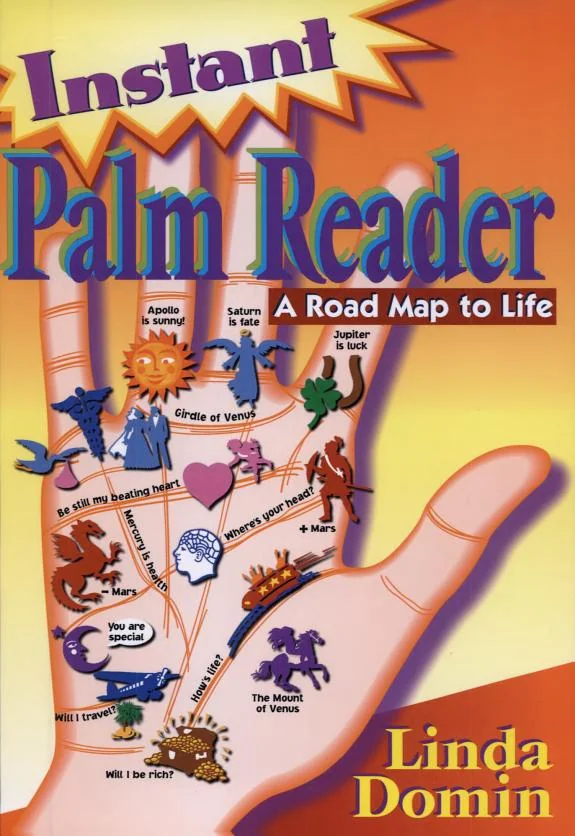
Linda Domin's *Instant Palm Reader* offers a refreshingly direct approach to chiromancy, eschewing overly mystical jargon for clear, actionable instruction. The book's strength lies in its organized presentation of hand features, systematically linking lines, mounts, and shapes to personality traits. For instance, the detailed breakdown of the Apollo line's variations and their meanings is particularly well-executed. However, the work occasionally feels a bit dated in its psychological framework, reflecting 1990s self-help paradigms more than contemporary psychological understanding. While comprehensive for its time, a deeper exploration of the philosophical underpinnings of palmistry could have enriched the text further. Still, for anyone wanting to learn the mechanics of reading palms without extensive prior knowledge, Domin provides a solid foundation.
📝 Description
73
Linda Domin's 1997 book explains chiromancy with clear guidance on hand interpretation.
Instant Palm Reader functions as a manual for understanding chiromancy. It details how to interpret the lines, mounts, and shapes of the human hand. The book presents palmistry as a method for self-discovery and psychological insight. It breaks down astrological and planetary associations with hand features, making them accessible to the layperson.
This book is for individuals interested in practical divination and personal growth. It is a good starting point for beginners seeking a structured approach to learning palm reading. Those with prior experience in esoteric studies or psychology may find its detailed interpretations and systematic framework valuable for expanding their analytical toolkit.
Published in 1997, Instant Palm Reader appeared during a time of growing interest in esotericism and self-help. It contributed to the popularization of divinatory arts, alongside other works that explored Tarot, astrology, and cartomancy. The book's straightforward approach contrasts with more academic or historically focused texts on chiromancy.
💡 Why Read This Book?
• Learn to interpret the seven mounts (Venus, Jupiter, Saturn, Apollo, Mercury, Mars, Luna) and their planetary associations, gaining insight into core personality drives and potentials. • Master the reading of major hand lines like the Life Line, Head Line, and Heart Line, understanding how their breaks, chains, and islands reveal life's influences and challenges. • Differentiate between the four primary hand shapes (Earth, Air, Fire, Water) and their associated elemental characteristics, providing a foundational understanding of an individual's innate nature.
⭐ Reader Reviews
Honest opinions from readers who have explored this book.
❓ Frequently Asked Questions
What is the origin of palmistry as presented in Instant Palm Reader?
While *Instant Palm Reader* focuses on practical application, the practice of palmistry has ancient roots, with evidence found in Vedic astrology and ancient Greece. Domin's work draws on this lineage, presenting interpretations that have evolved over centuries of observation and practice.
How does Linda Domin explain the connection between hand lines and destiny?
Domin explains that hand lines are not rigid predictions but rather indicators of tendencies, potentials, and life influences. The work explores how these lines map out psychological patterns and potential life events based on planetary alignments and the hand's structure.
Can Instant Palm Reader be used for psychological profiling?
Yes, the book presents palmistry as a tool for understanding character. By analyzing hand shapes, mounts, and lines, readers can gain insights into personality traits, strengths, and potential challenges, aligning with psychological interpretation methods.
What are the 'mounts' in palmistry according to this book?
The mounts are fleshy, raised areas on the palm, named after planets like Venus, Jupiter, and Saturn. *Instant Palm Reader* details how the prominence and characteristics of these mounts indicate specific personality aspects and energies.
Is Linda Domin's approach to palmistry considered traditional or modern?
Domin's approach in *Instant Palm Reader* is a blend. It uses traditional line and mount interpretations but frames them within a 1990s psychological and self-help context, making it accessible and relevant for contemporary readers seeking personal insight.
What distinguishes the 'Earth' hand shape from others in this guide?
According to *Instant Palm Reader*, the Earth hand shape is characterized by a square palm and short fingers, indicative of a practical, grounded, and stable personality. This contrasts with the more intellectual Air, passionate Fire, or emotional Water hand types.
🔮 Key Themes & Symbolism
Systematic Line Analysis
The book meticulously details the major and minor lines of the palm, such as the Life Line, Head Line, and Heart Line. It moves beyond simple identification to offer nuanced interpretations of their variations, breaks, chains, and islands. This systematic approach allows readers to understand how these markings can represent life experiences, mental faculties, emotional patterns, and potential future paths, grounding the practice in observable detail rather than abstract pronouncements.
Planetary Mount Interpretations
Domin dedicates significant attention to the seven planetary mounts—Venus, Jupiter, Saturn, Apollo, Mercury, Mars, and Luna. Each mount is explained in terms of its corresponding planet and its influence on character. The book teaches how to assess the development and significance of these mounts, linking their prominence to specific traits like passion (Venus), ambition (Jupiter), discipline (Saturn), creativity (Apollo), communication (Mercury), courage (Mars), and imagination (Luna).
Hand Shape Archetypes
A foundational element of Domin's guide is the classification of hands into four elemental shapes: Earth, Air, Fire, and Water. This categorization provides a broad overview of an individual's fundamental nature and approach to life. The book elaborates on the distinct characteristics associated with each shape, such as the practicality of Earth hands, the intellect of Air hands, the dynamism of Fire hands, and the sensitivity of Water hands.
Chiromancy as Self-Knowledge
Rather than solely focusing on fortune-telling, *Instant Palm Reader* frames palmistry as a sophisticated tool for self-discovery and psychological understanding. By examining the hand, readers are encouraged to explore their own innate potentials, challenges, and life patterns. This perspective aligns chiromancy with modern therapeutic and self-help modalities, presenting it as a means to enhance self-awareness and personal development.
💬 Memorable Quotes
Direct passages from the work, attributed to the author.
“The Life Line shows vitality and physical condition.”
— This concise statement highlights the fundamental function of the Life Line, emphasizing its connection to physical well-being and inherent energy levels rather than a fixed lifespan.
“The Head Line reveals the way a person thinks.”
— This interpretation focuses on the cognitive aspect of palmistry, explaining that the Head Line provides insight into an individual's intellectual style, mental processes, and problem-solving approaches.
“The Fate Line indicates influences on one's career or life path.”
— This interpretation clarifies that the Fate Line in palmistry, as presented in the book, maps external influences or significant turning points related to one's vocational or life direction.
💡 Key Ideas
Editorial paraphrase of the work's core concepts — not direct quotes.
A well-developed Mount of Jupiter indicates leadership qualities.
This paraphrase points to the astrological association within palmistry, linking the Jupiter mount's prominence to traits like ambition, confidence, and the capacity for command.
Water hands are associated with intuition and emotion.
This paraphrase connects the elemental 'Water' hand shape to core emotional and intuitive characteristics, suggesting a person with such hands might be highly sensitive and empathetic.
🌙 Esoteric Significance
Tradition
Domin's work draws heavily from the Western esoteric tradition of chiromancy, which integrates astrological correspondences and psychological interpretation. While not explicitly aligned with a single lineage like Hermeticism or Kabbalah, it utilizes their symbolic language, particularly planetary associations. The book adapts these ancient systems into a modern, accessible format, positioning palmistry as a tool for personal development and insight within a broader spiritual or metaphysical framework.
Symbolism
Key symbols include the seven planetary mounts (Venus, Jupiter, Saturn, Apollo, Mercury, Mars, Luna), each representing a divine principle and its influence on human character. The lines themselves—Life, Head, Heart, Fate—function as symbolic maps of an individual's journey, potentials, and challenges. Hand shapes (Earth, Air, Fire, Water) further symbolize elemental archetypes that define fundamental personality structures.
Modern Relevance
The book's systematic, psychological approach to palmistry continues to influence modern practitioners and authors who blend traditional chiromancy with contemporary self-help and coaching methodologies. Its clear explanations of mounts and lines are foundational for many contemporary guides seeking to make divination accessible. Thinkers and practitioners in the modern occult and New Age movements often cite such works as entry points for understanding character analysis through hand reading.
👥 Who Should Read This Book
['• Aspiring palm readers seeking a structured, step-by-step guide to interpreting hand features, from basic lines to complex mount formations.', '• Individuals interested in psychological archetypes and divination, looking for a practical system to understand personality and life potentials.', '• Students of esotericism wanting to explore the practical application of planetary symbolism and elemental correspondences through chiromancy.']
📜 Historical Context
Emerging in 1997, *Instant Palm Reader* arrived during a resurgence of interest in esoteric practices, fueled by the internet's growing reach and a general public seeking alternative avenues for self-understanding. This period saw a broad spectrum of metaphysical literature, from deeply academic studies to popular handbooks. While Domin's work focused on practical instruction, it existed alongside more esoteric traditions and astrological texts. Notably, it engaged with the popularization of divinatory arts seen in the works of authors like Lon Milo DuQuette, who explored ceremonial magic and tarot. Unlike more scholarly approaches that might trace chiromancy back to Hellenistic Egypt or medieval Europe, Domin's text aimed for immediate usability, reflecting a late 20th-century trend toward accessible self-help guides in the occult.
📔 Journal Prompts
Your dominant hand's Mount of Venus and its perceived development.
The meaning of breaks or chains on your Head Line.
Comparing your hand shape (Earth, Air, Fire, Water) to its described characteristics.
The specific planetary associations of the seven mounts.
Interpreting the clarity and depth of your own Fate Line.
🗂️ Glossary
Chiromancy
The practice of interpreting the lines, mounts, and features of the human hand to understand character, potential, and life patterns. It is the formal term for palm reading.
Mounts
The fleshy, raised pads on the palm, located below the fingers and around the edges. Each mount is associated with a planet and specific personality traits or energies.
Life Line
A prominent line on the palm, typically curving around the base of the thumb. It is interpreted as relating to vitality, physical health, and major life experiences, not lifespan.
Head Line
The line running horizontally across the palm, generally below the heart line. It symbolizes mental faculties, intellect, communication style, and cognitive approach.
Heart Line
The uppermost horizontal line on the palm, running from the edge below the little finger towards the index or middle finger. It relates to emotional capacity, romantic life, and relationships.
Fate Line
A vertical line, often starting near the base of the palm and extending upwards. It is interpreted as representing external influences, career path, and major life directions or turning points.
Hand Shapes
The overall classification of a hand based on its palm and finger proportions, typically categorized into four elemental types: Earth, Air, Fire, and Water, each representing distinct personality archetypes.
This book appears in 1 collection
🔮 Readers Also Liked
Browse all →








From the “Palmistry” Collection
View all →








More Free Occult Philosophy Books
View all →