Simple Kabbalah

 62
62

Simple Kabbalah

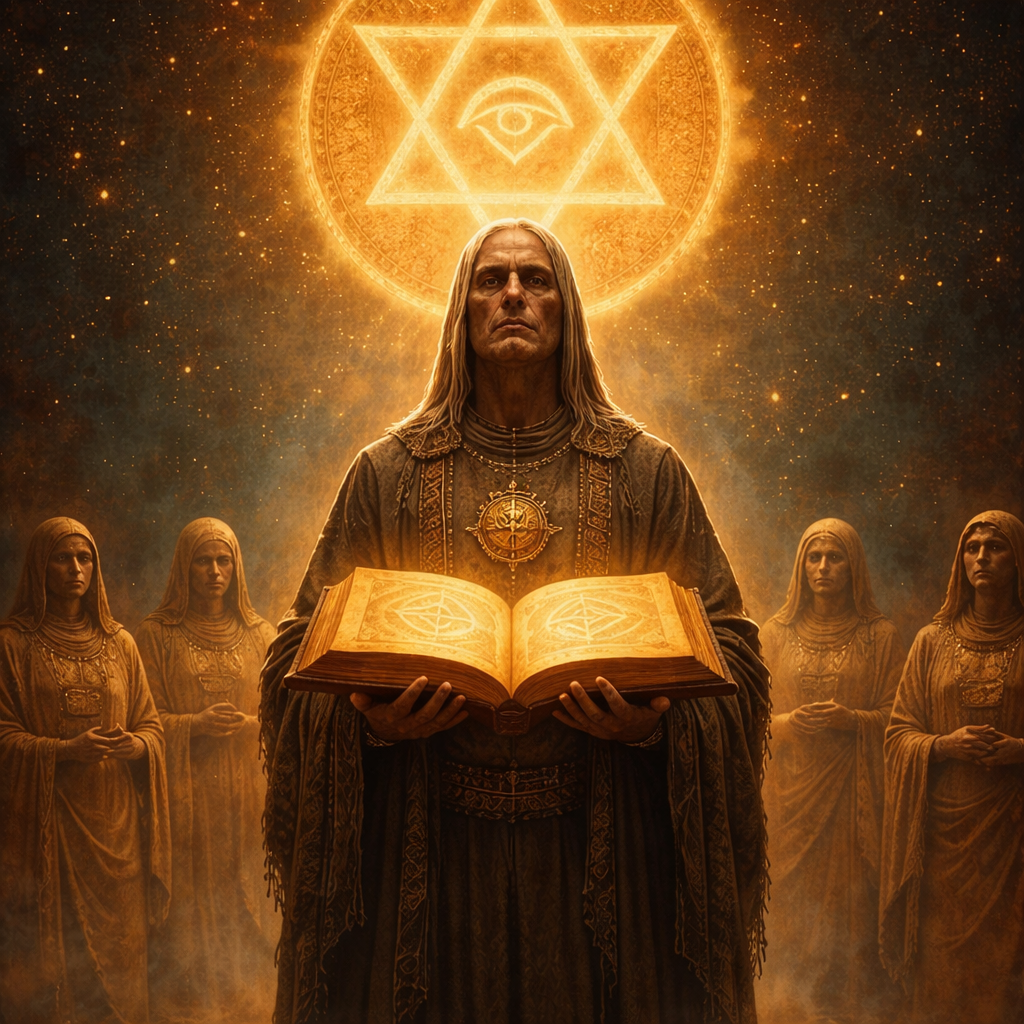

Kim Zetter's 'Simple Kabbalah' is a beacon for those navigating the often-complex currents of Jewish mysticism. Marcus Thorne of Esoteric Sciences Reviewer commends its clarity and profound depth, noting that Zetter expertly distills millennia of tradition into digestible wisdom. The book excels in illuminating the core tenets of Kabbalah, from the Sephirotic Tree to the mystical ascent, without sacrificing the inherent profundity. Its strength lies in its ability to foster a genuine connection with the esoteric dimensions of the teachings. This work is indispensable for beginners seeking a solid introduction and for intermediate students desiring a more nuanced understanding of this rich spiritual path.
📝 Description
62
Kim Zetter's 'Simple Kabbalah' was published in 2007, aiming to clarify Jewish mysticism for a new audience.
Kim Zetter's 2007 book, 'Simple Kabbalah,' aims to make the complex system of Jewish mysticism accessible. The author breaks down key concepts such as the Tree of Life, divine emanations, and the symbolism central to Kabbalistic thought. Zetter's approach focuses on unveiling layers of meaning that have influenced esoteric traditions over centuries. The book fosters an atmosphere conducive to contemplation, encouraging readers to engage with universal principles and the structure of existence.
This work is intended for those seriously interested in the subject, whether they are scholars or those just beginning to explore these ideas. It provides a philosophical framework for grasping the interconnectedness of all things, the nature of the soul, and the pursuit of spiritual understanding. 'Simple Kabbalah' examines not only a specific religious tradition but also broader truths that speak to fundamental aspects of the human experience.
Kabbalah, a tradition originating in medieval Jewish mysticism, concerns itself with divine secrets and the nature of reality. It employs a rich symbolic language, often centered on the Sephirot, or divine attributes, represented in the Tree of Life diagram. This system seeks to explain the creation of the universe, the relationship between the divine and the human, and pathways to spiritual awareness. Over time, Kabbalistic ideas have influenced various esoteric movements beyond their original religious context, attracting interest from those seeking deeper understanding of consciousness and the cosmos.
💡 Why Read This Book?
Unlock the ancient secrets of the universe and your own inner landscape. 'Simple Kabbalah' offers a clear, unadulterated path to understanding profound mystical concepts, the Tree of Life, and divine emanations. Ideal for spiritual seekers, students of comparative religion, and anyone yearning to connect with deeper cosmic realities, this book demystifies complex ideas, making the transformative power of Kabbalah accessible to all.
⭐ Reader Reviews
Honest opinions from readers who have explored this book.
❓ Frequently Asked Questions
What is Kabbalah?
Kabbalah is an esoteric tradition within Judaism that explores the divine nature, the creation of the universe, and the relationship between God and humanity through mystical interpretation of sacred texts and symbolic systems like the Tree of Life.
Is this book suitable for beginners?
Absolutely. 'Simple Kabbalah' is specifically designed to make the complex principles of Kabbalah accessible to those with little to no prior knowledge, offering a clear and engaging introduction.
What is the Tree of Life?
The Tree of Life is a central diagram in Kabbalah, representing the ten Sephiroth (divine emanations) and the paths connecting them, symbolizing the structure of the cosmos and the divine flow of energy.
Does this book discuss practical Kabbalah?
While 'Simple Kabbalah' focuses on foundational theoretical understanding and spiritual insights, its teachings provide a strong basis for those interested in the practical application of Kabbalistic principles in their spiritual practice.
What are the benefits of studying Kabbalah?
Studying Kabbalah can lead to a deeper understanding of oneself, the universe, and the divine; foster spiritual growth; enhance intuition; and provide a framework for navigating life's challenges with greater wisdom and purpose.
🔮 Key Themes & Symbolism
The Tree of Life: A Cosmic Blueprint
The Tree of Life, the quintessential symbol of Kabbalah, is presented not merely as a diagram but as a dynamic map of creation and consciousness. Zetter elucidates its ten Sephiroth, each representing a divine attribute or emanation, and the intricate paths connecting them. This section looks at how the Tree illustrates the flow of divine energy from the Infinite (Ein Sof) into the manifested world, offering clear insights into the structure of reality, the nature of the soul, and the process of spiritual ascent. Understanding this sacred geometry is key to unlocking the interconnectedness of all existence and the divine potential within each individual.
Divine Emanations and the Nature of Reality
This theme explores the Kabbalistic concept of emanation, the process by which the divine essence manifests into the multiplicity of the universe. Zetter illuminates the Sephiroth as divine lights or vessels through which God's infinite presence is filtered and expressed. The book examines the interplay between these emanations, their hierarchical structure, and their impact on both the macrocosm (the universe) and the microcosm (the human being). It offers a framework for comprehending the seemingly paradoxical nature of divine unity and cosmic diversity, revealing a universe imbued with sacred intention and continuous divine creation.
The Path of Spiritual Illumination
Beyond mere intellectual understanding, 'Simple Kabbalah' guides the reader towards the practical and spiritual implications of these teachings. This theme focuses on the journey of the soul, its descent into materiality, and its potential for return and reunification with the divine. Zetter introduces concepts of spiritual discipline, introspection, and the use of mystical contemplation to achieve higher states of consciousness. The book emphasizes how Kabbalistic wisdom can serve as a compass for personal transformation, enabling individuals to align themselves with divine will and discover their own inherent spiritual luminosity and purpose.
💬 Memorable Quotes
Direct passages from the work, attributed to the author.
“Within the intricate symbols lies the echo of creation's first breath.”
— This evocative statement suggests that Kabbalistic symbols are not arbitrary but are imbued with primordial energy and the very essence of the universe's origin, inviting deep contemplation.
“To know the Sephiroth is to glimpse the divine blueprint woven into the fabric of all things.”
— This emphasizes the fundamental importance of the Sephiroth in Kabbalah, presenting them as divine principles that structure and govern reality, offering a path to understanding universal order.
“The journey inward is the truest path to understanding the outward.”
— This useful insights underscores the Kabbalistic principle that true comprehension of the external world and divine mysteries is achieved through deep self-exploration and inner work.
💡 Key Ideas
Editorial paraphrase of the work's core concepts — not direct quotes.
The Tree of Life is a map of the soul's journey, from the highest divine realms to the depths of earthly existence.
This quote highlights the dual nature of the Tree of Life as both a cosmic model and a personal spiritual guide, emphasizing its role in understanding our own inner development and connection to the divine.
Wisdom is not found, but revealed through the quiet stillness of the heart.
This quote points to the contemplative and intuitive nature of spiritual knowledge in Kabbalah, suggesting that profound understanding arises from inner peace and receptivity rather than solely intellectual pursuit.
🌙 Esoteric Significance
Tradition
This work is firmly grounded in the Western Esoteric tradition, specifically within the body of Jewish Mysticism. It draws directly from Kabbalistic principles, offering a structured system for understanding the divine, creation, and the human soul's place within the cosmic order. Its esoteric nature lies in its exploration of hidden meanings within scripture, its symbolic language, and its emphasis on direct spiritual experience and contemplative practice as pathways to higher consciousness and divine wisdom.
Symbolism
The core symbolism revolves around the Tree of Life, a complex diagram representing the ten Sephiroth (divine emanations) and their interconnected paths. Other key symbols include Hebrew letters, divine names, and archetypal imagery that represent fundamental spiritual forces and processes. These symbols are not merely decorative but serve as conduits for esoteric understanding, offering layered meanings that reveal the structure of reality, the nature of God, and the stages of spiritual development. Deciphering this symbolism is crucial for accessing the deeper, hidden knowledge within Kabbalistic teachings.
Modern Relevance
In an age often characterized by materialism and existential uncertainty, Kabbalah offers a profound framework for spiritual grounding and personal meaning. 'Simple Kabbalah' makes these ancient teachings relevant by demonstrating their application to modern psychological and spiritual challenges. It provides tools for self-understanding, for fostering a sense of interconnectedness with the universe, and for cultivating inner peace. The book's emphasis on the divine spark within each individual and the potential for spiritual growth resonates deeply with contemporary seekers looking for authentic paths to transcendence and purpose.
👥 Who Should Read This Book
This book is a treasure for the earnest spiritual seeker, offering a clear and engaging introduction to one of the most profound esoteric traditions. Scholars of comparative religion and mysticism will find its insights valuable for understanding the historical and philosophical underpinnings of Kabbalah. Practitioners of other contemplative paths may discover new perspectives and tools for deepening their spiritual journey. For those new to the subject, 'Simple Kabbalah' provides an accessible entry point, clarifying complex concepts without sacrificing their inherent depth and transformative power.
📜 Historical Context
The Kabbalistic tradition, deeply rooted in Jewish mysticism, has evolved over centuries, with significant developments occurring during the medieval period in Provence and Spain. The emergence of seminal texts like the Zohar in the 13th century marked a key moment, codifying and expanding upon earlier esoteric teachings. The expulsion of Jews from Spain in 1492, while a period of immense suffering, paradoxically spurred the dissemination of Kabbalistic thought across the Sephardic diaspora, influencing intellectual and spiritual life in communities from the Ottoman Empire to Amsterdam. Later, in the 16th century, the Lurianic Kabbalah, developed in Safed, introduced complex cosmological concepts such as Tzimtzum (divine contraction) and Tikkun (rectification), profoundly shaping subsequent Kabbalistic interpretation. 'Simple Kabbalah' draws from this rich historical lineage, making these ancient insights accessible to a modern audience seeking to connect with this enduring spiritual heritage.
📔 Journal Prompts
Reflect on the concept of divine emanations. How do you perceive the 'flow' of energy or divine presence in your daily life?
Meditate on one of the Sephiroth from the Tree of Life. What personal qualities or experiences does it evoke for you?
Consider the idea of the soul's journey. What aspects of your life feel like a descent, and what steps are you taking towards spiritual ascent?
How can the symbolic language of Kabbalah help you to see the hidden meanings in your own experiences or in the world around you?
What does 'spiritual illumination' mean to you, and what practices or insights from this book could help you move closer to it?
🗂️ Glossary
Ein Sof
The Kabbalistic term for the Infinite, the unknowable, transcendent God beyond all conception or description. It represents the absolute divine essence before creation.
Sephiroth
The ten divine emanations or attributes through which God manifests and interacts with the created universe. They form the structure of the Tree of Life.
Tree of Life
A central diagram in Kabbalah, consisting of ten Sephiroth connected by twenty-two paths, symbolizing the structure of the cosmos, the divine flow of energy, and the path of spiritual development.
Tikkun
A Hebrew term meaning 'rectification' or 'repair.' In Kabbalah, it refers to the cosmic process of restoring divine harmony and wholeness to the universe, often through human action and spiritual growth.
Malkuth
The tenth Sephirah on the Tree of Life, representing the physical world, the kingdom, and the material manifestation of divine energy. It is the point of connection to our earthly reality.
This book appears in 1 collection
🔮 Readers Also Liked
Browse all →








More by Kim Zetter
All books →
From the “Kabbalah” Collection
View all →![EBOOK COLLECTION ( PART 8) [ CSI][h 33t]](/img/thumb/ebook-collection-part-8-csi-h-33t.webp)







More Free Kabbalah & Jewish Mysticism Books
View all →