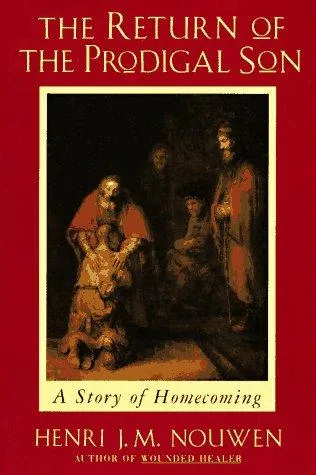
The Return of the Prodigal Son
 74
74

The Return of the Prodigal Son
Nouwen’s examination of Rembrandt’s painting, *The Return of the Prodigal Son*, offers a poignant meditation on unconditional love. He skillfully translates the visual drama of the 1669 artwork into a profound spiritual narrative. His strength lies in bridging the gap between the biblical parable and lived experience, particularly his candid exploration of his own feelings of brokenness and longing. The book’s limitation, however, is its occasional reliance on a somewhat generalized Christian framework, which might leave readers outside that specific tradition seeking deeper cross-cultural or philosophical connections. The passage where Nouwen identifies with the elder son, feeling resentful of grace, is particularly powerful in its honesty. Ultimately, it’s a deeply personal spiritual reflection that invites introspection.
📝 Description
74
Henri Nouwen's 1992 book uses Rembrandt's painting to explore divine love.
Henri J. M. Nouwen's 1992 book, *The Return of the Prodigal Son*, uses Rembrandt's 1669 painting as a lens to examine the parable of the prodigal son. Nouwen treats the biblical story not merely as a narrative but as a personal allegory for human existence and our connection to the Divine. He unpacks the painting's figures, relating them to God's unconditional love, human wandering, and the struggle to accept that love.
The work is suited for those engaged in contemplative spirituality, particularly those grappling with feelings of inadequacy or estrangement. It also speaks to readers seeking a deeper grasp of unconditional love and theological reflection that embraces personal vulnerability and artistic interpretation. Readers interested in the confluence of art, psychology, and faith will find resonance in Nouwen's reflections.
Published in 1992, *The Return of the Prodigal Son* emerges from a tradition of Christian mysticism that finds spiritual truth through contemplation of art and scripture. Nouwen, a Catholic priest, draws from his academic background and personal spiritual experiences to interpret Rembrandt's painting. This approach aligns with contemplative practices that use external forms, like visual art, as a means to access inner spiritual realities and understand God's relationship with humanity, particularly concepts of grace and redemption.
💡 Why Read This Book?
• Gain insight into the concept of the 'beloved child' as articulated through Nouwen's personal reflections, offering a unique perspective on inherent worthiness beyond performance. • Understand the allegorical significance of Rembrandt’s 1669 painting, *The Return of the Prodigal Son*, and how its visual elements illuminate core spiritual themes. • Explore the parable of the prodigal son through Nouwen's vulnerable lens, learning to approach themes of forgiveness and reconciliation with a more compassionate self-understanding.
⭐ Reader Reviews
Honest opinions from readers who have explored this book.
❓ Frequently Asked Questions
What is the main theme of Henri Nouwen's The Return of the Prodigal Son?
The central theme is unconditional love and forgiveness, explored through the lens of the biblical parable and Rembrandt's 1669 painting. Nouwen focuses on our identity as beloved children of God, regardless of our actions.
When was The Return of the Prodigal Son by Henri Nouwen first published?
The book was first published in 1992, near the end of Henri Nouwen's life, allowing him to synthesize his theological insights and personal spiritual journey.
How does Rembrandt's painting relate to Nouwen's book?
Rembrandt's 1669 painting serves as the primary visual and symbolic inspiration. Nouwen uses the figures and their interactions in the artwork to illustrate the parable's spiritual dimensions.
What does Nouwen mean by 'the beloved child'?
Nouwen uses 'the beloved child' to describe our fundamental identity in God's eyes – one of inherent worth and unconditional acceptance, separate from our achievements or perceived failings.
Is this book only for Christians?
While rooted in Christian tradition and the parable, the book's themes of love, forgiveness, and self-acceptance are universal and can resonate with individuals of various spiritual or philosophical backgrounds.
What is the significance of the elder son in Nouwen's interpretation?
Nouwen identifies with the elder son's feelings of resentment and self-righteousness, using this character to explore the difficulty many experience in truly accepting grace and love.
🔮 Key Themes & Symbolism
The Beloved Child
This theme posits that our core identity is that of a beloved child, an unconditional affirmation of worth that precedes any action or achievement. Nouwen argues that recognizing this inherent belovedness is crucial for spiritual wholeness. He contrasts this with feelings of orphanhood or unworthiness, suggesting that embracing our status as beloved is the path to true freedom and reconciliation with the Divine and ourselves.
Forgiveness and Reconciliation
Central to the book is the dynamic of forgiveness, both receiving and extending it. Nouwen explores how the parable and Rembrandt's depiction of the father’s embrace illustrate God’s boundless capacity for forgiveness. Reconciliation is presented not merely as an act, but as a state of being restored to wholeness, where past transgressions do not define one's present or future relationship with the Divine.
The Elder Son's Resentment
Nouwen devotes significant attention to the often-overlooked elder son, interpreting his anger and resentment as a barrier to experiencing the father’s love. This aspect examines the psychological and spiritual challenges of jealousy, self-importance, and the difficulty of embracing grace when one feels they have always followed the rules. It highlights the spiritual danger of a performance-based relationship with the Divine.
Art as Spiritual Catalyst
The book functions as an extended meditation on Rembrandt's 1669 masterpiece. Nouwen demonstrates how engaging deeply with art can serve as a powerful conduit for spiritual insight. He uses the visual elements of the painting—the light, the gestures, the expressions—to unlock theological truths and personal reflections, showing how aesthetic contemplation can lead to profound inner transformation.
💬 Memorable Quotes
Direct passages from the work, attributed to the author.
“When we are able to recognize that we are loved, we are able to love.”
— This suggests a direct link between self-acceptance and the capacity for outward love. Nouwen implies that understanding our own belovedness is the prerequisite for extending genuine compassion to others.
“The most painful experience that we can have is the experience of feeling orphaned.”
— This highlights the profound human need for connection and belonging. Nouwen frames the spiritual life as a journey away from feelings of isolation and towards a sense of divine parentage.
“The elder son’s anger was not directed only at his father but also at his brother.”
— This interpretation points to the destructive nature of resentment, suggesting it poisons relationships not just with the perceived offender but also with those who are seen as favored.
“When we are broken, we can be healed. When we are wounded, we can be loved.”
— Nouwen presents vulnerability not as a weakness, but as an opening for healing and divine love. It suggests that acknowledging our brokenness is the first step toward embracing compassion.
💡 Key Ideas
Editorial paraphrase of the work's core concepts — not direct quotes.
The father’s response is one of overwhelming love and forgiveness.
This summarizes the core message of the parable and the father’s role as representing divine grace. It emphasizes the abundance of God's mercy, available to all who return.
🌙 Esoteric Significance
Tradition
While primarily rooted in Christian theology, Nouwen's work draws upon universal spiritual principles that resonate with esoteric traditions. His emphasis on inner transformation, the recognition of divine immanence within the self (the 'beloved child'), and the symbolic interpretation of art aligns with contemplative practices found in Mysticism across various lineages, including Christian, Sufi, and even certain interpretations of Kabbalah focusing on divine love.
Symbolism
The central symbol is Rembrandt's depiction of the father's hands, representing divine embrace and unconditional acceptance. The prodigal son’s worn clothing symbolizes the state of spiritual poverty and alienation, while the younger son's returning posture signifies humility and readiness to receive. The elder son’s rigid stance embodies spiritual pride and resistance to grace, illustrating the internal barriers to experiencing divine love.
Modern Relevance
Nouwen's exploration of self-worth, forgiveness, and the journey from alienation to belonging remains highly relevant. Contemporary spiritual seekers, therapists, and artists continue to draw inspiration from his ability to translate complex theological concepts into accessible, personal narratives. His work informs modern approaches to mindfulness, self-compassion, and the integration of psychological well-being with spiritual growth, finding echoes in therapeutic modalities and contemplative communities.
👥 Who Should Read This Book
• Individuals seeking to deepen their understanding of unconditional love and forgiveness, particularly those feeling estranged from their spiritual path or struggling with self-judgment. • Art enthusiasts and students of religious iconography interested in how visual art can serve as a powerful medium for spiritual reflection and theological exploration. • Readers grappling with feelings of inadequacy or resentment, looking for a compassionate guide to understanding their own emotional landscape through a spiritual lens.
📜 Historical Context
Henri J. M. Nouwen’s *The Return of the Prodigal Son*, published in 1992, emerged during a period of significant introspection within Christian spirituality. Nouwen, a Dutch Catholic priest and professor, was already a widely respected author whose work often synthesized theological depth with psychological insight. The book’s contemplative approach and focus on personal spiritual experience stood in contrast to some of the more polemical theological debates of the late 20th century. While not directly engaging with specific rival schools of thought in the text itself, Nouwen’s work implicitly offered a path toward spiritual integration for those grappling with modern alienation, a theme also explored by existentialist thinkers, though Nouwen’s response was rooted in faith rather than secular philosophy. The book resonated broadly within Catholic and Protestant circles, becoming a key text for spiritual directors and individuals seeking personal renewal.
📔 Journal Prompts
The father's unconditional embrace: reflecting on the nature of being truly loved.
Identifying with the elder son: examining personal experiences of resentment or self-righteousness.
The symbolic language of Rembrandt's painting: journaling observations about the hands and the figures.
The journey from orphanhood to belovedness: mapping personal shifts in self-perception.
The parable's resonance today: considering how its themes apply to contemporary relationships and societal issues.
🗂️ Glossary
Prodigal Son
Refers to the younger son in Jesus' parable who squanders his inheritance and returns home, symbolizing a sinner who repents and is welcomed back by God.
Beloved Child
Nouwen's concept representing the inherent identity of every person as unconditionally loved and valued by God, irrespective of their actions or perceived worth.
Elder Son
In the parable, the elder son represents those who feel they have obeyed and served faithfully but struggle with resentment towards others receiving grace, symbolizing spiritual pride and self-justification.
The Father
Represents God in the parable, characterized by boundless love, forgiveness, and a welcoming spirit towards those who return, regardless of their past.
Orphanhood
A state of feeling disconnected, unloved, or spiritually alone, contrasted with the sense of belonging and divine parentage that comes from recognizing oneself as a beloved child.
Spiritual Exile
A condition of being separated from one's true spiritual home or identity, often due to sin, alienation, or a lack of self-understanding.
Rembrandt's Painting
Refers to Rembrandt van Rijn's 1669 oil painting, 'The Return of the Prodigal Son,' which serves as the central visual and thematic inspiration for Nouwen's book.
🔮 Readers Also Liked
Browse all →









More by Henri J. M. Nouwen
All books →





More Free Spiritual Development Books
View all →