Ghosts
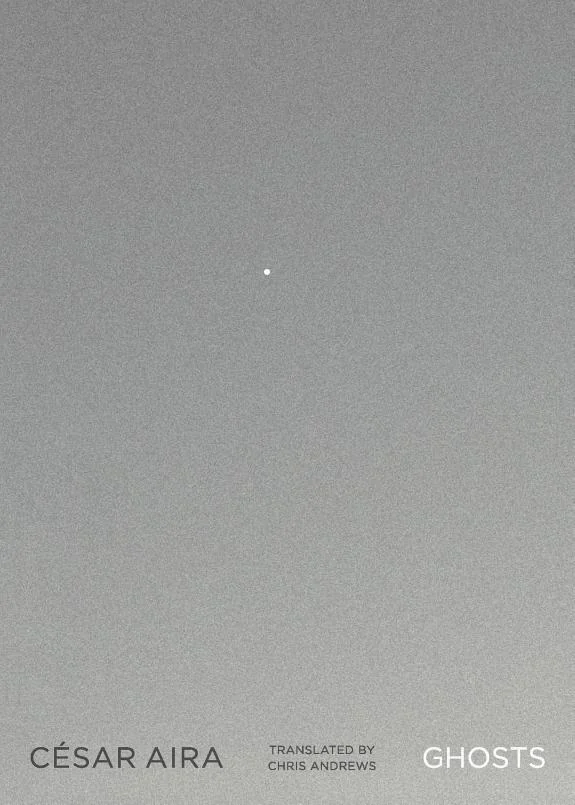
 83
83

Ghosts
César Aira’s “Ghosts” presents a disquieting scenario where spectral apparitions are less a source of terror and more an atmospheric constant. The premise, an immigrant family squatting on a haunted construction site of a luxury condo, is immediately intriguing. Aira’s strength lies in his understated, almost matter-of-fact delivery of the supernatural. The ghosts aren’t dramatic entities; they are simply *there*, a detail that lends the work a unique, unnerving quality. The focus on a teenage girl’s intense curiosity about these entities serves as the narrative’s engine, raising the stakes as her mother perceives a genuine threat. A potential limitation, however, is the novella’s brevity, which leaves some of the thematic threads, particularly the socio-economic commentary, feeling somewhat underdeveloped. The chilling realization of the daughter's peril, while impactful, arrives swiftly. Aira’s “Ghosts” offers a peculiar, potent glimpse into the spectral underbelly of urban development, a compact yet memorable work.
📝 Description
83
César Aira's 2003 novella "Ghosts" presents spectral presences as ordinary inhabitants of a construction site.
In César Aira's 2003 novella "Ghosts," originally published in Spanish as "Las Mellizas," an immigrant family occupies an unfinished luxury condominium site. This site is not just incomplete; it is actively haunted. The spectral presence is a known quantity, a shared reality for the workers, their families, and their children, who observe the ghosts alongside their everyday lives. This narrative blends the mundane with the spectral, integrating the supernatural into ordinary existence without extensive explanation. The work touches on themes of class, immigration, and the anxieties surrounding modern urban development. Aira's approach uses the spectral to refract these societal issues rather than offering direct commentary. Readers who prefer psychological depth and atmospheric unease over traditional scares will find this novella distinctive. The ghosts function not only as supernatural entities but also as metaphors for the lingering past, social displacement, and the psychological effects of economic disparity.
Published in 2003, "Ghosts" emerged from a period of experimental literary production in Latin America. While not directly tied to the "Latin American Boom," Aira forged a distinct path with a more contemporary, unconventional approach to magical realism. His work often sidesteps overt social critique, instead employing supernatural or uncanny elements to reflect societal conditions. The novella's spectral figures can be seen as manifestations of historical or social burdens that persist, a concept that resonates with certain esoteric traditions that view the material world as layered with unseen forces or psychological echoes. Aira uses these elements to refract themes of gentrification and displacement, placing the spectral at the heart of everyday anxieties.
💡 Why Read This Book?
• Learn about the unique application of magical realism to themes of immigration and urban development, as seen in the immigrant family's occupation of the haunted construction site, a scenario not found in traditional literature. • Experience Aira's distinctive narrative style, where the supernatural, as depicted by the literal presence of ghosts, is treated with an almost mundane acceptance, challenging conventional ghost story tropes. • Understand the specific dynamic of adolescent curiosity pushing boundaries, particularly through the teenage girl's intense focus on the ghosts, highlighting a perilous intersection of youthful inquiry and spectral reality.
⭐ Reader Reviews
Honest opinions from readers who have explored this book.
❓ Frequently Asked Questions
What is the original publication year of César Aira's 'Ghosts'?
The novel 'Ghosts' by César Aira was originally published in Spanish as 'Las Mellizas' in 2003. The 2008 date often associated with it refers to specific translations or editions.
What is the central premise of César Aira's 'Ghosts'?
The book follows an immigrant family who squats on the construction site of a luxury condominium. This site is not only unfinished but also actively haunted, with the ghosts being a common sight for everyone there.
How does 'Ghosts' differ from typical ghost stories?
Unlike conventional ghost stories, 'Ghosts' presents the spectral apparitions as ordinary presences, integrated into the daily lives of the characters rather than being a source of overt horror or mystery.
What role does the teenage girl play in the narrative?
A teenage girl becomes particularly fascinated by the ghosts. Her intense curiosity about their nature drives the plot forward and creates a sense of mounting tension and potential danger for her.
What themes are explored in César Aira's 'Ghosts'?
The novella explores themes of immigration, displacement, class disparity, and the psychological impact of urban development, using the literal presence of ghosts as a unique narrative device.
Is 'Ghosts' a long novel?
'Ghosts' is generally considered a novella, meaning it is a short, compact work, allowing for a focused exploration of its themes and narrative.
🔮 Key Themes & Symbolism
Spectral Coexistence
The narrative presents ghosts not as terrifying specters but as ambient presences. They inhabit the same space as the immigrant workers and their families on the unfinished condominium site. This unusual integration challenges the reader's expectations of supernatural encounters, framing the spectral as an accepted, if peculiar, aspect of their existence. It suggests that the 'haunting' might be an externalization of deeper societal or psychological displacements.
Adolescent Obsession
The novella highlights the intense curiosity of a teenage girl regarding the ghosts. Her fixation becomes a central point, escalating the perceived stakes of the narrative. This focus on youthful inquiry into the unknown, especially concerning the spectral, implies a dangerous allure and a potential for profound, perhaps perilous, discovery.
Immigration and Displacement
The setting of an immigrant family squatting on a construction site for luxury housing inherently points to themes of economic disparity and displacement. The ghosts can be interpreted as lingering remnants of past events or societal shadows that haunt the present, mirroring the precarious existence of the characters themselves in a rapidly changing urban landscape.
The Mundane Supernatural
Aira's distinctive approach is to treat the supernatural with remarkable nonchalance. The ghosts are simply part of the environment, witnessed by all but primarily investigated by the young protagonist. This normalization of the spectral blurs the line between reality and fantasy, creating an unsettling yet compelling atmosphere.
💬 Memorable Quotes
Direct passages from the work, attributed to the author.
“One teenage girl becomes the most curious.”
— This highlights the narrative's pivot towards individual fascination within a collective experience. Her singular focus on the ghosts suggests a deeper psychological engagement or a specific destiny tied to the spectral.
“Her questions about the ghosts get so intense that her mother in a chilling split-second realizes her daughter's life hangs in the balance.”
— This captures the escalating tension and the mother's sudden, stark perception of danger. It underscores that the girl's pursuit of knowledge about the supernatural carries real, potentially fatal, consequences.
“The construction site of a luxury condominium building.”
— This phrase grounds the supernatural elements in a contemporary, socio-economic context. The juxtaposition of spectral hauntings with the development of high-end real estate creates a potent commentary on class and urban change.
“The ghosts, who literally hang around the place.”
— This emphasizes the physical, almost static, nature of the apparitions. They are not actively malevolent or spectral in a traditional sense, but rather persistent, passive occupants of the space.
💡 Key Ideas
Editorial paraphrase of the work's core concepts — not direct quotes.
All the workmen and their wives and children see the ghosts, who literally hang around the place.
This line establishes the pervasive and unremarkable nature of the spectral presence. It's not a hidden phenomenon but a shared reality, making the setting itself a unique confluence of the material and immaterial.
🌙 Esoteric Significance
Tradition
While not explicitly tied to a single esoteric lineage, "Ghosts" engages with the archetype of the spectral and the concept of place-bound hauntings, themes that resonate across various folk traditions and occult studies. It touches upon a form of 'haunted geography,' where residual energies or psychic imprints linger in physical locations. This aligns loosely with concepts found in some forms of animism and Western esotericism that explore the energetic field of the world.
Symbolism
The construction site itself functions as a potent symbol, representing unfinished business, societal ambition, and the displacement of existing realities by new development. The ghosts can symbolize the repressed or ignored aspects of a society—the labor, the history, the displaced—that refuse to vanish. The teenage girl's intense curiosity represents the seeker's drive to confront the unseen, potentially leading to dangerous self-discovery.
Modern Relevance
Contemporary writers exploring urban alienation, gentrification, and the psychological residue of economic systems can find resonance in Aira's work. Thinkers in speculative fiction and those examining the porosity between the material and immaterial worlds might draw inspiration from his matter-of-fact integration of the supernatural. The novella's exploration of how marginalized communities coexist with unseen forces remains pertinent in discussions of social justice and cultural memory.
👥 Who Should Read This Book
• Readers interested in contemporary magical realism who seek narratives that integrate the supernatural into everyday life without extensive explanation. • Students of comparative literature examining how themes of immigration, class, and urban development are explored through unconventional narrative devices. • Fans of César Aira's unique, concise, and speculative fiction style, looking for a compact yet evocative work that showcases his distinctive approach to reality.
📜 Historical Context
César Aira's "Ghosts" (originally "Las Mellizas," 2003) emerged in a period when Latin American literature continued to explore magical realism but with increasingly experimental and individualistic approaches. Unlike the more overtly political or epic narratives of the "Boom" generation, Aira developed a distinct style characterized by brevity, speculative leaps, and a focus on the absurdities of everyday life. His work often sidesteps direct engagement with specific intellectual movements, preferring a unique, self-contained surrealism. The early 2000s saw a growing global discourse on gentrification and the precariousness of immigrant labor, themes subtly reflected in the novel's setting. While Aira hasn't been associated with specific "schools" of thought in the way García Márquez was with magical realism, his prolific output and unique voice have influenced contemporary writers. The novella did not face significant censorship or controversy but rather joined a broad spectrum of experimental fiction being produced internationally, standing apart from more mainstream literary trends.
📔 Journal Prompts
The ghosts' literal presence on the construction site.
The teenage girl's intense curiosity about the spectral inhabitants.
The mother's chilling realization of danger.
The immigrant family's squatting on luxury condominium land.
The shared experience of witnessing ghosts among the workers and their families.
🗂️ Glossary
Magical Realism
A literary genre where fantastical or mythical elements are woven into otherwise realistic narratives, presented with a matter-of-fact tone.
Novella
A work of fiction that is shorter than a novel but longer than a short story, typically focusing on a single plot or theme.
Gentrification
The process of renovating and improving a house or district so that it conforms to middle-class taste, often leading to the displacement of existing, lower-income residents.
Spectral
Relating to or resembling a ghost; ghostly or phantom-like.
Squatting
The act of occupying an abandoned or unoccupied building or land without the permission of the owner.
Archetype
A recurring symbol or motif in literature, art, or mythology that represents universal patterns of human nature or experience.
Haunted Geography
The concept of locations retaining residual energies, memories, or psychic imprints that manifest as phenomena perceived by inhabitants.
This book appears in 1 collection
🔮 Readers Also Liked
Browse all →








From the “Haunted Places” Collection
View all →







More Free Occult Philosophy Books
View all →