The Real Halloween
 77
77

The Real Halloween
Sheena Morgan's 'The Real Halloween' (2002) provides a welcome counterpoint to the saccharine, commercialized image of the holiday. The strength of the book lies in its meticulous tracing of the festival's lineage, drawing connections between ancient Celtic observances like Samhain and its modern incarnation. Morgan avoids speculative leaps, grounding her analysis in historical and anthropological evidence. A notable passage details the significance of the thinning veil between worlds during this period, a concept explored by many folklorists. However, the work occasionally suffers from a dryness that might deter readers seeking a more overtly mystical or experiential account. While factual, it sometimes lacks the evocative language needed to fully convey the potent atmosphere of the original festival. Nevertheless, it serves as an essential primer for understanding Halloween's complex heritage.
📝 Description
77
Sheena Morgan's 2002 book, The Real Halloween, examines the autumnal festival beyond modern commercialization.
Published in 2002, The Real Halloween by Sheena Morgan provides a scholarly look at the autumn festival, moving past contemporary commercial interpretations. The book traces Halloween's origins and changing importance through historical and folkloric traditions. Morgan situates the holiday within a wider history of harvest festivals and old observances that signaled the start of the year's darker half.
It considers how these old practices were changed and understood in different times, from pre-Christian Europe to their appearance in the United States. Morgan's study breaks down ideas like the liminal nature of the Samhain period, the meaning of spirits and the deceased, and the farming cycles that shaped early events. The book also notes how these themes have been made secular and commercial, even as older meanings continue beneath the surface.
This work fits within the study of Western esotericism by examining the deep historical and folkloric roots of a widely celebrated holiday. It connects modern Halloween practices to older pagan and folk traditions, particularly those related to the turning of the seasons and the veil between worlds. The book approaches these subjects with a scholarly, anthropological lens, shedding light on the persistent symbolic meanings that inform cultural observances.
💡 Why Read This Book?
• Gain a historical understanding of Samhain, the ancient Celtic festival that predates modern Halloween, by exploring its specific rituals and seasonal significance as detailed in the book. • Learn about the concept of liminality and the 'thinning of the veil' between worlds, a key theme Morgan connects to the ancient festival's focus on spirits and ancestors. • Understand how the agricultural calendar and harvest cycles directly influenced the early observances of Halloween, providing a concrete link between nature and celebration.
⭐ Reader Reviews
Honest opinions from readers who have explored this book.
❓ Frequently Asked Questions
What is the primary focus of 'The Real Halloween'?
The book's primary focus is to explore the historical and folkloric roots of Halloween, moving beyond its modern commercialized aspects to examine its origins in ancient festivals like Samhain.
When was 'The Real Halloween' first published?
'The Real Halloween' by Sheena Morgan was first published in 2002, offering a scholarly perspective on the holiday's evolution.
Does the book discuss the Celtic festival of Samhain?
Yes, a significant portion of the book is dedicated to Samhain, examining its role as a precursor to modern Halloween and its associated rituals and beliefs.
Who is the author of 'The Real Halloween'?
The author is Sheena Morgan, whose work in this 2002 publication delves into the cultural and historical layers of the Halloween festival.
Is 'The Real Halloween' suitable for those interested in esoteric traditions?
Yes, the book appeals to those interested in esoteric traditions due to its exploration of ancient beliefs, folklore, and the symbolic meanings associated with the turning of the year.
What distinguishes 'The Real Halloween' from typical modern accounts of the holiday?
It distinguishes itself by grounding the discussion in historical research and anthropological context, rather than focusing on contemporary practices or commercial aspects.
🔮 Key Themes & Symbolism
Ancient Observances and Samhain
Morgan meticulously reconstructs the practices and beliefs surrounding Samhain, the ancient Celtic festival marking the end of summer and the harvest. This section details the seasonal transition into winter, the agrarian cycles, and the significance of the period as a liminal time. It explores how Samhain was not merely a date but a crucial turning point, deeply interwoven with the community's relationship to the land and the supernatural.
The Liminal and the Spirit World
A central concept explored is the idea of the 'thinning of the veil' between the world of the living and the area of spirits, a notion strongly associated with Samhain. The book examines the ancient beliefs regarding the return of ancestral spirits and other entities, and the rituals developed to appease, ward off, or commune with them. This theme connects the festival to ancient concepts of death, memory, and the ongoing relationship with the departed.
Secularization and Modern Manifestations
The work contrasts the ancient significance of Halloween with its evolution into a modern, largely secularized celebration. Morgan analyzes how elements of older traditions, such as costumes and the symbolic exchange of goods, have been transformed through centuries of cultural shifts. The book addresses the impact of commercialization on the holiday's deeper meanings, while suggesting that traces of its ancient purpose persist.
Folklore and Cultural Memory
Morgan positions Halloween within the broader scope of folklore studies, highlighting how the holiday serves as a repository of cultural memory and collective anxieties. The book investigates the transmission of customs and stories across generations, examining how the festival retains elements of its past even as its outward form changes. This theme underscores the enduring power of ritual and myth in shaping societal understanding.
💬 Memorable Quotes
Direct passages from the work, attributed to the author.
“Samhain marked the end of summer and the harvest, heralding the onset of winter.”
— This highlights the fundamental connection of the festival to the agrarian calendar and the cyclical nature of the year, emphasizing its role as a significant seasonal marker.
“The period was often seen as a time when the boundaries between the living and the dead became permeable.”
— This interpretation points to the core esoteric concept of liminality, where the ordinary rules of reality are suspended, allowing for interaction with unseen forces or spirits.
“Ancient practices involved rituals aimed at appeasing or warding off spirits.”
— This underscores the practical, often protective, function of early Halloween traditions, reflecting a deep-seated human concern with working through the spiritual landscape.
“Modern Halloween celebrations retain traces of these older customs.”
— This suggests that contemporary traditions, though perhaps secularized, carry latent meanings and historical connections to their more ancient, potent origins.
“The festival's significance is tied to the agricultural year and the transition into darkness.”
— This emphasizes the primal connection between human culture, the natural world, and the symbolic meanings derived from celestial and seasonal movements.
🌙 Esoteric Significance
Tradition
While not strictly adhering to a single esoteric lineage like Hermeticism or Kabbalah, 'The Real Halloween' draws heavily from the study of ancient European paganism, Celtic traditions, and folklore. It speaks to animistic and shamanistic perspectives that emphasize the interconnectedness of the natural world and the spirit realm. The work aligns with a broader Neopagan and occult interest in reclaiming and understanding pre-Christian European spiritual practices.
Symbolism
The book explores the potent symbolism inherent in the autumnal festival. Key symbols include the harvest itself, representing the culmination of effort and the bounty of the earth, but also the coming scarcity of winter. The 'thinning of the veil' between worlds is a crucial motif, symbolizing a period of heightened spiritual awareness and interaction. Costumes and masks, while secularized today, are examined for their ancient roots in disguise, ritual, and embodying spirits or deities.
Modern Relevance
Contemporary practitioners of Neopaganism and Wicca often reference the historical roots of festivals like Samhain, as explored by Morgan, to inform their modern observances. The book's focus on liminality and the spirit world also finds relevance in modern psychological and esoteric explorations of altered states of consciousness and encounters with the archetypal.
👥 Who Should Read This Book
• Students of Western Esotericism: Individuals seeking to understand the historical and folkloric underpinnings of festivals often incorporated into esoteric practices will find valuable context. • Folklore and Mythology Enthusiasts: Readers interested in the anthropological evolution of cultural celebrations and the transition from ancient ritual to modern holiday will appreciate the detailed analysis. • Those Questioning Modern Halloween: Anyone seeking to move beyond the commercialized aspects of Halloween to grasp its deeper historical and symbolic significance will benefit from Morgan's scholarly approach.
📜 Historical Context
Published in 2002, Sheena Morgan's 'The Real Halloween' emerged during a period of renewed academic and popular interest in the historical roots of holidays and folk traditions. The late 20th and early 21st centuries saw a surge in comparative mythology and folklore studies, influenced by scholars like Mircea Eliade and his work on the sacred and the profane. Morgan's book engages with this intellectual current by examining Halloween not as a modern invention but as a descendant of ancient European festivals, particularly the Celtic Samhain. This contrasted with more simplistic or purely commercialized interpretations prevalent at the time. While not directly engaging with a specific contemporary rival text, its scholarly approach implicitly challenged more superficial accounts and appealed to readers seeking depth, aligning with the broader academic trend of re-examining cultural practices through historical and anthropological lenses.
📔 Journal Prompts
The concept of the 'thinning of the veil' during Samhain.
Reflect on the symbolism of the harvest in relation to the turning of the year.
Analyze how ancient protective rituals for spirits might manifest in modern Halloween customs.
Consider the transition from agrarian cycles to modern secular holidays.
Explore the cultural memory embedded in enduring festival traditions.
🗂️ Glossary
Samhain
An ancient Celtic festival marking the end of summer and the harvest and the beginning of winter, traditionally observed around November 1st. It is considered a precursor to modern Halloween.
Liminality
A state of being in between or at a threshold, particularly referring to transitional periods or spaces where ordinary rules and boundaries may not apply, such as the transition between seasons or between the worlds of the living and the dead.
Folkloric
Relating to the traditions, customs, beliefs, and stories that are passed down within a community or culture, often orally.
Agrarian
Concerning the cultivation of land or the structure of agrarian societies; related to farming and agricultural cycles.
Esoteric
Intended for or likely to be understood by only a small number of people with a specialized knowledge or interest; relating to mystical or occult beliefs.
Secularization
The process whereby religious influence or phenomena are removed from or diminished in public life and cultural practices.
Archetype
In Jungian psychology, a universally understood symbol, concept, or pattern of thought, derived from the collective unconscious and recurring in mythology and folklore.
🔮 Readers Also Liked
Browse all →









More by Sheena Morgan
All books →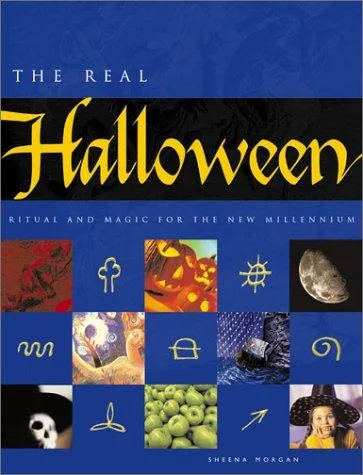

More Free Divination & Tarot Books
View all →