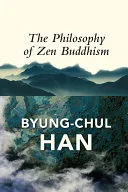
The Philosophy of Zen Buddhism
 74
74

The Philosophy of Zen Buddhism
Byung-Chul Han’s "The Philosophy of Zen Buddhism" offers a rigorous, albeit brief, philosophical dissection of a tradition often shrouded in mystique. Han excels at articulating Zen's inherent tension between its anti-conceptual, experiential core and the possibility of reasoned discourse. He skillfully navigates the paradox of philosophizing about a path that explicitly distrusts philosophical scaffolding, a strength evident when he discusses the concept of *mushin* (no-mind). However, the book's brevity, while allowing for sharp focus, sometimes leaves the reader yearning for deeper engagement with the historical nuances or comparative aspects of Zen's development across different schools. Han's critique of language, while central to Zen, could have been more expansively explored in relation to specific koans. Ultimately, this work serves as a precise, intellectually stimulating primer for those ready to engage with Zen's philosophical architecture.
📝 Description
74
Byung-Chul Han's 2021 book examines Zen Buddhism's anti-discursive philosophy.
Byung-Chul Han's "The Philosophy of Zen Buddhism" addresses a spiritual tradition often defined by its silence. Originating in China as a Mahāyāna Buddhist school, Zen prioritizes direct experience via meditation (zazen). It regards language and conceptual thought with suspicion, leading to koans and statements that resist easy interpretation. Han's work seeks to connect Zen's resistance to discourse with philosophical investigation, uncovering its core intellectual structures.
This study is for those interested in Buddhist philosophy or comparative religion who have encountered Zen's distinct path to enlightenment and desire a more organized grasp of its metaphysical foundations. Readers concerned with Western rationalism's limitations, consciousness, and the boundaries of language will find subjects for reflection. It is not a manual for meditation but a scholarly analysis.
Han traces Zen Buddhism's historical path from India through China, where it incorporated Taoist elements, and its later movement to Japan and the West. He highlights Zen's opposition to scholasticism, which developed as a significant contrast to the increasingly complex philosophical systems of other Buddhist groups during Zen's early centuries.
This book places Zen Buddhism within the broader context of esoteric traditions that emphasize direct experience over dogma. Like other schools that value intuition and sudden insight, Zen developed methods, such as zazen and koans, to bypass conventional intellectual frameworks. Han's analysis connects this practice to philosophical inquiry, showing how Zen's seemingly anti-intellectual stance possesses its own rigorous conceptual underpinnings, challenging the perceived dichotomy between mystical experience and reasoned thought.
💡 Why Read This Book?
• Gain a philosophical framework for understanding Zen's skepticism towards language, a key departure from other Buddhist schools, as explored when discussing *mushin*. • Comprehend the concept of *sunyata* (emptiness) not as void, but as the interconnectedness of phenomena, challenging dualistic perception. • Appreciate the historical development of Zen Buddhism from its Chinese origins, understanding its unique trajectory compared to other Mahāyāna traditions.
⭐ Reader Reviews
Honest opinions from readers who have explored this book.
❓ Frequently Asked Questions
What is the primary difference between Zen Buddhism and other forms of Buddhism as presented by Byung-Chul Han?
Han highlights Zen's distinct skepticism towards language and conceptual thought. Unlike more scholastic Buddhist traditions, Zen prioritizes direct meditative experience and intuitive understanding, often using enigmatic sayings (koans) to bypass intellectualization.
What does Byung-Chul Han mean by Zen's 'hostility towards theory'?
This refers to Zen's emphasis on experiential realization over abstract doctrine. Han explains that while Zen distrusts theoretical frameworks as ultimate truths, it doesn't preclude philosophical reflection on its practices and insights, as demonstrated in his own work.
When was Byung-Chul Han's 'The Philosophy of Zen Buddhism' first published?
The book was first published on August 29, 2022, making it a contemporary philosophical engagement with ancient traditions.
What is the concept of 'no-mind' (mushin) in Zen Buddhism according to this book?
Mushin, as discussed by Han, represents a state of consciousness free from ego-driven thoughts and mental distractions. It allows for spontaneous, unhindered action and a direct engagement with reality.
How does Han's work relate to the historical development of Zen in China?
Han traces Zen's origins in China, noting its absorption of Taoist elements and its distinct evolution from Indian Buddhism. This context is crucial for understanding its unique anti-discursive stance.
Is this book suitable for someone new to Buddhism?
While accessible, the book is more a philosophical analysis than a beginner's guide to Buddhist practices. It's best suited for those with some prior interest in Buddhist philosophy or contemplative traditions.
🔮 Key Themes & Symbolism
Critique of Language
Han emphasizes Zen's inherent suspicion of language and conceptual thought as vehicles for ultimate truth. This theme explores how Zen employs enigmatic sayings and koans not as puzzles to be solved intellectually, but as tools to shock the mind out of discursive habits. The work examines how this stance challenges Western philosophical traditions reliant on linguistic precision, positing that true understanding arises from direct, non-verbal apprehension.
The Nature of 'No-Mind' (Mushin)
This section explores the Zen concept of *mushin*, often translated as 'no-mind'. Han elucidates this state not as an absence of thought, but as freedom from ego-centric, discursive thinking. It's a state of pure presence and spontaneous action, where the practitioner responds directly to situations without the filter of preconceived notions or self-awareness. The book explores its implications for ethical action and perception.
Emptiness (Sunyata) Beyond Nihilism
Han clarifies the Mahāyāna Buddhist concept of *sunyata*, or emptiness, as presented within the Zen context. It is presented not as a nihilistic void, but as the interdependent and impermanent nature of all phenomena. Understanding emptiness dismantles the illusion of a fixed, independent self and the solid reality of objects, fostering a sense of interconnectedness and liberating one from attachment.
Meditation as Philosophical Practice
The book highlights *zazen* (seated meditation) as Zen's primary method for philosophical inquiry. Han explains how the practice of sustained, mindful attention cultivates insights into the nature of consciousness, reality, and the self. It is through this disciplined experiential investigation, rather than abstract theorizing, that Zen seeks its profound understanding of existence.
💬 Memorable Quotes
Direct passages from the work, attributed to the author.
“Zen Buddhist sayings are so enigmatic and succinct.”
— This observation by Han points to the deliberate use of brevity and paradox in Zen teachings. It suggests these concise statements are designed to circumvent rational analysis and provoke a more direct, intuitive understanding in the practitioner.
“Zen Buddhism... is strongly focused on meditation.”
— This highlights the centrality of *zazen* (seated meditation) in the Zen tradition. Han emphasizes that meditation is not merely a preparatory practice but the core method through which Zen's philosophical insights are realized and embodied.
“skeptical towards language and distrustful of conceptual thought”
— This phrase captures Zen's unique epistemological stance. Han uses it to explain why Zen masters often employ indirect methods, koans, and silence, aiming to lead disciples beyond the limitations of intellectualization towards direct experience.
“it is possible to reflect philosophically on Zen Buddhism”
— This statement addresses the apparent contradiction in studying Zen philosophically. Han asserts that despite Zen's anti-discursive nature, its core principles offer rich ground for philosophical investigation and intellectual exploration.
“unfold the philosophy”
— This phrase describes Han's objective: to reveal the underlying philosophical structure and meaning within Zen Buddhism. It signifies an effort to articulate the rational and metaphysical dimensions of a tradition often perceived solely through its practices.
🌙 Esoteric Significance
Tradition
While Zen Buddhism is a branch of Mahāyāna Buddhism, its emphasis on direct experience, sudden enlightenment, and the dissolution of the ego appeals to certain esoteric currents. It shares with traditions like Advaita Vedanta and some Western mystical paths a focus on non-duality and the realization of an underlying unity beyond phenomenal appearance. Zen's approach, however, is less about union with a divine principle and more about the direct apprehension of reality as it is, stripped of conceptual overlays.
Symbolism
Central to Zen symbolism is the empty circle (*ensō*), often drawn by monks, representing enlightenment, the void, and the universe itself. The koan, a paradoxical question or statement, functions symbolically to break down logical barriers. The practice of *zazen* (seated meditation) itself symbolizes stillness, presence, and the direct confrontation with the self, aiming to reveal the inherent Buddha-nature within.
Modern Relevance
Contemporary thinkers and practitioners in fields ranging from psychology (e.g., mindfulness-based therapies) to art and design draw heavily on Zen principles. Its critique of hyper-productivity and consumerism, as explored by Han, finds new relevance in discussions of digital detox and conscious living. Schools of contemplative practice worldwide continue to adapt Zen's methods for personal development and spiritual inquiry, seeking its mix of rigor and spaciousness.
👥 Who Should Read This Book
• Students of Eastern Philosophy: Those seeking to understand the philosophical underpinnings of Zen Buddhism beyond its meditative practices will find Han's analysis clear. • Comparative Religion Scholars: Readers interested in how different traditions approach concepts like consciousness, reality, and the self will benefit from Zen's unique perspective. • Practitioners of Contemplative Arts: Individuals engaged in meditation, martial arts, or other disciplines emphasizing mind-body integration can gain deeper conceptual clarity.
📜 Historical Context
Byung-Chul Han's "The Philosophy of Zen Buddhism" engages with a tradition that solidified its distinct identity in China during the Tang Dynasty (618-907 CE), notably through figures like Huineng. Zen Buddhism emerged as a potent force, often in dialogue and contrast with established Buddhist schools like Tiantai and Huayan, which emphasized extensive textual study and complex philosophical systems. Han’s work implicitly acknowledges this historical backdrop, where Zen's emphasis on direct experience and its critique of scholasticism offered an alternative path to enlightenment. Its subsequent spread to Japan, where it deeply influenced samurai culture and aesthetics, further cemented its unique position. While Han does not focus on specific reception events, his philosophical analysis implicitly addresses the ongoing intellectual currents that have sought to reconcile Zen's experiential core with rational understanding across centuries.
📔 Journal Prompts
The Zen critique of language: How does your own use of words shape your perception of reality?
Mushin as spontaneous action: Reflect on a moment where an unthinking, direct response proved most effective.
Sunyata and interconnectedness: Consider how the concept of emptiness challenges your sense of individual self.
The paradox of Zen sayings: Analyze a koan's potential to disrupt logical thought processes.
Meditation's role in philosophy: How can direct experience inform abstract reasoning for you?
🗂️ Glossary
Zazen
The practice of seated meditation central to Zen Buddhism. It involves cultivating sustained, mindful attention, often with focus on the breath, to achieve insight into the nature of reality.
Mahāyāna Buddhism
A major branch of Buddhism that originated in India, emphasizing the path of the Bodhisattva—an enlightened being who delays their own nirvana to help all sentient beings achieve enlightenment.
Mushin
A Zen concept translating to 'no-mind' or 'mind without mind'. It describes a state of consciousness free from ego-driven thoughts, allowing for spontaneous and unhindered action.
Sunyata
A core Mahāyāna Buddhist concept, often translated as 'emptiness'. It refers to the interdependent and impermanent nature of all phenomena, challenging notions of inherent existence.
Koan
A paradoxical anecdote or riddle used in Zen Buddhism to provoke doubt, challenge logical reasoning, and ultimately lead to intuitive understanding or enlightenment.
Dukkha
A fundamental concept in Buddhism, often translated as 'suffering', 'dissatisfaction', or 'stress'. It describes the inherent unsatisfactoriness of conditioned existence.
Enlightenment
In Buddhism, the ultimate goal of spiritual practice; a state of profound understanding, wisdom, and liberation from suffering and the cycle of rebirth.