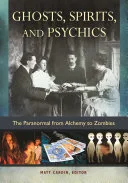
Ghosts, Spirits, and Psychics
 81
81

Ghosts, Spirits, and Psychics
Matt Cardin’s Ghosts, Spirits, and Psychics presents a commendably balanced historical survey of paranormal inquiry. Instead of succumbing to either credulity or outright dismissal, Cardin meticulously documents the ebb and flow of serious investigation into phenomena that have long captivated the public imagination. His strength lies in situating these investigations within their specific historical and intellectual milieus, demonstrating how concepts like spiritualism were not mere fringe curiosities but reflected broader societal shifts and scientific debates of their time. A notable passage details the early 20th-century fascination with ectoplasmic manifestations, showcasing the rigorous, albeit often flawed, methods employed by researchers. The book's limitation, however, is its sheer breadth; while comprehensive, it sometimes feels more like an exhaustive catalog than a deeply analytical exploration of individual cases or theories. Despite this, Cardin succeeds in reframing paranormal studies as a significant, albeit often marginalized, chapter in the history of ideas. It is a valuable resource for understanding the cultural and scientific appetite for the unexplained.
📝 Description
81
Matt Cardin's 2015 book surveys paranormal phenomena from spiritualism to psychic abilities.
This 2015 book examines the history of paranormal beliefs and investigations. It traces how phenomena like spiritualism, telekinesis, and mediumship moved from serious academic interest to popular culture. Cardin looks at the methods used to study these occurrences, from early parapsychology to skeptical critiques, and considers their impact on cultural and philosophical thought. The work acknowledges the recent resurgence of interest in the paranormal, placing it within a broader context of human curiosity about the unseen.
The book is for readers interested in the history of ideas about consciousness and the supernatural. It offers a balanced perspective, appreciating critical thought while remaining open to the subject matter. Those studying cultural history, philosophy of mind, and religious studies will find its overview of historical research particularly useful. Cardin details concepts like ectoplasm and apparitions, and discusses philosophical questions about the survival of consciousness.
This work engages with the long tradition of exploring consciousness beyond the physical body, a theme present in spiritualism, occultism, and parapsychology. It situates these investigations within their historical and intellectual settings, showing how attempts to understand psychic phenomena, survival of death, and altered states of awareness have intersected with scientific and philosophical discourse across different eras. The book maps the shifting societal and academic reception of these pursuits.
💡 Why Read This Book?
• You will learn how the serious study of phenomena like ectoplasm and mediumship was once integrated into scientific discourse, particularly during the late 19th and early 20th centuries, challenging modern perceptions of these topics. • You will gain an understanding of the philosophical debates surrounding consciousness and survival, exploring how thinkers grappled with evidence presented by early parapsychologists and spiritualists. • You will discover the methodologies employed by historical figures in paranormal research, such as the detailed investigations into psychic phenomena documented in the book, providing context for contemporary skepticism and belief.
⭐ Reader Reviews
Honest opinions from readers who have explored this book.
❓ Frequently Asked Questions
What historical periods does Matt Cardin focus on regarding paranormal research?
Cardin's work primarily covers the period from the mid-19th century through the mid-20th century, a time when spiritualism, psychic phenomena, and parapsychology were subjects of significant academic and public interest.
Who were some key figures discussed in Ghosts, Spirits, and Psychics?
The book examines the contributions and controversies surrounding figures like Helena Blavatsky, Arthur Conan Doyle, and various spiritualist mediums, alongside prominent debunkers and researchers of the era.
How does the book address the scientific validity of paranormal claims?
It presents a historical overview of how scientific methods were applied to paranormal claims, detailing both the attempts at validation and the critiques that led to skepticism, without definitively proving or disproving any phenomena.
Is Ghosts, Spirits, and Psychics suitable for beginners in esoteric studies?
Yes, the book provides a solid historical foundation and overview of key concepts, making it accessible for those new to the study of paranormal phenomena and their place in history.
What is the book's perspective on the popular culture interest in ghosts and psychics today?
Cardin contrasts the contemporary pop culture fascination with the historically more rigorous, though often flawed, academic and philosophical engagement with paranormal subjects from previous centuries.
Does the book explore specific types of paranormal phenomena?
Absolutely. It delves into phenomena such as apparitions, telekinesis, mediumship, and alleged communications with the deceased, examining historical accounts and investigations.
🔮 Key Themes & Symbolism
The Scientific Status of the Paranormal
Cardin meticulously traces the historical attempts to legitimize the study of paranormal phenomena within scientific frameworks. This includes examining the methodologies of early parapsychology, the establishment of research societies, and the inherent challenges in verifying subjective experiences or extraordinary claims using empirical methods. The work highlights the tension between the desire for objective proof and the elusive nature of the subjects investigated, showing how scientific paradigms shifted and influenced the acceptance or rejection of paranormal evidence over time.
Spiritualism and Survival of Consciousness
A significant portion of the book addresses the rise and impact of Spiritualism, particularly in the 19th and early 20th centuries. It details the cultural phenomenon of séances, mediumship, and the widespread belief in communication with the dead. Cardin explores how these practices intersected with philosophical questions about the nature of consciousness, the soul, and the possibility of an afterlife, presenting the arguments and counterarguments from believers, skeptics, and researchers of the period.
Cultural Perceptions of the Unseen
Beyond scientific inquiry, the book examines how societal attitudes and cultural narratives shaped the understanding and perception of ghosts, spirits, and psychic abilities. It illustrates how folklore, religious beliefs, and literary representations influenced both popular acceptance and academic discourse surrounding the paranormal. Cardin shows how these phenomena became a lens through which societies grappled with mortality, the unknown, and the limits of human perception.
Debunking and Skepticism
Ghosts, Spirits, and Psychics dedicates attention to the critical voices and skeptical investigations that challenged paranormal claims. It profiles prominent debunkers and analyzes the techniques used to expose fraud or provide naturalistic explanations for alleged supernatural occurrences. This critical perspective is essential for understanding the historical balance of belief and doubt, and how skepticism itself contributed to the evolution of paranormal research methodologies.
💬 Memorable Quotes
Direct passages from the work, attributed to the author.
“The history of paranormal investigation reveals a persistent human drive to understand experiences that lie beyond conventional explanation.”
— This interpretation highlights the enduring nature of curiosity about the unknown, suggesting that the study of ghosts and spirits is not merely a fad but a deep-seated aspect of human inquiry into existence.
“Spiritualism offered solace and a framework for belief in an era marked by rapid social and scientific change.”
— This interpretation emphasizes the psychological and cultural role Spiritualism played, providing comfort and answers to questions about life, death, and the universe during a period of significant upheaval.
“The line between genuine psychic ability and elaborate deception has long been a subject of intense debate.”
— This interpretation underscores the persistent ambiguity surrounding paranormal claims, noting that distinguishing between authentic phenomena and fraud has been a central and often unresolved issue throughout the history of such studies.
💡 Key Ideas
Editorial paraphrase of the work's core concepts — not direct quotes.
Early parapsychology often grappled with the difficulty of obtaining repeatable, objective results for subjective phenomena.
This paraphrased concept points to the core methodological challenge faced by historical researchers: how to apply the rigor of scientific experimentation to experiences that are inherently personal and difficult to quantify.
Skepticism, while essential for critical inquiry, sometimes overlooked the sincerity of subjective experiences reported by individuals.
This paraphrased concept suggests that the pursuit of debunking, while valuable, could occasionally lead to the dismissal of genuine personal testimony or the psychological impact of belief, creating a complex dynamic.
🌙 Esoteric Significance
Tradition
While not strictly adhering to a single lineage, this work engages with themes pertinent to Hermeticism and Theosophy, particularly concerning the nature of consciousness, unseen realms, and the possibility of communication beyond the physical. It examines how historical figures attempted to reconcile spiritualist claims with broader metaphysical inquiries, touching upon concepts of spirit, energy, and altered states of awareness that resonate within esoteric traditions. The book provides historical context for how these ideas were explored outside of formal esoteric schools.
Symbolism
The book frequently encounters symbols associated with the afterlife and spiritual communication. Apparitions, for instance, serve as potent symbols of unresolved issues or lingering presence, representing the boundary between life and death. Ectoplasm, a supposed physical manifestation of spirits, functions as a symbol of the tangible evidence sought for the intangible, bridging the material and spiritual worlds. Mediumship itself symbolizes a conduit, a point of connection between distinct states of being or areas of existence.
Modern Relevance
Contemporary interest in consciousness studies, quantum mysticism, and the neurological basis of spiritual experiences draws indirectly from the historical inquiries documented in this book. Thinkers exploring altered states, near-death experiences, and the philosophical implications of psi phenomena often find valuable context in the historical debates Cardin outlines. The book's examination of early parapsychological methods also informs current discussions on scientific rigor within parapsychology and related fields.
👥 Who Should Read This Book
• Students of cultural history and the history of science seeking to understand the societal impact and academic reception of paranormal beliefs. • Researchers interested in the philosophical underpinnings of consciousness and the afterlife, particularly those examining historical arguments for survival beyond death. • Enthusiasts of esoteric studies looking for a grounded historical overview of phenomena like mediumship and spiritualism, separating historical fact from later embellishment.
📜 Historical Context
Published in 2015, Matt Cardin's Ghosts, Spirits, and Psychics arrived at a time when paranormal subjects were increasingly relegated to popular entertainment, far removed from their earlier standing. The late 19th and early 20th centuries, the primary focus of the book, represented a zenith for paranormal inquiry. This era saw the burgeoning of Spiritualism, attracting millions and sparking serious investigation by figures like William James, a noted psychologist who explored psychic phenomena. Societies such as the Society for Psychical Research (SPR), founded in 1882, employed rigorous (for their time) methods to study telepathy, apparitions, and mediumship. Cardin situates these efforts against the backdrop of scientific materialism and evolving religious thought. He also implicitly contrasts this period with later developments, such as the rise of more formalized psychology and the eventual marginalization of parapsychology within mainstream academia, partly due to persistent issues with fraud and methodology, and the influence of figures like Harry Houdini who actively debunked spiritualists.
📔 Journal Prompts
The historical investigation of ectoplasm: what methods were used and what were their limitations?
Spiritualism's role in 19th-century society: how did it address anxieties of the time?
The philosophical implications of alleged psychic phenomena on concepts of self and reality.
Analyze the methods employed by debunkers versus proponents in the early paranormal research era.
Apparitions as symbols: explore their recurring meanings across different historical accounts.
🗂️ Glossary
Ectoplasm
A supposed viscous, translucent substance exuded by some spiritualist mediums during séances, believed to be a physical manifestation of spirits or their energy.
Mediumship
The practice or ability of a person claimed to serve as a medium, that is, a person who facilitates communication between the living and the spirits of the dead.
Spiritualism
A religious movement or philosophy that asserts the continuity of consciousness after death and the possibility of communicating with the deceased.
Parapsychology
The study of alleged psychic phenomena and other paranormal claims, including telepathy, precognition, and psychokinesis, often from a scientific perspective.
Séance
A meeting at which people attempt to make contact with the spirit world, especially through a medium.
Apparition
The appearance of something or someone in a ghostly form; a ghost or ghostlike image of a person or animal.
Skepticism
An attitude of doubt or a disposition to incredulity either in general or toward a particular subject, often requiring empirical evidence before accepting claims.