The Dream Dictionary from A to Z
 81
81

The Dream Dictionary from A to Z
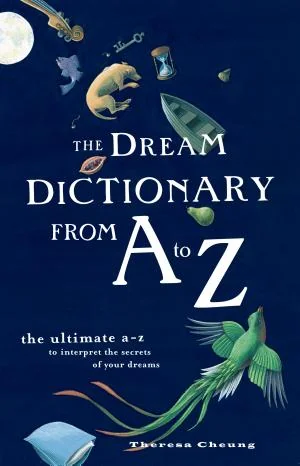
Theresa Cheung's "The Dream Dictionary from A to Z" provides a remarkably broad and accessible compendium of dream symbology. Its primary strength lies in its exhaustive alphabetical listing, allowing for quick lookups of almost any conceivable dream element, from common anxieties like "falling" to more esoteric imagery. The interpretations offered are generally balanced, drawing from psychological, mythological, and spiritual perspectives without rigidly adhering to a single school of thought. However, a notable limitation is the occasional brevity of entries; while extensive, some interpretations could benefit from deeper exploration of the nuances or historical development of a symbol. A particularly useful section, for instance, discusses the multifaceted symbolism of water, acknowledging its representations of emotion, purification, and the subconscious. The book serves as an excellent starting point for dream exploration. It's a functional reference that demystifies the nocturnal narrative.
📝 Description
81
Theresa Cheung's 2009 book catalogs dream symbols alphabetically.
The Dream Dictionary from A to Z provides an alphabetical catalog of dream symbols with interpretations. Theresa Cheung systematically breaks down common dream imagery, grounding her explanations in psychological and symbolic traditions. This work acts as a practical guide for anyone seeking to understand subconscious messages conveyed through dreams. It offers structured meanings for a wide range of symbols, from animals and objects to abstract concepts and recurring scenarios.
This volume suits anyone curious about their inner world during sleep, from novice dreamers to those with more experience in esotericism. Readers interested in Jungian psychology, archetypal symbolism, and the history of dream interpretation will find its entries valuable. It can also serve therapists and counselors wanting to explore the symbolic language of their clients' dreams.
Published in 2009, Cheung's dictionary built on the long tradition of dream analysis, influenced by figures like Freud and Jung. The early 21st century saw renewed interest in self-exploration through personal mythology, with dream interpretation playing a key role. Cheung synthesizes various interpretive schools, acknowledging both psychological depth and spiritual significance. This approach offers a broad yet structured perspective, distinguishing it from more narrowly focused texts.
💡 Why Read This Book?
• Learn to decode the specific symbolism of recurring dream elements like "falling" or encountering animals, as detailed in Cheung's extensive A-Z catalog, providing concrete interpretations you can apply immediately. • Understand the psychological and archetypal significance of common dream motifs, drawing from the book's exploration of symbolism rooted in traditions predating Freud's 1900s theories. • Gain practical tools for personal reflection by using the dictionary's structured meanings to analyze your own dream content, fostering self-awareness beyond generic advice.
⭐ Reader Reviews
Honest opinions from readers who have explored this book.
❓ Frequently Asked Questions
When was "The Dream Dictionary from A to Z" first published?
Theresa Cheung's "The Dream Dictionary from A to Z" was first published on February 24, 2009. This edition provides a comprehensive guide to dream interpretation that has been accessible to readers for over a decade.
What is the main purpose of this dream dictionary?
The main purpose is to provide readers with a comprehensive and accessible guide to understanding the meaning of their dreams. It offers interpretations for a vast array of symbols encountered during sleep, drawing from various psychological and symbolic traditions.
Does the book focus on a specific psychological school of thought?
No, the book takes a broader approach, synthesizing interpretations from various traditions, including psychological, mythological, and spiritual perspectives. It moves beyond the singular focus of early 20th-century theories like Freudian psychoanalysis.
How is the dictionary organized?
The dictionary is organized alphabetically, from A to Z. This structure allows users to quickly find specific symbols or imagery that appeared in their dreams and access relevant interpretations.
Who is the author, Theresa Cheung?
Theresa Cheung is an author known for her work in the fields of dreams, psychology, and spirituality. Her extensive research has led to several popular books on understanding the subconscious mind and its manifestations.
Can this book help with recurring dreams?
Yes, the book is particularly useful for recurring dreams. By looking up the symbols that repeat, readers can gain insights into persistent subconscious messages or unresolved issues that their dreams are highlighting.
🔮 Key Themes & Symbolism
Archetypal Symbolism
The dictionary looks at the concept of archetypes, universal patterns of imagery and meaning that surface in dreams across cultures and time. It explores how symbols like the "shadow," the "wise old man," or the "great mother" represent fundamental aspects of the human psyche. Cheung's work suggests these archetypes, as discussed in Jungian psychology, offer a framework for understanding deeper psychological and spiritual truths embedded within our nightly visions. The book aims to connect personal dream experiences to these broader mythic structures.
Subconscious Communication
Central to the book is the idea that dreams serve as a direct line to the subconscious mind, communicating vital information that our conscious awareness might overlook. It posits that symbols are the language of this inner dialogue, translating complex emotions, fears, desires, and unresolved issues into visual metaphors. By deciphering these symbols, individuals can gain self-awareness, address hidden anxieties, and foster psychological integration, aligning with therapeutic approaches that value the subconscious narrative.
Personalized Interpretation
While providing common meanings for dream symbols, the dictionary consistently emphasizes that the most accurate interpretation is deeply personal. It encourages readers to consider their unique life experiences, emotional associations, and cultural background when analyzing their dreams. For example, the meaning of an "empty house" can vary significantly based on an individual's past experiences with home and security, moving beyond one-size-fits-all explanations found in simpler dream guides.
The Nature of Sleep
The work implicitly explores the state of sleep as a liminal space where the boundaries between the conscious and unconscious mind blur. It views dreaming not merely as random neural firings but as a purposeful process of psychological and spiritual navigation. By cataloging dream imagery, Cheung provides a map for exploring this inner landscape, suggesting that understanding dream patterns can lead to greater personal insight and a more integrated sense of self.
💬 Memorable Quotes
Direct passages from the work, attributed to the author.
“Dreams are a unique and personal language.”
— This highlights the core premise that dream symbols are not universally fixed but hold meaning specific to the dreamer's individual life and experiences, encouraging a personalized approach to interpretation.
“Interpreting dreams involves looking at the symbol in the context of your own life.”
— This emphasizes the importance of personal association and lived experience when deciphering dream imagery, suggesting that external dictionaries are guides, not definitive answers.
“Common symbols often represent fundamental human emotions or experiences.”
— This points to the existence of archetypal elements within dreams, suggesting that many dream images tap into shared psychological patterns and universal aspects of the human condition.
“The subconscious mind uses symbols to communicate what the conscious mind may ignore.”
— This underscores the function of dreams as a mechanism for the subconscious to bring attention to unresolved issues, hidden desires, or important emotional truths that the waking mind might be avoiding.
“Every symbol has multiple layers of meaning.”
— This suggests that a single dream image can carry complex and complex significance, inviting a deeper, more nuanced exploration rather than settling for a single, simple interpretation.
🌙 Esoteric Significance
Tradition
This work draws broadly from the Western esoteric tradition, particularly its psychological and symbolic branches influenced by Jungian thought. While not strictly adhering to a single lineage like Hermeticism or Kabbalah, it engages with the concept of a symbolic language of the psyche that is fundamental to many esoteric paths. It positions dreams as a form of inner oracle or a means of accessing intuitive knowledge, aligning with practices that seek wisdom from non-ordinary states of consciousness.
Symbolism
Key symbols explored include water, often representing the subconscious, emotions, and the feminine principle; animals, which can embody instinctual drives, hidden aspects of the self, or specific archetypal energies (e.g., a lion for courage, a snake for transformation); and celestial bodies like the moon, frequently associated with intuition, the unconscious, and cyclical change. These symbols function within the dictionary as keys to unlocking deeper psychological and spiritual meanings.
Modern Relevance
Contemporary practices in depth psychology, transpersonal psychology, and various forms of spiritual self-discovery continue to utilize dream analysis as a core tool. Thinkers and practitioners in fields ranging from active imagination to modern shamanic practices often reference dream symbolism as a direct pathway to understanding the self and the unseen realms. Cheung's accessible dictionary serves as a foundational reference for those exploring these modern applications of ancient symbolic languages.
👥 Who Should Read This Book
• Individuals new to dream analysis seeking a clear, structured introduction to common symbols and their meanings, moving beyond anecdotal advice. • Students of Jungian psychology and archetypal studies who want a comprehensive reference to complement theoretical texts with practical dream interpretation examples. • Anyone interested in self-discovery and personal growth who wishes to understand the messages from their subconscious mind through a systematic, yet personalized, approach.
📜 Historical Context
Theresa Cheung's "The Dream Dictionary from A to Z," first published in 2009, arrived during a period of continued popular and academic interest in the subconscious, building on a legacy stretching back to Freud's "The Interpretation of Dreams" (1899) and Jung's extensive work on archetypes and the collective unconscious. The early 21st century saw a proliferation of self-help and esoteric literature, where dream analysis remained a popular avenue for personal growth. Cheung's approach synthesized various interpretive traditions, offering a comprehensive, alphabetical guide that contrasted with the more theoretical or specialized texts that often dominated academic discourse on the subject. While Freud's psychoanalytic framework was well-established, and Jungian psychology offered rich archetypal insights, Cheung's work aimed for broader accessibility. Its publication did not coincide with a specific major reception event like a censorship controversy or a major academic award, but it represented a continuation of the popular engagement with dream interpretation that has characterized much of modern Western thought since the late 19th century.
📔 Journal Prompts
Your recurring dream of flying: what personal freedom or escapism does it signify?
The symbolism of the "shadow" figure in your dreams: what hidden aspects does it represent?
Reflect on the meaning of water encountered in your dreams and its connection to your emotional state.
Consider a dream involving a "wise old man" or "wise old woman": what guidance might this archetype offer?
Analyze a dream about "falling": what anxieties or loss of control does it reflect in your waking life?
🗂️ Glossary
Archetype
Universal, archaic patterns and images that derive from the collective unconscious and are the psychic counterpart of an instinct. They manifest in dreams and myths.
Collective Unconscious
A concept introduced by Carl Jung, referring to a layer of the unconscious mind shared by all humanity, containing archetypes and inherited psychic predispositions.
Subconscious Mind
The part of the mind of which we are not aware but which influences our thoughts and behavior. Dreams are often seen as a manifestation of its contents.
Symbolism
The use of images and figures to represent ideas, emotions, or concepts. In dreams, symbols translate complex inner states into tangible imagery.
Liminal Space
A transitional or in-between state or place. In dream interpretation, the state of sleep is considered a liminal space between waking reality and the unconscious.
Psychoanalysis
A system of psychological theory and therapy, originated by Sigmund Freud, which aims to treat mental disorders by investigating the interaction of conscious and unconscious elements in the patient's mind.
Jungian Psychology
A school of psychology founded by Carl Jung, emphasizing archetypes, the collective unconscious, and the process of individuation.
This book appears in 1 collection
🔮 Readers Also Liked
Browse all →




![[ Alexander W. Dray] The Infernal Path Dark Harvest ( Occult Publishers 2012)](/img/thumb/alexander-w-dray-the-infernal-path-dark-harvest-occult-publishers-2012-alexander-w-dray.webp)




From the “Dream Interpretation” Collection
View all →![The mystic oracle, or, The complete fortune-teller and dream book / [F.M. Lupton].](/img/thumb/the-mystic-oracle-or-the-complete-fortune-teller-and-dream-book-f-m-lupton.webp)



More Free Occult Philosophy Books
View all →