Binaural Beats
 73
73

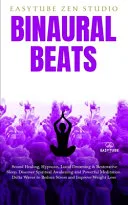
Binaural Beats
Easytube Zen Studio's "Binaural Beats" offers a lengthy sonic landscape intended for deep relaxation and sleep. The primary strength lies in its sheer duration – over 20 hours of Delta wave frequencies can certainly provide an extended period of auditory immersion. However, the work is extremely minimalist, offering little in the way of sonic variation or texture beyond the core binaural effect. While the blurb mentions "gentle, pleasant, and very calming sensations," the actual auditory experience can be perceived as monotonous by some listeners. A specific limitation is the lack of any introductory or concluding segments, making it feel like a continuous, unmediated loop. The concept of using Delta waves for sleep is well-established, but the execution here is purely functional, lacking the artistic nuance found in some other sound therapy works. The verdict is a functional tool for sleep and relaxation, albeit one that prioritizes duration over sonic artistry.
📝 Description
73
Easytube Zen Studio's Binaural Beats composition aims to induce specific mental states through psychoacoustic phenomena.
This audio work by Easytube Zen Studio uses binaural beats, a psychoacoustic effect created by presenting two slightly different sound frequencies to each ear. The brain perceives a third, phantom beat at the difference between these frequencies. This auditory illusion is designed to entrain brainwaves, guiding them towards specific frequency patterns associated with states like deep sleep, relaxation, or focus.
It is intended for individuals seeking straightforward methods to reduce stress, improve sleep, or enhance concentration. The composition offers a passive alternative for those who find traditional meditation difficult or time consuming. Listeners interested in sound therapy, meditation aids, or simply fostering a calmer personal environment may find this audio useful. It is especially suited for people navigating the pressures of modern life.
The use of sound for altering consciousness has ancient roots, seen in practices like chanting and harmonic resonance found in various historical cultures. The scientific study of binaural beats began in the mid-19th century with physicist Heinrich Wilhelm Dove. Later research in the 20th century, notably by Gerald Oster, further illuminated their psychoacoustic properties and therapeutic possibilities. This composition builds upon that history, applying the principles of brainwave entrainment for mental recalibration.
💡 Why Read This Book?
• Learn to utilize Delta waves for deep restorative sleep, a concept explored through specific frequency entrainment, offering a passive method to improve sleep quality beyond typical 8-hour cycles. • Experience profound relaxation by allowing your brainwaves to synchronize with the 0.5-4 Hz Delta frequency range, a technique rooted in psychoacoustic principles dating back to mid-19th century physics. • Enhance mental focus and reduce stress through sustained auditory stimulation, leveraging the brain's natural tendency to entrain to specific binaural beat patterns for over 20 hours.
⭐ Reader Reviews
Honest opinions from readers who have explored this book.
❓ Frequently Asked Questions
What are binaural beats and how do they work?
Binaural beats are an auditory illusion perceived when two different frequencies are played separately in each ear. The brain interprets this difference as a third, 'phantom' beat, which can encourage brainwave entrainment to match specific frequencies associated with states like relaxation or sleep.
What is the purpose of Delta waves in this composition?
Delta waves, ranging from 0.5 to 4 Hz, are primarily associated with deep, dreamless sleep and profound relaxation. This composition uses them to facilitate restorative sleep and mental recovery.
How long is the "Binaural Beats" composition?
The composition is over 20 hours long, designed to provide an extended period of auditory stimulation for deep sleep and relaxation without interruption.
Can binaural beats help with focus?
While this specific composition emphasizes Delta waves for sleep, other binaural beat frequencies (like Alpha or Theta) are often used to promote focus and creativity. This Delta wave track is primarily for relaxation and sleep.
Is any special equipment needed to listen to binaural beats?
Yes, headphones are essential. Binaural beats require presenting different frequencies to each ear, which can only be achieved accurately with stereo headphones or earbuds.
When were binaural beats first scientifically described?
The psychoacoustic phenomenon underlying binaural beats was first described by physicist Heinrich Wilhelm Dove in 1839. Later research in the 1970s by Gerald Oster further explored their effects.
🔮 Key Themes & Symbolism
Brainwave Entrainment
The central theme is brainwave entrainment, the process by which the brain's electrical activity synchronizes with external rhythmic stimuli. This work uses specific binaural frequencies to guide the listener's brainwaves towards the Delta range (0.5-4 Hz). This phenomenon, scientifically explored since the 19th century, aims to passively induce states of deep sleep and profound relaxation without conscious effort from the user, offering an auditory pathway to altered consciousness.
Delta Wave States
This composition specifically targets Delta waves, the slowest brainwave frequencies observed in humans. These are predominantly present during deep, dreamless sleep and are crucial for physical and mental restoration. The work leverages over 20 hours of Delta wave frequencies to promote extended periods of restorative rest, aiming to combat the effects of modern-day stress and sleep deprivation by facilitating entry into this vital brain state.
Auditory Meditation Aid
Positioned as a tool for modern life, the work functions as an auditory meditation aid. It offers an accessible alternative for individuals who find traditional meditation practices challenging. By providing a consistent, calming sonic environment, it helps listeners step back, relax, and re-center themselves, facilitating a meditative state through passive listening rather than active concentration.
Stress Reduction and Focus
Beyond sleep, the underlying principle of binaural beats is often applied to stress reduction and focus enhancement. While this particular composition emphasizes Delta waves for sleep, the broader application of this technology suggests its potential for calming the nervous system and potentially improving concentration by shifting brainwave activity. The extended duration ensures ample opportunity for these effects to manifest.
💬 Memorable Quotes
Direct passages from the work, attributed to the author.
“Delta Waves to allow for deep restorative sleep, true relaxation, and complete focus.”
— This statement highlights the intended effects of the Delta frequencies used in the composition, linking them directly to crucial states of mental and physical well-being.
“For over 20 hours, our delta sound waves produce an array of gentle, pleasant, and very calming sensations.”
— This emphasizes the extended duration and the desired sensory experience, aiming for a prolonged period of soothing auditory input designed to induce tranquility.
“In the modern-day world, it can often prove difficult to step back, relax, and re-center ourselves.”
— This acknowledges a common contemporary challenge, framing the binaural beats as a potential solution for individuals struggling with the pressures of modern life.
“Binaural beats are used by many to allow an individual's mind to release stress and enter a meditative state.”
— This points to the widespread adoption and perceived efficacy of binaural beats as a tool for stress relief and achieving meditative states.
“There are a variety of binaural beats, but this composition includes an array of Delta Waves...”
— This distinguishes the specific focus of this work (Delta waves) from the broader category of binaural beat applications, clarifying its intended purpose.
🌙 Esoteric Significance
Tradition
While not explicitly tied to a single historical esoteric lineage like Hermeticism or Kabbalah, this work draws upon the broader esoteric interest in altering consciousness through subtle means. It aligns with practices focused on mind-body connection and the manipulation of internal states, echoing concepts found in Western esoteric traditions that explore vibrational frequencies and their effects on the human psyche. It represents a modern, technologically mediated approach to achieving altered states.
Symbolism
The primary 'symbol' is the binaural beat itself – the perceived phantom frequency representing the brain's interpretation and harmonization. The Delta wave frequency (0.5-4 Hz) symbolizes deep unconsciousness, the void, or the primordial state of rest and renewal. The extended duration (over 20 hours) can symbolize immersion, the dissolution of temporal boundaries, or a complete surrender to the process of restoration, akin to a prolonged initiatory trance.
Modern Relevance
This work is highly relevant to contemporary practices in biohacking, neurofeedback, and digital wellness. Thinkers and practitioners in these fields utilize sonic technologies to optimize mental states. It finds resonance with mindfulness app developers, sound healers, and individuals exploring non-pharmacological methods for managing anxiety, insomnia, and cognitive fatigue, reflecting a growing interest in scientifically-informed, yet spiritually-adjacent, self-care technologies.
👥 Who Should Read This Book
• Individuals experiencing insomnia or seeking deeper, more restorative sleep, who can benefit from the extended 20+ hour Delta wave immersion. • Practitioners of meditation and mindfulness looking for supplementary tools to aid relaxation and stress reduction, especially those who find active meditation challenging. • Researchers or enthusiasts of psychoacoustics and sound therapy interested in practical applications of brainwave entrainment technology based on principles explored since the 19th century.
📜 Historical Context
Published in 2022, "Binaural Beats" by Easytube Zen Studio emerges in an era saturated with digital wellness tools. Its lineage traces back to mid-19th century physics, with Heinrich Wilhelm Dove’s initial descriptions of binaural beats in 1839. The scientific exploration gained significant traction in the 1970s, notably through Gerald Oster’s influential 1973 Scientific American article, which detailed their psychoacoustic properties and potential therapeutic applications. This work exists within a broader contemporary field of mindfulness apps and sound therapy, often drawing from principles explored by researchers like Oster. Unlike earlier esoteric traditions that relied on chants or instruments, this composition utilizes precise digital frequencies, reflecting a modern intersection of technology and consciousness exploration. Its relevance lies in providing an accessible, passive method for achieving states historically sought through more active contemplative practices, positioning itself against purely secular or technologically minimalist approaches to mental well-being.
📔 Journal Prompts
The Delta wave state's restorative properties and its potential for deep relaxation.
Experiences of brainwave entrainment during the 20+ hour composition.
Comparing the passive relaxation offered by binaural beats to active meditation techniques.
The concept of a 'phantom' beat and its psychological impact.
Modern life's difficulty in achieving states of deep rest and re-centering.
🗂️ Glossary
Binaural Beats
An auditory illusion perceived when two different frequencies are presented separately to each ear, causing the brain to detect a third 'beat' at the frequency difference.
Brainwave Entrainment
The process by which the brain's electrical activity (brainwaves) synchronizes with an external rhythmic stimulus, such as sound or light.
Delta Waves
The slowest brainwave frequencies (typically 0.5-4 Hz), associated with deep, dreamless sleep, healing, and restoration.
Psychoacoustics
The study of the psychological and physiological responses to sound, including how humans perceive and react to auditory stimuli.
Frequency
The rate at which a vibration occurs, measured in Hertz (Hz), representing cycles per second. In audio, this relates to pitch.
Hertz (Hz)
The unit of frequency, equal to one cycle per second. Used to measure brainwave activity and sound frequencies.
Sonic Composition
A piece of audio created or arranged with specific sonic elements, in this case, binaural beats, for a particular effect or purpose.