Questioning the Oracle
 61
61

Questioning the Oracle



Celeste Moreau, Divination & Symbolism Reviewer: Amy Shapiro's "Questioning the Oracle" is an indispensable volume for anyone seeking to delve into the profound depths of Chinese divination. Shapiro's scholarship is both rigorous and deeply intuitive, illuminating the philosophical underpinnings of ancient practices with remarkable clarity. She doesn't just present techniques; she unravels the spiritual essence, connecting the oracle's pronouncements to broader themes of Taoist philosophy and religious thought. The book is a treasure trove of esoteric insights, offering a nuanced understanding of symbolism and fate that will resonate with seasoned practitioners and curious newcomers alike. It's a rare gem that bridges the gap between academic inquiry and genuine spiritual exploration, making the sacred accessible.
📝 Description
61
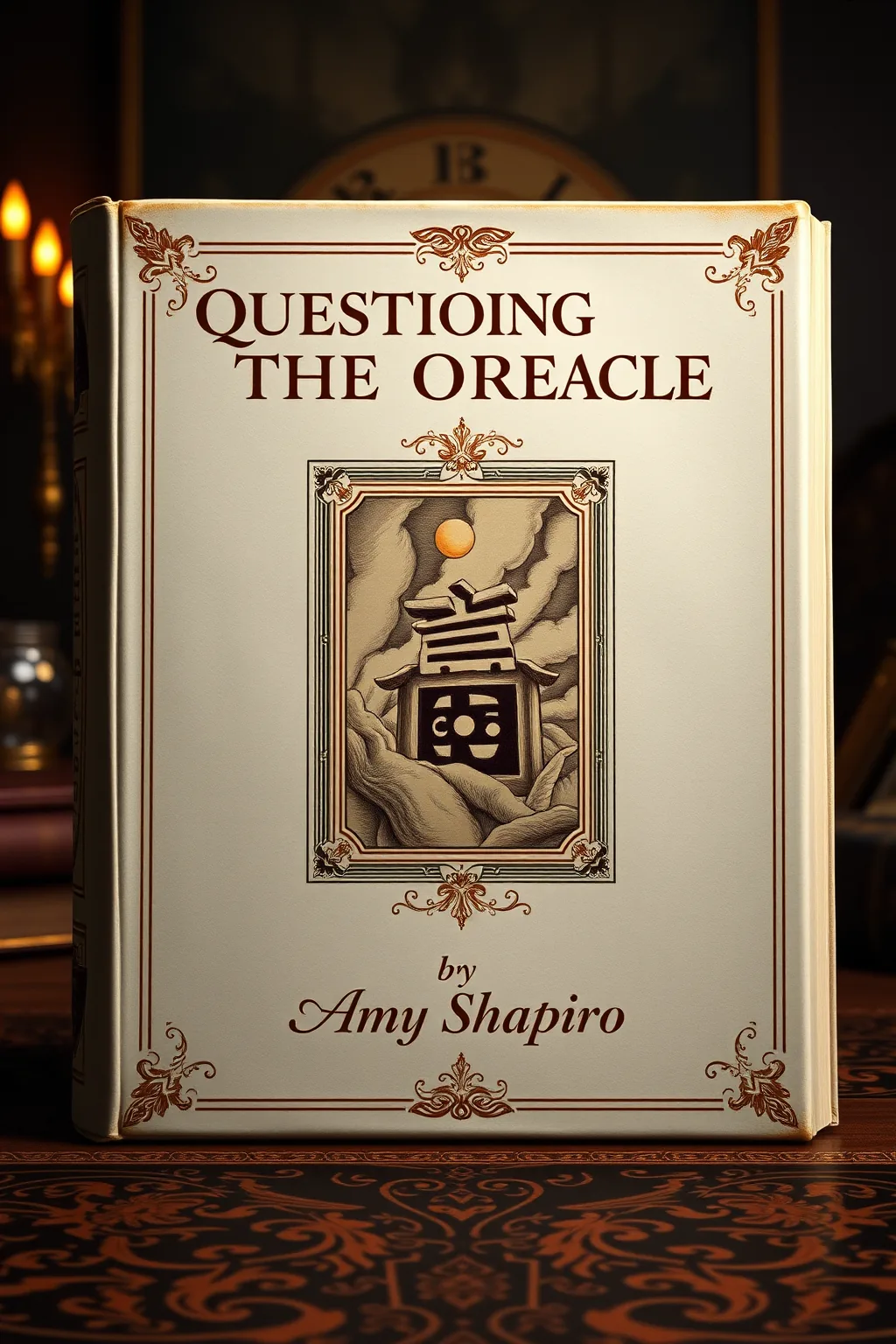
Amy Shapiro's 2008 book, "Questioning the Oracle," examines Chinese divination practices.
Amy Shapiro's "Questioning the Oracle" investigates the philosophical underpinnings of ancient Chinese divination. Rather than focusing solely on predictive techniques, the book delves into the symbolic language and religious thought that informed these practices. Shapiro aims to show how oracle traditions offered a framework for understanding the cosmos and an individual's role within it. The text approaches its subject with a sense of reverence for the material, encouraging readers to consider fundamental questions about existence, destiny, and spiritual awareness. It presents a worldview where the ordinary and the sacred are interconnected, suggesting that understanding these connections can reveal deeper truths about reality.
The book is structured to appeal to serious students of esoteric traditions, academic researchers, and individuals actively engaged in spiritual practice. It provides access to a perspective where the material world and the divine are not separate entities. Shapiro's work seeks to illuminate the less obvious forces that influence human experience. It invites readers to connect with ancient traditions and to become more aware of the subtle energies that shape their lives.
This book sits within the tradition of Western scholarship on Chinese esoteric practices, particularly those related to the I Ching. It moves beyond simple fortune-telling manuals to analyze the philosophical and religious frameworks that gave rise to and sustained these practices. Shapiro connects divination not just to methods of foresight, but to broader cosmological views and concepts of fate and enlightenment found in Chinese thought. The work engages with how these traditions conceptualized the relationship between humanity, the divine, and the natural order, situating it within a lineage of interpreting ancient oracular systems for spiritual insight.
💡 Why Read This Book?
Unravel the esoteric secrets of ancient Chinese divination. "Questioning the Oracle" offers a unique synthesis of religious philosophy, symbolism, and practical insight. Ideal for seekers of hidden knowledge, students of Eastern thought, and practitioners of divination who wish to deepen their understanding beyond superficial techniques. Discover how to interpret cosmic whispers and align with universal forces.
⭐ Reader Reviews
Honest opinions from readers who have explored this book.
❓ Frequently Asked Questions
What is the primary focus of "Questioning the Oracle"?
The book primarily focuses on the philosophical and religious underpinnings of ancient Chinese divination, exploring the oracle's role in understanding cosmic order and personal destiny through rich symbolism and esoteric interpretation.
Is this book suitable for beginners in divination?
Yes, while it delves into complex philosophy, Shapiro's accessible writing style makes it suitable for beginners eager to explore the deeper spiritual dimensions of divination, providing a solid foundation.
What specific Chinese traditions are explored?
The book extensively explores Taoist philosophy and its influence on divination, touching upon elements of folk religion and ancient Chinese cosmology that inform oracular practices.
Does the book offer practical divination techniques?
While its strength lies in philosophical depth and symbolic interpretation, the book implicitly guides readers toward a more profound engagement with any divination tools they may use, enhancing their intuitive practice.
Can "Questioning the Oracle" be read for its philosophical insights alone?
Absolutely. The book offers profound reflections on existence, fate, and the interconnectedness of all things, making it a valuable read for anyone interested in Eastern philosophy, regardless of their interest in divination.
🔮 Key Themes & Symbolism
The Interconnectedness of Fate and Free Will
Shapiro meticulously explores the Chinese philosophical concept of destiny, not as a rigid, predetermined path, but as a dynamic interplay between cosmic forces and individual agency. The oracle, in this context, becomes a mirror reflecting potential trajectories, offering guidance rather than dictating outcomes. This theme examines how ancient Chinese thought perceived the delicate balance between the preordained and the chosen, emphasizing the responsibility of the individual to navigate their circumstances with wisdom and intention. It challenges readers to consider their own role in shaping their reality within the grand cosmic design, offering a nuanced perspective on predestination.
Symbolic Language of the Cosmos
This book is a profound exploration of the symbolic lexicon employed by Chinese oracular traditions. Shapiro deciphers the body of imagery – from trigrams and hexagrams to elemental associations and natural phenomena – revealing their deep spiritual and philosophical meanings. It's understood that the universe communicates through a symbolic language, and the oracle acts as a conduit for translating these celestial messages. The text encourages readers to move beyond literal interpretations, fostering an appreciation for the multi-layered significance embedded within each symbol, thereby enhancing their intuitive understanding of life's mysteries and the subtle energies at play.
The Oracle as a Spiritual Guide
Amy Shapiro presents the oracle not merely as a tool for fortune-telling, but as an ancient spiritual guide designed to facilitate self-awareness and ethical development. The process of 'questioning the oracle' is framed as a sacred dialogue, a practice of introspection that seeks alignment with the Tao and the natural order of the universe. This theme emphasizes how engaging with oracular wisdom can lead to greater clarity, wisdom, and a more harmonious existence. It encourages a profound respect for the insights gained, urging readers to integrate them into their lives as a means of personal growth and spiritual evolution.
💬 Memorable Quotes
Direct passages from the work, attributed to the author.
“To question the oracle is to question the self, and in doing so, to find the Way.”
— This highlights the introspective nature of divination, suggesting that seeking external guidance ultimately leads to profound self-discovery and alignment with spiritual principles.
“Destiny is not a cage, but a riverbed; the water flows, but the banks guide.”
— This offers a philosophical perspective on fate, portraying it as influential but not absolute, allowing for agency within the natural flow of life's circumstances.
“The ancient symbols hold the keys to unlocking the unseen architecture of reality.”
— This suggests that the esoteric symbolism within ancient traditions provides clear insights into the fundamental structures and hidden workings of the universe.
“Wisdom is found not in knowing the future, but in understanding the present's sacred dance.”
— This emphasizes the importance of present moment awareness and the spiritual significance of our current experiences over the pursuit of foreknowledge.
💡 Key Ideas
Editorial paraphrase of the work's core concepts — not direct quotes.
The whispers of the cosmos are etched in the patterns of the stones.
This quote emphasizes the belief that the universe communicates through subtle signs and symbols, accessible through practices like divination, revealing hidden truths.
🌙 Esoteric Significance
Tradition
This work is deeply rooted in the esoteric traditions of Taoism and ancient Chinese folk religion, particularly concerning the philosophical interpretation of divination. It explores how practices like consulting the I Ching were not merely predictive but were integral to cultivating spiritual harmony, understanding the flow of Qi (life force), and aligning oneself with the Tao, the fundamental principle of the universe. The esoteric significance lies in its revelation of how these ancient methods were used to access deeper levels of consciousness and cosmic intelligence, fostering self-awareness and spiritual enlightenment.
Symbolism
The book meticulously deciphers the intricate symbolism inherent in Chinese divination. Key symbols such as the Yin and Yang, the Five Elements, and the trigrams/hexagrams of the I Ching are explained not just as components of a system, but as embodiments of universal principles and archetypal energies. These symbols function as a sacred language, offering clear insights into the cyclical nature of existence, the balance of opposing forces, and the dynamic processes of change. Understanding this symbolic language is presented as crucial for interpreting the oracle's messages and unlocking a deeper comprehension of reality.
Modern Relevance
In an age often characterized by fragmentation and disconnection, "Questioning the Oracle" offers a profound reconnection to ancient wisdom and a holistic worldview. Its exploration of fate, free will, and symbolic communication provides timeless tools for navigating modern challenges with greater clarity and intention. The book's emphasis on introspection and spiritual alignment resonates powerfully, offering a counterpoint to materialistic pursuits. For contemporary seekers, practitioners, and scholars, it provides a rich source of inspiration and guidance, encouraging a more meaningful engagement with life and the subtle energies that shape our existence.
👥 Who Should Read This Book
This book is a valuable collection for a diverse audience. **Beginners** seeking a deeper, philosophical understanding of divination beyond mere prediction will find accessible yet clear insights. **Scholars** of Eastern philosophy and religion will appreciate the rigorous research and nuanced interpretations of ancient Chinese thought. **Spiritual seekers** yearning for hidden knowledge and a connection to timeless wisdom will find guidance on navigating life's complexities. **Practitioners** of divination, whether Tarot, I Ching, or other forms, will discover how to imbue their practice with greater depth, intuition, and spiritual significance.
📜 Historical Context
"Questioning the Oracle" emerges from a rich lineage of Chinese philosophical and religious thought that flourished over millennia, particularly during periods of intense intellectual and spiritual inquiry. The development of divination practices, such as the I Ching, is deeply intertwined with the rise of Taoism and Confucianism, which sought to understand humanity's place within the cosmic order. The oracle served as a vital bridge between the earthly realm and the divine, a tool for emperors, scholars, and commoners alike to seek guidance on matters of state, personal life, and spiritual development. This book situates itself within this historical context, drawing upon ancient texts and traditions that have shaped Chinese culture, offering a window into a worldview where prophecy, philosophy, and religious practice were seamlessly integrated, providing a framework for navigating life's complexities.
📔 Journal Prompts
How does the concept of 'The Way' (Tao) inform your understanding of your current life path?
Identify a recurring symbol in your dreams or meditations. How might it relate to the themes in 'Questioning the Oracle'?
Reflect on a recent decision you made. How did it align with or diverge from what you perceive as the natural flow of events?
If the oracle could speak to you now, what is the most pressing question you would ask about your spiritual growth?
Consider the balance of Yin and Yang in your daily life. Where could you cultivate more harmony between these forces?
🗂️ Glossary
Tao (Dao)
The fundamental, ineffable principle of the universe in Taoist philosophy, often translated as 'The Way.' It represents the natural order, the source of all things, and the underlying current of existence.
Qi (Chi)
The vital life force or energy that flows through all living beings and the universe. It is considered the fundamental substance and animating principle in Chinese philosophy and medicine.
Yin and Yang
Two complementary and interdependent forces that represent the dualistic nature of reality in Chinese philosophy. Yin is associated with passivity, darkness, and femininity, while Yang is associated with activity, light, and masculinity.
Trigrams (Bagua)
Eight symbolic representations, each composed of three stacked lines (solid for Yang, broken for Yin), used in the I Ching and other Chinese cosmological systems to represent fundamental natural forces and concepts.
I Ching (Yijing)
An ancient Chinese divination text, also known as the 'Book of Changes.' It uses a system of hexagrams derived from trigrams to provide guidance and insight into various situations and their potential transformations.
This book appears in 1 collection
🔮 Readers Also Liked
Browse all →







From the “Divination” Collection
View all →









More Free Divination & Tarot Books
View all →